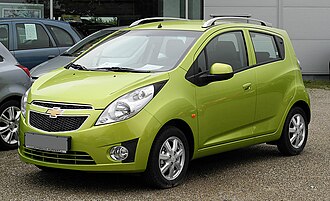
Chevrolet Spark as a Used Car: Is This Small City Car Still Worth Buying?
The Chevrolet Spark is one of those cars that makes the most sense when viewed through the realities of urban driving rather than traditional measures of automotive prestige. It is small, inexpensive and easy to manoeuvre, with a compact footprint that makes parking and navigating narrow streets considerably less stressful than in a modern crossover. In Europe, the Spark was sold primarily as an affordable city car, and although Chevrolet eventually withdrew from the mainstream European passenger-car market, used examples remain an interesting option for drivers who need simple and inexpensive transportation. A good Spark will not impress with performance, luxury or motorway refinement, but it can provide exactly what many city drivers actually need: a small car that is cheap to buy, easy to drive and relatively inexpensive to run.
The Spark name covers more than one generation, but European buyers will most commonly encounter the M300 generation, introduced around 2010. This version was considerably more modern than the earlier Matiz-based cars and was offered with small petrol engines, particularly 1.0- and 1.2-litre four-cylinder units. The car’s tall body created a surprisingly spacious cabin for its exterior dimensions, while five doors and five seats made it more practical than many two-door city cars. Later versions also received equipment such as air conditioning, stability-control systems and modern infotainment features depending on trim and market.
Today, age is the most important factor when shopping for a used Spark. Even the newest European examples are now several years old, so the condition of the body, suspension, engine and electrical systems matters more than the original trim level. The Spark can be an excellent first car or urban commuter, but buying the cheapest example available can easily result in repair bills that exceed the difference between a neglected car and a properly maintained one.
What Is the Chevrolet Spark?
The Chevrolet Spark is a small five-door city car developed for markets where compact dimensions, low operating costs and affordability are important. It was sold under the Chevrolet name in Europe but has roots in the wider General Motors and Daewoo small-car family. The model was designed to compete with cars such as the Hyundai i10, Kia Picanto, Toyota Aygo, Peugeot 107 and Citroën C1.
The Spark’s greatest advantage is its size. The M300 generation is only around 3.64 metres long and approximately 1.60 metres wide, which makes it very easy to place on narrow streets and in small parking spaces. The relatively tall body also means the interior feels more spacious than its footprint suggests.
Unlike some very small city cars, the Spark has five doors and can seat five people on paper. In reality, four adults will generally be more comfortable, particularly on longer journeys, but the additional rear-seat capacity makes the car considerably more versatile than a strict two- or four-seat city vehicle.
The trade-off is that luggage space is limited when all seats are occupied. This is normal for the class. The Spark is designed around urban mobility, not family holiday luggage.
Which Engine Should You Choose?
1.0-Litre Petrol
The 1.0-litre petrol engine is the most obvious choice for buyers who primarily use their Spark in town. Depending on market and year, outputs were around 65–68 PS. It is a naturally aspirated four-cylinder engine, which gives it a straightforward character.
In urban traffic, the 1.0 is generally adequate. The car’s relatively low weight means that it does not need a huge engine to feel responsive at city speeds. It is easy to pull away from traffic lights, manoeuvre through residential streets and park in tight spaces.
The limitations become clearer on motorways. With several passengers aboard, the small engine needs to be worked hard when accelerating or climbing hills. Overtaking requires planning, and maintaining high speeds on steep gradients can result in considerable engine noise.
For a city-based driver, however, these limitations may be irrelevant. The 1.0 is arguably the most natural match for the Spark’s purpose.
1.2-Litre Petrol
The 1.2-litre petrol engine is the better choice for drivers who regularly leave the city. Depending on specification, it produced roughly 80–82 PS, providing a useful increase in performance over the 1.0.
The difference is particularly noticeable at higher speeds. The larger engine makes motorway driving less stressful and provides more flexibility when the vehicle is carrying passengers.
It remains a naturally aspirated petrol engine, so the driving experience is predictable rather than turbocharged. There is no dramatic surge of torque, but the engine responds consistently as the revs rise.
If two similarly maintained Sparks are available at similar prices, the 1.2 is arguably the better all-round choice. The 1.0 remains preferable if the car will spend almost all of its life in an urban environment.
How Does the Spark Drive?
The Spark’s driving experience is dominated by its compact dimensions. The steering is light, the turning circle is useful and the elevated seating position gives the driver a good view of the surrounding traffic.
This makes it particularly pleasant in cities. Narrow streets that can feel uncomfortable in a large SUV are easy to navigate, and parallel parking requires considerably less space. The car’s small footprint is a genuine advantage rather than simply a marketing feature.
The suspension is designed for everyday roads rather than sporty handling. At low speeds it generally copes well with urban imperfections, although older examples can develop worn suspension components that make the ride noisy or uncomfortable.
At motorway speeds, the Spark’s limitations become more obvious. The short wheelbase and lightweight construction mean it can feel more sensitive to crosswinds than a larger car, while engine and wind noise are noticeable. It is perfectly capable of longer journeys, but it is most comfortable when used as an urban and suburban car.
What Makes the Spark Attractive as a Used Car?
Very Small Exterior Dimensions
The Spark’s compact size is probably its greatest used-car advantage. At roughly 3.64 metres long, it can fit into spaces that would be inaccessible to many modern cars.
This is particularly valuable in European cities where parking spaces can be narrow and streets can be difficult to navigate. A driver who spends every day dealing with urban traffic may appreciate this characteristic more than having an additional 100 horsepower.
Five Doors and a Tall Cabin
The five-door layout makes the Spark much easier to use than older small cars with rear-hinged or two-door access. Children can be placed in the rear more conveniently, and passengers do not have to climb through the front seats.
The tall roof also creates a surprising amount of headroom. The interior does not feel as cramped as the exterior dimensions might suggest, particularly for front passengers.
Low Purchase Price
The Spark’s lack of prestige is an advantage in the used market. It was never an expensive or fashionable model, and today it can be purchased for relatively little money.
This makes it attractive as a first car, second household car or inexpensive commuter. However, buyers should avoid spending their entire budget on the purchase price. An older car always needs a maintenance reserve.
What Should You Check Before Buying?
Inspect the Body and Underside
Age-related corrosion is one of the first things to check. Examine the wheel arches, sills, doors, boot lid and underside carefully.
Look for bubbling paint, rust around seams and evidence of previous accident repairs. A small dent or cosmetic scratch is usually not a major concern, but structural corrosion can make a cheap Spark uneconomical to repair.
The underside deserves particular attention in countries where winter road salt is commonly used. Suspension mounting points and brake lines should be checked carefully.
Listen to the Engine
Ask to see the car with a cold engine. It should start promptly and settle into a stable idle.
Listen for unusual rattling, tapping or knocking sounds. Check for oil or coolant leaks and make sure the temperature gauge behaves normally during the test drive.
The small petrol engines are relatively simple, but age and poor maintenance can still lead to problems. Regular oil changes are especially important.
Check the Clutch and Gearbox
Most Sparks are equipped with manual transmissions. The clutch should engage smoothly and should not slip under acceleration.
Try all gears during the test drive. Difficulty selecting a gear, grinding noises or excessive vibration can indicate transmission or clutch problems.
Because replacement costs can be significant relative to the value of an older Spark, a problematic clutch should be reflected in the purchase price or be a reason to walk away.
Test All Electrical Equipment
Small cars often have simpler electrical systems than modern luxury vehicles, but every component should still be checked.
Test the windows, central locking, lights, dashboard, audio system, air conditioning and heater. Make sure no warning lights remain illuminated after the engine starts.
Air conditioning deserves particular attention. A system that fails to cool may only need servicing, but it could also require a compressor, condenser or other expensive component.
Is the Chevrolet Spark Reliable?
The Spark can be dependable when maintained properly, and its relatively simple petrol engines are attractive in this respect. However, the age of today’s used examples means that reliability should be assessed at the individual-car level.
Suspension components, wheel bearings, brakes, exhaust systems, batteries and air-conditioning components can all wear out over time. None of these problems necessarily means that the Spark is inherently unreliable; they are simply normal risks associated with an older vehicle.
Service history is therefore extremely important. A car with documented oil changes, recent brakes, good tyres and evidence of suspension work can be a better purchase than an apparently low-mileage example with no records.
Mileage should also be considered alongside usage. A Spark that has spent most of its life travelling gently through town may have a different wear pattern from one that has completed long motorway journeys every day.
Is the Spark Practical Enough for a Family?
The answer depends on what you mean by practical. For a small family living in a city, the Spark can work surprisingly well. Five doors make child-seat access easier, the upright cabin provides good headroom and the small exterior dimensions simplify parking.
The boot is the main limitation. With the rear seats in use, luggage space is modest, so a family travelling with large amounts of luggage may quickly run out of room.
For everyday shopping, school runs and commuting, however, the car can be perfectly adequate. Folding the rear seats significantly improves cargo flexibility and allows the Spark to carry surprisingly bulky objects for its size.
It is best thought of as an urban family car rather than a long-distance family tourer.
How Much Does a Used Spark Cost to Run?
The Spark’s small engines and low weight help keep everyday costs under control. Fuel consumption can be modest, particularly when the car is used as intended in urban and suburban environments.
Tyres are also relatively inexpensive compared with those fitted to larger cars. Brakes and routine service items are generally manageable as well.
The biggest financial risk is not normal fuel consumption but age-related repairs. A low purchase price can make a major mechanical repair disproportionately expensive as a percentage of the vehicle’s value.
This is why buying a slightly more expensive example with a strong history is usually preferable to buying the absolute cheapest Spark on the market.
Is the Chevrolet Spark Safe?
The M300 Spark was designed to meet contemporary safety requirements and could be equipped with features such as airbags, ABS and electronic stability control, depending on year and specification. However, buyers should remember that safety technology has advanced considerably since the car was launched.
A modern supermini can offer much more sophisticated driver assistance, including automatic emergency braking, lane-keeping assistance and advanced collision avoidance systems. The Spark cannot compete with that technology.
For a used Spark, the most important considerations are the condition of the brakes, tyres, suspension and airbags. Any persistent airbag or stability-control warning light should be investigated before purchase.
If the vehicle has been involved in an accident, ask for evidence that repairs were carried out properly. Small city cars can be particularly vulnerable to parking and low-speed impacts, so a careful inspection of the body is worthwhile.
Chevrolet Spark Versus Other Small Used Cars
The Spark’s main competitors include the Hyundai i10, Kia Picanto, Toyota Aygo and other small European and Asian city cars. Against these rivals, its main advantages are its tall cabin, five-door practicality and often attractive used price.
The Hyundai i10 and Kia Picanto may offer stronger dealer and parts support in some European countries. Toyota’s small cars have a particularly strong reputation for reliability. The Spark’s advantage is that it can sometimes be purchased for less, allowing buyers to obtain a relatively modern five-door city car without spending much.
The most important point is not to choose based solely on brand reputation. Compare individual examples. A well-maintained Spark can be a better purchase than a neglected example of a theoretically more reliable model.
Which Chevrolet Spark Is the Best Used Buy?
For mostly urban driving, the 1.0 petrol is the logical choice. It provides adequate performance at city speeds, is relatively simple and matches the car’s lightweight character.
For mixed urban and motorway use, the 1.2 petrol is more appealing. Its additional power makes the car less demanding on faster roads and when carrying passengers.
Regardless of engine, prioritize a car with a clean body, good tyres, functioning air conditioning, a smooth clutch and gearbox, and a documented maintenance history. It is better to buy a well-maintained 1.0 than a neglected 1.2 simply because the larger engine sounds more attractive on paper.
Final Verdict: Is the Chevrolet Spark Worth Buying?
The Chevrolet Spark is a small car with a very specific purpose, and that is exactly why it can still be attractive as a used vehicle. It is not designed for long-distance luxury, high-speed performance or carrying a huge amount of luggage. Instead, it is a compact urban tool that makes parking easier, keeps fuel consumption under control and provides more interior space than its tiny footprint initially suggests.
The M300 generation is particularly appealing because its five-door body, tall cabin and modern-enough equipment make it substantially more usable than many older city cars. The 1.0 petrol is a sensible choice for urban drivers, while the 1.2 petrol provides a useful performance advantage for mixed driving.
The biggest concern today is age rather than the basic concept of the car. Buyers need to inspect corrosion, suspension, clutch, gearbox, cooling system and electrical equipment carefully. Chevrolet’s departure from the European passenger-car market also means that checking parts availability is sensible, especially for body and trim components.
For a first-time driver, city commuter or second household car, the Spark can be an excellent budget choice. It is easy to drive, easy to park and relatively inexpensive to run. It will never offer the refinement of a newer supermini, but that is not what makes it appealing.
Ultimately, a good Chevrolet Spark is about affordable urban mobility. Find a rust-free, well-maintained example with a strong service history and the car can remain a remarkably useful little companion. The key is to buy condition rather than simply chasing the lowest price.
Chevrolet Spark Technical Specifications
Specifications vary by model year and market. The following table focuses primarily on the European M300 generation, which is the version most likely to interest today’s used-car buyer.
| Specification | 1.0 Petrol | 1.2 Petrol |
|---|---|---|
| Engine type | 4-cylinder naturally aspirated petrol | 4-cylinder naturally aspirated petrol |
| Displacement | 995 cc | 1,206 cc |
| Approx. power | 65–68 PS | 80–82 PS |
| Approx. torque | 93 Nm | 111–112 Nm |
| Transmission | 5-speed manual / automatic depending on market | 5-speed manual / automatic depending on market |
| Drive | Front-wheel drive | Front-wheel drive |
| Cylinders | 4 | 4 |
| Seats | 5 | 5 |
| Doors | 5 | 5 |
| Length | approx. 3,640 mm | approx. 3,640 mm |
| Width | approx. 1,595 mm | approx. 1,595 mm |
| Wheelbase | approx. 2,375 mm | approx. 2,375 mm |
| Body style | 5-door hatchback | 5-door hatchback |
| Main character | City-focused | More versatile |
| Best suited to | Urban commuting | Mixed driving |
| Main advantage | Compactness and simplicity | Better performance |
| Main concern | Limited motorway performance | Slightly higher fuel consumption |
Bottom line: the Chevrolet Spark remains an appealing used car for buyers who prioritize compact dimensions, low running costs and straightforward urban transportation. The 1.0 petrol is ideal for predominantly city-based driving, while the 1.2 is the better all-rounder for drivers who regularly use faster roads. As with any older inexpensive car, the condition of the individual vehicle matters more than the badge, engine size or equipment level. A carefully inspected Spark with a good service history can still be an economical and surprisingly practical choice for European city driving.
