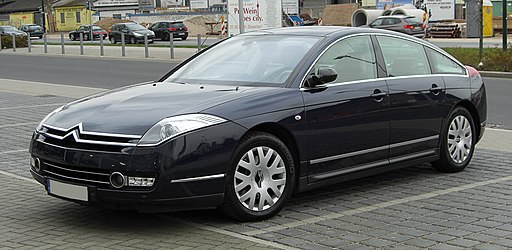
Buying a Citroën C6 as a used car is not the same as buying a normal executive sedan. It is closer to adopting a rare piece of French engineering philosophy, because the C6 was never designed to win a sales race; it was designed to be a flagship in the most Citroën way possible. That means comfort-first suspension engineering, long-distance refinement, and an interior built around the idea that a car should feel like a calm lounge rather than a sporty tool. On the used market, the C6 becomes especially interesting because depreciation has already done its work. The purchase price often looks shockingly low compared with the size, equipment level, and original positioning of the car. The important reality, though, is that a low purchase price does not turn the C6 into a cheap car to own. Technically, it remains a complex, heavy, high-end vehicle with specialized systems, and the smartest way to approach it is to treat it like a used luxury car: buy the best example, expect premium maintenance, and prioritize condition and service history over mileage.
Model Overview, Platform, and Executive-Class Dimensions
The Citroën C6 is a large executive fastback-style sedan, built on a platform shared with other high-end PSA products of its era, but tuned to be distinctly Citroën in ride and behavior. In pure physical terms, it is a long car, typically around 4.9 meters in length, with a wheelbase close to 2.9 meters. Those numbers are not just trivia; they define how the C6 drives. A long wheelbase improves straight-line stability and reduces the pitching motions that make some large cars feel busy on rough roads. The C6 also has a wide track and a relatively substantial curb weight, often in the 1,800–2,000 kg range depending on engine and equipment. That weight contributes to the car’s planted feel at speed, but it also means tires, brakes, suspension components, and drivetrain parts are sized for serious loads. The boot is large and usable, and rear-seat space is one of the C6’s strongest practical advantages, making it a genuine long-distance machine for four adults rather than a car that only looks big from the outside.
Hydropneumatic Suspension: The Heart of the C6 Experience
The defining technical feature of the Citroën C6 is its hydropneumatic suspension, specifically the Hydractive 3+ system. Unlike conventional suspension that relies on steel springs and separate dampers, the C6 uses hydraulic spheres that act as springing elements and fluid control to manage damping behavior. The result is a ride quality that is still unusual even today: the C6 can absorb rough surfaces with a smoothness that makes many modern cars feel nervous or harsh. The system is also self-leveling, which means the car maintains correct ride height regardless of load, improving stability and preserving suspension geometry. Hydractive 3+ can vary suspension firmness based on driving conditions, meaning it can be soft and floating on a motorway but tighten up when cornering or braking. For used buyers, this is both the greatest attraction and the biggest inspection priority. A healthy C6 should rise smoothly to its normal ride height, remain level, and feel supple without bouncing. A C6 that feels crashy, stiff, or slow to adjust height may need spheres, hydraulic work, or sensor-related repairs, and while these are solvable, they require specialist knowledge and can be expensive.
Engines: Diesel Dominance and the V6 Character
Most Citroën C6s on the used market are diesel, and the most common and most desirable engine for many buyers is the 2.7-liter V6 HDi. This engine is a twin-turbo V6 designed for refinement and torque rather than sporty revving. Power output is typically in the mid-200 hp range, and torque is strong enough to move the heavy C6 with effortless ease. The character of the 2.7 V6 HDi is perfectly matched to the C6: low-rev thrust, quiet cruising, and a smoothness that makes the car feel like it’s operating at half effort most of the time. Some markets also received the later 3.0-liter V6 HDi, which improved performance and efficiency, typically offering around 240 hp and even stronger torque. These engines make the C6 feel genuinely fast in real-world terms, not because it’s a sports sedan, but because it can surge forward at motorway speeds without drama. There are also rarer four-cylinder diesel versions, but the C6’s size and luxury mission mean that the V6 models are generally the ones that deliver the “correct” driving experience.
Petrol Engines: Rare, Smooth, and Usually a Niche Choice
Petrol Citroën C6s exist, most notably with a 3.0-liter V6 petrol engine in some markets. These versions are much rarer and often attract enthusiasts because they avoid certain diesel emissions complications and can be smoother in short-trip use. The downside is fuel consumption, which is typically high, especially in city driving. Petrol C6s can be excellent for low-mileage owners who want the C6 experience without DPF and EGR concerns, but parts availability and specialist knowledge may be more limited depending on region. Technically, the petrol V6 is usually less torque-rich than the diesel V6, so the car may feel a bit more “traditional automatic sedan,” needing more revs for strong acceleration, but it can also be quieter and more refined in certain conditions.
Transmission: Automatic Only, and Why Maintenance Matters
The C6 is essentially an automatic-only car in most markets, typically using a conventional torque-converter automatic gearbox. This suits the car’s personality perfectly: smooth takeoffs, relaxed cruising, and effortless progress in traffic. From a used-car perspective, this is generally a positive, because torque-converter automatics tend to be durable if maintained properly. The problem is that many cars of this era were marketed with long gearbox service intervals, and some owners never changed the transmission fluid. On a used C6, gearbox health is critical. Shifts should be smooth, kickdown should be predictable, and there should be no hesitation when selecting Drive or Reverse. Any harsh engagement, slipping, or delayed shifting should be treated as a serious warning sign, because gearbox repairs on a C6 are not small-car money.
Brakes, Wheels, and the C6’s Mass
The Citroën C6 is a heavy vehicle, and the braking system reflects that. It uses large ventilated front discs and substantial rear discs, with ABS, stability control, and a braking feel tuned for smoothness rather than sharp sportiness. In used form, you should check for vibration under braking, uneven wear, and signs of seized calipers, especially if the car has been stored for long periods. Wheel sizes are typically in the 17–18 inch range depending on trim, and tire choice matters because it affects both comfort and noise. The C6 is extremely sensitive to tire quality: cheap tires can make the car feel less refined and can introduce road roar that undermines the entire luxury experience. Because the suspension is so capable, many owners underestimate how important correct tire specification is, but in reality the tire is the first part of the suspension system, and the C6 benefits greatly from good rubber.
Aerodynamics, High-Speed Stability, and Long-Distance Refinement
One of the most impressive technical qualities of the C6 is how stable it feels at motorway speed. The combination of long wheelbase, hydropneumatic suspension, and a body designed for high-speed comfort makes it feel like it was engineered for French autoroutes. Aerodynamic efficiency is respectable for a large car of its era, and wind noise is generally well controlled. The C6 is not a lightweight, agile sedan, but it is exceptionally good at maintaining speed with minimal driver fatigue. The steering is tuned for calmness rather than feedback, and the chassis feels like it’s always working to isolate you from the road rather than transmit it. For used buyers, this matters because it means the C6’s strengths only fully reveal themselves on longer drives. A short test drive around city streets can make it feel simply “big,” but a 20-minute motorway run will often show why the car has a cult following.
Fuel Economy: Surprisingly Good for a Flagship, With Caveats
Diesel V6 C6s can deliver fuel economy that seems almost unreasonable for a car of this size and comfort level, especially on long motorway runs. The torque and gearing allow the engine to cruise at low revs, and the car can return respectable consumption figures in steady driving. However, in urban use, fuel economy drops sharply, and the car’s mass becomes unavoidable. Additionally, diesel emissions systems add complexity. Many C6s have DPF systems, EGR valves, and other emissions hardware that must be kept healthy through correct driving patterns and maintenance. If you use the car mainly for short trips, you risk DPF clogging and expensive repairs. In other words, the C6 can be efficient, but only when used as intended: as a long-distance cruiser rather than a city commuter.
Electronics, Comfort Systems, and High-End Features
The C6 was loaded with technology for its era, and that is part of its appeal as a used luxury car. Many examples include high-spec climate control, heated seats, memory functions, advanced audio systems, and sophisticated driver information displays. Some versions also feature unique high-end Citroën touches such as a head-up display and advanced lighting systems. The downside is that electronics age, and the C6 has more modules and sensors than simpler cars. In used inspection, it’s crucial to test every comfort feature: climate control performance, seat adjustment, display behavior, parking sensors, navigation, and all interior switches. A C6 with multiple small electrical faults can become frustrating, not because any single problem is catastrophic, but because the car’s luxury identity depends on everything working smoothly. Also, because the C6 is rare, some parts may require patience to source, and not every garage will be comfortable diagnosing its systems.
Reliability Themes: What Usually Breaks and What Usually Survives
A well-maintained C6 can be remarkably robust, but neglect is punished quickly. The biggest reliability themes revolve around three areas: the hydropneumatic suspension, the diesel V6 drivetrain, and aging electronics. Suspension issues often come from leaks, tired spheres, or sensor faults rather than the core concept failing. Diesel V6 engines can be strong, but they require consistent oil changes, correct coolant maintenance, and attention to turbocharger health. Emissions systems can be expensive if the car has been used incorrectly or if owners have ignored warning signs. Cooling systems and thermostats are important because a large engine in a heavy car generates substantial heat, and overheating is not something you want to gamble with. Electronics issues tend to be more about age and connector corrosion than design flaws, but because the car is complex, diagnosing intermittent faults can take time. The good news is that the C6 was engineered as a flagship and generally has a strong body structure, good corrosion resistance, and a cabin that can hold up well if cared for.
What to Check Before Buying: A C6-Specific Inspection Strategy
Buying a used C6 requires a different mindset than buying a used hatchback. Start by verifying suspension behavior. The car should raise and settle smoothly, and it should sit level. The ride should be supple and controlled, not stiff or bouncy. Inspect underneath for signs of hydraulic leaks. Next, focus on the drivetrain. On diesel models, ensure the engine starts cleanly, idles smoothly, and accelerates without hesitation. Listen for unusual turbo noises and check for smoke under load. Verify that the automatic gearbox shifts smoothly and does not hesitate. Check service history in detail, because this is not a car you want to buy with missing records. Confirm that major maintenance items have been addressed, including transmission servicing if possible.
Then move to electronics. Test the head-up display, climate control, seat functions, parking sensors, and infotainment. Check that all dashboard warnings illuminate and then disappear correctly at startup. Finally, assess tires and brakes. Uneven tire wear can indicate suspension alignment issues, and cheap tires can suggest a cost-cutting owner, which is a red flag on a car that demands proper maintenance.
Which C6 Is the Best Used Buy
For most buyers, the best used Citroën C6 is a well-maintained diesel V6 with complete service history, a healthy suspension system, and evidence of long-distance use. The 2.7 V6 HDi is often the most common and can be an excellent choice if maintained properly. The later 3.0 V6 HDi is generally considered the most desirable in terms of performance and refinement, but it may be rarer and more expensive. Petrol versions are best suited to niche buyers who do low mileage and want to avoid diesel emissions complexity, but they will cost more to fuel and may be harder to source. The most important rule is simple: do not buy the cheapest C6 you can find. Buy the one with the best history, the best condition, and the owner who clearly understood what the car is.
Final Verdict: The Citroën C6 as a Used Car
As a used car, the Citroën C6 is one of the most distinctive luxury bargains available. It offers a combination of ride comfort, long-distance stability, and engineering personality that very few cars can match, even today. Its hydropneumatic suspension is not just a gimmick; it is the foundation of the entire driving experience, and when it is healthy, it makes the C6 feel like it belongs to a different category of car. The V6 diesel engines suit the C6’s mission perfectly, and the automatic gearbox complements its relaxed character. The trade-off is complexity: the C6 demands careful buying and serious maintenance, and it is not a car for people who want cheap, simple motoring. But for the right owner, the C6 can be one of the most rewarding used purchases you can make, delivering genuine flagship comfort and a rare sense of calm on the road that modern cars often forget how to provide.
,_26._M%C3%A4rz_2011,_D%C3%BCsseldorf.jpg)