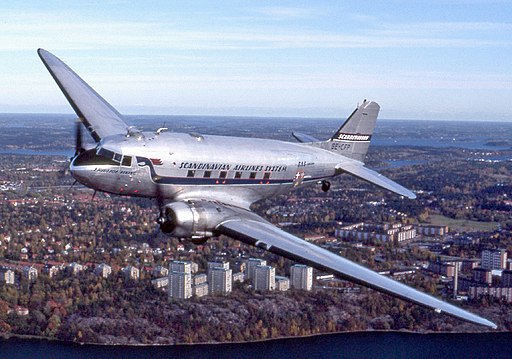
Douglas DC-3: The Aircraft That Changed the World
The Douglas DC-3 isn’t just a plane—it’s an aviation milestone. First flown in 1935, it became the backbone of early commercial aviation, revolutionized air travel, and went on to serve valiantly in nearly every corner of the world during wartime. Its graceful lines, legendary reliability and enduring versatility have earned it a place in both history books and modern airfields to this day.
Development & Design Legacy
Origins of a Classic
In the early 1930s, American Airlines sought a sleeper transport to elevate long-distance air travel. Douglas Aircraft answered with the DC-2, but it was the DC-3—lengthened, strengthened, and outfitted with passenger comforts—that defined the golden age of airline flight. The prototype first flew on December 17, 1935, and quickly attracted airlines and military planners alike.
Airframe & Construction
- Fuselage: All-metal monocoque structure made from aluminum alloy with stressed-skin construction—cutting-edge for its time.
- Wing: Low-wing monoplane layout with a straight center section and tapered outer panels; built for lift and endurance.
- Landing Gear: Retractable tailwheel-type gear with hydraulic actuation and shock-absorbing struts.
The DC-3’s rugged simplicity and corrosion-resistant skin made it suitable for extreme conditions—from desert airstrips to icy tundra.
Powerplant & Propulsion
Engine Specifications
Most civil DC-3s and military C-47 variants were powered by:
| Engine | Pratt & Whitney R-1830 Twin Wasp |
|---|---|
| Configuration | 14-cylinder twin-row radial engine |
| Power Output | 1,200 hp per engine |
| Propeller | Hamilton Standard constant-speed propellers |
| Fuel Type | Avgas 100/130 |
Later conversions (like the Basler BT-67) upgraded the powerplant to Pratt & Whitney PT6A-67R turboprops, offering better fuel economy and hot-and-high performance.
Technical Specifications
Dimensions & Capacity
| Parameter | Value |
|---|---|
| Length | 19.66 m (64 ft 6 in) |
| Wingspan | 29.11 m (95 ft 6 in) |
| Height | 5.16 m (16 ft 11 in) |
| Wing Area | 91.7 m² (987 ft²) |
| Empty Weight | 8,225 kg (18,135 lb) |
| Max Takeoff Weight | 11,430 kg (25,200 lb) |
| Seating | Up to 32 passengers |
| Crew | 2 (pilot and copilot) |
| Cargo Load (C-47) | ≈ 3,400 kg (7,500 lb) |
Performance Metrics
| Metric | Value |
|---|---|
| Maximum Speed | 370 km/h (230 mph) |
| Cruise Speed | 305 km/h (190 mph) |
| Stall Speed | 105 km/h (65 mph) |
| Range | 2,410 km (1,500 mi) |
| Rate of Climb | 1,130 ft/min (5.7 m/s) |
| Service Ceiling | 7,625 m (25,000 ft) |
| Takeoff Distance (to 50 ft) | 820 m (2,700 ft) |
| Landing Roll | 610 m (2,000 ft) |
These numbers exemplify the DC-3’s ability to operate from unpaved strips and in austere environments without sacrificing payload or safety.
Interior Configuration & Avionics
Civilian Layout
Originally configured for 21–32 passengers, the cabin was wide enough for stand-up access and equipped with heating, ventilation, and windows that opened. Its comfort for the era—reclining seats and sleeping berths—ushered in reliable overnight coast-to-coast air travel.
Cockpit & Instrumentation
The classic cockpit features analog flight gauges, dual yoke controls and engine-monitoring systems. Retrofits in the 21st century often include:
- Garmin GNS430/530 or GTN series for GPS navigation
- Digital engine instruments
- ADS-B Out compliance systems
- Dual VHF comm and nav radios
Still, many pilots cherish the DC-3’s tactile feedback and simplicity—flying it “by the seat of your pants” remains part of the charm.
Military Service: The C-47 Skytrain
The Backbone of WWII Logistics
As the C-47 Skytrain (Dakota in Commonwealth service), the DC-3 gained a new identity as the workhorse of Allied operations. It flew paratrooper drops over Normandy, towed gliders during Operation Market Garden, and hauled everything from radar trucks to wounded soldiers through the Pacific Islands and Europe.
Combat-Ready Modifications
- Reinforced cargo floor and oversized loading door
- Glider tow hook attachments
- Jump lights and bench seating for paratroopers
- Long-range fuel tanks for transoceanic missions
The C-47’s wartime versatility helped secure victory on multiple fronts—and trained a generation of pilots and logisticians in the value of rugged, flexible airframes.
Legacy & Civilian Renaissance
Global Postwar Civil Aviation
After WWII, surplus C-47s were sold to airlines and cargo operators around the globe. In remote areas like Alaska, Northern Canada, Africa, and South America, DC-3s became lifelines—delivering mail, medicine, and food where roads couldn’t reach.
Turboprop Conversions & Modern Use
Today, many DC-3s remain active thanks to upgrades:
- PT6A turboprop retrofits (Basler BT-67, Preferred Turbine-3)
- IFR avionics packages
- Re-certified wing spars and corrosion-proofing
They serve in roles ranging from environmental monitoring and cargo drops to skydiving and polar exploration.
Maintenance & Reliability
Field Serviceability
Mechanics praise the DC-3 for:
- Easy access to components via cowlings and belly panels
- Forgiving airframe tolerances
- Durable landing gear and tailwheel that withstands abuse
Routine inspections (every 100 flight hours) focus on engine mounts, wing spar integrity and hydraulic systems. Modern operators use digital monitoring tools to supplement analog checks.
Pilot’s Perspective
Ask a veteran and they’ll tell you: The DC-3 doesn’t fly you—you fly it. It responds with steady control, resists stalls with grace, and needs a light touch on the rudders. In crosswinds or icy strips, its weight is your ally. Flying a DC-3 is a reminder of what pure piloting feels like.
Cultural & Historical Significance
- First Aircraft to Turn a Profit with Passenger Service
- Featured in Films from Casablanca to Memphis Belle
- Flown by Dozens of Heads of State and Celebrities
- Symbol of the Berlin Airlift (1948–49)
Few aircraft have entered popular imagination and stayed there for so long.
Conclusion
The Douglas DC-3 is not just an airplane—it’s an experience, a benchmark and a piece of aviation soul. From its chrome-clad nose in the 1930s to its PT6-powered variants still flying today, it embodies reliability, grace and innovation. It’s said that “the only replacement for a DC-3 is another DC-3,” and more than 80 years on, that truth still soars.
