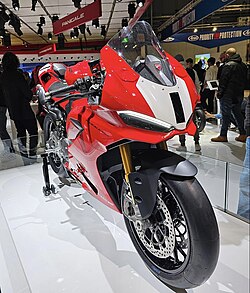
Ducati Panigale V2: The New Generation of Ducati’s V-Twin Superbike
The Ducati Panigale V2 occupies a fascinating position in Ducati’s modern motorcycle range. It carries the unmistakable Panigale name and retains the emotional appeal of a 90-degree V-twin, yet the latest generation represents a major technical departure from the previous Panigale V2. Instead of the older 955 cc Superquadro engine, Ducati has introduced a completely new 890 cc V2 that is lighter, more compact and equipped with variable intake valve timing. The result is a motorcycle designed to deliver genuine Ducati superbike character without simply trying to replicate the enormous peak performance of the Panigale V4. Ducati describes the new engine as the lightest twin-cylinder engine it has ever produced, weighing approximately 54.4 kg, while the European-market Panigale V2 produces 120 hp at 10,750 rpm and 93.3 Nm of torque at 8,250 rpm.
The significance of the new Panigale V2 goes beyond its engine displacement. Ducati has effectively rethought what a middleweight sports motorcycle should be. The new V2 combines a lightweight aluminum monocoque chassis, modern racing ergonomics, sophisticated electronics, fully adjustable suspension and a substantial braking package in a motorcycle that is considerably more approachable than the company’s flagship V4. It is still unmistakably a Panigale, but its appeal is broader: rather than requiring a racetrack to make sense, the V2 is intended to provide an engaging experience on the road while retaining serious track-day potential. The motorcycle therefore represents an important continuation of Ducati’s twin-cylinder tradition at a time when the company’s most powerful superbikes are increasingly defined by four-cylinder technology.
A New Chapter for the Panigale V2
Moving Beyond the 955 cc Superquadro
Previous generations of the Panigale V2 were powered by Ducati’s 955 cc Superquadro V-twin, an engine that developed substantial performance and gave the motorcycle a close connection to Ducati’s traditional superbike philosophy. The latest V2 changes that formula dramatically. Ducati developed a new 890 cc 90-degree V2, using a chain-driven double-overhead-camshaft design and an electronically controlled variable valve-timing system on the intake side. The company says the new engine weighs only 54.4 kg, making it the lightest twin-cylinder engine ever produced by Ducati.
Reducing engine mass is particularly valuable on a sports motorcycle because weight at the center of the machine influences much more than the number shown on a specification sheet. A lighter engine can contribute to a more compact motorcycle and help reduce the overall effort required to change direction. Ducati’s engineers have therefore approached the new V2 as both a powerplant and a structural component of the motorcycle’s overall weight-saving strategy.
The reduction in displacement might initially appear surprising, particularly when compared with the previous 955 cc engine. However, Ducati’s objective was not simply to produce a smaller motorcycle. The new V2 has been designed to provide a broad spread of torque and a strong top-end performance while meeting modern emissions requirements. Ducati states that the engine is Euro 5+ homologated and uses variable intake valve timing to improve torque delivery throughout the rev range.
The Character of a 90-Degree V-Twin
The 90-degree V-twin remains central to the motorcycle’s identity. Ducati has used this architecture across generations of motorcycles, and it provides a combination of compact packaging, distinctive exhaust character and strong mechanical personality that cannot be duplicated simply by increasing the number of cylinders.
The new engine has a 96 mm bore and 61.5 mm stroke, together with a 13.1:1 compression ratio. Its 120 hp peak output may seem modest beside the 200-plus-horsepower figures associated with flagship superbikes, but that comparison misses the purpose of the Panigale V2. A lighter and less intimidating motorcycle can often be more entertaining on real roads because the rider can access a greater proportion of its performance. Ducati’s published figures emphasize torque delivery across the rev range as one of the engine’s defining characteristics.
The New 890 cc Ducati V2 Engine
Variable Valve Timing
One of the most important technical features of the new V2 is its Intake Variable Timing system. Instead of optimizing the valve timing around one particular engine speed, the system allows Ducati to alter the intake-valve timing as operating conditions change. This gives the engine greater flexibility and allows engineers to balance low- and midrange torque with high-rpm performance.
That characteristic is particularly appropriate for a road-focused sports motorcycle. On public roads, a rider spends much of the time away from the engine’s absolute maximum rpm. Strong torque and predictable response can therefore be more useful than an extreme peak-power figure. When the road opens up and the revs rise, however, the engine is still designed to provide the kind of energetic top-end behavior expected from a Panigale.
The engine also uses hollow-stem intake valves and advanced surface treatments on components such as the rocker arms. These details illustrate Ducati’s focus on reducing internal friction and weight while maintaining the durability necessary for a production motorcycle. Ducati’s technical information identifies the engine as a 90-degree V2 with four valves per cylinder, liquid cooling and electronically controlled intake variable valve timing.
Ride-by-Wire and Quick Shift
The Panigale V2 uses full ride-by-wire throttle control, giving its electronic management system precise control over engine response. The motorcycle is equipped with Ducati Quick Shift 2.0 as standard, allowing clutchless upshifts and downshifts. The six-speed gearbox is therefore an integral part of the motorcycle’s sporting character rather than simply a means of transferring engine power to the rear wheel.
The wet multiplate clutch incorporates hydraulic actuation, an assist function and an anti-hopping system. This arrangement helps control rear-wheel behavior during aggressive downshifts while also making the clutch easier to operate. For riders who use the motorcycle on a circuit, that combination can make repeated braking and downshifting sequences considerably smoother.
Lightweight Chassis and Handling
Aluminum Monocoque Construction
The Panigale V2 uses an aluminum monocoque chassis, continuing Ducati’s distinctive approach to lightweight structural design. Rather than surrounding the engine with a traditional full perimeter frame, the architecture makes the engine an important part of the motorcycle’s structural arrangement. Ducati can consequently concentrate mass around the center of the motorcycle while keeping the chassis compact.
The result is a machine that feels substantially different from larger superbikes. The new V2 has a wet weight without fuel of approximately 176 kg in the European specification, while Ducati’s U.S. specification lists 388 lb. The difference in published figures across markets illustrates why weight figures should always be compared using the same measurement standard.
For riders, the important point is that the motorcycle has been developed around manageable mass rather than simply chasing engine output. A lighter motorcycle can brake later, change direction with less effort and place fewer demands on its tires and suspension. This is particularly valuable on twisty roads and medium-speed circuits where outright horsepower is not always the determining factor.
Suspension Options
The standard Panigale V2 is equipped with a fully adjustable 43 mm Marzocchi inverted fork at the front and a Kayaba rear shock. This gives owners the ability to tailor suspension behavior to riding style, rider weight and conditions.
For riders seeking a higher specification, Ducati offers the Panigale V2 S. The S model replaces the standard suspension with Öhlins equipment, including a 43 mm Öhlins NIX30 fork and an Öhlins rear shock. This is an important distinction for track-focused riders because suspension quality and adjustability can have a profound effect on how confidently a motorcycle communicates grip and responds to setup changes.
Brakes, Wheels and Tires
Serious Stopping Power
The Panigale V2 has been designed around strong braking performance, as expected from a motorcycle carrying the Panigale name. The braking system works together with cornering-aware electronic assistance, allowing the motorcycle to manage braking more intelligently when the rider is leaned over.
The objective is not merely to prevent wheel lock. Modern electronic braking systems are increasingly designed to help preserve stability and confidence during aggressive braking. That matters particularly on a sports motorcycle because riders frequently transition from maximum acceleration to hard braking within a very short distance.
Lightweight Wheels and Pirelli Tires
Ducati fits the new Panigale V2 with lightweight six-spoke Y-shaped aluminum wheels. Standard tires are Pirelli Diablo Rosso IV units, measuring 120/70 ZR17 at the front and 190/55 ZR17 at the rear. Ducati also notes that riders seeking maximum track performance can use slick tires, including a 190/60 rear size associated with the Supersport World Championship.
The relatively narrow rear tire compared with some larger superbikes is another clue to the motorcycle’s philosophy. The V2 is intended to maintain agility and usable performance rather than simply maximizing the size of every component. Tire profile, chassis geometry and suspension are designed as a complete system.
Advanced Electronics
Technology Derived From the Panigale V4
The Panigale V2’s electronics package draws heavily from technology developed for the Panigale V4. Ducati equips the motorcycle with Cornering ABS, traction control, wheelie control and engine-braking management, all coordinated through sophisticated electronic systems and presented to the rider through a 5-inch color TFT display. Ducati says the display allows riders to adjust the levels of several electronic systems while riding.
This is one of the strongest arguments for the new V2. The motorcycle does not require the rider to sacrifice modern electronic assistance simply because it uses a smaller engine. Instead, Ducati has effectively brought much of the technological philosophy of its flagship superbike into a lighter and more accessible package.
The electronic systems are particularly useful because the V2 is still a high-performance motorcycle. Even 120 hp is considerable in a machine weighing roughly 176 kg without fuel. Traction control and wheelie control can therefore provide meaningful assistance when acceleration is aggressive, while cornering ABS can add another layer of confidence during hard braking.
Riding Modes
The electronic package is organized around riding modes that allow the motorcycle’s response to be adapted to different situations. A rider commuting through town does not need the same throttle response and intervention strategy as someone riding on a racetrack, and Ducati’s software allows those differences to be accommodated.
This adaptability also makes the motorcycle easier to live with. The Panigale V2 remains a focused sports machine, but it is not forced to behave aggressively in every circumstance. That flexibility is an important part of its appeal because it allows the motorcycle to be used for spirited road riding as well as occasional track sessions.
Design and Ergonomics
unmistakably Panigale
Visually, the new Panigale V2 clearly belongs to Ducati’s superbike family. The bodywork is compact and aerodynamic, with sharp surfaces and a purposeful riding position. However, Ducati has worked to make the latest generation more approachable ergonomically rather than simply creating a miniature version of the most extreme Panigale V4.
The seat height is approximately 837 mm, and Ducati describes the new ergonomic triangle as modern, with a relatively contained difference between seat and handlebar height. The intention is to give the rider good front-end feedback without placing excessive weight on the wrists.
That is an important distinction for road riders. A motorcycle can be extremely fast while still being physically exhausting, and excessive pressure on the hands or an overly aggressive riding position can quickly become tiring. Ducati’s approach with the V2 suggests that the company wants this Panigale to be used for longer real-world rides rather than only short bursts around a racetrack.
Managing Heat
Thermal comfort has also received attention. A high-performance motorcycle inevitably produces heat, particularly when ridden slowly in traffic, but Ducati has worked on the V2’s thermal management so that the rider is not subjected to unnecessary discomfort. The company’s feature list specifically identifies thermal comfort as one of the motorcycle’s major development areas.
This might seem like a minor consideration compared with engine power or suspension specifications, but it can make a substantial difference to everyday ownership. A motorcycle intended for road use must function in traffic, urban environments and warm weather, not just at racing speeds with constant airflow.
Panigale V2 vs. Panigale V4
Different Bikes for Different Riders
It is tempting to view the Panigale V2 simply as a cheaper or less powerful Panigale V4, but that interpretation does not really capture its purpose. The two motorcycles offer different experiences. The V4 is designed around extraordinary outright performance and a 1,103 cc four-cylinder engine, while the V2 emphasizes lightness, manageability and the distinctive character of a twin-cylinder engine.
The V2’s 120 hp is obviously far below the output of the flagship V4, but that is precisely what makes the smaller motorcycle interesting. A rider can explore more of its performance on public roads without immediately reaching speeds that are completely detached from normal riding conditions. On a tight circuit, the lighter V2 can also be extremely rewarding because corner speed, braking technique and momentum become more important than simply maximizing horsepower.
Why the V2 Still Matters
Ducati’s continued investment in a dedicated V2 engine is also significant from a historical perspective. The company has built much of its identity around twin-cylinder motorcycles, and the new engine demonstrates that Ducati does not regard the V-twin as merely a nostalgic technology. Instead, the architecture has been redesigned using modern variable valve timing, advanced materials and contemporary electronic control.
The new V2 is therefore simultaneously traditional and modern. Its 90-degree layout preserves a fundamental Ducati characteristic, while its variable valve timing and lightweight construction demonstrate how that architecture can evolve for current emissions and performance requirements. Ducati explicitly describes the engine as a continuation of a twin-cylinder tradition stretching from the Pantah through later Desmodue, Desmoquattro, Testastretta and Superquadro generations.
Ducati Panigale V2 Technical Specifications
The following table summarizes key specifications for the current-generation Panigale V2. Figures can vary by market and model configuration, so the table uses Ducati’s European/global specifications where available. Ducati lists the standard motorcycle at 176 kg wet without fuel, while some regional pages display approximately 179 kg depending on market specification.
| Specification | Ducati Panigale V2 |
|---|---|
| Engine | Ducati V2, 90° V-twin |
| Cooling | Liquid-cooled |
| Valve system | 4 valves per cylinder, DOHC |
| Valve timing | Intake variable valve timing |
| Displacement | 890 cc |
| Bore × stroke | 96 × 61.5 mm |
| Compression ratio | 13.1:1 |
| Maximum power | 120 hp (88 kW) @ 10,750 rpm |
| Maximum torque | 93.3 Nm / 69 lb-ft @ 8,250 rpm |
| Fuel system | Electronic injection, one injector per cylinder |
| Throttle | Full ride-by-wire |
| Transmission | 6-speed |
| Quick shifter | Ducati Quick Shift up/down 2.0 |
| Clutch | Wet multiplate, hydraulic, assist and anti-hopping |
| Frame | Aluminum monocoque |
| Front suspension | 43 mm fully adjustable Marzocchi fork |
| Rear suspension | Fully adjustable Kayaba shock |
| Front brakes | Twin-disc Brembo system |
| Rear brake | Disc with two-piston caliper |
| Front tire | Pirelli Diablo Rosso IV 120/70 ZR17 |
| Rear tire | Pirelli Diablo Rosso IV 190/55 ZR17 |
| Front wheel | 3.50 × 17-inch aluminum |
| Rear wheel | 6.00 × 17-inch aluminum |
| Seat height | 837 mm |
| Fuel capacity | 15 litres |
| Wet weight without fuel | Approx. 176 kg |
| Display | 5-inch color TFT |
| Electronics | Cornering ABS, traction control, wheelie control, engine-brake control |
| Emissions | Euro 5+ |
Final Verdict
The Ducati Panigale V2 is an intriguing interpretation of the modern sports motorcycle because it refuses to measure its success solely by horsepower. Its new 890 cc V2 engine produces 120 hp, but the motorcycle’s real strengths are its low engine weight, compact chassis, responsive handling, sophisticated electronics and unmistakable twin-cylinder character. Ducati has created a machine that sits below the Panigale V4 in outright performance while remaining thoroughly serious about sporting ability.
The new engine is perhaps the most important part of the story. By combining a 90-degree V-twin layout with variable intake valve timing, modern materials and advanced electronic management, Ducati has shown that its twin-cylinder tradition can evolve rather than simply disappear. The engine is significantly lighter than its predecessors, and that weight saving contributes to the overall character of the motorcycle.
The chassis reinforces the same philosophy. The aluminum monocoque construction, adjustable Marzocchi and Kayaba suspension, lightweight wheels and Pirelli tires create a package focused on agility rather than brute force. The Panigale V2 is designed to reward smooth inputs, precise cornering and momentum, qualities that can make a lighter motorcycle more satisfying than a much more powerful machine when the road becomes technical.
For riders who want the prestige and design of a Ducati Panigale but do not need the extraordinary output of a V4 superbike, the V2 makes a compelling argument. It is fast enough to be genuinely exciting, light enough to feel agile, sophisticated enough to provide modern electronic assistance and distinctive enough to retain the emotional appeal that has always defined Ducati.
Ultimately, the Panigale V2 demonstrates that superbike performance does not have to be defined by the biggest engine or the highest horsepower number. Its appeal comes from balance: a lightweight V-twin, focused chassis, advanced electronics, strong brakes and unmistakable Italian design working together as one coherent motorcycle. In an era when performance figures continue to climb, the Panigale V2 makes a persuasive case for something different—the idea that the most rewarding sports motorcycle may be the one that gives its rider the greatest opportunity to use what it has.
