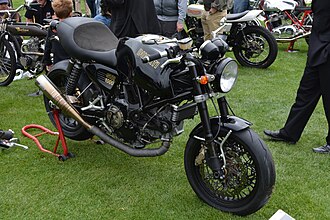
Ducati SportClassic: The Modern Classic That Reimagined Ducati’s Golden Era
The Ducati SportClassic is one of the most distinctive modern interpretations of Ducati’s historic motorcycle designs. Introduced during the mid-2000s, the SportClassic family combined the unmistakable mechanical character of Ducati’s air-cooled L-twin engine with styling inspired by the company’s celebrated motorcycles of the early 1970s. Rather than simply reproducing an old design, Ducati created a family of contemporary motorcycles that deliberately mixed classic visual cues with modern chassis technology, electronic fuel injection and the performance of the 992cc Desmodue engine. The result was a motorcycle range that looked backward while remaining fundamentally a product of its time.
The SportClassic name covered several related models, most notably the Paul Smart 1000 LE, Sport 1000, Sport 1000 S and GT1000. Ducati officially describes the family as a modern interpretation of its first generation of 1970s twin-cylinder motorcycles. The Paul Smart was inspired by the 750 SS Desmo associated with Ducati’s famous 1972 Imola victory, the Sport recalled the 1972 Sport, and the GT1000 drew its visual inspiration from the 750 GT introduced in 1971.
The family first appeared as a concept at the 2003 Tokyo Motor Show, with production motorcycles arriving for the 2006 model year. Production continued into 2010, when the final GT1000 examples brought the SportClassic era to a close.
What makes these motorcycles particularly interesting today is the way Ducati managed to combine several seemingly contradictory qualities. They look like motorcycles from the 1970s, but they have fuel injection, six-speed transmissions, modern disc brakes and contemporary suspension components. They are unmistakably retro, yet their 992cc V-twin gives them considerably more performance than their classic appearance suggests.
The Birth of the SportClassic Family
From the 1970s to the 2000s
Ducati’s decision to revisit its early 1970s motorcycles came at a time when retro styling was becoming increasingly influential in the motorcycle industry. The company already had considerable experience with modern interpretations of its heritage, particularly through the MH900e designed by Pierre Terblanche. The SportClassic family continued that design philosophy, but instead of focusing on one historic motorcycle, Ducati created an entire range.
The design brief was unusually clear: take inspiration from the first generation of Ducati’s famous large-capacity V-twins and reinterpret those motorcycles for the modern era. The result was a family with three distinct personalities. The Paul Smart 1000 LE was the most overtly sporting and exclusive model, the Sport 1000 was a stripped-back café-racer-style machine, and the GT1000 was the more practical road-going interpretation. Ducati’s own historical archive identifies these three design directions as deliberate references to the company’s 1970s twin-cylinder heritage.
This was not simply a cosmetic exercise. The SportClassics shared the same fundamental 992cc air-cooled L-twin engine, but Ducati changed suspension, seating, handlebars, bodywork, clutch configuration and other details to create meaningful differences between the models.
That approach gave the range an unusual breadth. A rider interested in classic styling could choose a motorcycle that leaned toward café-racer aesthetics, racing nostalgia or relaxed touring.
The 992cc Desmodue Engine
Classic Architecture With Modern Fuel Injection
At the heart of the SportClassic range was Ducati’s 992cc air-cooled 90-degree L-twin. The engine used a 94mm bore and 71.5mm stroke, a 10.0:1 compression ratio and two desmodromically operated valves per cylinder. Electronic fuel injection was supplied through 45mm throttle bodies.
The engine was part of Ducati’s 1000 DS, or Dual Spark, family, and its character was considerably different from that of a modern high-revving superbike. Rather than chasing huge peak horsepower figures, the air-cooled twin emphasized usable midrange torque and a strong, immediate response.
Ducati quoted approximately 92 horsepower at 8,000 rpm and 91 Nm of torque at 6,000 rpm. Those figures may seem moderate compared with contemporary superbikes, but they are extremely well suited to the SportClassic concept. The engine has enough performance to make the motorcycle genuinely fast while retaining the physical and mechanical character associated with an air-cooled Ducati twin.
The desmodromic valve system is particularly important to the motorcycle’s identity. Instead of relying solely on conventional valve springs for closing the valves, Ducati’s system mechanically controls both opening and closing. Combined with the 90-degree cylinder arrangement, the result is an engine that feels and sounds unmistakably Ducati.
The Sound and Character of the L-Twin
A major part of the SportClassic experience comes from the engine’s personality. The air-cooled V-twin produces a deep, uneven exhaust note and a strong pulse through the chassis. It does not need extreme engine speeds to become entertaining. Instead, the rider can exploit the broad torque curve while working through the six-speed transmission.
The engine’s relatively straightforward architecture also contributes to the visual appeal of the motorcycle. The cylinders, cooling fins, belt covers and exposed mechanical components are all visible, reinforcing the connection between the motorcycle and Ducati’s earlier machines.
In an age when many performance motorcycles were becoming increasingly enclosed by bodywork and electronic systems, the SportClassic retained a strong mechanical presence.
The Paul Smart 1000 LE
A Tribute to the 1972 Imola Victory
The most historically significant member of the family is arguably the Paul Smart 1000 LE. Ducati created this limited-edition motorcycle as a tribute to Paul Smart’s victory at the 200-mile Imola race in 1972, where he rode a Ducati 750 Imola Desmo to a landmark victory. The modern motorcycle deliberately echoed the appearance of that racing machine, including its half fairing, café-racer tail and distinctive green-and-silver color scheme.
The Paul Smart was produced for the 2006 model year as a limited edition, with Ducati’s historical material identifying a production run of 2,250 motorcycles.
Its chassis was also the most sophisticated in the SportClassic family. The motorcycle received fully adjustable Öhlins suspension, including a 43mm upside-down front fork and a fully adjustable Öhlins rear shock. The dry weight was approximately 181kg, while wheelbase measured 1,425mm.
The model therefore went beyond appearance. Its suspension specification gave it a more serious sporting character than the standard GT1000, while the riding position and half fairing reinforced the café-racer theme.
The Sport 1000
A Modern Café Racer
The standard Sport 1000 was perhaps the purest expression of the SportClassic idea. It stripped away much of the practical equipment and concentrated on the visual language of a 1970s Ducati sporting motorcycle.
The early 2006 Sport 1000 featured a single seat, low clip-on handlebars, a single rear shock and a dry clutch. Later versions changed considerably. The Sport 1000 Biposto introduced a passenger seat, taller handlebars, a wet clutch and a twin-shock rear suspension arrangement.
This evolution is important when looking at used or collectible Sport 1000s because motorcycles carrying the same basic name can have noticeably different specifications depending on the production year.
The motorcycle’s visual simplicity remains its greatest attraction. Wire-spoke wheels, exposed trellis-frame tubes, a sculpted fuel tank and the large air-cooled V-twin create a combination that looks immediately recognizable as Ducati while also appearing to belong to another era.
The Sport 1000 S
Adding a Half Fairing to the Formula
The Sport 1000 S took the standard Sport 1000 concept and added a half fairing inspired by Ducati’s early 1970s racing motorcycles. It occupied an interesting middle ground between the stripped-back Sport and the fully road-oriented GT1000.
The fairing dramatically changed the motorcycle’s appearance while preserving the underlying mechanical architecture. It gave the Sport 1000 S a more purposeful silhouette and strengthened the connection to the Paul Smart 1000 LE.
The model was offered from 2007 through the end of the Sport 1000 family production period, with details changing between versions and markets. The combination of café-racer styling and the torquey 992cc engine made it one of the most visually distinctive members of the range.
For riders who wanted the sporting appearance without the limited-edition status of the Paul Smart, the Sport 1000 S provided an alternative route into the SportClassic concept.
The GT1000
The Practical Member of the Family
The GT1000 was perhaps the most understated SportClassic, and it was also the model that remained in production the longest. Ducati styled it after the company’s original 750 GT, giving it a more upright riding position, conventional handlebar and twin rear shocks.
Compared with the low-slung Sport 1000, the GT1000 was much more suitable for everyday road use. Its riding position was less committed, its seat was more accommodating and its overall presentation emphasized the idea of a classic road motorcycle rather than a café racer.
Ducati’s historical archive notes that the GT1000 became the most produced member of the SportClassic family, and the final examples were built in 2010.
The GT1000 therefore provides an interesting reminder that the SportClassic concept was not exclusively about nostalgia or sporting style. Ducati also wanted to recreate the character of its classic road motorcycles in a package capable of handling modern traffic and everyday riding.
Chassis and Suspension
A Trellis Frame With Modern Hardware
Although the SportClassics were visually inspired by older Ducatis, their chassis technology was thoroughly contemporary for the period. The motorcycles used tubular steel trellis frames, one of Ducati’s signature structural designs.
The basic wheelbase was approximately 1,425mm on most versions, although the earliest Sport 1000 and Paul Smart configurations used a longer 1,462mm figure according to commonly cited specifications. The steering geometry was approximately 24 degrees of rake with 92mm of trail.
The combination of a relatively compact wheelbase and wide 17-inch wheels gave the motorcycles responsive road manners. Unlike the narrow tires and smaller wheels of many genuine 1970s motorcycles, the SportClassics used contemporary radial tire dimensions: 120/70 R17 at the front and 180/55 R17 at the rear. (Specs Motorcycles)
That difference is crucial. The motorcycles look old-fashioned, but their contact with the road is much more modern.
Suspension specifications varied considerably between models. The Sport 1000 and GT1000 used 43mm upside-down front forks, while the Paul Smart received fully adjustable Öhlins equipment. The GT1000 used twin rear shocks, while the Sport 1000 and Paul Smart used single-shock arrangements in their early configurations.
Braking and Wheels
The SportClassic range combined wire-spoke wheels with modern disc brakes. At the front were twin 320mm semi-floating discs, while the rear used a 245mm disc. The exact caliper arrangement varied slightly between versions, but the overall system provided substantially more braking capability than the drum-brake systems found on the 1970s motorcycles that inspired the styling.
The wire wheels were an important visual element. Ducati managed to retain the traditional spoke-wheel appearance while using dimensions appropriate for modern road tires. This was one of the details that made the SportClassic concept work so effectively: the motorcycles did not simply reproduce old technology but reproduced the appearance of classic components while incorporating modern performance where appropriate.
Design by Pierre Terblanche
Retro Without Being a Direct Replica
The SportClassic motorcycles were designed under Ducati design chief Pierre Terblanche, whose work was often characterized by a willingness to reinterpret Ducati history rather than reproduce it literally. The SportClassic family demonstrates this philosophy particularly well.
The fuel tanks, seats, exhaust systems, fairings and frames clearly reference historic Ducati motorcycles, but the proportions are adapted to modern mechanical components. The result is neither a conventional modern motorcycle with retro accessories nor an exact replica of a 1970s machine.
That distinction is important. The SportClassic was a product of the early 2000s and reflects the design language of that period. The bodywork is cleaner, the tires are wider and the chassis components are much more advanced than those of the original motorcycles that inspired it.
This combination has allowed the SportClassics to age in an interesting way. Rather than looking exactly like an old motorcycle, they now have the appearance of a motorcycle from a specific historical moment when manufacturers were experimenting with modern interpretations of their own heritage.
What Makes the SportClassic Special?
The SportClassic’s appeal comes from the way its elements reinforce one another. The air-cooled 992cc engine provides the mechanical centerpiece, the trellis frame establishes Ducati identity, the spoke wheels deliver the classic appearance and the bodywork connects each version to a specific chapter of Ducati racing or road-bike history.
At the same time, the motorcycle does not behave like a 1970s motorcycle. Fuel injection makes starting and throttle response considerably more convenient, six gears make longer-distance riding easier and modern suspension and brakes provide capabilities that were unavailable on many of the motorcycles that inspired the design.
The result is a motorcycle that occupies a fascinating middle ground. It is not a vintage Ducati, but it does not try to be an ordinary contemporary Ducati either.
The SportClassic Legacy
The SportClassic family was relatively short-lived, with production spanning approximately 2006 to 2010. The Paul Smart existed only for 2006, the Sport 1000 family continued through the late 2000s, and the GT1000 survived until 2010.
Despite that relatively brief production period, the motorcycles have developed a strong following among enthusiasts because they represent a particularly distinctive approach to motorcycle design. They arrived before the modern retro motorcycle market became as extensive as it is today, making the SportClassics an early example of a major manufacturer deliberately mining its own history for design inspiration.
The Paul Smart in particular has become closely associated with Ducati’s Imola heritage, while the GT1000 and Sport 1000 demonstrate how the same mechanical foundation could be adapted to very different riding styles.
Perhaps the most interesting aspect of the range is that Ducati did not attempt to make one motorcycle satisfy every customer. Instead, it created several interpretations of the same basic idea. The result was a family that could appeal to café-racer enthusiasts, classic-bike admirers and riders who wanted something more practical.
Ducati SportClassic Technical Specifications
Because the SportClassic name covers several models, the table below summarizes the core specifications shared across the range, followed by the principal differences between the major versions. Individual model years and markets can vary, particularly in suspension, clutch and rear-suspension configuration.
| Specification | Ducati SportClassic Range |
|---|---|
| Manufacturer | Ducati |
| Production | 2006–2010 |
| Main models | Paul Smart 1000 LE, Sport 1000, Sport 1000 S, GT1000 |
| Engine | Air-cooled 90° L-twin, 4-stroke |
| Valve train | SOHC, desmodromic, 2 valves per cylinder |
| Displacement | 992cc |
| Bore × stroke | 94 × 71.5mm |
| Compression ratio | 10.0:1 |
| Fuel system | Marelli electronic fuel injection |
| Throttle bodies | 45mm |
| Claimed maximum power | Approximately 92 hp at 8,000 rpm |
| Maximum torque | Approximately 91 Nm at 6,000 rpm |
| Transmission | 6-speed |
| Primary drive | Straight-cut gears |
| Final drive | Chain |
| Clutch | Dry or wet multiplate, depending on model/year |
| Frame | Tubular steel trellis |
| Front suspension | 43mm upside-down fork |
| Rear suspension | Single shock or twin shocks, depending on model |
| Paul Smart front suspension | Fully adjustable Öhlins 43mm USD fork |
| Paul Smart rear suspension | Fully adjustable Öhlins monoshock |
| Front brakes | Twin 320mm discs |
| Rear brake | 245mm disc |
| Front tire | 120/70 R17 |
| Rear tire | 180/55 R17 |
| Typical wheelbase | 1,425mm |
| Paul Smart dry weight | Approximately 181kg |
| Sport 1000 dry weight | Approximately 179kg |
| GT1000 dry weight | Approximately 183kg |
| Seat height | Approximately 810–825mm |
| Fuel capacity | 15 litres |
| Claimed top speed | Approximately 217 km/h |
Final Thoughts
The Ducati SportClassic is a fascinating example of how a motorcycle manufacturer can reinterpret its own history without simply reproducing it. Introduced in the mid-2000s, the range took inspiration from Ducati’s formative 1970s twin-cylinder motorcycles and combined those visual themes with the company’s modern 992cc air-cooled Desmodue engine, electronic fuel injection, six-speed gearbox, trellis frame and contemporary braking technology.
The result was a family rather than a single motorcycle. The Paul Smart 1000 LE emphasized Ducati’s racing heritage, the Sport 1000 embraced the café-racer aesthetic, the Sport 1000 S added a distinctive half fairing, and the GT1000 offered a more relaxed interpretation of the same basic formula. Ducati’s own historical account emphasizes these different connections to the company’s early 1970s twins. (Ducati)
More than anything, the SportClassic demonstrates the enduring appeal of the air-cooled Ducati V-twin. The engine provides the mechanical character, while the styling gives each motorcycle an immediate connection to Ducati’s past. Yet beneath the retro exterior is a motorcycle capable of modern road speeds and equipped with technology that makes it far more usable than an actual 1970s Ducati.
That mixture explains why the SportClassic remains such an intriguing machine. It belongs to neither the vintage era nor the fully modern era. Instead, it represents a moment when Ducati looked back at some of its most influential motorcycles and asked what those machines might have become if they had been developed for a new generation.
The answer was the SportClassic: a motorcycle with the soul of a classic Ducati, the mechanical character of an air-cooled L-twin and the capabilities of a thoroughly modern motorcycle.
