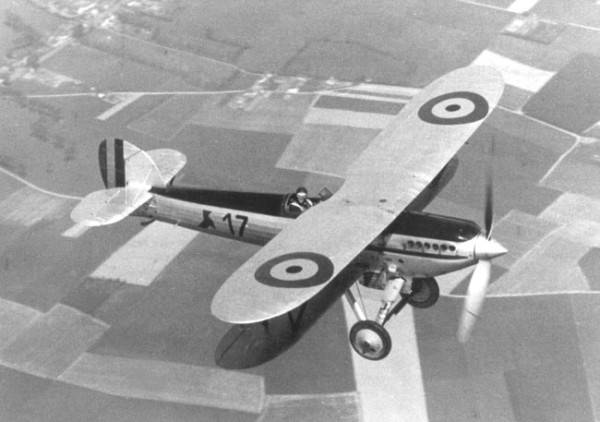
The Fairey Firefly IIM represented a post-war evolution of the Royal Navy’s well-regarded Firefly family, adapting a proven airframe to the emerging realities of Cold War naval aviation. While the original Firefly gained its reputation as a carrier-based reconnaissance and strike aircraft during the Second World War, the IIM variant was developed to meet more specialized requirements for modernized fleet operations, particularly long-range maritime patrol, anti-submarine cooperation, and advanced training within the Fleet Air Arm. The “IIM” suffix signified a refined multirole aircraft that retained the structural philosophy of its predecessors while integrating improved systems, updated structural reinforcements, and revised internal arrangements suitable for new mission profiles in an era increasingly shaped by jet aviation and submarine threats.
Airframe design and structural characteristics
The Firefly IIM maintained the unmistakable profile of the Firefly series, marked by its mid-mounted straight wing, broad fuselage, and twin-seat cockpit configuration arranged in tandem. The airframe was built using all-metal stressed-skin construction, primarily aluminum alloy, providing an optimal balance between strength and weight while ensuring resistance to corrosion in maritime environments. The wings featured a robust folding mechanism, allowing the aircraft to be stored efficiently within the confined hangar decks of British aircraft carriers. Structural reinforcements were applied around the wing roots and landing gear attachment points to accommodate higher operational stresses, particularly during catapult-assisted carrier launches and arrested recoveries. The empennage consisted of a conventional single fin and tailplane layout, delivering stable longitudinal and directional control across a wide speed envelope.
Powerplant and propulsion systems
Power for the Fairey Firefly IIM was supplied by a liquid-cooled Rolls-Royce Griffon inline piston engine, chosen for its high power output and operational reliability. The engine developed approximately 2,300 horsepower, driving a large four-bladed constant-speed propeller that optimized thrust across varying airspeeds and altitudes. This propulsion system gave the Firefly IIM respectable performance for a piston-engine naval aircraft, ensuring strong climb rates, reliable deck takeoff capability, and effective low-level maneuverability for maritime patrol. The engine installation incorporated advanced cooling arrangements, including prominent radiators and oil coolers integrated into the fuselage and wing roots to maintain thermal efficiency during prolonged low-speed flight over open water.
Dimensions, weights, and structural measurements
In terms of physical specifications, the Fairey Firefly IIM had an overall length of approximately 12.8 meters, with a wingspan of around 16.5 meters when unfolded and significantly reduced when folded for carrier storage. The aircraft stood roughly 4.4 meters high at the tail, with a wing area of about 45 square meters supporting stable low-speed handling characteristics. Typical empty weight was in the region of 5,200 kilograms, while maximum takeoff weight approached 7,900 kilograms depending on fuel load and external stores configuration. These dimensions provided the Firefly IIM with a balanced airframe suitable for extended carrier deployments without compromising stability or structural resilience.
Cockpit configuration and crew ergonomics
The Firefly IIM was designed with a two-seat arrangement, placing the pilot in the forward cockpit and the observer or radar operator in the rear. This layout supported integrated mission operations, particularly maritime reconnaissance and anti-submarine roles that required coordinated visual and sensor-based observation. The cockpit featured robust armor protection around critical areas and was fitted with a comprehensive suite of analog instruments, radio communication systems, and navigation aids suited to all-weather operations. Large glazed canopy panels offered excellent outward visibility for both crew members, essential for carrier landings and visual target acquisition over open seas.
Avionics and onboard systems
The avionics suite of the Firefly IIM reflected the transitional period of aviation technology in the late 1940s and early 1950s. It incorporated enhanced navigation radios, improved intercom systems, and radar equipment allowing detection of surface and sub-surface threats. The rear cockpit often housed specialized equipment for maritime patrol, including radar displays and plotting instruments. Electrical and hydraulic systems were upgraded compared to earlier Firefly variants, improving reliability and reducing maintenance cycles during prolonged carrier operations.
Armament and mission payload
The Fairey Firefly IIM retained a significant offensive capability despite its increased emphasis on reconnaissance and patrol roles. Fixed forward armament typically included four 20 mm Hispano cannons mounted in the wings, providing formidable firepower for surface attack or limited air combat. The aircraft was also capable of carrying a wide array of external stores, including depth charges, bombs, unguided rockets, and auxiliary fuel tanks mounted under the wings. With a total external payload capacity exceeding 900 kilograms, the Firefly IIM could adapt its loadout to suit anti-submarine warfare, close air support, or long-range reconnaissance missions.
Flight performance and handling characteristics
Performance data highlighted the Firefly IIM’s role as a versatile and dependable carrier aircraft. Maximum speed was approximately 510 km/h at optimal altitude, while cruising speed for maritime patrol missions typically ranged between 320 and 370 km/h. Service ceiling was around 9,100 meters, with an operational range of approximately 2,000 kilometers when configured with external fuel tanks. Takeoff and landing characteristics were optimized for carrier use, supported by strong low-speed lift capability and predictable stall behavior. These qualities made the Firefly IIM particularly effective for extended patrol flights over open water and confident operations in turbulent maritime conditions.
Operational service and deployment roles
The Firefly IIM entered service with the Royal Navy as part of its post-war modernization program and became a staple aircraft for fleet air squadrons during the early Cold War period. It operated extensively from British carriers and overseas bases, contributing to maritime surveillance, anti-submarine exercises, and joint fleet operations. The aircraft also found service with allied navies and air forces, further demonstrating its adaptability and robust design for multinational operational environments.
Strengths, limitations, and technical legacy
The primary strengths of the Fairey Firefly IIM included its long operational range, durable airframe, and flexible mission profile. It successfully bridged the technological gap between wartime piston aircraft and the emerging jet-powered generation, providing valuable service during an era of doctrinal transition. However, the rapid advancement of jet aviation ultimately rendered piston-engine carrier aircraft increasingly obsolete, limiting its long-term frontline viability. Despite this, the Firefly IIM remains an important benchmark in naval aviation history, illustrating the refinement of propeller-driven carrier aircraft design at the peak of its maturity.
Conclusion
The Fairey Firefly IIM stands as a technically sophisticated naval aircraft that embodied the culmination of British piston-engine carrier aviation. Through its advanced structural design, powerful Griffon engine, and versatile operational capabilities, it provided the Royal Navy with a reliable platform for maritime dominance and tactical awareness. Its technical achievements and operational record reflect a deliberate balance between innovation, practicality, and durability, securing its place as a significant contributor to post-war naval air power development.
