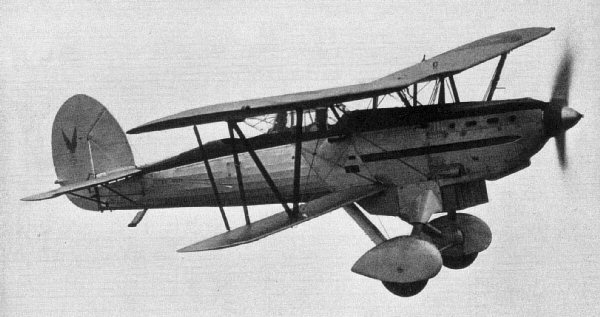
The Fairey Fox was a groundbreaking British light bomber and reconnaissance aircraft developed during the 1920s, notable for its pioneering use of high-performance engines and innovative design features that set new standards for military aviation of its era. Conceived as a private venture by Fairey Aviation, the Fox was intended to meet the demands of the Royal Air Force (RAF) and foreign air services for a fast, versatile bomber capable of performing multiple roles including reconnaissance, light bombing, and ground attack. The aircraft’s development marked a departure from the slower, more cumbersome biplanes typical of World War I, integrating aerodynamic refinements and powerful Rolls-Royce engines that gave it a distinct advantage in speed and maneuverability. Its introduction played a significant role in shaping interwar military aviation doctrine and demonstrated the potential of light bombers as rapid strike platforms.
Airframe design and construction
The Fairey Fox was a biplane featuring a conventional two-bay wing structure with equal-span, unstaggered wings constructed primarily from wood and fabric covering, with metal fittings reinforcing critical load areas. Its fuselage utilized a welded steel tube framework covered with fabric, optimizing weight without sacrificing structural strength. This construction approach combined the proven reliability of traditional materials with aerodynamic efficiency. The Fox incorporated a streamlined fuselage profile and a rounded nose section, reducing drag and improving airflow over the engine cowling. The aircraft featured fixed conventional landing gear with a tailskid, designed for operations from grass and unprepared airstrips typical of the 1920s military environment. The pilot and observer sat in tandem open cockpits, with the observer positioned in the rear cockpit equipped for defensive operations.
Powerplant and propulsion characteristics
A defining feature of the Fairey Fox was its pioneering use of the Rolls-Royce Falcon engine, a liquid-cooled V-12 powerplant that provided between 275 and 300 horsepower depending on the specific variant. This engine choice distinguished the Fox from contemporaries that primarily relied on less powerful radial engines. The Falcon’s compact size and smooth operation allowed for a streamlined nose design and contributed to the aircraft’s remarkable speed for its class. The engine was coupled to a two-bladed fixed-pitch propeller, optimized for efficient thrust generation at the aircraft’s operational speeds. Cooling was managed via a distinctive radiator mounted beneath the fuselage, contributing to the aircraft’s clean aerodynamic lines. This engine and cooling arrangement enabled the Fox to achieve performance figures that were exceptional among light bombers of the mid-1920s.
Dimensions and weight characteristics
The Fairey Fox had a wingspan of approximately 12.8 meters, with a length of around 9.6 meters and a height of roughly 3.3 meters. The wing area was approximately 40 square meters, providing adequate lift for the aircraft’s bomb load and fuel. Its empty weight was close to 1,230 kilograms, while the maximum takeoff weight reached approximately 2,150 kilograms, reflecting its light bomber classification. The aircraft’s compact dimensions and relatively low weight contributed to its nimble handling and superior speed, enabling it to outrun many contemporary fighters during its initial operational period. Its wings were designed to offer a balanced combination of lift and maneuverability, suitable for both low-altitude bombing runs and reconnaissance missions.
Cockpit layout and crew accommodations
The Fairey Fox featured two open cockpits arranged in tandem, with the pilot occupying the forward position and the observer/gunner seated aft. This layout facilitated clear communication and efficient coordination during reconnaissance or bombing missions. The pilot’s cockpit was equipped with essential flight instruments of the era, including altimeter, airspeed indicator, compass, and engine gauges, allowing for effective navigation and engine management during extended sorties. The rear cockpit contained flexible defensive armament, including a manually operated Lewis machine gun mounted on a Scarff ring, enabling the observer to defend against attacking fighters. Both crew stations were exposed to the elements but incorporated windshields and minimal armor plating around vital areas to provide some protection from shrapnel and small-arms fire.
Armament and mission payload
The Fairey Fox was primarily designed as a light bomber and reconnaissance platform, capable of carrying a modest bomb load internally and externally. It could accommodate up to 225 kilograms of bombs, typically arranged in racks under the fuselage or wings. Bomb types included general-purpose bombs and incendiaries suited to tactical strikes against enemy troop concentrations, supply lines, or infrastructure. For self-defense, the aircraft was equipped with one fixed, forward-firing Vickers machine gun synchronized to fire through the propeller arc, operated by the pilot. The observer’s flexible Lewis gun provided coverage of the rear hemisphere, protecting against enemy fighters attempting to attack from behind. This combination of offensive and defensive armament allowed the Fox to perform daylight missions with a reasonable degree of survivability.
Flight performance and handling qualities
Performance-wise, the Fairey Fox was notable for its remarkable speed and agility for a bomber of its time, achieving a maximum speed in the region of 280 kilometers per hour at sea level, significantly faster than many contemporaries. Its service ceiling reached approximately 6,000 meters, with a range of around 700 kilometers, enabling extended reconnaissance and bombing missions deep behind enemy lines. The aircraft exhibited excellent handling characteristics, with responsive controls and stable flight behavior, making it a reliable platform for both novice and experienced pilots. Its relatively low wing loading contributed to favorable stall and glide characteristics, facilitating safe operations during low-speed bombing runs or reconnaissance patrols.
Operational history and deployment
The Fairey Fox entered service with the Royal Air Force in the mid-1920s and was subsequently exported to several foreign air forces including Belgium and Latvia, where it served as a frontline light bomber and reconnaissance aircraft. Its operational history included participation in various interwar exercises and border patrols, where its speed and versatility provided valuable tactical advantages. The aircraft’s adaptability to multiple roles, including liaison and training, further extended its service life. Although soon eclipsed by more advanced monoplanes and heavier bombers, the Fox’s impact on light bomber design and doctrine was significant, demonstrating the tactical value of fast, maneuverable attack aircraft in an era dominated by slower, heavier types.
Strengths, limitations, and legacy
The Fairey Fox’s primary strengths lay in its advanced powerplant integration, aerodynamic efficiency, and multi-role capabilities, which combined to provide an effective light bomber and reconnaissance platform ahead of its time. Its speed and handling outperformed many contemporaries, while its flexible armament configuration allowed adaptation to diverse tactical needs. Limitations included its relatively light bomb load and lack of armor protection for the crew, common challenges for aircraft of its generation. Additionally, the open cockpit design limited crew comfort and operational endurance under adverse weather conditions. Nevertheless, the Fox’s innovative design principles influenced subsequent generations of military aircraft, bridging the gap between World War I biplanes and the more modern monoplane bombers that followed.
Conclusion
The Fairey Fox stands as an important milestone in the evolution of military aviation, embodying the transition from First World War designs to more sophisticated interwar aircraft. Its combination of speed, maneuverability, and multi-role capability allowed it to perform effectively as both a light bomber and reconnaissance aircraft, setting a precedent for future developments in tactical aviation. While eventually superseded by newer designs, the Fox’s technical achievements and operational successes contributed meaningfully to the modernization of air forces in the 1920s and established a legacy of innovation that would inform British and international aircraft design for years to come.
