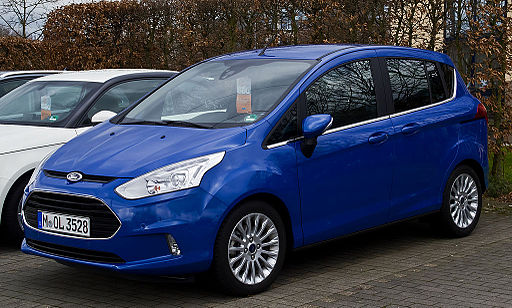
Why the Ford B-Max Is an Interesting Used-Car Choice
When looking for a used car, many buyers focus on the most common choices: compact hatchbacks, small SUVs, or traditional family estates. However, some of the most practical and underrated vehicles on the second-hand market come from less popular categories. The Ford B-Max is one such example. Produced between 2012 and 2017, the B-Max was Ford’s attempt to create a small, efficient, and extremely practical family vehicle that combined the compact dimensions of a city car with the interior flexibility of a small MPV.
Although the B-Max never achieved the same level of popularity as models such as the Ford Fiesta or Ford Focus, it developed a loyal following among drivers who valued practicality, easy access, and clever engineering. Today, as a used car, the Ford B-Max offers an appealing combination of affordability, reliability, and everyday usability. It is especially attractive for families, older drivers, urban commuters, and anyone who appreciates a vehicle that makes transporting passengers and cargo easier without requiring a large exterior footprint.
The B-Max occupies an unusual position in the automotive market. It is smaller than many traditional MPVs but offers features commonly associated with larger family vehicles. Its most distinctive feature is the absence of a traditional B-pillar, which allows the front and rear doors to open widely and create a large side opening. Ford called this system “Easy Access Door System,” and it was designed to make entering the vehicle and loading items much easier. This feature is particularly useful for parents installing child seats, older passengers who need easier access, or anyone who regularly loads bulky objects.
Like any used vehicle, the Ford B-Max has strengths and weaknesses. Its compact size, efficient engines, and clever interior design make it a practical choice, but buyers should also understand its limitations. It is not a sporty vehicle, rear passenger space is not class-leading, and some engines and equipment choices are more desirable than others. A careful inspection and knowledge of common issues are essential before purchase.
This guide examines the Ford B-Max as a used car, covering its history, practicality, driving experience, reliability, engine options, maintenance costs, common problems, buying advice, and overall value.
The History of the Ford B-Max
The Ford B-Max was introduced in 2012 as part of Ford’s expanding range of compact vehicles. It was based on the same platform architecture used by the Ford Fiesta, which meant it benefited from proven mechanical components and relatively low running costs.
Ford designed the B-Max as a replacement of sorts for the smaller Fusion model in some markets, but with a much more modern approach. Instead of simply creating a small box-shaped vehicle, Ford focused on combining compact exterior dimensions with maximum interior flexibility.
The B-Max entered a market where small MPVs were becoming increasingly popular. Buyers wanted vehicles that were easier to park than large family vans but more practical than conventional hatchbacks. Competitors included vehicles such as the Opel Meriva, Citroën C3 Picasso, Renault Modus, and other compact people carriers.
One of the biggest selling points of the B-Max was its unique door system. Traditional cars use a central pillar between the front and rear doors to provide structural strength. Ford developed a solution where the structural reinforcement was integrated into the doors themselves. When both front and rear doors were opened, the result was a large opening that made access exceptionally easy.
Despite its innovative design, the B-Max was never a major commercial success. Many buyers were moving toward small SUVs and crossovers, which reduced demand for traditional MPVs. As a result, Ford discontinued production in 2017. However, this lack of popularity has created an advantage for used-car buyers: prices are often lower than those of comparable vehicles despite the B-Max offering excellent practicality.
Compact Exterior Dimensions With Clever Interior Space
One of the main reasons to consider a Ford B-Max as a used car is its excellent use of space. Although it is relatively short and narrow compared with many family vehicles, the interior feels surprisingly versatile.
The B-Max was designed around practicality rather than aggressive styling. Its tall body shape provides a higher seating position than a traditional hatchback, making entry and exit easier. The upright seating position also improves visibility, which is helpful in city driving and parking situations.
For drivers moving from a normal hatchback, the difference is noticeable. The seats are positioned higher, creating a more commanding view of the road. This makes the B-Max particularly appealing to families and older drivers who may find lower vehicles less comfortable.
The rear doors are one of the vehicle’s defining features. Because there is no fixed B-pillar, passengers have a much larger opening when entering the rear seats. This is especially useful when fitting child seats, helping children enter the car, or loading shopping bags and larger objects.
The Easy Access Door System
The B-Max’s unique door design is one of its most memorable features. When the front and rear doors are opened together, the resulting opening is much larger than in a conventional hatchback.
For families, this can make daily life significantly easier. Installing a child seat becomes less awkward because there is more room to maneuver. Elderly passengers benefit from easier access, and people carrying large items can load them more conveniently.
However, the system also has some considerations. Because the doors contain additional structural reinforcement, repairs after accidents may be more expensive compared with a conventional vehicle. Buyers should carefully inspect the doors and surrounding areas for signs of previous damage.
The door system is also something that should be demonstrated during a test drive. Make sure all doors open and close smoothly, the locking system works correctly, and there are no unusual noises.
A Functional Rather Than Luxurious Cabin
The interior of the Ford B-Max follows Ford’s traditional approach: practical, driver-focused, and built for everyday use. It does not attempt to compete with premium vehicles, but it provides everything most owners need.
The dashboard design is similar to other Ford models from the same period, particularly the Fiesta. Controls are logically arranged, and drivers quickly become familiar with the layout. Higher trim levels may include features such as touchscreen infotainment systems, automatic climate control, cruise control, heated seats, and parking sensors.
Material quality is acceptable for a compact family vehicle. Hard plastics are common, especially on lower sections of the dashboard and doors, but the overall construction feels solid. Many examples have aged well, particularly when owners have maintained the interior carefully.
The front seats are comfortable and provide good support for longer journeys. Because the B-Max shares components with Ford’s smaller models, the driving position feels familiar to anyone who has driven a Fiesta.
Passenger Space and Family Use
The B-Max is designed primarily for small families and practical users. It provides seating for five people, although it is most comfortable when carrying four adults.
Front-seat passengers have plenty of room, while rear-seat space is acceptable for the vehicle’s size. Legroom is reasonable, but taller passengers may find larger MPVs or SUVs more spacious.
The rear seats can fold to increase cargo capacity, creating a much more versatile load area. This makes the B-Max useful for transporting bicycles, furniture pieces, luggage, or shopping items.
The flat loading area and wide door openings are among the vehicle’s strongest practical features.
Comfortable and Easy to Drive
The Ford B-Max was not designed as a performance vehicle, but it benefits from Ford’s experience in creating enjoyable small cars. Because it shares its platform with the Fiesta, it handles better than many traditional MPVs.
The steering is light and predictable, making the B-Max easy to drive in urban environments. Parking is simple thanks to its compact dimensions and good visibility.
On winding roads, the B-Max feels stable and secure, although body movement is more noticeable than in a lower hatchback. Comfort is the priority, and the suspension is tuned to absorb everyday road imperfections.
For most owners, the driving experience is perfectly suited to the vehicle’s purpose. It is designed to make transportation easier rather than provide excitement.
Engines, Reliability, Ownership Costs, Buying Advice and Specifications
One of the most important decisions when buying a used Ford B-Max is choosing the right engine. Ford offered the B-Max with several petrol and diesel engines during its production period, and each option has different advantages depending on how the vehicle will be used. Since the B-Max was designed mainly as a practical family and urban vehicle, engine selection should be based less on outright performance and more on reliability, fuel economy, maintenance requirements, and driving habits.
The best engine choice depends heavily on whether the car will spend most of its life in city traffic, on rural roads, or on long motorway journeys. Buyers covering lower annual mileage will usually find petrol engines more suitable, while high-mileage drivers may benefit from diesel efficiency.
The 1.0 EcoBoost three-cylinder petrol engine became one of Ford’s most recognized modern engines. Available in several power outputs, it offered an impressive combination of efficiency and performance for its small displacement.
In the B-Max, the 1.0 EcoBoost provides enough power for everyday driving while maintaining excellent fuel economy. The turbocharger helps deliver useful torque at low engine speeds, making the car feel more responsive than many naturally aspirated small engines.
The advantages of the 1.0 EcoBoost include:
- Good fuel efficiency
- Smooth power delivery
- Low road tax in many markets
- Quiet operation
- Strong performance for a small engine
However, buyers should pay close attention to maintenance history. Early EcoBoost engines require correct servicing, particularly regarding the timing belt system. Regular oil changes using the correct specification oil are essential for long-term reliability.
A neglected EcoBoost engine can become expensive to repair, while a properly maintained example can provide many years of efficient service.
The naturally aspirated petrol engines available in the Ford B-Max are often attractive to used-car buyers who prioritize simplicity.
Unlike smaller turbocharged engines, naturally aspirated engines have fewer complex components. They generally provide predictable performance and can be cheaper to maintain over the long term.
The 1.4-litre petrol engine is adequate for city driving but may feel slightly underpowered when the vehicle is fully loaded. It is best suited to relaxed drivers who value reliability and low running costs.
The 1.6-litre petrol engine provides stronger performance and is a better choice for drivers who frequently carry passengers or travel longer distances. It offers smoother acceleration and a more relaxed motorway experience.
For buyers who want the lowest ownership risk, these engines can be excellent options when supported by good maintenance records.
The diesel versions of the Ford B-Max appeal mainly to drivers who cover significant distances each year. Diesel engines provide strong torque, meaning they feel comfortable when carrying passengers or driving on highways.
The 1.5 TDCi diesel engine offers impressive fuel economy and is well suited to longer journeys. When properly maintained, it can achieve very high mileage.
Advantages include:
- Excellent fuel consumption
- Strong low-speed pulling power
- Good motorway efficiency
- Long-distance comfort
However, diesel engines are not ideal for everyone. Drivers who mainly make short urban trips may experience problems related to diesel emissions systems, including the diesel particulate filter (DPF).
A diesel B-Max should be chosen by someone whose driving pattern allows the engine to reach normal operating temperature regularly.
The Ford B-Max has generally earned a positive reputation for reliability. It uses many proven components from Ford’s wider vehicle range, particularly the Fiesta, which means parts availability is good and many mechanics are familiar with repairs.
The vehicle itself is relatively simple compared with newer cars that contain extensive electronic systems and hybrid technology. This simplicity can be an advantage for used-car ownership.
A well-maintained B-Max can easily provide many years of dependable service. However, as with any used vehicle, reliability depends heavily on previous ownership. A car that has received regular servicing will usually perform much better than one that has been neglected.
Important factors affecting reliability include:
- Service history
- Correct oil changes
- Transmission maintenance
- Driving style
- Previous accident history
- Mileage
Buyers should avoid focusing only on mileage. A high-mileage vehicle with complete maintenance records may be a better purchase than a low-mileage example that has been poorly maintained.
Although the Ford B-Max is generally reliable, several areas deserve attention during a used-car inspection.
The unique Easy Access Door System is one of the B-Max’s biggest advantages, but it is also an area that requires careful checking.
Potential issues include:
- Door alignment problems
- Difficult closing
- Damaged seals
- Electrical locking faults
- Evidence of accident repairs
Because the doors play an important structural role, previous accident damage should be taken seriously.
During inspection, open and close every door several times. The operation should feel smooth, with no excessive force required.
Manual-transmission B-Max models are generally dependable, but clutch wear is possible, especially on higher-mileage vehicles.
Signs of clutch problems include:
- High clutch biting point
- Slipping under acceleration
- Difficulty selecting gears
- Unusual noises when pressing the clutch pedal
Some versions were available with automatic transmissions. Buyers should test automatic models carefully and ensure that gear changes are smooth.
A transmission repair can be expensive, so this area should never be ignored during a test drive.
Like many small vehicles, the Ford B-Max may develop suspension wear as it ages.
Common wear items include:
- Shock absorbers
- Bushings
- Stabilizer links
- Springs
Symptoms may include:
- Knocking sounds over uneven roads
- Uneven tire wear
- Poor ride quality
- Reduced handling precision
These repairs are usually manageable, but they should be considered when negotiating the purchase price.
Modern vehicles rely heavily on electronic systems, and older B-Max models may experience occasional electrical problems.
Possible issues include:
- Parking sensor failures
- Infotainment glitches
- Central locking problems
- Warning lights caused by faulty sensors
Most electrical problems are not unique to the B-Max, but buyers should test all equipment before purchase.
One of the strongest reasons to choose a Ford B-Max as a used car is affordable ownership. It was designed to provide family practicality without the fuel consumption associated with larger vehicles.
Typical fuel economy depends on the engine and driving style:
- Small petrol engines can provide excellent urban efficiency.
- Diesel engines offer the best economy on longer journeys.
- Larger petrol engines provide smoother performance but use slightly more fuel.
Maintenance costs are generally reasonable because Ford parts are widely available. Independent garages are usually comfortable servicing the vehicle, helping owners avoid expensive dealership prices.
Routine costs include:
- Engine oil and filters
- Brake pads and discs
- Tires
- Battery replacement
- Suspension components
- Timing belt maintenance where applicable
Compared with larger family vehicles, the B-Max is relatively inexpensive to operate.
Safety was an important part of the Ford B-Max’s design. Despite its compact dimensions and unusual door structure, Ford engineered the vehicle to meet modern safety expectations.
Features available depending on trim level include:
- Multiple airbags
- Electronic stability control
- Anti-lock braking system
- Emergency braking assistance
- Parking sensors
- Hill-start assistance
The B-Max performed well in safety testing for its category when new, and the strong door structure was one of Ford’s major engineering achievements.
For family buyers, safety features combined with excellent visibility make the B-Max a reassuring vehicle for everyday transportation.
The Ford B-Max is not the perfect choice for every driver, but it suits certain lifestyles extremely well.
It is particularly suitable for:
Small Families
Parents will appreciate the easy rear-seat access, practical interior, and compact size. Installing child seats is easier than in many conventional hatchbacks.
Older Drivers
The raised seating position and wide-opening doors make entering and exiting the vehicle simple.
Urban Drivers
The compact dimensions, good visibility, and efficient engines make the B-Max ideal for city environments.
Practical Buyers
Anyone who values functionality over image may find the B-Max an excellent choice. It offers many advantages of a larger MPV while remaining easy to drive and inexpensive to run.
The B-Max is practical, but it does have limitations.
It may not suit buyers who need:
- Large rear passenger space
- High-performance driving
- Off-road capability
- Premium interior quality
- Large towing capacity
Drivers who frequently transport five adults or large amounts of luggage may prefer a larger vehicle.
Before purchasing a used Ford B-Max, buyers should inspect the following areas:
| Area | What to Check |
|---|---|
| Service history | Regular maintenance and correct servicing |
| Engine | Smooth running, no warning lights, no unusual noises |
| Transmission | Smooth gear changes and clutch operation |
| Doors | Easy Access Door System working correctly |
| Interior | Electronics, air conditioning, seats, controls |
| Suspension | No knocks or excessive movement |
| Tires | Even wear and sufficient tread |
| Bodywork | No rust or accident damage |
| Test drive | Comfort, braking, steering, and engine response |
A professional inspection is recommended, especially when buying privately
| Specification | Ford B-Max |
|---|---|
| Production years | 2012–2017 |
| Vehicle category | Compact MPV / small family vehicle |
| Platform | Ford Fiesta-based platform |
| Body style | Five-door compact MPV |
| Seating capacity | 5 passengers |
| Length | Approximately 4.08 metres |
| Width | Approximately 1.75 metres |
| Height | Approximately 1.60 metres |
| Wheelbase | Approximately 2.49 metres |
| Boot capacity | Approximately 318 litres (expandable with seats folded) |
| Engine options | Petrol and diesel engines |
| Petrol engines | 1.0 EcoBoost, 1.4, 1.6 |
| Diesel engines | 1.5 TDCi, depending on market |
| Power output | Approximately 75–125 hp |
| Transmission options | Manual and automatic depending on engine |
| Drive system | Front-wheel drive |
| Fuel economy | Approximately 4–7 l/100 km depending on engine |
| Suspension front | Independent MacPherson strut |
| Suspension rear | Torsion beam system |
| Safety equipment | ABS, airbags, stability control, assistance systems |
| Special feature | Ford Easy Access Door System without traditional B-pillar |
| Main advantages | Practicality, easy access, low running costs |
| Main disadvantages | Limited rear space, aging design, fewer modern features |
The Ford B-Max is one of the most interesting used cars in the compact family segment because it offers something many modern vehicles have moved away from: clever practicality. While SUVs dominate today’s market, the B-Max demonstrates that a small, intelligently designed MPV can still be extremely useful.
Its biggest strengths are the unique door system, compact dimensions, comfortable driving experience, affordable maintenance, and efficient engines. It is easy to live with, inexpensive to operate, and surprisingly versatile for its size.
The best used examples are those with complete service histories, reliable engines, and well-maintained interiors. Petrol versions are often the safest choice for urban drivers, while diesel models make sense for people who regularly travel longer distances.
Although it lacks the fashionable image of an SUV and does not offer the latest technology found in newer vehicles, the Ford B-Max remains a smart choice for buyers who value function over fashion. A carefully chosen example can provide years of practical, comfortable, and economical motoring.
