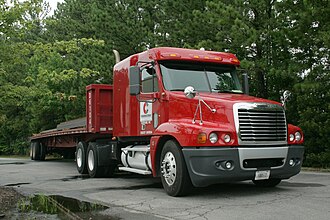
Freightliner Century Class: The Truck That Helped Redefine Modern North American Long-Haul Transportation
The Freightliner Century Class occupies a unique place in the history of North American trucking. Introduced during a period when the transportation industry was evolving rapidly, the Century Class represented far more than a replacement for an older model. It symbolized a new direction in heavy-duty truck engineering, combining improved aerodynamics, greater driver comfort, easier maintenance, and enhanced operating efficiency into a package that quickly became one of the most recognizable Class 8 trucks on highways across the United States, Canada, and Mexico. Whether hauling refrigerated freight across the Midwest, transporting construction materials through mountainous terrain, or operating as part of a coast-to-coast logistics fleet, the Century Class proved that a conventional highway tractor could be both practical and innovative. Even decades after production began, many examples continue to work daily, a testament to their durability and adaptability.
For owner-operators, fleet managers, mechanics, and truck enthusiasts alike, the Century Class remains an important chapter in Freightliner’s history. It bridged the gap between traditional square-bodied highway tractors and the highly aerodynamic, electronically sophisticated trucks that dominate today’s commercial transportation industry. Its combination of reliable powertrains, spacious cabins, and relatively straightforward maintenance helped establish Freightliner as one of the leading manufacturers of heavy-duty trucks in North America.
The Origins of the Freightliner Century Class
The trucking industry of the late twentieth century was undergoing significant transformation. Rising fuel costs, increasingly strict emissions regulations, growing competition among manufacturers, and higher expectations from drivers all encouraged truck builders to rethink traditional designs. Fleet operators wanted lower operating costs, while drivers demanded better working environments capable of supporting weeks on the road. These changing priorities provided the perfect opportunity for Freightliner to introduce an entirely new generation of highway tractors.
The Century Class debuted during the 1990s as part of Freightliner’s effort to modernize its product lineup. Rather than simply refreshing an existing design, engineers developed a truck that emphasized aerodynamic efficiency without sacrificing durability or serviceability. Every major component—from the sloping hood to the carefully shaped cab corners—was designed with airflow in mind. At highway speeds, even modest improvements in aerodynamic performance could translate into substantial fuel savings over hundreds of thousands of miles, making the Century Class especially attractive to large commercial fleets.
Freightliner also recognized that driver retention had become an increasingly important issue. Truck drivers were spending extended periods away from home, making the cab both a workplace and a temporary living space. Consequently, the Century Class was engineered with greater interior room, improved visibility, more ergonomic controls, and better sleeper accommodations than many of its predecessors. These improvements reflected a broader industry trend toward prioritizing driver comfort as an essential element of productivity rather than a luxury.
The truck quickly gained acceptance throughout North America. Large national carriers appreciated its efficiency and standardized maintenance procedures, while independent owner-operators valued its flexibility, attractive styling, and compatibility with a wide variety of engines and transmissions.
A New Philosophy in Truck Design
Perhaps the most significant contribution of the Century Class was its departure from traditional heavy-duty truck styling. Earlier conventional tractors often featured relatively flat front surfaces and sharp body lines that created aerodynamic drag. Freightliner’s designers instead embraced smoother contours, rounded edges, and integrated body panels that allowed air to flow more cleanly around the vehicle.
This design philosophy extended beyond appearance. The hood, fenders, bumper, mirrors, and roof profile all worked together to reduce turbulence. Even relatively small improvements in airflow helped reduce fuel consumption during long-distance highway operations, where trucks routinely travel hundreds of miles each day. Fleet managers quickly realized that lower fuel consumption could significantly reduce annual operating expenses, particularly for companies operating hundreds or even thousands of trucks.
The aerodynamic improvements also contributed to quieter operation inside the cab. Reduced wind noise helped decrease driver fatigue during long trips, making the truck more comfortable over extended periods behind the wheel. Although these changes may appear subtle compared to advances in engine technology, they collectively represented a major step forward in commercial truck engineering.
Another important aspect of the Century Class philosophy involved ease of maintenance. Freightliner understood that downtime costs money. Engineers therefore designed many service points to be more accessible, allowing technicians to complete inspections and repairs more efficiently. This practical approach appealed to maintenance departments responsible for keeping large fleets on the road.
Freightliner and the Evolution of Heavy-Duty Transportation
The Century Class emerged during an era when logistics networks were becoming increasingly sophisticated. Just-in-time manufacturing, expanding interstate commerce, and growing consumer demand required trucks capable of operating efficiently under demanding schedules. Freightliner positioned the Century Class to meet these evolving transportation needs by offering exceptional versatility.
Rather than limiting customers to a single powertrain configuration, Freightliner provided compatibility with multiple engines, transmissions, wheelbases, axle arrangements, and sleeper options. This flexibility allowed buyers to configure trucks specifically for regional hauling, long-distance freight, specialized heavy loads, or dedicated fleet operations.
Such adaptability contributed significantly to the truck’s commercial success. A refrigerated carrier operating coast-to-coast routes could specify a large sleeper and high-horsepower engine, while a regional freight company might choose a lighter configuration emphasizing fuel economy and maneuverability. This broad range of available configurations enabled the Century Class to serve virtually every segment of the heavy-duty transportation industry.
Moreover, Freightliner’s extensive dealer and service network gave customers confidence that replacement parts and qualified technicians would remain readily available throughout the truck’s operational life. This support infrastructure became one of the model’s greatest competitive advantages.
Exterior Styling That Balanced Form and Function
One of the defining characteristics of the Freightliner Century Class is its instantly recognizable exterior. The truck’s sloped hood, rounded headlights, smoothly integrated grille, and aerodynamic roofline distinguished it from many competitors during its introduction. While visually modern, every styling decision also served a functional purpose.
The hood incorporated composite materials that reduced weight while resisting corrosion. Compared with heavier steel components, composite construction helped improve fuel efficiency and simplified certain repair procedures following minor collisions. Fleet operators appreciated the durability of these materials, particularly in regions where winter road salt accelerated corrosion on conventional steel panels.
Large windshield dimensions enhanced forward visibility, improving driver confidence in urban environments and adverse weather conditions. Generous side windows further minimized blind spots, contributing to safer lane changes and easier maneuvering around loading docks.
Mirror placement received careful engineering attention as well. Proper positioning balanced aerodynamic performance with visibility requirements, ensuring drivers maintained clear rearward sightlines without creating excessive wind resistance.
Lighting systems evolved throughout the production run, reflecting improvements in automotive lighting technology. Many later models benefited from brighter headlights and improved reflector designs that enhanced nighttime visibility while reducing maintenance requirements.
Aerodynamics: More Than Just Fuel Savings
While fuel economy represented the primary motivation behind aerodynamic development, the Century Class demonstrated that improved airflow could deliver multiple operational benefits simultaneously. Reduced drag not only lowered fuel consumption but also enhanced vehicle stability at highway speeds.
Crosswinds affect all large commercial vehicles, especially those hauling tall trailers. The streamlined design of the Century Class helped moderate some of these aerodynamic forces, giving drivers a more predictable handling experience under varying weather conditions. Although no heavy truck is immune to strong winds, thoughtful aerodynamic engineering contributed to greater driver confidence and reduced fatigue during extended highway travel.
Improved airflow also reduced the accumulation of dirt and road spray on certain body surfaces. Cleaner mirrors, windows, and lighting assemblies translated into better visibility during wet-weather driving, enhancing overall safety.
Fleet operators frequently evaluated trucks based on total operating cost rather than initial purchase price alone. Fuel savings accumulated gradually over hundreds of thousands of miles, meaning even relatively small improvements in efficiency could generate substantial financial returns throughout the truck’s service life. Consequently, the aerodynamic characteristics of the Century Class became one of its strongest selling points.
Engineering for Durability
Heavy-duty commercial trucks operate under conditions far more demanding than passenger vehicles. They routinely accumulate more than one million miles, haul gross combination weights approaching legal limits, and encounter extreme weather ranging from desert heat to subzero winters. Freightliner therefore engineered the Century Class with durability as a primary objective.
The chassis utilized robust steel frame rails capable of supporting diverse vocational applications. Suspension systems were selected according to intended usage, allowing operators to prioritize ride comfort, payload capacity, or durability depending on operational requirements.
Cab structures incorporated reinforcement intended to withstand years of continuous use while minimizing squeaks, rattles, and structural fatigue. Interior components likewise emphasized longevity, recognizing that commercial vehicles experience significantly greater daily wear than privately owned automobiles.
Corrosion resistance received increasing attention throughout production. Improved coatings, composite exterior components, and enhanced manufacturing techniques helped extend vehicle life, particularly for trucks operating in northern climates where exposure to snow, ice, and deicing chemicals was unavoidable.
Mechanical systems were designed with serviceability in mind. Routine maintenance items remained relatively accessible, allowing technicians to perform inspections efficiently. Since preventive maintenance forms the foundation of successful fleet management, these design decisions directly contributed to reduced operating costs and increased vehicle availability.
Why Fleets Quickly Embraced the Century Class
Large trucking companies evaluate equipment according to rigorous economic criteria. Purchase price represents only one factor among many. Fuel consumption, maintenance costs, driver satisfaction, resale value, parts availability, and reliability all influence purchasing decisions.
The Century Class performed well across these categories, making it attractive to both large national fleets and smaller regional carriers. Drivers appreciated the comfortable working environment, while maintenance departments valued standardized service procedures and broad parts availability. Fleet managers benefited from competitive fuel economy and strong manufacturer support.
As more companies adopted the model, the availability of aftermarket components expanded significantly. Independent repair facilities became increasingly familiar with the platform, further reducing maintenance costs throughout the truck’s lifespan.
This widespread adoption created a positive cycle. High production volumes supported strong parts availability, which encouraged additional buyers to invest in the platform. Even years after production ended, many Century Class trucks continue operating because replacement components remain widely available and experienced technicians understand the vehicle thoroughly.
For owner-operators entering the trucking industry, used Century Class tractors often represented an appealing balance between affordability, capability, and maintainability. Many trucks remained mechanically sound after extensive commercial service, provided they had received consistent preventive maintenance throughout their operational lives.
Engine Options That Defined the Century Class
One of the Freightliner Century Class’s greatest strengths was the extraordinary variety of engines that could be installed under its aerodynamic hood. Unlike some truck manufacturers that relied primarily on proprietary powerplants, Freightliner designed the Century Class to accommodate engines from several of North America’s leading diesel manufacturers. This flexibility allowed fleet operators to purchase trucks that matched their maintenance programs, preferred engine suppliers, operating environments, and long-term ownership strategies. As a result, no single engine defined the Century Class. Instead, the truck became a versatile platform capable of serving regional carriers focused on fuel economy, long-haul fleets prioritizing durability, and specialized operators requiring exceptional horsepower and torque.
Among the most common engines were the Detroit Diesel Series 60, Caterpillar C10, C12, C13, C15, Cummins N14, ISX, ISM, and later Detroit Diesel DD-series engines on newer production models. Horsepower ratings generally ranged from approximately 350 horsepower to well over 600 horsepower depending on customer specifications. Torque outputs varied accordingly, often exceeding 2,000 lb-ft in higher-performance configurations intended for heavy hauling or mountainous terrain.
The availability of multiple engines meant that no two Century Class trucks were necessarily identical. A truck hauling lightweight dry van freight across relatively flat Midwestern highways might utilize a smaller displacement engine optimized for fuel efficiency. Meanwhile, another Century Class pulling oversized equipment through the Rocky Mountains could be equipped with a high-output Caterpillar or Cummins engine designed to deliver exceptional pulling power under demanding conditions. This remarkable configurability significantly broadened the truck’s appeal throughout the trucking industry.
The Detroit Diesel Series 60 became one of the most widely recognized engines associated with the Century Class. Renowned for its electronic controls, smooth operation, and excellent fuel economy, the Series 60 earned a reputation as one of the most successful heavy-duty diesel engines ever produced. Many fleets accumulated well over one million miles before major engine overhauls, provided preventive maintenance schedules were followed consistently. This longevity helped reinforce the Century Class’s reputation as a dependable long-distance tractor.
Cummins engines likewise became popular among owner-operators who appreciated their widespread service network, abundant aftermarket support, and strong torque characteristics. Models such as the ISX combined impressive pulling power with increasingly sophisticated electronic engine management systems that optimized fuel delivery, emissions performance, and reliability. Caterpillar engines, particularly the C15, developed an almost legendary status among experienced truck drivers for their robust performance and ability to maintain speed on steep grades while hauling heavy loads.
Transmission Choices for Every Application
Complementing the wide variety of available engines was an equally impressive selection of transmissions. Freightliner understood that different freight operations demanded different drivetrain characteristics, so customers could specify manual, automated, or fully automatic transmissions depending on operational requirements.
Traditional manual transmissions remained extremely popular throughout much of the Century Class’s production life. Eaton Fuller 9-speed, 10-speed, 13-speed, 15-speed, and 18-speed gearboxes were common choices, offering drivers precise control over gear selection under varying road conditions. Experienced operators often preferred these transmissions because they allowed careful management of engine speed, particularly when climbing grades, descending mountain passes, or maneuvering heavy loads in confined work areas.
The 13-speed and 18-speed transmissions proved especially attractive for specialized heavy-haul applications. Their closely spaced gear ratios enabled drivers to maintain engines within optimal operating ranges while maximizing fuel efficiency and minimizing drivetrain stress. Skilled drivers frequently praised these transmissions for their durability and predictable shifting characteristics, qualities that contributed to the Century Class’s favorable reputation among professional truck operators.
As automated manual transmissions gained acceptance throughout the commercial transportation industry, later Century Class models increasingly featured electronically controlled shifting systems. These transmissions retained the mechanical efficiency of conventional manuals while reducing driver workload during long-distance operations. Automatic gear selection also helped newer drivers achieve more consistent fuel economy and reduced clutch wear caused by improper shifting techniques.
In vocational applications requiring frequent stops, such as regional distribution or municipal operations, fully automatic transmissions occasionally offered additional convenience. Although less common in long-haul service during the truck’s early production years, automatic transmissions gradually became more prevalent as transmission technology advanced and fleet priorities shifted toward reducing driver fatigue.
Chassis and Drivetrain Flexibility
Beyond engines and transmissions, the Century Class offered an exceptionally adaptable chassis capable of supporting numerous axle configurations, wheelbases, suspension systems, and weight ratings. This flexibility allowed customers to tailor each truck precisely to its intended operational environment.
Most highway tractors utilized tandem rear axles to maximize traction and comply with North American weight regulations. However, axle ratios could vary considerably depending on intended use. Trucks designed for fuel-efficient interstate cruising often employed taller gearing that reduced engine revolutions per minute at highway speeds. Conversely, tractors intended for mountainous terrain or heavy freight frequently featured lower axle ratios that emphasized pulling power over maximum cruising efficiency.
Wheelbase options also varied substantially. Shorter wheelbases enhanced maneuverability in urban environments, distribution centers, and crowded loading docks. Longer wheelbases improved ride quality, accommodated larger sleeper compartments, and provided additional stability during highway operation. Fleet managers carefully balanced these characteristics according to route structures and customer requirements.
Power take-off compatibility further expanded the Century Class’s versatility. Certain vocational configurations supported hydraulic systems, auxiliary equipment, and specialized trailers requiring external power sources. Although primarily recognized as a highway tractor, the Century Class demonstrated considerable adaptability across multiple commercial transportation sectors.
Suspension Systems Designed for Comfort and Control
Ride quality has a profound influence on driver fatigue, cargo protection, and overall vehicle longevity. Freightliner therefore offered multiple suspension systems that balanced comfort, durability, payload capacity, and maintenance requirements according to customer preferences.
Air-ride suspensions became particularly popular for long-haul applications. By using compressed air rather than conventional steel leaf springs alone, these systems significantly reduced road shock transmitted to both the vehicle and its occupants. Drivers spending ten or eleven hours behind the wheel each day appreciated the smoother ride, while delicate freight benefited from reduced vibration throughout transport.
Freightliner collaborated with several suspension manufacturers to provide configurations suited to diverse operational needs. Some fleets prioritized lightweight suspension components that maximized payload capacity, while others selected heavy-duty systems designed for demanding vocational environments involving rough roads and uneven terrain.
Front suspension tuning likewise contributed to the Century Class’s favorable handling characteristics. Improved steering precision, controlled body movement, and effective shock absorption combined to create a truck that felt composed during extended interstate travel without sacrificing durability under challenging operating conditions.
Proper suspension maintenance remained essential throughout the truck’s service life. Routine inspection of airbags, bushings, shocks, and alignment components helped preserve ride quality while minimizing tire wear. Fleet maintenance departments often considered these preventive measures an investment that reduced long-term operating costs.
Braking Systems and Safety Features
Safety has always been a central consideration in commercial vehicle engineering, and the Century Class incorporated braking technologies that reflected industry best practices during its production years. Standard air brake systems provided dependable stopping power suitable for the substantial weights routinely encountered in long-haul freight operations.
Many configurations included dual-circuit air systems, automatic slack adjusters, spring parking brakes, and engine compression brakes. Engine braking systems, often referred to by drivers as “Jake Brakes” when equipped with Jacobs compression braking technology, significantly reduced reliance on service brakes during long downhill descents. This not only improved vehicle control but also extended brake component life while reducing the risk of overheating.
As technology advanced, anti-lock braking systems became increasingly common. ABS enhanced directional stability during emergency braking by preventing wheel lockup, particularly on wet or slippery road surfaces. Although modern electronic stability systems had not yet reached their current level of sophistication during much of the Century Class’s production run, available electronic safety features steadily expanded as regulatory requirements evolved.
Regular brake inspections formed an essential part of fleet maintenance programs. Brake drums, linings, air chambers, hoses, valves, and compressors required periodic evaluation to ensure reliable operation under demanding commercial conditions. Fortunately, the Century Class’s service-friendly design simplified many routine inspection procedures.
Inside the Cab: A Workplace Designed for Long Days
Stepping into a Freightliner Century Class reveals one of the truck’s greatest achievements: a cab designed around the needs of professional drivers. Earlier generations of heavy-duty trucks often emphasized mechanical durability above all else, but the Century Class recognized that driver productivity depended heavily upon comfort, visibility, organization, and ease of operation.
The dashboard featured a logical arrangement of gauges, switches, and controls intended to minimize distraction while driving. Large analog instruments provided clear readings for engine speed, oil pressure, coolant temperature, air pressure, fuel level, and other critical operating parameters. Controls were positioned within easy reach, reducing unnecessary driver movement during long hours on the road.
Large windows and carefully designed mirrors contributed to outstanding visibility in nearly every direction. The elevated seating position gave drivers an excellent view of surrounding traffic, while the sloped hood improved forward sightlines compared with older conventional truck designs. These seemingly simple improvements reduced stress during congested urban driving and simplified maneuvering in loading facilities.
Storage also received considerable attention. Numerous compartments accommodated logbooks, tools, personal belongings, maps, radios, food, and other equipment essential for life on the road. Because many long-haul drivers essentially lived inside their trucks for extended periods, practical storage solutions became an important selling point.
Sleeper Cab Configurations
Long-distance trucking demands accommodations that extend well beyond the driver’s seat. Freightliner therefore offered multiple sleeper configurations to satisfy varying operational requirements and customer budgets.
Smaller sleepers proved adequate for regional routes involving occasional overnight stays, while larger integrated sleeper cabs transformed the Century Class into a genuine mobile living space. Depending on configuration, sleepers included comfortable bunks, storage cabinets, wardrobes, reading lights, climate controls, and provisions for entertainment equipment or small appliances.
The additional headroom provided by raised-roof sleeper designs dramatically improved everyday livability. Drivers could move more comfortably within the cab during mandatory rest periods, making extended trips less physically demanding. Although sleeper amenities varied according to customer specifications, the Century Class consistently ranked among the more spacious conventional tractors available during its era.
Noise insulation also represented a significant improvement over earlier truck generations. Better sealing, enhanced insulation materials, and improved aerodynamic design collectively reduced interior noise levels, allowing drivers to rest more comfortably between shifts. This focus on driver well-being reflected a growing industry recognition that adequate rest directly contributes to safer and more productive operations.
By combining spacious accommodations with thoughtful ergonomics, Freightliner helped establish new expectations for what professional drivers could expect from a long-haul tractor. Rather than serving merely as transportation equipment, the Century Class evolved into a practical mobile workspace capable of supporting drivers throughout weeks of continuous interstate operation.
Reliability and Long-Term Ownership
One of the primary reasons the Freightliner Century Class continues to be seen on North American highways long after the end of its production run is its reputation for durability. Although no heavy-duty truck is immune to wear and mechanical failures after years of commercial service, the Century Class earned the confidence of fleet operators and independent owner-operators because it could consistently accumulate exceptionally high mileage when maintained properly. It was not uncommon for well-maintained examples equipped with Detroit Diesel Series 60, Cummins ISX, or Caterpillar C15 engines to exceed one million miles before requiring a major overhaul. Such longevity made the truck an attractive investment for businesses that carefully monitored operating costs over many years rather than focusing solely on initial purchase price.
The truck’s reliability was not due to any single component but rather to the combination of proven drivetrains, a durable chassis, accessible service points, and widespread parts availability. Because Freightliner offered the Century Class with numerous engine and transmission combinations from well-established manufacturers, owners benefited from extensive dealer networks and experienced technicians throughout North America. This ecosystem reduced downtime and simplified repairs, especially for fleets operating nationwide.
Routine preventive maintenance remained the key to achieving exceptional service life. Regular oil and filter changes, cooling system inspections, valve adjustments where applicable, drivetrain lubrication, brake servicing, suspension inspections, and careful monitoring of electronic systems all contributed to keeping these trucks productive. Operators who invested in preventive maintenance often found that unexpected breakdowns became relatively infrequent, allowing the truck to generate revenue consistently throughout its working life.
Another advantage was the truck’s structural durability. Frame rails, cab construction, suspension mounting points, and drivetrain components were designed to withstand years of heavy freight transportation. While cosmetic wear inevitably appeared after hundreds of thousands of miles, the underlying mechanical structure frequently remained capable of many additional years of service.
Common Issues and Maintenance Considerations
Despite its overall reputation for dependability, the Freightliner Century Class was not without recurring maintenance concerns. Like virtually every heavy-duty commercial truck, certain components required closer attention as mileage accumulated.
Electrical issues occasionally appeared on older examples, particularly those that had spent many years exposed to moisture, road salt, and temperature extremes. Aging wiring harnesses, corroded connectors, and deteriorating grounds could lead to intermittent lighting problems or dashboard warning indicators. Fortunately, these issues were generally well understood by experienced technicians and could often be resolved without major component replacement.
Cooling systems also deserved careful attention. Radiators, coolant hoses, thermostats, and water pumps naturally aged over time, especially on trucks operating under heavy loads in hot climates. Preventive replacement of aging cooling components often proved less expensive than dealing with overheating-related engine damage.
Suspension bushings, shock absorbers, airbags, and steering components gradually wore with continuous operation over rough highways. While these items represented normal maintenance rather than design flaws, timely replacement preserved ride quality, steering precision, and tire life.
Owners of high-mileage trucks also monitored turbochargers, exhaust systems, air compressors, and clutch assemblies, all of which eventually reached the end of their service lives. Fortunately, because the Century Class achieved such widespread commercial success, replacement parts remained readily available through both original equipment suppliers and the aftermarket.
One of the truck’s greatest advantages from a maintenance perspective was accessibility. Mechanics generally appreciated the relatively straightforward layout beneath the hood, which simplified many routine service procedures compared with more tightly packaged modern trucks. Reduced labor time translated directly into lower maintenance costs throughout the truck’s operational life.
Buying a Used Freightliner Century Class Today
Even years after production concluded, the Freightliner Century Class remains a popular choice in the used truck market. For first-time owner-operators, small transportation companies, and vocational businesses, the model often represents an attractive balance between affordability, proven engineering, and widespread parts support.
Prospective buyers should begin by evaluating maintenance records. A truck with documented service history generally provides far greater confidence than one with an unknown past, regardless of mileage. Evidence of regular oil changes, cooling system maintenance, drivetrain servicing, and preventive inspections indicates responsible ownership and often predicts future reliability.
Engine condition should receive particular attention. Compression testing, oil analysis, inspection for coolant contamination, and careful evaluation of cold-start performance can reveal valuable information about internal engine health. Likewise, buyers should examine transmission operation, clutch engagement, driveline condition, differential noise, steering play, suspension wear, and brake performance.
Frame condition represents another important consideration. Evidence of accident damage, corrosion, unauthorized modifications, or poor-quality repairs may affect long-term durability. Because many Century Class trucks served in demanding commercial environments, careful structural inspection remains essential before purchase.
Interior condition can also provide useful clues regarding overall maintenance. Excessive wear, broken controls, water leaks, or neglected cab interiors sometimes indicate a lack of attention to preventive maintenance elsewhere on the vehicle. Conversely, a clean, well-maintained cab often reflects an owner who cared for the truck mechanically as well.
Although newer trucks offer advanced driver assistance technologies and improved emissions systems, many experienced operators continue to appreciate the Century Class for its mechanical simplicity, familiar systems, and relatively straightforward maintenance requirements.
How the Century Class Compared with Its Competitors
The Freightliner Century Class entered a highly competitive marketplace populated by respected manufacturers such as the Peterbilt 379, Kenworth T600 and T660, Volvo VN series, International 9400i, and Mack Vision. Each competitor offered unique strengths, yet the Century Class established its own identity through an effective balance of efficiency, comfort, versatility, and affordability.
Compared with traditional long-nose conventional tractors, the Century Class emphasized aerodynamic performance and fuel economy. While some owner-operators preferred the classic styling of premium conventional trucks, many fleet operators prioritized the measurable operating cost reductions delivered by Freightliner’s streamlined design.
Against other aerodynamic competitors, the Century Class remained highly competitive due to its flexible engine choices, spacious cab, extensive dealer network, and favorable purchase price. Freightliner’s large production volumes also supported excellent parts availability, a significant consideration for fleets seeking to minimize downtime.
Driver comfort represented another area in which the Century Class performed well. Spacious sleeper options, ergonomic controls, excellent visibility, and practical storage solutions helped create an environment suitable for extended long-haul operations. These characteristics contributed to its popularity among professional drivers who spent weeks at a time on the road.
Ultimately, the Century Class succeeded not because it dominated every individual category, but because it delivered consistently strong performance across nearly every area important to commercial transportation.
The Lasting Legacy of the Freightliner Century Class
The influence of the Freightliner Century Class extends well beyond the years during which it was manufactured. Many of the design philosophies introduced or refined during its development—including aerodynamic optimization, improved driver ergonomics, integrated sleeper designs, and service-friendly engineering—became standard expectations throughout the heavy-duty trucking industry.
The truck also demonstrated that fuel efficiency and driver comfort could coexist without sacrificing durability. Fleet operators increasingly recognized that investments in aerodynamics, ergonomic interiors, and maintenance accessibility generated measurable financial returns over the lifetime of the vehicle.
Modern Freightliner highway tractors continue to build upon principles first demonstrated so effectively by the Century Class. Advances in electronic controls, automated transmissions, collision mitigation systems, and emissions technology have transformed commercial trucking, yet the Century Class represents an important milestone in that ongoing evolution.
Even today, many examples remain active in regional hauling, agricultural transportation, vocational work, export markets, and independent owner-operator service. Their continued presence serves as a testament to the robustness of their engineering and the practical value they delivered throughout decades of commercial operation.
Conclusion
The Freightliner Century Class stands as one of the defining heavy-duty trucks of its generation. It successfully combined aerodynamic efficiency, dependable mechanical components, exceptional configurability, and improved driver comfort into a platform capable of serving virtually every segment of North American freight transportation. Whether equipped with a Detroit Diesel Series 60, a Cummins ISX, or a Caterpillar C15, paired with a traditional manual transmission or a newer automated gearbox, the Century Class proved adaptable to countless operational requirements.
Its commercial success resulted from more than attractive styling or powerful engines. Fleet managers appreciated its operating economics, mechanics valued its accessibility, drivers enjoyed its spacious cab, and owner-operators recognized its long-term value. These qualities allowed the Century Class to earn a lasting reputation as a reliable workhorse capable of covering extraordinary distances while remaining practical to maintain.
Although newer Freightliner models have introduced significant technological advances, the Century Class remains an enduring symbol of a transformative period in heavy-duty truck development. For trucking enthusiasts, historians, mechanics, and professional drivers alike, it continues to represent one of the most influential conventional highway tractors ever built.
Freightliner Century Class Technical Specifications
| Specification | Details |
|---|---|
| Manufacturer | Freightliner Trucks |
| Vehicle Class | Class 8 Heavy-Duty Truck |
| Production Years | 1995–2010 (North American production) |
| Body Style | Conventional cab-over-enginehood tractor |
| Typical Applications | Long-haul freight, regional hauling, tanker, flatbed, refrigerated transport, vocational work |
| Cab Configurations | Day Cab, Mid-Roof Sleeper, Raised-Roof Sleeper |
| Engine Manufacturers | Detroit Diesel, Cummins, Caterpillar, Mercedes-Benz (selected markets) |
| Common Engines | Series 60, DD13, N14, ISM, ISX, C10, C12, C13, C15 |
| Horsepower Range | Approximately 350–600+ hp |
| Torque Range | Approximately 1,350–2,050+ lb-ft |
| Fuel Type | Diesel |
| Transmission Options | Eaton Fuller 9-, 10-, 13-, 15-, and 18-speed manuals; automated manual transmissions; selected automatic transmissions |
| Drive Configuration | 4×2, 6×2, 6×4 (depending on specification) |
| Suspension Types | Air Ride, Leaf Spring, Heavy-Duty Fleet Configurations |
| Brake System | Full Air Brakes with optional ABS |
| Steering | Hydraulic Power Steering |
| Frame Construction | High-strength steel ladder frame |
| Hood Material | Composite/Fiberglass |
| Fuel Tank Capacity | Approximately 100–300 gallons (378–1,135 liters), depending on configuration |
| Gross Vehicle Weight Rating (GVWR) | Up to approximately 80,000 lb (36,287 kg) GCWR depending on specification |
| Sleeper Sizes | Multiple factory sleeper options ranging from approximately 48 to 70 inches |
| Wheelbase | Numerous configurations depending on application |
| Primary Markets | United States, Canada, Mexico, Export Markets |
| Successor | Freightliner Cascadia |
