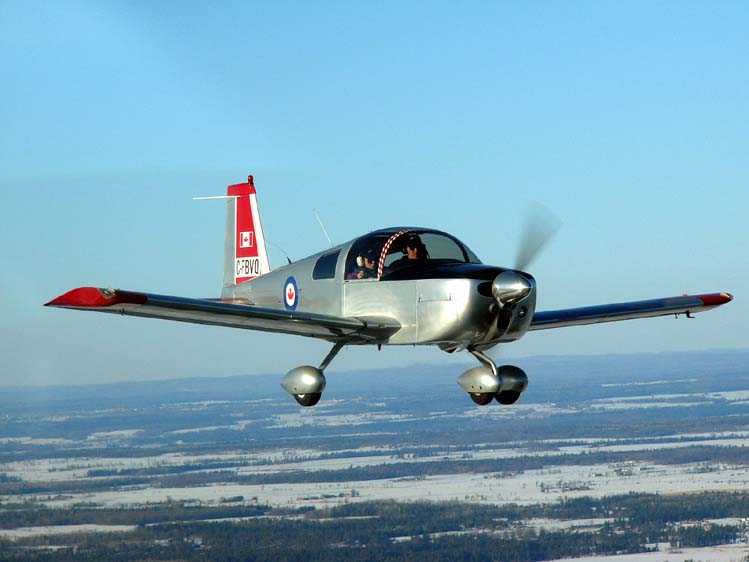
Grumman American AA-1
The Grumman American AA-1 series emerged in the late 1960s as a nimble, cost-effective two-seat trainer and sport aircraft. Born from American Aviation’s pursuit of simplicity and economy, the AA-1 combined a lightweight airframe with responsive handling, appealing to flight schools and private owners alike. Over its production run, refinements in engine power, cockpit comfort, and aerodynamics ensured the AA-1 retained relevance in a competitive general aviation market.
Development History
Origins at American Aviation
American Aviation set out in 1967 to design a basic trainer that minimized manufacturing and operating costs. By employing bonded aluminum construction and limiting control surfaces to essential elements, the company created a baseline airframe weighing under 900 kg empty. Flight testing in 1968 validated the concept: the prototype demonstrated docile stall behavior and crisp roll response, earning praise from early evaluators.
Acquisition by Grumman
In 1971, Grumman Aircraft bought American Aviation, rebranding the AA-1 as the Grumman American series. Under new stewardship, production ramped up, quality control tightened, and marketing broadened to reach flight schools worldwide. Minor airframe tweaks ensued, along with the introduction of more powerful Lycoming engines and improved avionics options over successive models.
Design Features
Airframe and Structure
The AA-1 airframe utilizes a semi-monocoque fuselage made from bonded and riveted 2024-T3 aluminum. Key structural highlights include:
- Wing spars formed from extruded aluminum I-beams
- Stressed-skin wings with integral fuel tanks holding 120 L total
- Removable cowling panels for rapid engine access
- Fixed tricycle landing gear with oleo-pneumatic shock absorption
This lightweight yet sturdy construction yields an empty weight around 880 kg, contributing to low stall speeds and minimal runway demands.
Aerodynamic Characteristics
Aerodynamic efficiency underpins the AA-1’s performance. Features include:
- A straight-tapered wing with 6° dihedral for roll stability
- NACA 2413 airfoil balancing lift and gentle stall progression
- Rounded wingtips to reduce induced drag
- Control-surface mass balancing to prevent flutter at high speeds
The result is a cruise speed near 190 km/h with fuel economy exceeding 10 L/h in economy settings.
Control System
The AA-1 employs conventional push-pull rods and torque tubes, eliminating complex pulleys and cables. Controls are direct and free of slop, providing precise stick response. Differential ailerons and a standard horn-balanced rudder keep control forces modest, ideal for student training.
Cockpit and Avionics
The two-seat side-by-side cockpit emphasizes ergonomics and visibility. Features include:
- Large greenhouse canopy offering 300° horizontal sightlines
- Adjustable seats accommodating pilots from 1.5 m to 1.9 m tall
- Basic instrument panel layout with room for steam gauges or modern EFIS upgrades
- Ventilation via adjustable vents and optional cabin heat for high-altitude flights
Optional avionics bundles upgraded the AA-1 over its life, adding VOR/ILS navigation, transponder with Mode C, and later GPS units.
Powerplant and Propulsion
Engine Variants
Across its variants, the AA-1 series saw two primary Lycoming engines:
- Lycoming O-235-C1 rated at 115 hp (AA-1 Yankee Clipper)
- Lycoming O-320-A2B rated at 150 hp (AA-1B Trainer and later AG-5B Tiger)
Both engines drive a fixed-pitch, two-blade propeller. The O-320 upgrade increased climb rate by 20 % and raised cruise speed by roughly 15 km/h.
Fuel System
Integral wing tanks feed a single engine-driven fuel pump, supplemented by an electric backup pump. A manual selector allows switching between left and right tanks to maintain lateral balance. Low-fuel warning lights and a fuel pressure gauge ensure pilots maintain adequate reserves for training patterns and cross-country legs.
Performance Specifications
The AA-1’s blend of light weight and efficient aerodynamics yields competitive performance for its class:
- Maximum cruise speed: 190 km/h at 3,000 m
- Best rate of climb speed: 115 km/h yielding 4 m/s
- Stall speed (flaps down): 78 km/h
- Service ceiling: 4,600 m
- Range with 30-minute reserve: 950 km
- Takeoff distance over 50 ft obstacle: 470 m
- Landing distance from 50 ft: 550 m
Fuel consumption hovers around 10–12 L/h in typical cruise, translating to low operating costs for training organizations.
Variants and Model Evolution
Throughout its production from 1969 to 1979, the AA-1 series evolved:
- AA-1 Yankee Clipper: Original 115 hp model with basic instrumentation
- AA-1A Trainer: Minor cockpit updates and dual controls for instruction
- AA-1B Trainer: 150 hp O-320 engine, higher gross weight, improved climb
- AG-5B Tiger: Post-Grumman continuation by American General with refined cowlings and interior
- AG-5C Tiger R: Modernized Tiger variant featuring composite wingtips and optional Garmin avionics
Each iteration built on the AA-1’s core strengths while addressing pilot and operator feedback.
Operational Use and Legacy
Flight schools valued the AA-1 for its predictable handling and low direct operating costs. Private owners appreciated the tight control harmony and the ability to upgrade avionics affordably. Although production numbers remained modest—just over 1,300 airframes—many AA-1s remain active today, frequently found in flying clubs and owner-flown for recreation or transition training.
The AA-1’s design philosophy of simplicity and efficiency influenced later light aircraft, demonstrating that cost-conscious construction need not sacrifice performance or safety.
Technical Specifications Summary
| Parameter | AA-1B Trainer |
|---|---|
| Crew | 2 |
| Length | 6.53 m |
| Wingspan | 9.45 m |
| Height | 2.10 m |
| Wing Area | 12.4 m² |
| Empty Weight | 880 kg |
| Maximum Takeoff Weight | 1,220 kg |
| Powerplant | Lycoming O-320-A2B, 150 hp |
| Propeller | 2-blade fixed-pitch |
| Fuel Capacity | 120 L |
| Maximum Cruise Speed | 190 km/h |
| Stall Speed (flaps down) | 78 km/h |
| Rate of Climb | 4 m/s |
| Service Ceiling | 4,600 m |
| Range (30-min reserve) | 950 km |
| Takeoff Distance (50 ft obstacle) | 470 m |
| Landing Distance (50 ft obstacle) | 550 m |
Conclusion
The Grumman American AA-1 series stands as a testament to straightforward, economical aircraft design. Its bonded-aluminum structure, clean aerodynamics, and reliable Lycoming powerplants produced an agile trainer that still resonates with pilots today. With an enduring presence in flight schools and private hangars, the AA-1’s legacy persists as a benchmark for simplicity, efficiency, and pilot-centric handling in light aviation.
