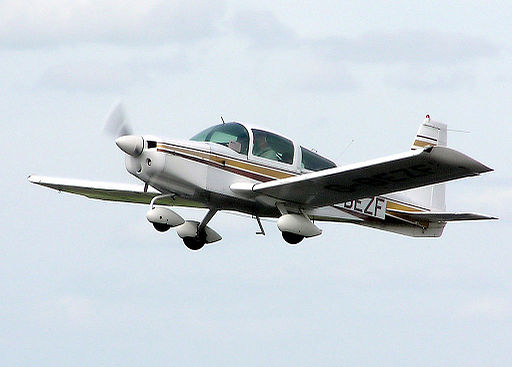
Grumman American AA-5
The Grumman American AA-5 series emerged in the early 1970s as a four-seat, light-sport aircraft marrying ease of operation with spirited performance. Building on lessons from the smaller AA-1, the AA-5 offered greater cabin comfort, extended range, and refined aerodynamics. Over its production run, models like the Traveler, Cheetah, and Tiger cemented the AA-5’s reputation as a cost-effective tourer and reliable family aircraft.
Passengers appreciate the AA-5’s roomy side-by-side seating, generous baggage space, and large canopy. Pilots laud its precise handling, docile stall characteristics, and efficient cruise speeds. Today, many AA-5s remain active in flight schools and owner-flown fleets, testament to their robust design and enduring appeal.
Development History
From AA-1 Roots to Four Seats
American Aviation initiated the AA-5 project to capture a segment between basic trainers and higher-end four-seat cruisers. Engineers lengthened the AA-1 fuselage by nearly a meter, stretched the wing by 20 percent, and added two rear seats. These changes elevated gross weight and improved load-carrying without sacrificing agility.
Flight tests in 1971 verified crisp control response and benign stall behavior. Early feedback led to minor tweaks in tailplane incidence and flap geometry to ensure balanced handling across all weights.
Grumman Acquisition and Series Evolution
When Grumman Aircraft acquired American Aviation in 1971, the AA-5 lineup gained stronger marketing and support. Initial production of the AA-5 Traveler began in 1973, followed by aerodynamic refinements yielding the AA-5A Cheetah in 1976 and the higher-powered AA-5B Tiger in 1979. Each variant introduced incremental upgrades in engine power, drag reduction, and cockpit amenities.
Airframe and Aerodynamics
Structural Design
The AA-5’s semi-monocoque fuselage combines aluminum skins bonded and riveted over a framework of bulkheads and stringers. Main wing spars are constructed from extruded aluminum I-beams, while ribs and control-surface spars utilize lighter alloy. Landing gear legs are spring-steel composites, offering shock absorption without hydraulic complexity.
Torsional rigidity of the wing-fuselage joint enables precise roll control. Corrosion-protected fuel tanks sit within the wing structure, eliminating external bladder vulnerability and simplifying pre-flight inspections.
Wing and Control Surfaces
A straight-tapered wing with 6° dihedral provides stability in cruise and responsiveness in maneuvering. Double-slotted flaps extend to 35° for steep approach angles and reduced stall speeds. Frise-type ailerons and horn-balanced rudder maintain crisp, yet well-damped, control forces.
Advanced fairings streamline wing root and fuselage fillets, trimming parasite drag. Early models featured plain wingtips; later Cheetahs and Tigers adopted tapered tips to further reduce induced drag and improve roll rate.
Propulsion and Powerplant
Engine Options
Three primary powerplants propelled the AA-5 family:
- AA-5 Traveler: Lycoming O-320-E2G rated at 150 shp
- AA-5A Cheetah: Same 150-shp engine with improved cowling and propeller
- AA-5B Tiger: Lycoming O-320-A2B uprated to 160 shp
All engines drive a fixed-pitch, two-blade propeller. The Tiger’s higher compression ratio and spinners optimized airflow for a 10-percent lift in cruise speed over the Traveler.
Fuel System
Each wing houses an integral fuel tank with a total capacity of 189 liters. A selector valve permits fuel feed from left, right, or both tanks simultaneously. An engine-driven pump is backed up by an electric auxiliary pump to guarantee flow during critical phases. Float-type fuel gauges in each tank provide quick visual reference.
Cockpit and Avionics
Cabin Layout
The AA-5’s cabin spans 1.2 meters at the shoulders, accommodating pilots up to 1.9 meters tall. Seats offer fore-aft and recline adjustment. A single door on each side provides easy entry, while the wraparound windshield and door windows deliver panoramic visibility. Baggage compartment capacity ranges from 90 to 120 kilograms, accessible through a floor hatch behind the rear seats.
Instrumentation Options
Basic models come equipped with analog gauges: airspeed, altimeter, vertical speed, turn coordinator, and engine tachometer. Optional packages add:
- VHF NAV/COM radios and transponder with Mode C
- GPS navigator and handheld mounting point
- Autopilot with altitude hold
- Audio panel with intercom and marker beacon receiver
Later Tigers often feature Glass Panel retrofits, replacing steam gauges with two large multifunction displays and an integrated GPS/COM stack.
Performance Characteristics
Speed, Range, and Endurance
The AA-5 series combines moderate power with efficient aerodynamics:
- Maximum cruise speed:
- Traveler: 210 km/h
- Cheetah: 215 km/h
- Tiger: 225 km/h
- Economy cruise (55% power):
- Fuel flow near 22 liters/hour
- Range with 45-minute reserve up to 1,150 km
- Service ceiling: 4,600 meters
These figures make the Tiger competitive with higher-powered four-seat aircraft, yet the Traveler and Cheetah excel in operating costs.
Climb and Takeoff/Landing
- Rate of climb at sea level:
- Traveler: 4.3 m/s
- Cheetah: 4.5 m/s
- Tiger: 5.0 m/s
- Takeoff distance over 50-ft obstacle: 480 meters
- Landing distance from 50-ft obstacle: 550 meters
- Stall speed (flaps down): 85 km/h
Slotted flaps and low wing loading ensure a forgiving stall break and controllable sink rates on approach.
Variants in the AA-5 Family
Traveler
The Traveler introduced entry-level four-seat flying with a robust O-320 engine, plain wingtips, and basic interior. It served flight schools and budget-conscious owners, valued for predictability and strong safety margins.
Cheetah
The Cheetah incorporated a reshaped cowling, three-blade propeller option, and tapered wingtips. Drag reduction measures boosted cruise speed by 5 km/h without extra power. Interior upgrades included upholstered seats and improved soundproofing.
Tiger
The top-tier Tiger added 10 hp, streamlined engine baffles, and a semi-tuned muffler. A standard spinner and polished propeller raised cruise speeds into the mid-220 km/h range. Optional Garmin avionics packages became popular among cross-country pilots.
Operational Use and Legacy
Flight schools continue to deploy AA-5s for complex training due to their conventional flight characteristics and modern avionics retrofit paths. Private owners prize Tigers for weekend touring and air-show attendance. The AA-5’s low operating costs, structural durability, and ease of maintenance have fostered an enthusiastic owner community that supports parts pooling and peer-to-peer technical forums.
Generations of pilots describe the AA-5 as “transparent” in the air—its handling intuitive and free of surprises. That quality, combined with its payload and performance balance, secures the AA-5’s place in light-aviation history.
Technical Specifications Summary
| Parameter | AA-5 Traveler | AA-5A Cheetah | AA-5B Tiger |
|---|---|---|---|
| Crew | 1 pilot + 3 passengers | 1 + 3 | 1 + 3 |
| Length | 6.96 m | 6.96 m | 6.96 m |
| Wingspan | 8.97 m | 8.97 m | 8.97 m |
| Height | 2.16 m | 2.16 m | 2.16 m |
| Wing Area | 13.2 m² | 13.2 m² | 13.2 m² |
| Empty Weight | 730 kg | 735 kg | 745 kg |
| Maximum Takeoff Weight | 1,155 kg | 1,155 kg | 1,169 kg |
| Powerplant | Lycoming O-320-E2G, 150 shp | O-320-E2G, 150 shp | O-320-A2B, 160 shp |
| Fuel Capacity | 189 L | 189 L | 189 L |
| Maximum Cruise Speed | 210 km/h | 215 km/h | 225 km/h |
| Economy Cruise Speed | 185 km/h | 190 km/h | 200 km/h |
| Service Ceiling | 4,600 m | 4,600 m | 4,600 m |
| Rate of Climb | 4.3 m/s | 4.5 m/s | 5.0 m/s |
| Range (45-min reserve) | 1,050 km | 1,100 km | 1,150 km |
| Stall Speed (flaps down) | 85 km/h | 85 km/h | 85 km/h |
| Takeoff Distance (50 ft obstacle) | 480 m | 480 m | 480 m |
| Landing Distance (50 ft obstacle) | 550 m | 550 m | 550 m |
Conclusion
The Grumman American AA-5 series redefined four-seat light aircraft by blending aerodynamic efficiency, manageable power, and practical cabin space. From the foundational Traveler to the performance-oriented Tiger, each variant delivered incremental improvements without losing sight of economy and pilot-friendly handling. Decades later, the AA-5 remains a cherished member of general aviation, admired for its transparent flight characteristics and capacity to carry families and cross-country adventurers safely and comfortably.
