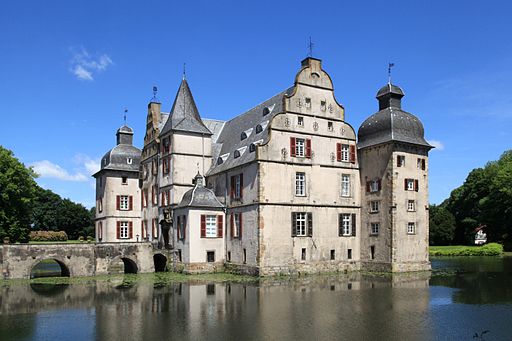
Haus Bodelschwingh is closely tied to the social, religious, and architectural history of Germany, particularly through its connection to the Bodelschwingh family, a lineage known for its influence in theology, social reform, and charitable work. The estate originated as a noble residence and gradually evolved into a symbol of Protestant engagement with social responsibility. Over generations, the site reflected shifting priorities, moving from private aristocratic use toward broader community-oriented purposes. Its development mirrored the wider transformation of German society during the nineteenth and early twentieth centuries, when faith-based initiatives increasingly addressed poverty, illness, and social exclusion through organized institutions rather than informal charity.
Architectural Character and Spatial Design
Architecturally, Haus Bodelschwingh presents a layered composition shaped by successive renovations and expansions. The structure combines elements of traditional manor architecture with later functional additions, resulting in a complex that feels both stately and approachable. Solid masonry walls, restrained decorative details, and a clear spatial hierarchy emphasize durability and order rather than ostentation. The surrounding grounds were designed to support contemplation and everyday use at the same time, blending landscaped areas with practical pathways. This balance between formality and function reflects the values associated with the house, where aesthetic presence was never meant to overshadow social purpose.
Role in Social and Diaconal Work
One of the defining aspects of Haus Bodelschwingh is its role in the history of diaconal and social welfare initiatives. The house became associated with efforts to support marginalized groups, including people with disabilities, chronic illnesses, and those living in poverty. From this base, ideas were developed that later influenced larger institutional movements, most notably those connected with Protestant social care. Rather than functioning solely as an administrative center, Haus Bodelschwingh served as a lived environment where care, education, and spiritual life intersected. This integration of daily life and service gave the site a practical credibility that extended far beyond its physical boundaries.
Cultural and Educational Significance
Beyond social care, Haus Bodelschwingh has held cultural and educational importance. It became a meeting place for theologians, educators, and reform-minded thinkers who shared a belief in socially engaged Christianity. Discussions held there contributed to evolving perspectives on responsibility, dignity, and the role of institutions in supporting vulnerable individuals. Educational programs connected to the house emphasized holistic development, combining intellectual formation with ethical reflection. Over time, this approach helped shape broader debates about inclusion and humane care within both religious and secular contexts.
Relationship to the Surrounding Community
The relationship between Haus Bodelschwingh and its surrounding community has always been central to its identity. Rather than remaining isolated as a private estate, the house gradually opened itself to interaction with local residents and institutions. Employment opportunities, cooperative projects, and shared spaces fostered a sense of mutual dependence. This openness reduced the social distance often associated with large estates or care institutions, reinforcing the idea that social responsibility is most effective when rooted in everyday relationships. The house thus functioned not as a detached landmark, but as an active participant in local life.
Preservation and Contemporary Relevance
Today, Haus Bodelschwingh stands as a reminder of how architecture, faith, and social engagement can be meaningfully intertwined. Preservation efforts focus not only on maintaining the physical structure, but also on safeguarding the values historically associated with the site. Its continued relevance lies in demonstrating that long-term social commitment requires stable places, thoughtful design, and a willingness to adapt over time. In an era marked by rapid change and fragmented communities, Haus Bodelschwingh offers an enduring example of how spaces can embody care, continuity, and collective responsibility.
