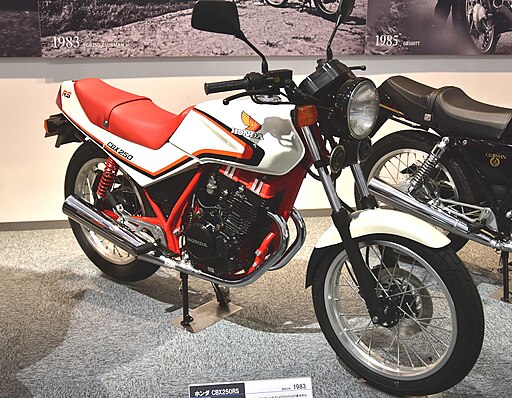
Honda CBX250RS
The Honda CBX250RS emerged in the mid-1980s as an agile, sporty commuter machine designed to bridge the gap between everyday practicality and spirited riding. Tailored for riders seeking a nimble handling package and rev-happy engine, the CBX250RS blended Japanese engineering precision with a chassis geometry optimized for quick direction changes and confidence-inspiring feedback. While its modest 250 cc displacement positioned it squarely in the entry-level segment, Honda infused it with race-inspired hardware and an enthusiast’s spirit rarely seen on commuter bikes of the era.
Throughout its production span, the CBX250RS carved a niche among riders who craved a mini sportbike that could navigate city streets with ease yet come alive on twisty backroads. Its lightweight construction, coupled with a high-revving parallel-twin heart, provided a blend of low-end tractability and top-end excitement. Beyond pure performance figures, the CBX250RS showcased Honda’s commitment to reliability, daily usability, and a rider-focused ergonomics package. In this deep dive, we’ll explore every facet of this clever 250 cc machine, from its engine internals and chassis layout to its routine maintenance considerations and on-road character.
Engine and Performance
Engine Architecture
At its core, the CBX250RS is powered by a liquid-cooled, four-stroke, parallel-twin engine sporting a dual overhead camshaft (DOHC) configuration. Each cylinder measures 53 mm in bore and 53 mm in stroke, yielding a perfectly square geometry that balances torque delivery with revving capability. The engine’s compression ratio of 11.0:1 underscores its sporting intent, making high-octane pump fuel advisable for peak performance and clean combustion.
A six-speed gearbox sits bolted directly to the crankcase, promoting compact packaging and a short final drive path. The smooth-shifting transmission allows riders to keep the engine in its powerband, with a redline just above 12,000 rpm—a thrilling realm for a 250 cc twin.
Fueling and Power Output
Fuel is metered through twin Keihin MV carburetors, each nozzle perfectly tuned to deliver crisp throttle response and efficient atomization. A small yet effective airbox, combined with precisely jetted carbs and a full-flow coolant jacket, ensures the engine remains responsive from idle all the way to its screaming rev limit.
Typical output figures sit around 32 PS (31.5 hp) at 11,500 rpm, with peak torque of 21 Nm at 9,500 rpm. Though not earth-shattering on paper, these numbers translate to a lively, eager-to-rev feeling that rewards smooth, high-rpm riding styles more common in sportbikes than commuter machines.
Exhaust and Emissions
Exhaust gases flow through a lightweight stainless steel header into a compact muffler designed to meet evolving emissions regulations of the time without sacrificing an evocative exhaust note. A small catalytic insert was optional in later models, ensuring the CBX250RS remained compliant in markets with stricter standards, yet still retained its characterful bark when ridden hard.
Chassis and Handling
Frame and Geometry
The CBX250RS employs a steel perimeter frame—a design Honda used to centralize mass and enhance torsional rigidity. The engine acts as a stressed member, trimming weight and promoting sharper turn-in characteristics. With a wheelbase of just 1,335 mm, the bike feels compact and agile, pivoting easily through corners.
Rake and trail specifications (25° rake, 103 mm trail) strike a balance between stability at speed and responsiveness at lower velocities. The result is a bike that never feels twitchy, yet eagerly changes direction when prompted.
Suspension Setup
Up front, 35 mm telescopic forks deliver 110 mm of travel, tuned to offer a firm ride without jarring the rider over urban potholes. Preload adjustment on the rear twin-shock units allows owners to dial in sag for solo or two-up riding. With 100 mm of rear wheel travel, the shocks absorb bumps while controlling chassis movement under acceleration and cornering loads.
Braking System
Stopping power comes courtesy of a single 296 mm hydraulic disc brake at the front, paired with a twin-piston caliper. At the rear, a sealed mechanical drum brake provides gentle, progressive retardation without surprise lock-ups. This combination ensured predictable braking performance in dry conditions, though moderate rainfall called for smoother lever inputs.
Electrical and Instrumentation
Charging and Ignition
A 12 V, 35 W alternator maintains battery health and powers lighting even at low revs. The CD ignition module, paired with twin coils, delivers precise spark timing across the rev range. This electronic ignition replaced point sets, eliminating frequent dwell-angle adjustments and enhancing reliability.
Instrument Cluster
The cockpit features two large, easy-to-read analog gauges: a 16,000 rpm tachometer on the left and a 180 km/h speedometer on the right. Between them, a compact digital clock and warning lights—neutral, high beam, oil pressure, and turn indicators—keep the rider informed. The cluster’s white-faced dials on later editions improved legibility under varying light conditions.
Lighting Package
Halogen headlights, a bright tail lamp, and incandescent turn signals round out the lighting suite. Reflective housing geometry maximized beam spread, giving urban riders confident night-time visibility without resorting to high-wattage bulbs that could strain the electrical system.
Dimensions and Capacity
| Specification | Measurement |
|---|---|
| Engine Displacement | 249 cc |
| Bore × Stroke | 53 mm × 53 mm |
| Compression Ratio | 11.0 :1 |
| Transmission | 6-speed, chain final drive |
| Frame Type | Steel perimeter, engine stressed member |
| Front Suspension | 35 mm telescopic forks, 110 mm travel |
| Rear Suspension | Twin shocks, adjustable preload, 100 mm travel |
| Front Brake | 296 mm disc |
| Rear Brake | 110 mm drum |
| Wheelbase | 1,335 mm |
| Seat Height | 780 mm |
| Wet Weight | 147 kg |
| Fuel Capacity | 12 L |
| Top Speed | 140 km/h (estimated) |
Ergonomics and Rider Comfort
Ergonomically, the CBX250RS strikes a sporty yet relaxed stance. A slightly rear-set footpeg position encourages a forward-leaning posture without causing rider fatigue on longer commutes. The contoured seat, 780 mm above the ground, accommodates a wide range of riders, allowing full foot contact at stops for shorter riders and room to move on track-style riding for taller individuals.
Handlebar positioning combines a gentle rise with slight pull-back, offering precise steering inputs while easing strain on the wrists. The fuel tank’s sculpted shape allows confident grip with the knees, enhancing stability during spirited cornering.
Maintenance and Servicing
Routine maintenance on the CBX250RS is straightforward, thanks to its classic carbureted layout and easily accessible engine components. Valve clearance checks every 8,000 km ensure peak high-rpm performance, while carburetor syncs prevent fuel starvation or rich running. The enclosed O-ring chain requires lubrication every 500 km, and a full fluid change—including coolant, engine oil, and brake fluid—every 12 months conserves component life.
Honda’s global parts network makes replacement items like filters, brake shoes, and electrical relays readily available even decades after production ceased. An active community of enthusiasts further supports restoration efforts, with reproduction decals, seat covers, and aftermarket exhausts keeping these bikes on the road.
Riding Experience
On the road, the CBX250RS rewards smooth, rev-centric riding. Off-the-line acceleration is surprisingly brisk, though the bike truly shines between 7,000 rpm and its redline. Corner entrance is composed, the chassis offering clear feedback through the grips and footpegs. Brake setup encourages early application and modulation, preventing panic-stop front dives.
Whether weaving through city traffic or attacking country lanes, the CBX250RS feels balanced and compliant. Its light curb weight allows novices to build confidence quickly, while experienced riders can exploit its chassis limits without impediment. Though modern sportbikes surpass it in outright specs, the CBX250RS’s mechanical purity and communicative nature remain its greatest assets.
Conclusion
The Honda CBX250RS exemplifies a harmonious blend of sporty character and everyday usability. Its high-revving twin engine, nimble chassis, and rider-focused ergonomics created a compelling package in the 250 cc class. Decades on, it endures as a testament to Honda’s engineering ethos: delivering reliability, performance, and fun in equal measure. Whether you’re hunting for a vintage lightweight sportbike or seeking an affordable, engaging commuter, the CBX250RS still thrills with its timeless mid-80s charm.
