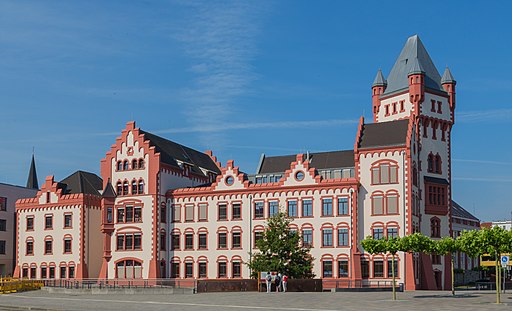
Hörder Burg is located in the district of Hörde in the city of Dortmund, an area that historically lay at the crossroads of important trade routes in the Ruhr region. Unlike many rural castles, Hörder Burg developed within an increasingly urban environment, reflecting the growth of Hörde from a small settlement into a significant town. Its position near waterways and roads allowed control over local commerce and movement, making it an important stronghold in a region shaped by economic exchange and political competition. The surrounding landscape, once characterized by marshy ground and open fields, provided natural defensive advantages that were later absorbed into the expanding urban fabric.
Early History and Medieval Foundations
The origins of Hörder Burg date back to the Middle Ages, when fortified residences were established to secure territorial claims and administrative authority. Early structures on the site were likely constructed with a combination of timber and stone, gradually evolving into a more permanent fortification as the importance of Hörde increased. The castle served as the seat of local rulers or their representatives, functioning as both a military installation and a center of governance. During this period, Hörder Burg played a key role in asserting control over surrounding lands and maintaining order in a region marked by shifting alliances and frequent disputes.
Architectural Form and Defensive Design
Architecturally, Hörder Burg was shaped by its dual role as fortress and residence. The design emphasized strong walls, limited access points, and defensive features suited to its low-lying terrain. A moat or water-filled ditch likely surrounded parts of the complex, enhancing its defensive capabilities while also defining its boundaries within the settlement. Inside the fortification, residential and administrative buildings were arranged to support daily life, with halls, storage rooms, and service areas organized around a central courtyard. This practical layout reflected the need for both security and functionality in a medieval urban castle.
Role in Local Administration and Society
Throughout the medieval period, Hörder Burg functioned as a focal point of local authority. Legal proceedings, administrative decisions, and economic management were centered within its walls, influencing the lives of the surrounding population. The presence of the castle contributed to the development of Hörde as a town, attracting craftsmen, merchants, and laborers who benefited from the protection and stability it provided. In times of conflict, the castle offered refuge and defense, reinforcing its importance as a symbol of power and security within the community.
Transformation During the Early Modern Period
As warfare and political structures evolved, the military significance of Hörder Burg gradually declined. Advances in weaponry reduced the effectiveness of traditional medieval defenses, prompting changes in the use and appearance of the castle. During the early modern period, the focus shifted toward administrative and residential functions, with interior spaces adapted to meet changing needs. Decorative elements and structural modifications reflected contemporary tastes, while some defensive features lost their original purpose. These transformations allowed the castle to remain relevant even as its role within the region changed.
Decline and Urban Integration
In later centuries, the expansion of industry and urban development in the Ruhr region dramatically altered the surroundings of Hörder Burg. As Hörde became increasingly industrialized, the castle’s original function diminished, and parts of the structure fell into disuse or were altered to accommodate new purposes. The growth of the city absorbed the former castle grounds, integrating them into the modern urban landscape. Despite these changes, the historical significance of the site remained embedded in the identity of the district.
Legacy and Cultural Significance
Today, Hörder Burg is remembered as an important element of Dortmund’s historical heritage, representing the medieval roots of a region better known for its industrial past. Even where the original structures have been modified or partially lost, the site continues to symbolize the transition from feudal stronghold to urban center. Hörder Burg offers valuable insight into how medieval castles adapted to changing political, economic, and social conditions, and it remains a meaningful reference point for understanding the long and complex history of Hörde and the wider Ruhr area.
