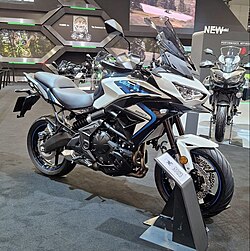
Kawasaki Versys 650: The Ultimate Middleweight Adventure-Touring Motorcycle for Everyday Exploration
The Kawasaki Versys 650 has earned a reputation as one of the most versatile motorcycles in the middleweight adventure-touring category. Designed to deliver comfort, practicality, reliability, and enjoyable performance, the Versys 650 occupies a unique position between aggressive adventure machines and traditional road-focused motorcycles. It is a motorcycle built for riders who want one machine capable of handling daily commuting, weekend escapes, long-distance touring, and occasional exploration beyond smooth pavement.
The name “Versys” itself reflects Kawasaki’s philosophy behind the motorcycle: versatility. Unlike motorcycles designed around a single purpose, the Versys 650 is created to adapt. It offers the upright riding position and long-distance comfort associated with adventure motorcycles while maintaining the manageable size and approachable performance of a middleweight road bike. This combination has made it popular among beginners moving into larger motorcycles, experienced riders looking for practical transportation, and touring enthusiasts who value simplicity and reliability.
Since its introduction, the Kawasaki Versys 650 has evolved significantly while maintaining its original mission. Each generation has received improvements in styling, electronics, comfort, suspension refinement, and overall usability. However, the fundamental character of the motorcycle has remained consistent: a dependable, comfortable, and enjoyable machine designed to make every journey more accessible.
In a motorcycle market increasingly filled with specialized machines, the Versys 650 stands out because it does not demand that riders choose between practicality and excitement. It can comfortably navigate city traffic during the week, carry luggage on extended trips, and still provide an engaging riding experience on winding roads. This broad capability is the reason many owners describe it as a motorcycle that can truly do almost everything.
The History and Evolution of the Kawasaki Versys 650
The Kawasaki Versys 650 was introduced in 2007 as part of Kawasaki’s effort to create a motorcycle that combined the best qualities of several categories. At the time, adventure motorcycles were becoming increasingly popular, but many available models were large, heavy, and focused on serious off-road capability. Kawasaki identified a need for a more accessible motorcycle that could provide adventure-inspired comfort without the size and complexity of larger machines.
The first-generation Versys 650 was based around Kawasaki’s proven 649 cc parallel-twin engine, which had already demonstrated strong reliability in models such as the Kawasaki Ninja 650 and ER-6 series. By combining this dependable engine with an upright chassis, longer suspension travel, and adventure-style ergonomics, Kawasaki created a motorcycle that offered a unique blend of performance and practicality.
The early Versys 650 introduced riders to a different interpretation of adventure motorcycling. It was not designed to compete directly with large dual-sport motorcycles or extreme off-road machines. Instead, it focused on real-world riding conditions where most motorcyclists spend their time: highways, city streets, rural roads, and occasional gravel routes. This practical approach quickly attracted riders who wanted adventure styling without sacrificing everyday usability.
Over the years, Kawasaki continued refining the Versys 650. Later generations received updated styling, improved suspension components, better wind protection, revised ergonomics, and modern electronic features. The motorcycle gradually developed from a unique niche model into one of Kawasaki’s most recognized touring and adventure-oriented motorcycles.
The introduction of newer versions also reflected changing rider expectations. Modern motorcyclists increasingly value features such as traction control, LED lighting, improved displays, and enhanced comfort. Kawasaki incorporated these updates while preserving the motorcycle’s core identity. The result is a machine that feels contemporary while remaining faithful to the original concept of versatile riding.
A Motorcycle Designed for Real-World Riders
The success of the Versys 650 comes from understanding how most riders actually use motorcycles. While extreme performance and advanced technology attract attention, many riders need a motorcycle that works in everyday situations. A machine that starts reliably every morning, feels comfortable during long rides, carries luggage, handles traffic, and remains enjoyable on scenic roads provides genuine value.
The Versys 650 was created around this philosophy. It is not a motorcycle that requires special conditions to be enjoyable. Instead, it delivers satisfaction during ordinary rides, making every commute, weekend trip, and journey feel more rewarding. This practical character has become one of its greatest strengths.
Adventure-Inspired Design and Styling
The Kawasaki Versys 650’s design clearly communicates its adventure-touring purpose. Its tall stance, upright riding position, and functional bodywork create the appearance of a motorcycle ready for exploration. However, unlike some larger adventure motorcycles that can appear intimidating, the Versys 650 maintains a balanced and approachable presence.
The front section features a distinctive headlight arrangement and aerodynamic fairing designed to provide both visual identity and practical wind protection. The motorcycle’s styling has changed through different generations, but Kawasaki has consistently emphasized functionality rather than unnecessary decoration. Every body panel serves a purpose, whether improving aerodynamics, protecting mechanical components, or enhancing rider comfort.
The tall windscreen is one of the motorcycle’s most important design features. Long-distance riders benefit from reduced wind pressure, especially during highway travel. Later versions introduced adjustable windscreen designs, allowing riders to customize protection based on height, riding position, and personal preference.
The fuel tank design contributes to both appearance and ergonomics. Its shape allows riders to grip the motorcycle comfortably while maintaining a natural riding position. The tank provides a balance between adventure styling and practical usability, avoiding the excessive width sometimes found on larger touring motorcycles.
The seating arrangement reflects the motorcycle’s focus on comfort. The relatively upright position reduces pressure on the wrists and lower back compared with sport motorcycles, making the Versys 650 suitable for longer rides. The relationship between seat, handlebars, and foot pegs creates a relaxed riding triangle that accommodates many different body types.
Storage and accessory compatibility are also important aspects of the Versys 650’s design. Kawasaki offers various touring accessories, including panniers, top cases, hand guards, heated grips, and protective equipment. These options allow owners to customize the motorcycle according to their intended use, whether that means daily commuting or extended adventure touring.
The Kawasaki Versys 650 Engine: Reliable Middleweight Performance
The heart of the Kawasaki Versys 650 is its 649 cc liquid-cooled parallel-twin engine, a powerplant known for durability, smoothness, and flexible performance. Rather than focusing on maximum horsepower, Kawasaki designed the engine to provide strong usable power across everyday riding conditions. This makes the motorcycle approachable while still offering enough performance for experienced riders.
The parallel-twin configuration provides an excellent balance between smooth operation and mechanical character. Compared with smaller engines, the 649 cc displacement delivers stronger acceleration and improved highway capability. Compared with larger adventure engines, it remains lightweight, efficient, and easy to manage.
One of the engine’s greatest strengths is its torque delivery. The motorcycle produces strong low- and mid-range performance, allowing riders to accelerate confidently without constantly searching for high engine speeds. This characteristic is especially useful during touring because the engine feels relaxed when carrying luggage or maintaining highway speeds.
The fuel-injected engine provides consistent performance in different weather and riding conditions. Electronic fuel management ensures reliable starting and smooth throttle response, reducing the adjustments and maintenance requirements associated with older carbureted motorcycles.
The six-speed transmission works well with the engine’s character. The lower gears provide responsive acceleration for city riding and winding roads, while the higher gears allow comfortable cruising during longer trips. Gear changes are smooth and predictable, contributing to the motorcycle’s overall refined riding experience.
Fuel efficiency is another important advantage of the Versys 650. While it offers significantly more performance than smaller motorcycles, it remains economical compared with larger adventure-touring machines. This makes it attractive to riders who want touring capability without excessive operating costs.
Performance Without Intimidation
The Versys 650 demonstrates that enjoyable performance does not require extreme specifications. Its engine provides enough power to make highway riding comfortable while remaining manageable for a wide range of riders. This balance is one of the reasons the motorcycle has remained popular for many years.
For newer riders, the engine offers room to grow. It provides more capability than entry-level motorcycles while maintaining predictable behavior. For experienced riders, it delivers enough performance to make everyday roads enjoyable without becoming unnecessarily demanding.
Riding Experience: Comfort, Control, and Confidence
The Kawasaki Versys 650 is designed around rider confidence. From the moment the motorcycle begins moving, its balanced chassis, comfortable ergonomics, and smooth engine create a feeling of control. The motorcycle feels natural rather than demanding, allowing riders to focus on enjoying the journey.
In urban environments, the Versys 650 performs exceptionally well. The upright seating position provides excellent visibility, while the manageable dimensions make filtering through traffic and navigating tight spaces easier than with many larger touring motorcycles. Despite its adventure styling, it remains practical for everyday transportation.
On winding roads, the motorcycle reveals its sporty side. The responsive engine, stable chassis, and comfortable riding position allow riders to enjoy corners while maintaining confidence. The motorcycle encourages smooth riding techniques rather than aggressive behavior, making it rewarding on scenic routes.
During highway travel, the Versys 650 demonstrates why it is considered an adventure-tourer. The engine provides enough power for sustained cruising, while the wind protection and upright ergonomics reduce fatigue. Riders can comfortably cover long distances without feeling exhausted after hours in the saddle.
Although the Versys 650 is not intended as a hardcore off-road motorcycle, it can handle light adventure situations. Gravel roads, dirt paths, and rough rural surfaces are within its capabilities, especially when equipped with appropriate tires. Its strength lies in versatility rather than specialization.
The motorcycle’s greatest achievement is how easily it adapts. It can be a commuter, a weekend explorer, a touring machine, or a practical everyday motorcycle depending on what the rider needs. This flexibility is the defining characteristic that has made the Versys 650 successful.
Chassis, Suspension, and Handling Characteristics
The Kawasaki Versys 650’s chassis is one of the main reasons the motorcycle has earned such a strong reputation among adventure-touring riders. Kawasaki designed the motorcycle around a philosophy of balance rather than extreme capability. Instead of creating a machine focused exclusively on aggressive off-road riding or high-speed performance, the company developed a platform that could provide stability, comfort, and confidence across a wide range of environments.
The motorcycle uses a high-tensile steel diamond frame that provides a strong foundation while maintaining reasonable weight. This construction contributes to the Versys 650’s predictable handling characteristics, allowing the motorcycle to feel stable during highway cruising while remaining agile on winding roads. The frame is engineered to support both solo riding and fully loaded touring, making it suitable for riders who regularly carry luggage or travel long distances.
The suspension system is designed around versatility. At the front, the motorcycle uses an inverted telescopic fork on newer generations, providing improved rigidity and refined handling. The rear suspension features Kawasaki’s Uni-Trak linkage system with an offset laydown shock absorber, a design that helps maintain comfort while controlling movement during acceleration, braking, and cornering.
Suspension travel is longer than what is typically found on conventional street motorcycles, giving the Versys 650 additional ability when encountering rough pavement, uneven roads, or light off-road surfaces. While it is not intended to compete with dedicated enduro motorcycles, this added capability allows riders to explore routes that might be uncomfortable on purely road-focused machines.
The motorcycle’s handling character is one of its strongest qualities. Steering is light and predictable, making the Versys 650 easy to maneuver at low speeds while still providing confidence during faster cornering. The upright riding position gives riders excellent leverage over the handlebars, improving control in traffic, tight corners, and challenging road conditions.
The brakes are designed to provide reliable stopping performance in a variety of situations. Modern versions feature dual front disc brakes and ABS technology, offering strong braking power with improved control. The system is tuned for everyday riding and touring rather than aggressive track use, providing smooth and confidence-inspiring operation.
The combination of frame, suspension, wheels, and brakes creates a motorcycle that feels stable without becoming heavy or difficult to manage. This balance is particularly valuable for adventure touring because riders often encounter changing conditions throughout a single journey. The Versys 650 remains composed whether traveling through city streets, highways, mountain roads, or gravel sections.
Confidence as a Design Priority
One of the defining characteristics of the Versys 650 is how comfortable it makes riders feel. The motorcycle does not demand expert-level skills to enjoy its capabilities. Instead, it provides predictable responses that allow riders to build confidence naturally.
This characteristic benefits both new and experienced riders. Beginners can develop their skills on a motorcycle that offers room for growth, while experienced riders appreciate the ability to enjoy long journeys without managing an unnecessarily complicated or demanding machine.
Touring Capability and Long-Distance Comfort
The Kawasaki Versys 650 has become especially popular among touring riders because it provides many of the benefits associated with larger adventure motorcycles while remaining practical and manageable. Its combination of comfort, efficiency, reliability, and accessory options makes it an excellent platform for extended travel.
The upright riding position is one of the motorcycle’s greatest touring advantages. Long-distance riding places significant demands on the rider’s body, and an uncomfortable riding position can quickly turn an enjoyable journey into a tiring experience. The Versys 650 reduces fatigue through relaxed ergonomics that keep the rider’s back, shoulders, and wrists in a natural position.
The seat design also supports longer journeys. While seat comfort is highly dependent on individual preference, the Versys 650 generally provides a supportive seating arrangement suitable for many hours of riding. Riders who frequently travel long distances can further enhance comfort through aftermarket seats and touring accessories.
Wind protection is another important factor in touring performance. The motorcycle’s fairing and adjustable windscreen help reduce wind pressure at highway speeds. This allows riders to maintain comfortable cruising speeds without excessive fatigue caused by constant wind exposure.
Passenger capability is another strength. The spacious seat and stable chassis make the motorcycle suitable for two-up riding. Although it is not a luxury touring machine, it can comfortably carry a passenger for weekend trips or extended adventures when properly equipped.
Luggage capacity can be expanded through Kawasaki’s accessory options and the large aftermarket support available for the Versys 650. Hard panniers, top cases, tank bags, and soft luggage systems allow owners to configure the motorcycle according to their travel style. With the right equipment, the Versys 650 becomes a capable long-distance touring machine.
Fuel range is also an important advantage during touring. The efficient parallel-twin engine combined with a practical fuel tank allows riders to travel significant distances between stops. This is especially valuable when exploring rural areas where fuel stations may not be frequent.
Technology and Modern Features
Although the Kawasaki Versys 650 maintains a practical and straightforward character, modern versions include technology designed to improve safety, convenience, and everyday usability. Kawasaki has carefully integrated these features without allowing electronics to dominate the riding experience.
One of the most significant updates in recent models is the addition of Kawasaki’s traction control system. This technology helps manage rear-wheel slip during acceleration, particularly in challenging conditions such as wet roads, loose surfaces, or unexpected changes in traction. For adventure touring, where road conditions can change quickly, traction control provides an additional layer of confidence.
The motorcycle also features modern LED lighting systems that improve visibility and durability. LED headlights provide stronger illumination while consuming less electrical power compared with traditional lighting systems. This is especially beneficial for riders who frequently travel at night or in changing weather conditions.
The instrument display has evolved throughout the motorcycle’s production. Newer versions include modern TFT displays with clear information presentation and improved readability. Riders can monitor essential information such as speed, fuel level, riding modes, and trip data easily.
Connectivity features available on some newer models allow riders to interact with motorcycle information through smartphone applications. These features provide additional convenience while maintaining the motorcycle’s focus on practical riding.
Despite these modern additions, the Versys 650 remains refreshingly simple compared with some high-end adventure motorcycles. It avoids unnecessary complexity, keeping ownership straightforward and reliable.
Reliability, Maintenance, and Ownership Costs
Reliability has always been one of Kawasaki’s strongest qualities, and the Versys 650 benefits from this reputation. The motorcycle’s 649 cc parallel-twin engine has been used in multiple Kawasaki models, allowing the company to refine the platform over many years. This proven design contributes to long-term durability and owner confidence.
The engine’s moderate state of tune is another advantage. Rather than extracting extreme power from the displacement, Kawasaki prioritizes smoothness and longevity. This means the engine operates comfortably during everyday riding and long-distance travel without excessive mechanical stress.
Routine maintenance requirements are reasonable for a motorcycle in this category. Regular oil changes, chain maintenance, brake inspections, tire checks, and scheduled servicing are necessary, but the motorcycle does not require unusually complicated procedures. This makes it suitable for riders who want dependable transportation without excessive maintenance demands.
The availability of replacement parts and aftermarket accessories further improves ownership practicality. Because the Versys 650 has been produced for many years and sold internationally, owners have access to a wide range of support resources.
Adventure touring can expose motorcycles to demanding conditions, including dust, rain, vibration, and long operating hours. The Versys 650’s durable construction allows it to handle these challenges effectively when properly maintained. Many owners report high mileage experiences with few major issues, demonstrating the motorcycle’s long-term reliability.
The Kawasaki Versys 650 Ownership Experience
Owning a Kawasaki Versys 650 is about having a motorcycle that fits naturally into everyday life. Unlike specialized machines that are excellent in limited situations but inconvenient elsewhere, the Versys 650 adapts to the rider’s needs. It can serve as transportation during the week and become an adventure companion on weekends.
Many owners appreciate the motorcycle because it encourages exploration without requiring extensive preparation. A spontaneous weekend ride can become a small adventure simply because the motorcycle is comfortable enough to travel farther and capable enough to handle different roads.
The owner community surrounding the Versys 650 is another important part of its appeal. Riders share touring experiences, maintenance advice, accessory recommendations, and modification ideas. This community support helps new owners get the most from their motorcycles.
Customization is common among Versys 650 owners. Some riders focus on touring improvements such as luggage systems, comfort seats, and additional wind protection. Others enhance adventure capability with crash protection, auxiliary lights, skid plates, and adventure tires. The motorcycle’s flexible design allows it to be adapted to many different riding styles.
Kawasaki Versys 650 Compared With Competitors
The middleweight adventure-touring category includes several strong competitors, including the Yamaha Tracer 7, Suzuki V-Strom 650, Honda NC750X, and BMW F 750 GS. Each motorcycle approaches versatility in a different way, but the Versys 650 remains competitive because of its balance of performance, comfort, and value.
Compared with the Suzuki V-Strom 650, the Versys 650 offers a sportier road-focused feel while maintaining adventure capability. The Suzuki is known for excellent touring ability and reliability, while the Kawasaki provides sharper handling and a more energetic riding character.
The Yamaha Tracer 7 offers strong performance and sporty handling, appealing to riders who prioritize excitement on paved roads. The Versys 650, however, provides a more relaxed adventure-oriented experience with greater emphasis on comfort and versatility.
The Honda NC750X focuses heavily on practicality and efficiency, including features designed for everyday usability. The Kawasaki counters with a more engaging engine character and a stronger connection to traditional motorcycle riding.
The BMW F 750 GS offers premium features and advanced technology but comes with higher ownership costs. The Versys 650 appeals to riders who want dependable adventure touring without unnecessary complexity.
Final Verdict: Why the Kawasaki Versys 650 Remains a Standout Motorcycle
The Kawasaki Versys 650 has succeeded because it understands what many riders truly need from a motorcycle. It does not attempt to be the most powerful, most luxurious, or most technologically advanced machine. Instead, it focuses on being useful, enjoyable, and dependable in almost every situation.
Its comfortable ergonomics, reliable engine, versatile chassis, touring capability, and reasonable ownership costs make it one of the most complete middleweight motorcycles available. It is equally comfortable serving as a commuter, weekend explorer, or long-distance travel companion.
The Versys 650 proves that adventure is not defined by extreme conditions or enormous motorcycles. Adventure comes from the freedom to choose different roads and the confidence that your motorcycle can handle whatever appears along the way.
For riders seeking a motorcycle that combines practicality with excitement, the Kawasaki Versys 650 remains one of the best-balanced choices in the adventure-touring world. It represents a simple but powerful idea: one motorcycle can truly do many things well.
Kawasaki Versys 650 Technical Specifications
| Specification | Details |
|---|---|
| Model | Kawasaki Versys 650 |
| Production Years | 2007–present |
| Engine Type | Liquid-cooled, four-stroke, parallel-twin, DOHC |
| Engine Displacement | 649 cc |
| Bore × Stroke | 83.0 mm × 60.0 mm |
| Compression Ratio | 10.8:1 |
| Fuel System | Electronic fuel injection |
| Cooling System | Liquid cooling |
| Maximum Power | Approximately 66 hp |
| Maximum Torque | Approximately 61 Nm |
| Transmission | 6-speed manual |
| Final Drive | Chain |
| Frame Type | High-tensile steel diamond frame |
| Front Suspension | 41 mm inverted telescopic fork |
| Rear Suspension | Uni-Trak gas-charged shock with preload adjustment |
| Front Brake | Dual 300 mm discs with ABS |
| Rear Brake | Single 250 mm disc with ABS |
| Front Tire | 120/70 R17 |
| Rear Tire | 160/60 R17 |
| Wheel Type | Cast alloy wheels |
| Seat Height | Approximately 845 mm |
| Ground Clearance | Approximately 170 mm |
| Wheelbase | Approximately 1,415 mm |
| Fuel Tank Capacity | Approximately 21 liters |
| Curb Weight | Approximately 219 kg |
| Riding Style | Adventure-touring / sport touring motorcycle |
