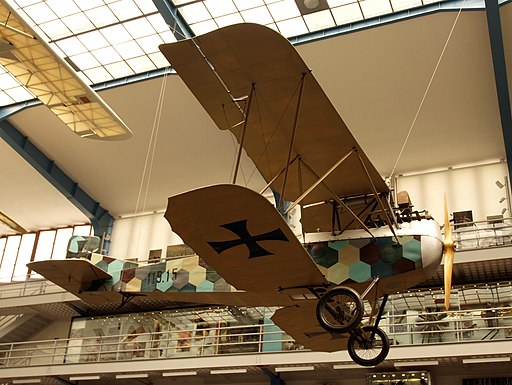
The Knoller C.II was an Austro-Hungarian two-seat reconnaissance aircraft developed during World War I. Designed by Professor Julius Knoller, it represented one of the attempts by the Austro-Hungarian Empire to produce indigenous combat aircraft tailored to the unique demands of reconnaissance and observation duties on the battlefield. Although the aircraft did not achieve widespread operational success, it embodies the experimental and developmental spirit of wartime aviation in the Central Powers. This article provides a detailed overview of the Knoller C.II, including its design philosophy, structural features, technical parameters, and operational history.
Development and Background
Designer and Development Context
Professor Julius Knoller, an Austrian aeronautical engineer, was responsible for the design of the Knoller C series aircraft. The Knoller C.II was an evolution of his earlier concepts and aimed to produce a more stable and effective reconnaissance platform than existing Austro-Hungarian two-seat aircraft. Developed in 1916 and entering service in limited numbers during 1917, the C.II sought to balance aerodynamic efficiency with structural robustness to meet the increasing demands for accurate battlefield observation and light combat roles.
Role and Tactical Requirements
The primary role of the Knoller C.II was tactical reconnaissance, including artillery spotting and photographic missions. The aircraft was required to operate in contested airspace, demanding reasonable speed, endurance, and defensive armament to survive encounters with enemy fighters.
Airframe Design and Structure
Fuselage Construction
The fuselage of the Knoller C.II featured a wooden frame structure covered predominantly with fabric, with plywood panels reinforcing the forward sections around the engine and cockpit to enhance rigidity and streamline airflow. The fuselage had a boxy yet streamlined shape characteristic of the period, designed to reduce drag while accommodating the pilot and observer in tandem cockpits.
Wing Configuration
The aircraft was a biplane with two bays of interplane struts and wire bracing. The wings were characterized by a moderate degree of stagger, improving pilot visibility and aerodynamic efficiency. The upper wing was larger than the lower wing, and both featured wooden spars and ribs covered with fabric. Notably, the wings incorporated a unique feature known as the Knoller wing warping system, an early method of lateral control that differed from the conventional ailerons commonly used.
Tail Assembly
The tailplane consisted of a fixed horizontal stabilizer with attached elevators and a vertical fin with a rudder. These surfaces were framed with wood and fabric-covered. The rudder was relatively large to provide adequate yaw control, essential for the precise maneuvering needed during observation missions.
Landing Gear
The fixed conventional landing gear consisted of a V-strut assembly with a single axle and two spoked wheels. The undercarriage was robust enough to operate from rough airfields but added to the aircraft’s overall drag.
Powerplant and Propulsion
Engine
The Knoller C.II was typically powered by a 160 horsepower (120 kW) Austro-Daimler inline six-cylinder water-cooled engine. This engine was renowned for its reliability and smooth operation, contributing to stable flight characteristics.
Cooling System
The engine was cooled by a front-mounted radiator positioned below or in front of the engine cowling. The cooling system was optimized to maintain adequate operating temperatures while minimizing aerodynamic drag.
Propeller
A two-blade fixed-pitch wooden propeller was employed, designed to provide an optimal balance between climb rate and cruising efficiency.
Armament and Equipment
Defensive Armament
The observer in the rear cockpit was equipped with a flexible mount for a single 8 mm Schwarzlose machine gun, allowing defensive coverage of the rear and upper sectors. The gun could be swiveled to respond to enemy attacks from various angles.
Offensive Armament
Typically, the aircraft did not carry forward-firing guns, as it was designed primarily for reconnaissance and observation rather than direct dogfighting.
Reconnaissance Equipment
The observer was equipped with binoculars, a camera for photographic reconnaissance, and a wireless radio set for artillery spotting and battlefield communication. These tools were essential for the aircraft’s primary reconnaissance role.
Performance Specifications
Dimensions
-
Wingspan: Approximately 12.5 meters (41 feet)
-
Length: Approximately 7.8 meters (25 feet 7 inches)
-
Height: Approximately 3.0 meters (9 feet 10 inches)
-
Wing area: Approximately 38 square meters (409 square feet)
Weight
-
Empty weight: Approximately 850 kilograms (1,874 pounds)
-
Gross weight: Approximately 1,250 kilograms (2,756 pounds)
Speed and Range
-
Maximum speed: Around 135 kilometers per hour (84 mph)
-
Service ceiling: Approximately 3,800 meters (12,500 feet)
-
Range: Approximately 350 kilometers (217 miles)
Climb Performance
-
Time to climb to 1,000 meters: Around 7 minutes
-
Rate of climb: Approximately 2.4 meters per second (472 feet per minute)
Flight Characteristics
The Knoller C.II was known for relatively stable flight behavior, making it suitable for the steady flight profiles required during observation and photographic reconnaissance. However, its wing warping control system was less responsive than ailerons, resulting in somewhat sluggish lateral control and reduced maneuverability. This limitation, combined with moderate speed, made the aircraft vulnerable in contested airspace without escort protection.
Operational Use and Legacy
Deployment
The Knoller C.II saw limited operational service primarily on the Italian Front. Its role was focused on tactical reconnaissance, artillery spotting, and battlefield surveillance, contributing vital intelligence to ground forces.
Effectiveness
While the aircraft provided stable platforms for reconnaissance missions, it was quickly overshadowed by more advanced two-seat aircraft featuring improved control systems and higher performance. The C.II’s relatively slow speed and limited maneuverability reduced its survivability against enemy fighters.
Production and Variants
Only a small number of Knoller C.II aircraft were produced, and no significant variants were developed. The experimental wing warping system and conventional construction highlighted both innovation and the limitations of early WWI aircraft design.
Postwar Impact
The Knoller C.II did not have a significant postwar legacy, but it remains a notable example of Austro-Hungarian efforts to develop indigenous military aircraft during the Great War. Lessons learned from its design and operational shortcomings informed future aircraft developments.
Technical Strengths and Weaknesses
Strengths
-
Reliable Austro-Daimler engine providing steady power
-
Stable flight characteristics suitable for reconnaissance
-
Innovative wing design showcasing early aerodynamic experimentation
-
Robust structural design able to withstand frontline operational stresses
Weaknesses
-
Wing warping control less effective than conventional ailerons, limiting maneuverability
-
Moderate speed and climb rate, making it vulnerable to enemy fighters
-
Limited defensive armament restricted self-defense capabilities
-
Small production run limited operational impact and refinement opportunities
Conclusion
The Knoller C.II serves as an intriguing chapter in Austro-Hungarian military aviation history, reflecting both the ambition and challenges of designing effective reconnaissance aircraft during World War I. Although overshadowed by more successful contemporaries, the C.II’s design and deployment demonstrate the experimental approaches taken in an era of rapid technological development. Its stable handling and reliable engine made it a competent observation platform, even as its control limitations and modest performance restricted its broader combat effectiveness. The Knoller C.II remains a valuable example of early 20th-century aircraft engineering and the evolution of military aviation.
