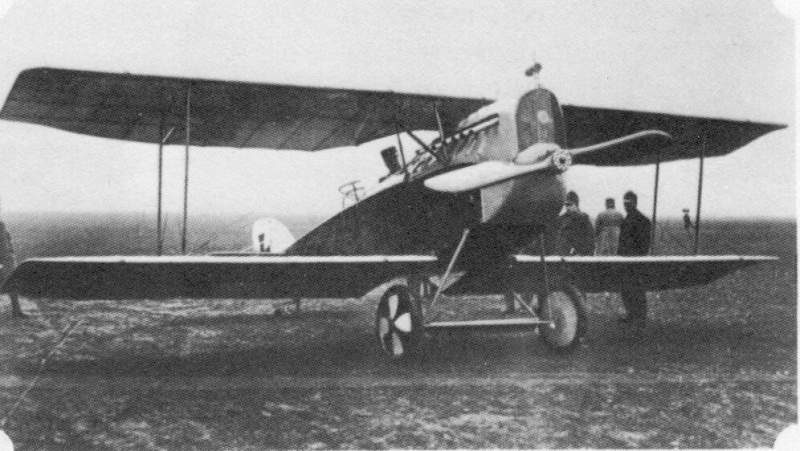
The Aviatik (Ö) C.I was a key reconnaissance and observation aircraft produced by the Austrian branch of Aviatik during World War I. It served as an essential two-seat aircraft in the Austro-Hungarian Luftfahrtruppen (air force), playing a vital role in artillery spotting, reconnaissance missions, and light bombing operations. As a licensed or locally produced variant of the German Aviatik C.I, the Austrian model was adapted for the specific needs of the Austro-Hungarian front, incorporating structural modifications and powerplant options suitable for varied combat environments. This article explores the detailed technical parameters, design features, and operational use of the Aviatik (Ö) C.I.
Development and Historical Background
Origins and Production
The Aviatik C.I originated in Germany in 1915 as a response to the need for effective two-seat reconnaissance aircraft. Recognizing its effectiveness, the Austro-Hungarian Empire obtained production licenses to manufacture the aircraft domestically, adapting it with local materials and engines. This Austrian-built model, commonly referred to as Aviatik (Ö) C.I, was produced primarily between 1916 and 1917, becoming a mainstay in the reconnaissance units on the Eastern and Italian fronts.
Role in Military Aviation
The Aviatik (Ö) C.I was designed primarily for reconnaissance and observation missions. It facilitated artillery spotting, photographic reconnaissance, and battlefield communication through wireless radio. Its design allowed a pilot and an observer/gunner to operate in tandem, with the observer responsible for both intelligence gathering and defensive armament.
Airframe and Structural Design
Fuselage
The fuselage of the Aviatik (Ö) C.I was constructed from a robust wooden frame, primarily spruce and ash, covered with fabric and plywood in areas requiring additional structural integrity and aerodynamic smoothness. The forward fuselage around the engine compartment was plywood-skinned, providing strength and streamlining, while the rear fuselage was fabric-covered. The cockpit was open and tandem, with the pilot seated in the front and the observer in the rear, providing optimal visibility for observation and defensive purposes.
Wings
The aircraft employed a two-bay biplane wing configuration with equal-span, unstaggered wings. The wooden wings consisted of dual spars with fabric-covered ribs and surfaces. The wingspan measured approximately 13 meters, providing significant lift and stability at the low speeds typical of reconnaissance missions. Ailerons were fitted on both upper and lower wings, enhancing roll control. The strut and wire-bracing system maintained structural integrity under varied flight loads.
Tail Unit
The tail assembly comprised a fixed horizontal stabilizer with balanced elevators, and a vertical stabilizer with a large, rounded rudder to ensure precise yaw control. The wooden framework of the tail was fabric-covered, balancing weight savings with durability.
Landing Gear
The fixed conventional landing gear consisted of a wooden V-strut main gear assembly with a single axle connecting the two large spoked wheels. These wheels were fitted with pneumatic tires suited for operation from rough airfields. A tailskid completed the undercarriage, typical of the period’s aircraft.
Powerplant and Propulsion
Engine Specifications
The Aviatik (Ö) C.I was powered by the Austro-Daimler 6-cylinder inline water-cooled engine, a common powerplant choice for Austro-Hungarian aircraft during WWI. Producing approximately 160 horsepower (119 kW), the engine offered a reliable balance of performance and maintenance simplicity. Some variants were equipped with the Hiero 6-cylinder inline engine, producing similar output.
Cooling System
The cooling system incorporated a nose-mounted radiator positioned directly behind the propeller. This placement ensured effective airflow to the liquid-cooled engine while minimizing aerodynamic drag. The radiator design was critical to maintaining optimal engine temperature during extended reconnaissance flights.
Propeller
The aircraft typically used a two-blade fixed-pitch wooden propeller optimized for balanced climb and cruise performance.
Armament and Equipment
Defensive Armament
The Aviatik (Ö) C.I featured a single flexible 8 mm Schwarzlose machine gun mounted on a ring mount in the observer’s rear cockpit. This defensive weapon allowed the observer to cover the rear and upper sectors, protecting the aircraft from pursuing fighters.
Offensive Armament
In addition to reconnaissance duties, the Aviatik (Ö) C.I could carry light bombs on underwing racks, usually in loads of up to 80 kilograms (176 pounds). This capability enabled it to perform limited ground-attack or tactical bombing missions.
Observation Equipment
The observer was equipped with binoculars, maps, and a wireless radio set for real-time communication with artillery units. A camera was often mounted in the observer’s cockpit or fuselage for photographic reconnaissance missions.
Performance Specifications
Dimensions
-
Wingspan: 13.00 meters (42 feet 8 inches)
-
Length: 8.35 meters (27 feet 5 inches)
-
Height: 3.15 meters (10 feet 4 inches)
-
Wing area: 39.0 square meters (420 square feet)
Weight
-
Empty weight: Approximately 930 kilograms (2,050 pounds)
-
Gross weight: Approximately 1,430 kilograms (3,150 pounds)
Speed and Range
-
Maximum speed: Approximately 140 kilometers per hour (87 mph)
-
Cruise speed: Around 115 kilometers per hour (71 mph)
-
Service ceiling: Approximately 4,000 meters (13,100 feet)
-
Range: About 350 kilometers (217 miles)
Climb Performance
-
Time to climb to 1,000 meters: Approximately 6.5 minutes
-
Rate of climb: Roughly 2.6 meters per second (510 feet per minute)
Flight Characteristics
The Aviatik (Ö) C.I was noted for stable flight characteristics, an essential feature for observation roles requiring steady flight for photography and artillery spotting. Its relatively forgiving handling made it accessible to pilots transitioning from training to combat roles. However, its modest speed and climb performance left it vulnerable to faster enemy fighters, necessitating the support of friendly air cover during operations.
Operational Use and Legacy
Frontline Service
The Aviatik (Ö) C.I was widely deployed on both the Italian and Eastern fronts, where it conducted reconnaissance, artillery spotting, and communication relay missions. It provided valuable intelligence that shaped tactical decisions and artillery accuracy.
Tactical Impact
Its ability to operate at moderate altitudes and loiter over targets made it invaluable for battlefield observation. The aircraft’s limited defensive armament, however, required skilled cooperation between pilot and observer to evade or repel enemy fighters.
Production and Variants
Several hundred units of the Aviatik (Ö) C.I were built, primarily under license by the Aviatik works in Austria. Minor production variants featured differences in engine models, cockpit instrumentation, and slight structural tweaks to improve durability or performance.
Postwar Influence
Following the war, many Aviatik (Ö) C.I aircraft were retired or adapted for civilian use in training and sport flying. The design influenced subsequent Austro-Hungarian and early Austrian reconnaissance aircraft, contributing to the evolution of two-seat military airplanes.
Technical Strengths and Limitations
Strengths
-
Reliable Austro-Daimler or Hiero engine ensuring steady power delivery
-
Stable and predictable flight characteristics ideal for reconnaissance
-
Twin-seat configuration enabling coordination between pilot and observer
-
Versatile role capability including light bombing and artillery spotting
Limitations
-
Relatively slow speed and limited climb performance compared to contemporary fighters
-
Limited defensive armament, relying heavily on observer’s skill and situational awareness
-
Open cockpits exposed crew to harsh weather conditions
-
Fixed landing gear limited aerodynamic efficiency and top speed
Conclusion
The Aviatik (Ö) C.I was a critical asset to the Austro-Hungarian air effort during World War I, balancing reconnaissance effectiveness with modest defensive capabilities. Its design exemplified early 20th-century military aviation principles, prioritizing stable observation platforms and multi-role flexibility over outright speed or maneuverability. Though overshadowed by later fighter aircraft and reconnaissance designs, the Aviatik (Ö) C.I remains an important example of Austro-Hungarian aviation innovation and operational capability during a transformative era in military aviation history.
_C.I.jpg)