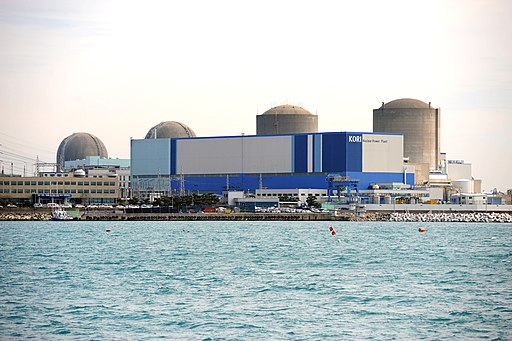
Kori Nuclear Power Plant
Kori Nuclear Power Plant is the largest operational nuclear power plant in the world in terms of the number of reactors operated. It won this first place after surpassing Canada’s Bruce Power Plant. The Kashiwazaki-Kariwa power plant has a higher rated capacity, but is not currently operating due to earthquake security modifications.
The first of the local reactors started its operation in 1978 and remained in operation until 2017. Three more reactors started operating two years later, in 2018.
All reactors operating in this complex are pressurized water reactors. In the first phase, all four reactors were supplied by the American company Westinghouse, in the second phase they were KEPCO reactors.
technical parameters Kori Nuclear Power Plant
| Location | Gori, Busan, South Korea |
| Owner | Korea Hydro & Nuclear Power |
| Operator | Korea Hydro & Nuclear Power |
| Construction began |
|
| Commission date |
|
| Decommission date | Unit 1: 18 June 2017 |
| Reactor supplier | Westinghouse KEPCO E&C |
| Reactor type |
Pressurized water reactor |
| Make and model |
|
| Thermal capacity |
|
| Units operational |
|
| Cooling source | Sea of Japan |
| Units decommissioned | 1 × 576 MW WH-60 |
| Units under const. | 2 × 1340 MW APR-1400 |
| Capacity factor | 74.45% (Units 1 & 7) |
| Annual net output | 43,148 GW·h (2016) (Units 1 & 7) |
| Nameplate capacity | 7489 MW (netto) |
Kori Nuclear Power Plant
.jpg)