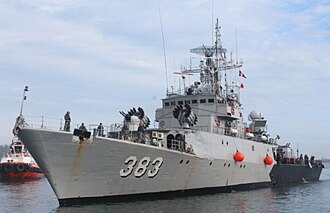
KRI Imam Bonjol (383): History, Technical Specifications, Armament, and Role in the Indonesian Navy
The KRI Imam Bonjol (383) is a Parchim-class corvette that has played an important role in the development of Indonesia’s naval capabilities and maritime security operations. Originally constructed in East Germany during the Cold War, the vessel eventually became part of the Indonesian Navy (Tentara Nasional Indonesia Angkatan Laut, or TNI AL) following Indonesia’s acquisition of a number of former East German naval vessels in the early 1990s. Although relatively small compared with modern frigates and destroyers, the ship represents an interesting example of how a naval platform designed for one strategic environment can be adapted to meet the operational requirements of another country.
The vessel is particularly interesting because of its combination of Cold War engineering, anti-submarine warfare capabilities, conventional naval weapons, and maritime patrol responsibilities. Its history also reflects the changing strategic priorities of Indonesia, an enormous archipelagic nation whose national security depends heavily on the ability to monitor, protect, and control its surrounding waters. With thousands of islands, extensive maritime boundaries, important shipping routes, and valuable fishing grounds, Indonesia requires naval forces capable of operating across a wide geographical area. Smaller warships such as the Imam Bonjol have traditionally contributed to these responsibilities by conducting patrols, responding to maritime incidents, supporting naval exercises, and maintaining a visible military presence in strategically important waters.
One of the most memorable moments in the ship’s Indonesian service occurred in June 2016, when it participated in an operation against a Chinese fishing vessel suspected of illegal fishing in the waters surrounding the Natuna Islands. The incident attracted considerable international attention because it involved maritime enforcement, Indonesia’s exclusive economic zone, and the wider geopolitical tensions surrounding the South China Sea. The ship subsequently became associated with a highly visible demonstration of Indonesia’s determination to protect its maritime interests.
Understanding KRI Imam Bonjol (383) therefore requires looking beyond its weapons and dimensions. Its story connects naval technology, Cold War history, international defence cooperation, maritime law enforcement, and Indonesia’s evolving approach to maritime security.
The Origins of KRI Imam Bonjol
Construction in East Germany
Before becoming an Indonesian warship, KRI Imam Bonjol served in the naval forces of East Germany under the name Teterow, carrying the hull number 234. The vessel was constructed at the Peene-Werft shipyard in Wolgast, East Germany, as part of the Parchim-class corvette programme. Construction began with the keel being laid on 1 July 1981, and the ship was launched on 27 March 1982. It officially entered service with the East German Volksmarine on 27 January 1984.
The Parchim-class vessels were developed during the Cold War, a period when naval forces on both sides of the Iron Curtain invested heavily in specialised warships designed to protect coastal waters and counter submarine threats. East Germany occupied a strategically important position along the Baltic Sea, where NATO and Warsaw Pact naval forces operated in close proximity. The country’s naval planners consequently required relatively compact but capable vessels that could operate in coastal environments, patrol important maritime approaches, and contribute to anti-submarine warfare operations.
The Parchim-class design reflected these requirements. Rather than functioning as large ocean-going combatants, these ships were intended to provide a combination of surveillance, coastal defence, and submarine-hunting capabilities. Their relatively modest dimensions made them suitable for operations in restricted waters, while their diesel propulsion systems provided the speed and endurance needed for routine patrol missions.
The construction of Teterow was part of a broader East German effort to maintain a capable naval force despite the country’s limited economic resources compared with the larger military powers of the Cold War. The result was a compact warship equipped with specialised sensors, torpedo systems, anti-submarine rocket launchers, and conventional naval artillery.
From Teterow to the Indonesian Navy
The political transformation of Europe at the end of the 1980s fundamentally changed the future of the East German Navy. Following German reunification in October 1990, the Volksmarine ceased to exist as an independent naval organisation, and its surviving vessels were temporarily incorporated into the newly unified German Navy. Teterow received the designation P 6168 during this transitional period, but its service in the German Navy was relatively short.
After being withdrawn from active service and placed in reserve, the ship became available for transfer to another country. Indonesia subsequently acquired the vessel as part of a larger defence procurement arrangement involving former East German naval equipment. The agreement allowed the Indonesian Navy to obtain a substantial number of ships at comparatively low acquisition costs, although the vessels required inspection, maintenance, modifications, and integration into Indonesia’s existing naval structure.
The former Teterow was renamed KRI Imam Bonjol and entered Indonesian Navy service on 26 April 1994, receiving the pennant number 383. This transfer marked the beginning of a new chapter in the vessel’s operational history. A ship originally designed to defend East German coastal waters against potential NATO submarine activity was now being used by a geographically very different country with extensive maritime borders and a wide range of naval responsibilities.
The acquisition also demonstrated Indonesia’s willingness to use existing foreign-built naval platforms to expand its fleet while managing defence expenditure. Instead of relying exclusively on the construction of entirely new warships, Indonesia could obtain established designs and adapt them to its operational requirements.
The Parchim-Class Corvette Design
A Warship Developed for Anti-Submarine Warfare
KRI Imam Bonjol belongs to the Parchim-class, also known by its East German designation Type 133.1. This class was developed primarily as a small anti-submarine warfare (ASW) corvette, with an emphasis on detecting and engaging submarines operating in coastal and relatively shallow maritime environments.
During the Cold War, submarines represented a significant threat to naval forces, commercial shipping, and important military installations. Consequently, smaller navies needed vessels that could detect underwater threats without the expense of operating large destroyers or specialised frigates. The Parchim-class offered a practical solution by combining sonar equipment, anti-submarine rocket launchers, torpedo tubes, and conventional guns on a relatively compact hull.
The design incorporated a steel hull, a relatively low superstructure, and a propulsion arrangement consisting of three diesel engines connected to three propellers. This configuration provided sufficient speed for interception and patrol operations while maintaining the mechanical simplicity associated with conventional diesel-powered naval vessels. The ship’s relatively shallow draught also made it suitable for operating in coastal waters and near important maritime approaches.
Although its original mission focused heavily on submarine warfare, the operational requirements of the Indonesian Navy were considerably broader. Indonesia needed ships capable of performing maritime patrols, protecting territorial waters, supporting naval exercises, monitoring fishing activities, and responding to potential security incidents. As a result, the Imam Bonjol became part of a naval force in which the traditional anti-submarine role was complemented by wider maritime security responsibilities.
Dimensions and Physical Characteristics
KRI Imam Bonjol is approximately 75.2 metres long, with a beam of around 9.78 metres. Its standard displacement is commonly reported at approximately 865 tonnes, increasing to around 935 tonnes at full load. These dimensions place the vessel firmly within the small-corvette category, considerably below the size of modern frigates and destroyers.
Its compact hull offers several practical advantages. Smaller vessels generally require fewer personnel than larger surface combatants, consume fewer resources during routine operations, and can be maintained at a lower cost. They are also useful for operations in maritime environments where the employment of larger warships might be unnecessary or inefficient.
However, the ship’s relatively small dimensions also impose limitations. Compared with modern frigates, it has less space for fuel, provisions, additional weapons, advanced electronic systems, and specialised mission equipment. Its ability to operate for extended periods without logistical support is consequently more limited than that of larger ocean-going combatants.
Nevertheless, the Parchim-class design provides a useful balance between size, speed, weapons, and operational flexibility. For Indonesia, where maritime surveillance requires the deployment of numerous vessels across a vast archipelago, smaller combatants have historically remained valuable components of the overall naval force.
Propulsion System and Performance
Three-Engine Diesel Propulsion
One of the defining characteristics of KRI Imam Bonjol is its three-engine diesel propulsion arrangement. The ship was originally equipped with three M-504A-series diesel engines, producing a combined output commonly reported at approximately 14,250 horsepower.
The engines drive three fixed-pitch propellers, providing the vessel with the mechanical power required for coastal patrols, interception missions, and naval operations. This arrangement was designed to deliver a useful combination of speed, reliability, and manoeuvrability rather than the exceptionally high performance associated with larger gas-turbine-powered warships.
The reported maximum speed is approximately 24.5 knots, equivalent to around 45 kilometres per hour. This performance allows the vessel to pursue many types of civilian vessels and perform routine patrol missions at operationally useful speeds. It is particularly relevant when responding to reports of suspicious maritime activity or approaching vessels that need to be inspected.
Diesel propulsion also offers certain economic advantages. Compared with some more complex propulsion systems, diesel engines can be practical for vessels that spend considerable time conducting routine patrols and operating at moderate speeds. However, actual fuel consumption, maintenance requirements, and operational availability depend on the condition of the engines, the ship’s maintenance history, and the quality of its supporting infrastructure.
Operational Range and Endurance
The range of KRI Imam Bonjol is generally reported at approximately 2,100 nautical miles at 14 knots, although published figures differ between sources and technical descriptions. Range is an important factor for a naval vessel operating in an archipelagic country because patrol responsibilities may involve long distances between islands, naval bases, and maritime surveillance areas.
At economical cruising speeds, a vessel can generally achieve greater range than when operating continuously at maximum speed. This relationship is particularly important for patrol ships, which spend much of their operational time travelling between designated patrol areas rather than pursuing targets at high speed.
The ship’s endurance also depends on the availability of food, drinking water, spare parts, maintenance facilities, and other logistical supplies. Although its range allows it to cover considerable distances, it was not designed to provide the same long-duration independent deployment capability as a large frigate or ocean-going support vessel.
For Indonesian naval operations, this makes access to forward naval facilities and logistical support particularly important. Bases and supporting infrastructure in strategically located islands can help smaller warships maintain a meaningful presence in distant maritime areas.
Armament and Weapons Systems
AK-725 57 mm Naval Gun
The principal artillery weapon traditionally associated with KRI Imam Bonjol is the AK-725 twin-barrel 57 mm naval gun. This Soviet-designed weapon system was widely used on a number of Cold War-era naval vessels and was developed to engage surface and aerial targets.
Its twin-barrel arrangement allows the weapon to deliver a relatively high volume of fire compared with a conventional single-barrel naval gun. In its original configuration, the AK-725 was intended to provide close-range defence against aircraft and smaller surface threats.
For a vessel of the Parchim-class, the 57 mm gun provides an important conventional weapon for naval patrol and combat operations. It can also serve as a visible deterrent during maritime security missions, where the presence of a properly armed warship can discourage potentially hostile behaviour.
However, the effectiveness of an older naval gun depends heavily on its fire-control equipment, ammunition availability, maintenance condition, and integration with the ship’s sensors. Although the weapon remains an important part of the vessel’s historical configuration, it should not be considered equivalent to the advanced gun systems installed on contemporary naval combatants.
AK-230 30 mm Close-Range Weapon
Another important weapon associated with the ship’s original configuration is the AK-230 twin-barrel 30 mm automatic naval cannon. This system was designed primarily for close-range defence against aerial and surface threats.
The AK-230 uses two rotating barrels and is capable of delivering rapid automatic fire. During the Cold War, weapons of this type were commonly installed on smaller naval combatants because they offered a relatively compact solution for short-range defensive engagements.
The system complements the larger 57 mm gun by providing an additional layer of close-range firepower. In a naval combat environment, multiple weapon systems can improve a vessel’s ability to respond to different types of threats, although the overall effectiveness of the arrangement depends on sensor integration and the age of the equipment.
Anti-Submarine Rocket Launchers
Because the Parchim-class was originally developed for anti-submarine warfare, one of its most important characteristics is its RBU-6000 rocket launcher system.
The RBU-6000 is a Soviet-designed anti-submarine rocket launcher capable of firing multiple unguided rockets carrying explosive warheads. It was developed to engage submarines and other underwater threats at relatively short ranges.
The system provides an important indication of the original operational philosophy behind the Parchim-class. Rather than relying exclusively on surface guns, the vessel was equipped to detect and attack targets beneath the water.
The presence of anti-submarine rocket launchers is particularly significant when considering the historical development of the ship. During the Cold War, protecting naval formations and maritime approaches from submarines was a major responsibility for smaller coastal combatants. The RBU-6000 helped fulfil that requirement by providing a relatively compact weapon system capable of delivering underwater explosive attacks.
Torpedo Systems
The Parchim-class design also incorporated torpedo tubes intended for anti-submarine warfare. The original configuration is commonly associated with four 400 mm torpedo tubes, although published descriptions of individual Indonesian vessels and their later modifications are not always consistent.
Torpedoes provide a different type of anti-submarine capability from rocket launchers. While rocket systems deliver explosive payloads over relatively short distances, torpedoes are self-propelled underwater weapons that can travel towards a target after launch.
The combination of sonar, torpedo tubes, and anti-submarine rocket launchers made the Parchim-class a specialised platform for its original mission. It was intended to locate potential underwater threats and engage them using more than one type of weapon.
Additional Weapons and Configuration Changes
The armament of a naval vessel can change considerably during its service life. Weapons may be removed, replaced, upgraded, or supplemented according to operational requirements and maintenance considerations.
Published descriptions of KRI Imam Bonjol also refer to additional 20 mm Denel GI-2 cannons. These weapons provide another layer of close-range defence and are particularly relevant to maritime patrol operations, where smaller surface vessels may need to be monitored or challenged.
It is important to distinguish between the original Parchim-class design and the precise equipment fitted to the Indonesian ship at a particular point in its service. Historical technical descriptions do not necessarily represent its final operational configuration. Consequently, the weapons listed here should be understood as reported equipment associated with the ship rather than confirmation that every system remained operational throughout its Indonesian career.
Sensors, Detection, and Naval Electronics
Radar and Surface Surveillance
Radar systems are essential for naval vessels because they allow crews to monitor surrounding maritime traffic, identify potential contacts, and maintain situational awareness during operations.
A warship operating in busy waters must be able to detect other vessels under different environmental conditions, including darkness, rain, poor visibility, and heavy maritime traffic. Radar information is particularly useful when combined with visual observation, communications equipment, and intelligence from other surveillance platforms.
The original Parchim-class design incorporated radar equipment suitable for its Cold War operational requirements. However, radar technology has developed significantly since the 1980s, and older systems cannot automatically be considered equivalent to modern multifunction naval radars.
For the Indonesian Navy, the ship’s surveillance responsibilities became particularly relevant in areas such as the Natuna Islands, where identifying and monitoring foreign vessels is an important part of maritime security operations.
Sonar and Underwater Detection
Sonar was another central component of the Parchim-class design. Unlike radar, which uses electromagnetic waves to detect objects, sonar uses sound waves to identify and track underwater contacts.
A hull-mounted sonar system allows a vessel to search for submarines and other underwater objects. The information obtained can help the crew assess potential threats and coordinate the use of anti-submarine weapons.
In the original operational environment, this capability was particularly important because the Baltic Sea was an area of considerable strategic interest during the Cold War. Submarine activity represented a major concern for the naval forces operating in the region.
Although Indonesia’s maritime security requirements are different, the historical presence of sonar and anti-submarine equipment illustrates the technical sophistication of the Parchim-class compared with simpler patrol craft.
KRI Imam Bonjol and Indonesia’s Maritime Security
A Small Warship in a Large Archipelago
Indonesia is one of the world’s largest archipelagic states, with an extensive maritime area connecting the Indian and Pacific Oceans. Its geographical position makes the country strategically important for international shipping, regional trade, fisheries, and maritime security.
Protecting such a vast area requires a combination of naval vessels, aircraft, surveillance systems, coastal installations, and maritime law-enforcement organisations. No single class of warship can fulfil every operational requirement.
Large frigates and other major surface combatants provide capabilities for longer deployments, more complex combat missions, and broader maritime operations. Smaller corvettes and patrol vessels, meanwhile, can contribute to local surveillance, interception, and routine presence missions.
KRI Imam Bonjol was part of this wider operational structure. Its relatively compact size and conventional armament made it suitable for patrol duties and operations in Indonesian waters. It also provided the Navy with a platform that could be deployed to areas where maintaining a visible naval presence was strategically important.
The ship’s service therefore illustrates the continuing relevance of smaller combatants in a country where maritime security is closely connected to geography.
Protecting Fisheries and Maritime Resources
Illegal fishing is a significant challenge for Indonesia because the country’s maritime resources support coastal communities, commercial fisheries, food security, and national economic development.
Foreign fishing vessels operating without proper authorisation can threaten marine ecosystems and undermine the livelihoods of local fishing communities. The problem becomes particularly complicated when illegal fishing takes place in distant maritime areas where monitoring and enforcement are difficult.
Naval patrol vessels can contribute to addressing this challenge by identifying suspicious vessels, intercepting them when legally authorised, and supporting boarding teams during inspections.
The operations of KRI Imam Bonjol demonstrate how a conventional military warship can be employed for maritime law-enforcement support. Although its original design focused on naval warfare, its weapons, communications, propulsion, and crew training also make it useful for certain security operations.
The ship’s role in this area became particularly visible during the events of June 2016, which brought Indonesia’s maritime enforcement policies to international attention.
The 2016 Natuna Incident: KRI Imam Bonjol in the International Spotlight
Interception of a Chinese Fishing Vessel
One of the most significant events in the operational history of KRI Imam Bonjol took place on 17 June 2016 in the waters surrounding the Natuna Islands. During a maritime patrol in Indonesia’s exclusive economic zone (EEZ), the ship received information from maritime aerial surveillance concerning the presence of approximately 12 foreign fishing vessels suspected of conducting illegal fishing activities.
After receiving the information, KRI Imam Bonjol approached the reported location to investigate the situation. According to Indonesian Navy statements reported by ANTARA, several fishing vessels attempted to manoeuvre away from the approaching Indonesian warship. The Imam Bonjol pursued the vessels and fired warning shots after its initial warnings were ignored.
Following the pursuit, the Indonesian Navy successfully stopped one Chinese-flagged fishing vessel. A Visit, Board, Search and Seizure (VBSS) team subsequently boarded the vessel and conducted an inspection. The crew members were identified as Chinese nationals, and the fishing vessel was taken for further investigation.
The operation was significant because it demonstrated the practical role of a relatively small corvette in protecting Indonesia’s maritime interests. Despite its origins as a Cold War anti-submarine vessel, KRI Imam Bonjol was able to conduct an interception operation involving surveillance information, pursuit, warning procedures, boarding personnel, and coordination with other naval elements.
Tensions with the Chinese Coast Guard
The incident did not end with the interception of the fishing vessel. Chinese Coast Guard ships became involved in the situation, creating a more complicated operational and diplomatic environment.
According to Indonesian defence authorities, Chinese Coast Guard vessels approached the area and attempted to influence the handling of the detained fishing boat. The Indonesian side maintained that the operation was taking place within Indonesia’s maritime jurisdiction and that the detained vessel should be brought to an Indonesian facility for investigation.
The situation illustrated the challenges faced by smaller naval vessels when dealing with larger and more heavily equipped government ships. A corvette such as KRI Imam Bonjol may be capable of intercepting fishing vessels and carrying out maritime security missions, but encounters with larger coast guard ships require careful judgement, communications, and coordination.
The incident also demonstrated that maritime security operations are not exclusively military matters. They can quickly become diplomatic events involving questions of jurisdiction, international law, fisheries management, and regional political relations.
The Indonesian authorities subsequently continued to emphasise their responsibility to protect national maritime interests while managing relations with neighbouring countries. The event became an important example of the connection between naval operations and wider foreign policy.
President Joko Widodo Visits the Ship
Just several days after the interception, KRI Imam Bonjol received an unusually prominent visitor. On 23 June 2016, Indonesian President Joko Widodo travelled to the Natuna Islands and boarded the warship while it was operating in the surrounding waters.
The President used the occasion to lead a limited government meeting concerning the economic development of the Natuna Islands. Several senior government officials and military representatives accompanied him, including the Indonesian military leadership and ministers responsible for important national policy areas.
Holding the meeting aboard KRI Imam Bonjol was symbolically important. The ship was not simply serving as a platform for transporting government officials; it represented Indonesia’s maritime presence in a strategically important area. The President’s visit attracted considerable attention because it followed closely after the confrontation involving the Chinese fishing vessel.
The meeting also highlighted the economic importance of the Natuna region. Its maritime resources, geographical position, fishing grounds, and proximity to important international shipping routes make it a significant part of Indonesia’s national development and security strategy.
The visit helped transform KRI Imam Bonjol into one of the more recognisable Indonesian naval vessels associated with maritime sovereignty during this period.
The Strategic Importance of the Natuna Islands
A Geographically Sensitive Maritime Region
The Natuna Islands occupy an important geographical position in the southern part of the South China Sea. Their location places them near important international shipping routes and maritime areas where several Southeast Asian countries have overlapping strategic interests.
For Indonesia, the region is especially important because the waters surrounding the islands form part of its maritime jurisdiction. The country’s exclusive economic zone provides sovereign rights over natural resources, including fisheries and other economic activities, in accordance with international maritime law.
The proximity of the Natuna Islands to areas of wider South China Sea disputes creates additional security challenges. Although Indonesia is not a claimant to the principal territorial island disputes in the same way as some neighbouring countries, its maritime interests have been affected by disagreements concerning maritime boundaries and fishing activities.
The presence of Indonesian naval vessels in the area therefore serves several purposes. Regular patrols help monitor maritime activity, support the enforcement of national laws, deter unauthorised fishing, and demonstrate that Indonesia maintains an active presence in its maritime jurisdiction.
Why Naval Patrol Vessels Matter
A large navy cannot rely exclusively on expensive frigates and destroyers to monitor every section of its maritime territory. Such vessels are valuable strategic assets, but operating them continuously on routine patrol duties can be economically inefficient.
Smaller warships provide a more practical solution for many everyday missions. They can be deployed to investigate suspicious contacts, monitor shipping activity, conduct inspections, and provide support to other maritime agencies.
KRI Imam Bonjol demonstrated this principle through its Natuna operations. Its ability to pursue and stop a fishing vessel showed that relatively small combatants can make a meaningful contribution to maritime enforcement.
However, maritime security requires more than the physical presence of a warship. Successful operations also depend on reliable intelligence, maritime surveillance aircraft, communications networks, trained boarding teams, and appropriate legal procedures. The 2016 incident highlighted the importance of integrating these different capabilities.
Operational Strengths and Limitations
Strengths of the Parchim-Class Design
The most important strength of the Parchim-class is its combination of relatively compact dimensions and specialised naval capabilities. The design was created to perform anti-submarine warfare missions while remaining suitable for coastal operations.
Its three-engine diesel arrangement provides useful speed and propulsion redundancy, while its artillery and underwater weapons offer a broad range of capabilities for a vessel of its size. The design also allows the ship to perform different operational tasks without requiring the extensive resources associated with larger combatants.
Another advantage is the relatively modest crew requirement. A vessel with approximately 60 personnel can carry out routine naval operations without requiring the manpower needed for a large frigate or destroyer. This is important for navies that must operate many vessels across extensive maritime territories.
Its relatively shallow draught is another useful characteristic. Smaller vessels can access certain coastal environments and maritime approaches that may be less convenient for larger warships, although operational access always depends on local depth, sea conditions, and navigational restrictions.
Limitations Compared with Modern Corvettes
Despite its strengths, KRI Imam Bonjol belongs to a generation of naval technology that is now several decades old. The ship was designed during the Cold War, when naval combat systems, radar technology, communications equipment, and weapons integration were significantly different from those used on contemporary warships.
Modern corvettes often feature more sophisticated combat management systems, advanced surveillance radars, electronic warfare equipment, improved communications, and integrated missile systems. These technologies allow modern ships to detect and respond to threats more effectively across a wider range of operational environments.
The Parchim-class also has limited internal space for major upgrades. Installing modern weapons, additional sensors, and new electronic equipment can require extensive structural modifications, electrical improvements, and changes to the vessel’s internal layout.
Another consideration is the availability of spare parts. Because the original design came from East Germany and incorporated Soviet-origin systems, maintaining older equipment can become increasingly complicated as manufacturers discontinue components and specialist technical knowledge becomes less widely available.
For these reasons, the operational value of KRI Imam Bonjol depended not only on its original specifications but also on maintenance, upgrades, crew training, and the availability of logistical support.
The Legacy of KRI Imam Bonjol in the Indonesian Navy
From Cold War Combatant to Maritime Security Vessel
The career of KRI Imam Bonjol represents an interesting example of how naval vessels can outlive the political and strategic environments for which they were originally constructed.
When the ship entered service as Teterow in 1984, its principal mission was connected to the defence requirements of East Germany and the Warsaw Pact. Its weapons and sensors were designed around the possibility of confronting submarines and other naval threats in European waters.
After its transfer to Indonesia, the ship entered a completely different maritime environment. Instead of operating primarily in the Baltic Sea, it became part of a navy responsible for protecting one of the world’s largest archipelagos.
Its operational responsibilities consequently evolved. Although the vessel retained its historical identity as a Parchim-class corvette, its practical value increasingly included patrol missions, maritime surveillance, fisheries protection, and support for national sovereignty.
This transition demonstrates that the useful life of a naval platform is not necessarily limited to its original military purpose. With suitable maintenance and operational adaptation, older warships can continue to provide useful services even when the strategic environment changes considerably.
The Ship’s Place in Indonesian Naval History
KRI Imam Bonjol is also part of a broader story involving Indonesia’s acquisition of former East German naval vessels. The procurement programme helped the Indonesian Navy expand its fleet during the 1990s, providing access to a variety of platforms that could support different maritime missions.
The ships acquired during this period were not all identical in their capabilities, and their eventual operational value depended on their individual condition, modifications, and maintenance requirements. Nevertheless, the programme represented an important stage in Indonesia’s effort to increase its naval presence across a large maritime territory.
The Imam Bonjol is particularly memorable because of its involvement in the Natuna incident and the subsequent presidential visit. These events connected the ship with a wider discussion about maritime sovereignty, illegal fishing, and Indonesia’s position in the South China Sea.
Current Service Status and Historical Significance
The operational status of older naval vessels can change as maintenance costs increase, replacement ships enter service, and naval modernisation programmes progress. Publicly available descriptions of KRI Imam Bonjol do not provide a consistently verified account of its precise final operational status as of October 2026. Therefore, its historical service record should be distinguished from claims that it is currently operational.
Regardless of its eventual retirement or continued service, the ship’s historical importance is clear. It represents the transfer of Cold War naval technology into Southeast Asian service and illustrates how Indonesia adapted an imported corvette to meet its own maritime security requirements.
Its story is also a reminder that the value of a naval vessel cannot be measured exclusively through displacement, speed, or armament. Operational experience, strategic location, crew professionalism, and the ability to contribute to national security are equally important considerations.
Technical Specifications of KRI Imam Bonjol (383)
The following table summarises the principal technical characteristics commonly reported for KRI Imam Bonjol and its Parchim-class design. Some figures may vary between references because of differences in vessel configuration, modifications, and measurement conditions.
KRI Imam Bonjol – Specification Table
| Specification | Details |
|---|---|
| Ship name | KRI Imam Bonjol |
| Pennant number | 383 |
| Country | Indonesia |
| Navy | Indonesian Navy (TNI AL) |
| Ship class | Parchim-class |
| Type | Corvette |
| Original designation | Type 133.1 |
| Former name | Teterow |
| Former hull number | 234 |
| Builder | Peene-Werft, Wolgast, East Germany |
| Keel laid | 1 July 1981 |
| Launched | 27 March 1982 |
| Original commissioning | 27 January 1984 |
| Indonesian commissioning | 26 April 1994 |
| Standard displacement | Approximately 865 tonnes |
| Full-load displacement | Approximately 935 tonnes |
| Length | 75.2 metres |
| Beam | 9.78 metres |
| Draught | Approximately 2.65 metres |
| Propulsion | 3 diesel engines |
| Engine type | M-504A series |
| Total power | Approximately 14,250 hp |
| Propellers | 3 fixed-pitch propellers |
| Maximum speed | Approximately 24.5 knots |
| Operational range | Approximately 2,100 nautical miles at 14 knots |
| Crew | Approximately 60–62 personnel |
| Main gun | 2 × 57 mm AK-725 |
| Secondary gun | 2 × 30 mm AK-230 |
| Additional guns | Reported 20 mm Denel GI-2 cannons |
| Anti-submarine weapons | 2 × RBU-6000 launchers |
| Torpedo armament | Originally reported as 4 × 400 mm torpedo tubes |
| Primary original mission | Anti-submarine warfare |
| Additional missions | Maritime patrol, surveillance, and interception |
Note: Specifications describe commonly published characteristics of the vessel and its original class configuration. They should not be interpreted as confirmation that every listed weapon or system remained installed and operational throughout its Indonesian service.
Conclusion
KRI Imam Bonjol (383) is an interesting example of the evolution of naval warfare and the adaptation of military technology to changing national requirements. Originally constructed in East Germany as the Parchim-class corvette Teterow, the ship entered Indonesian Navy service in 1994 and subsequently became part of Indonesia’s maritime security capabilities.
Its original design was focused on anti-submarine warfare, combining diesel propulsion, naval artillery, sonar, torpedo systems, and anti-submarine rocket launchers. These characteristics reflected the military requirements of the Cold War, when smaller navies needed specialised vessels capable of protecting coastal waters and detecting underwater threats.
However, its Indonesian service demonstrated that the ship could contribute to a much broader range of responsibilities. Its involvement in the June 2016 Natuna incident, particularly the interception of a Chinese fishing vessel suspected of illegal fishing, remains one of the most notable events associated with its operational history. The subsequent visit by President Joko Widodo further highlighted the importance of the ship in Indonesia’s maritime sovereignty efforts.
Although its technology belongs to an earlier generation of naval engineering, KRI Imam Bonjol remains historically significant because of its contribution to Indonesia’s naval development and maritime security. Its career illustrates how a relatively small warship can become an important national asset through operational adaptation, strategic deployment, and the changing requirements of naval defence.
Ultimately, the story of KRI Imam Bonjol is not simply about a former East German corvette. It is also about Indonesia’s efforts to maintain a naval presence across a vast archipelago, protect valuable maritime resources, and defend its national interests in strategically important waters.
