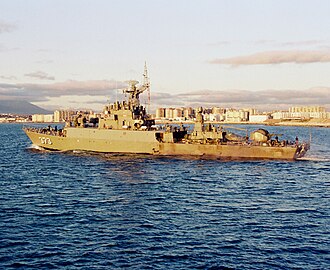
KRI Sultan Nuku (373): History, Technical Specifications, Armament, and Role in the Indonesian Navy
KRI Sultan Nuku (373) is a Parchim-class corvette operated by the Indonesian Navy (Tentara Nasional Indonesia Angkatan Laut, or TNI AL). Originally constructed in East Germany during the Cold War, the vessel was transferred to Indonesia in the early 1990s and became part of the country’s efforts to strengthen its naval capabilities. Before entering Indonesian service, the ship was known as Waren and served in the East German Volksmarine. Following its acquisition, it was renamed KRI Nuku and later became known as KRI Sultan Nuku, carrying the pennant number 373.
The ship belongs to a generation of relatively compact naval combatants designed primarily for anti-submarine warfare in coastal waters. Its original configuration combined naval artillery, underwater detection equipment, torpedo systems, and anti-submarine rocket launchers. Although its design dates back several decades, the vessel represents an important chapter in Indonesia’s naval development because it illustrates how an existing foreign-built military platform can be adapted to meet the operational requirements of an archipelagic country.
Indonesia’s geographical position creates significant challenges for maritime defence. The country consists of thousands of islands spread across a vast area connecting the Indian and Pacific Oceans, with important international shipping routes, valuable fisheries, offshore resources, and extensive maritime boundaries. Protecting these interests requires a diverse naval fleet capable of performing surveillance, patrol, interception, escort, and combat missions. Smaller corvettes such as KRI Sultan Nuku have historically contributed to these responsibilities by providing a practical combination of mobility, conventional weapons, and maritime operational flexibility.
Another particularly interesting aspect of this vessel is its name. Sultan Nuku was an important historical figure from the Sultanate of Tidore in the Maluku Islands, remembered for his resistance against Dutch colonial expansion during the eighteenth century. Naming a modern Indonesian warship after this historical leader creates a connection between the country’s maritime military traditions and its wider national history.
Today, KRI Sultan Nuku is an interesting subject for anyone studying Indonesian naval history, Cold War warship design, and the evolution of maritime security in Southeast Asia. Its story includes East German shipbuilding, post-Cold War military procurement, naval modernisation, and the continuing importance of patrol vessels in protecting Indonesia’s maritime interests.
The History and Origins of KRI Sultan Nuku
Construction in East Germany
KRI Sultan Nuku was originally constructed as Waren, a Parchim-class corvette built by the Peene-Werft shipyard in Wolgast, East Germany. The ship was developed as part of the Type 133.1 programme, which produced a series of compact anti-submarine warfare vessels for the East German Navy during the Cold War.
The vessel entered service with the East German Volksmarine on 23 November 1982 and carried the pennant number 224. At the time, East Germany maintained a naval force intended to protect its Baltic Sea coastline and support the wider military strategy of the Warsaw Pact. The geographical position of East Germany made coastal defence particularly important because the Baltic Sea was a strategically sensitive maritime environment where NATO and Warsaw Pact forces operated relatively close to one another.
The Parchim-class was designed to address the potential threat posed by enemy submarines, particularly smaller conventional submarines capable of operating in coastal waters. These vessels were therefore equipped with specialised underwater detection systems and weapons intended to locate and attack submerged targets. Their relatively small dimensions made them suitable for operations close to the coastline, while their diesel propulsion systems provided the necessary speed and endurance for routine patrol and interception duties.
The construction of Waren reflected the broader East German approach to naval procurement. Rather than concentrating exclusively on large surface combatants, the country invested in specialised vessels that could perform important defensive tasks without requiring the financial and logistical resources associated with destroyers or frigates. The resulting Parchim-class design combined conventional naval artillery, anti-submarine rocket launchers, torpedo equipment, and sonar within a relatively compact hull.
Transfer to Indonesia After German Reunification
The political changes that took place in Europe at the end of the 1980s had a major influence on the future of the East German Navy. Following German reunification in October 1990, the Volksmarine was dissolved, and its remaining ships were transferred into the structure of the unified German Navy or prepared for disposal. Many of these vessels were no longer required for Germany’s new defence priorities, creating opportunities for other countries to acquire relatively modern naval equipment at reduced prices.
Indonesia became one of the countries interested in purchasing former East German military vessels. The acquisition programme was intended to strengthen the Indonesian Navy while providing access to a considerable number of ships without the expense of ordering an entirely new fleet. The procurement arrangement included various types of naval vessels and supporting equipment, although the condition and suitability of individual ships differed.
The former Waren was acquired for Indonesian service and underwent the necessary preparations before being incorporated into the national fleet. It received the name Nuku and was officially commissioned into the Indonesian Navy on 15 December 1993, carrying the pennant number 373. Its name was subsequently expanded to Sultan Nuku, establishing the identity by which the ship is now widely recognised.
The transfer represented more than a simple change of national flag. The vessel was moving from a European Cold War environment into a maritime region with very different geographical, political, and operational requirements. Instead of concentrating primarily on defending Baltic Sea approaches against submarines, the Indonesian Navy could employ the ship for a broader combination of maritime patrol, coastal security, surveillance, and naval operations.
From Waren to KRI Sultan Nuku
The transformation from Waren into KRI Sultan Nuku is an example of the changing international market for military equipment following the end of the Cold War. During the 1980s, the ship was an element of East Germany’s coastal naval defence system. By the early 1990s, it had become a component of Indonesia’s expanding fleet, serving a country with extensive maritime responsibilities.
The Indonesian Navy adopted the Parchim-class vessels under the Kapitan Patimura-class designation. This means that KRI Sultan Nuku is commonly described as both a Parchim-class and a Kapitan Patimura-class corvette, depending on whether the reference concerns its original design or its Indonesian naval classification.
The acquisition programme also involved technical adaptation and maintenance. Operating a foreign-built vessel requires access to spare parts, specialised personnel, technical documentation, and supporting infrastructure. Differences in equipment standards and maintenance practices can create additional challenges, particularly when ships have originally been designed for another country’s naval organisation.
Nevertheless, the Parchim-class ships provided Indonesia with a useful addition to its surface fleet. KRI Sultan Nuku became one of the vessels associated with the country’s efforts to maintain an operational presence across its extensive maritime territory.
The Meaning Behind the Name Sultan Nuku
Nuku of Tidore: A Historical Maritime Leader
The name Sultan Nuku refers to Sultan Nuku of Tidore, also known by his full name Nuku Muhammad Amiruddin. He was an important ruler and resistance leader from the Sultanate of Tidore in the Maluku Islands during the late eighteenth and early nineteenth centuries.
Tidore was one of the important historical sultanates of the Maluku region, an area that became internationally significant because of its valuable spice resources. European colonial powers competed for political and commercial influence in the region, creating conflicts that affected local rulers, communities, and maritime trade.
Sultan Nuku became particularly well known for his resistance against Dutch colonial influence. He organised political and military opposition, built alliances with neighbouring communities, and worked to restore the independence and authority of Tidore. His struggle involved both land-based and maritime dimensions, reflecting the importance of ships, coastal settlements, and regional trade routes in the political life of the Maluku Islands.
His resistance made him an enduring figure in Indonesian historical memory. He is recognised as a National Hero of Indonesia, and his name has been used to honour his contribution to the struggle against colonial domination.
Why the Indonesian Navy Uses His Name
The Indonesian Navy frequently names its warships after national heroes, historical rulers, military leaders, and important figures associated with the country’s independence and maritime heritage. These names serve as symbols of national identity and provide a historical connection between the modern armed forces and earlier generations of Indonesian leaders.
In the case of KRI Sultan Nuku, the choice is particularly appropriate because the historical figure was closely connected with an island sultanate whose political and economic life depended heavily on maritime activity. The vessel’s name therefore represents both resistance to colonial domination and the historical importance of controlling surrounding waters.
The connection also reinforces the symbolic role of naval vessels. A warship is not merely a military platform carrying weapons and sensors; it is also a visible representation of national sovereignty. By carrying the name Sultan Nuku, the vessel commemorates an important figure whose life was closely associated with the defence of regional independence and political authority.
The Parchim-Class Corvette Design
Development of the Type 133.1 Warship
KRI Sultan Nuku belongs to the Parchim-class, a family of small anti-submarine warfare corvettes developed for the East German Navy during the late 1970s and early 1980s. The design was created to provide an effective coastal combatant capable of detecting and engaging enemy submarines while also performing routine naval patrol duties.
The Parchim-class was developed during a period when submarine warfare was considered one of the most important challenges facing European naval forces. Conventional submarines could operate in relatively shallow waters, making them difficult to detect and potentially dangerous to larger surface combatants. East German naval planners therefore needed smaller vessels capable of conducting underwater surveillance and attacking submerged targets without relying entirely on larger warships.
The Type 133.1 design incorporated a combination of sonar equipment, anti-submarine rocket launchers, torpedo tubes, and conventional guns. This arrangement provided the ships with a specialised anti-submarine capability while retaining sufficient surface armament for coastal defence and general naval operations.
The Parchim-class was also designed with relatively simple diesel propulsion, allowing the vessels to operate economically during routine patrols. Their compact dimensions made them particularly suitable for the Baltic Sea environment, where naval operations could involve restricted waters, coastal approaches, and relatively short distances between important bases.
The Indonesian Kapitan Patimura-Class
After the transfer of former East German vessels to Indonesia, the Parchim-class became known in Indonesian service as the Kapitan Patimura-class. The Indonesian Navy acquired several examples of this design, including KRI Sultan Nuku, KRI Kapitan Patimura, KRI Untung Suropati, KRI Lambung Mangkurat, and other vessels carrying the names of Indonesian historical figures.
The ships retained the basic characteristics of the original Parchim-class, although their equipment and armament configurations were subject to modifications during Indonesian service. These changes reflected the need to maintain the vessels using available components and adapt them to the operational requirements of the Indonesian Navy.
One of the advantages of operating several ships belonging to the same class is the possibility of standardising training, maintenance procedures, and logistical support. Crews can become familiar with similar propulsion arrangements, weapons systems, and operating procedures, while naval maintenance organisations can develop experience with common equipment.
However, the age of the original design also created challenges. Equipment produced during the Cold War can become increasingly difficult to maintain when manufacturers discontinue production or when replacement components are no longer readily available. Modernisation therefore becomes an important consideration for ensuring that older warships remain useful.
Dimensions and Physical Characteristics
Hull Design and Displacement
KRI Sultan Nuku is a relatively compact corvette with an overall length of approximately 75.2 metres and a beam of around 9.78 metres. Its standard displacement is generally reported at approximately 865 tonnes, while its full-load displacement reaches around 935 tonnes.
These dimensions place the ship in the small-corvette category, making it considerably smaller than modern frigates and destroyers. Nevertheless, its size is sufficient to accommodate a propulsion system, naval artillery, anti-submarine weapons, surveillance equipment, living quarters, and operational facilities for its crew.
The steel hull provides the structural strength necessary for normal naval operations, while the relatively narrow beam contributes to the vessel’s hydrodynamic characteristics. The design reflects the priorities of a coastal combatant that needs to combine useful speed, manoeuvrability, and weapons capacity without requiring the substantial resources associated with larger warships.
A relatively compact hull also offers practical advantages for an archipelagic navy. Smaller combatants can be useful in coastal environments and around maritime approaches where a large frigate may not be required. They can also provide a more economical way of maintaining a visible naval presence in several operational areas.
Draught and Maritime Operations
The reported draught of KRI Sultan Nuku is approximately 2.65 metres. Draught is an important measurement because it determines how deeply the vessel sits in the water and influences the minimum water depth required for safe navigation.
A relatively shallow draught can provide operational flexibility when approaching certain coastal areas, although it does not mean that the vessel can operate without restrictions in shallow waters. Navigational safety still depends on seabed conditions, tides, weather, currents, and local hydrographic information.
For Indonesia, these characteristics are useful because the country contains a wide variety of maritime environments. Its waters include deep international shipping channels, island passages, coastal fishing grounds, and relatively restricted approaches to ports and naval facilities.
The dimensions of KRI Sultan Nuku therefore represent a practical compromise between the requirements of a naval combatant and the economic advantages of a smaller patrol-oriented vessel.
Propulsion System and Performance
Three M-504A Diesel Engines
The propulsion system of KRI Sultan Nuku is based on three M-504A-series diesel engines. Each engine is commonly reported to produce approximately 4,750 horsepower, giving the ship a combined propulsion output of approximately 14,250 horsepower.
The engines are connected to three propeller shafts, with each shaft driving a fixed-pitch propeller. This three-engine arrangement was selected to provide sufficient propulsion power for the ship’s anti-submarine and coastal patrol missions.
The use of multiple diesel engines also offers operational flexibility. Depending on operating requirements and the condition of the machinery, the propulsion arrangement can be managed to balance speed, fuel consumption, and mechanical demands. However, the actual availability of the engines depends on maintenance standards and the condition of the individual mechanical components.
Diesel propulsion was a logical choice for the original Parchim-class design because it offered a practical solution for relatively small combatants expected to spend considerable time conducting routine patrols. Compared with some more complex propulsion arrangements, conventional diesel machinery can be easier to maintain within established naval support facilities.
Maximum Speed
KRI Sultan Nuku has a commonly reported maximum speed of approximately 24.5 knots, equivalent to around 45.4 kilometres per hour.
This speed provides useful performance for coastal patrols, interception missions, and naval exercises. Although it is not comparable with the maximum speed of specialised fast attack craft, it is adequate for many of the duties expected from a conventional corvette.
Speed is particularly important when a warship needs to investigate suspicious maritime activity. A vessel must be capable of reaching a designated area within a reasonable period, approaching another ship, and maintaining sufficient manoeuvrability to conduct surveillance or interception.
The three-engine arrangement provides the propulsion power necessary to fulfil these requirements, while the ship’s relatively compact hull supports its ability to operate in coastal maritime environments.
Range and Operational Endurance
The ship’s published operational range is approximately 2,100 nautical miles at a cruising speed of 14 knots. This is equivalent to roughly 3,889 kilometres, although some references round the distance to approximately 4,000 kilometres.
Range is an important consideration for Indonesian naval vessels because maritime patrol operations can involve significant distances between islands, naval bases, and designated surveillance areas. A ship with sufficient range can remain at sea for extended periods while maintaining the ability to return to a supporting facility.
However, operational range should not be confused with endurance. Range describes the distance a ship can travel under specified conditions, while endurance relates to how long the vessel can remain at sea with its available fuel, food, water, spare parts, and other supplies.
The practical endurance of KRI Sultan Nuku therefore depends on several factors, including the condition of its propulsion machinery, cruising speed, sea conditions, maintenance requirements, and the availability of logistical support.
Armament and Weapons Systems
AK-725 Twin 57 mm Naval Gun
One of the principal weapons associated with KRI Sultan Nuku is the AK-725 twin-barrel 57 mm naval gun. This Soviet-designed artillery system was widely used on Cold War-era warships and was developed to engage both surface and aerial targets.
The weapon consists of two 57 mm barrels mounted in a single turret. Its twin-barrel configuration provides a relatively high rate of fire compared with a conventional single-barrel naval cannon, allowing the ship to deliver concentrated fire during short engagements.
The AK-725 was originally intended to provide a combination of anti-aircraft and anti-surface firepower. It could be used against aircraft approaching the vessel at relatively close distances and against smaller surface targets.
For a small corvette, the 57 mm gun provides a substantial conventional weapon that can support both military and maritime security missions. Its presence also gives the vessel a visible deterrent capability during patrol operations.
However, the effectiveness of an older artillery system depends on its associated fire-control equipment, ammunition supply, mechanical condition, and integration with the ship’s surveillance sensors. Its historical presence should therefore be distinguished from assumptions about its current operational condition.
AK-230 Twin 30 mm Cannon
The ship’s original armament configuration also included an AK-230 twin-barrel 30 mm automatic cannon. This weapon was developed for close-range defence against aerial and surface threats.
The AK-230 uses two automatic barrels and was widely installed on Soviet and Warsaw Pact naval vessels. Its relatively compact design made it suitable for smaller warships that required additional defensive firepower without dedicating excessive space to larger artillery installations.
The 30 mm cannon complements the larger 57 mm gun by providing a separate close-range weapon system. Such an arrangement was particularly useful during the Cold War, when smaller naval combatants were expected to operate in environments where aircraft, helicopters, and other surface vessels could present potential threats.
The system also reflects the original philosophy of the Parchim-class: a small but heavily equipped coastal combatant designed to perform several different defensive tasks.
Denel GI-2 20 mm Cannons
Published descriptions of KRI Sultan Nuku’s Indonesian configuration also list two Denel GI-2 20 mm cannons. These weapons are associated with South African weapons technology and provide an additional layer of close-range firepower.
The GI-2 is a 20 mm automatic cannon based on the widely used Hispano-Suiza HS.820 design. It was developed for applications involving aircraft, armoured vehicles, and other military platforms.
On a naval vessel, weapons of this calibre can be useful for engaging relatively close surface contacts and providing additional defensive capability. Their smaller ammunition calibre also makes them suitable for situations where a lighter weapon may be preferable to the ship’s larger artillery systems.
The reported inclusion of these cannons demonstrates that the Indonesian configuration was not necessarily identical to the original East German arrangement. As with other older naval vessels, equipment could be changed to reflect the availability of replacement systems and the operational requirements of the navy.
RBU-6000 Anti-Submarine Rocket Launchers
The RBU-6000 is one of the most distinctive weapons associated with the Parchim-class design. This Soviet-developed anti-submarine rocket launcher was specifically created to engage underwater targets, making it particularly important for a vessel originally designed for anti-submarine warfare.
The system consists of multiple launcher tubes arranged in a circular configuration. It fires unguided rockets carrying explosive warheads that are intended to detonate underwater near suspected submarine positions.
Unlike a conventional naval gun, which fires projectiles through the air towards a visible or radar-detected target, the RBU-6000 is designed to attack underwater threats. Its effectiveness depends on information obtained from sonar and other underwater detection equipment.
The presence of two RBU-6000 launchers provides the ship with an important historical anti-submarine capability. It also demonstrates how the original designers attempted to integrate underwater detection and engagement systems into a relatively small naval platform.
For Indonesia, the anti-submarine systems were particularly relevant during the early stages of operating former East German corvettes. Even though the country’s immediate maritime security requirements differed from those of the Baltic Sea, underwater surveillance remained an important element of naval defence.
Torpedo Tubes and Underwater Weapons
The original Parchim-class configuration included four 400 mm torpedo tubes intended for anti-submarine warfare. These launchers were designed to fire lightweight torpedoes against submerged targets.
Torpedoes provide a different engagement capability from anti-submarine rockets because they are self-propelled underwater weapons capable of travelling towards a target after launch. Their use depends on the ship’s ability to detect, classify, and track underwater contacts.
Some technical descriptions of the Indonesian Parchim-class vessels indicate that torpedo arrangements were modified during their service. In the case of KRI Sultan Nuku, publicly available sources are not entirely consistent about the exact torpedo configuration and its operational status.
Consequently, the original four-tube arrangement should be treated as a class-related historical specification rather than definitive evidence that the system remains installed and operational on the ship today.
Defensive Systems and Countermeasures
Naval combatants also require defensive equipment designed to protect them against incoming threats. Electronic countermeasures, radar warning equipment, and decoy launchers can help a ship respond to hostile sensors or incoming missiles.
Technical descriptions associated with the Parchim-class mention the PK-16 decoy-launching system, which was developed to deploy countermeasures intended to confuse or distract certain incoming threats.
However, the precise defensive configuration of individual Indonesian ships may differ because of later modifications and maintenance decisions. It is therefore important not to assume that every system listed in descriptions of the original design remains fitted to KRI Sultan Nuku.
Radar, Sonar, and Electronic Equipment
MR-302 Surface and Air Surveillance Radar
The MR-302 radar, also known as Strut Curve, is associated with the original sensor arrangements of the Parchim-class. It was designed to provide surveillance information concerning surface and aerial contacts.
Radar is one of the most important systems aboard a naval vessel because it enables the crew to monitor surrounding maritime activity, identify potential contacts, and maintain situational awareness during operations.
For a ship conducting patrol duties in busy maritime waters, the ability to detect other vessels is particularly important. Fishing boats, commercial cargo ships, tankers, and military vessels may all operate within the same general area, making reliable surveillance essential.
The MR-302 reflects the technological standards of the period in which the Parchim-class was developed. Although modern naval radars provide substantially more advanced capabilities, the original equipment was designed to meet the surveillance requirements of its intended Cold War operational environment.
MR-123 Vympel Fire-Control Radar
Another system associated with the ship’s original equipment is the MR-123 Vympel fire-control radar, sometimes identified by its NATO reporting name Muff Cob.
Fire-control radar is different from general surveillance radar because it is designed to provide more precise information for directing weapons against selected targets. It can support the aiming and control of naval artillery by helping the crew calculate target position and movement.
The combination of surveillance radar and fire-control radar allows a warship to perform different stages of a naval engagement. General surveillance equipment helps identify contacts, while fire-control systems provide more specialised information for the use of weapons.
This arrangement was particularly important for Cold War corvettes because they were expected to operate in environments where rapid detection and response could be necessary.
MG-322T Sonar System
Sonar is another essential component of the original Parchim-class design. KRI Sultan Nuku is associated in published technical descriptions with the MG-322T sonar system.
Unlike radar, which uses electromagnetic waves, sonar uses sound waves to detect underwater objects. A hull-mounted sonar system can help a warship search for submarines and other submerged contacts.
The sonar system is especially important when considering the ship’s original anti-submarine mission. The RBU-6000 launchers and torpedo equipment would be of limited value without a system capable of providing information about underwater targets.
By combining sonar with anti-submarine weapons, the Parchim-class was designed to detect and engage submarines operating in coastal waters.
The MG-322T therefore represents an important part of the ship’s original technical identity, even though the exact current condition and operational availability of its sonar equipment should not be assumed from historical specifications alone.
Operational Role of KRI Sultan Nuku in the Indonesian Navy
Maritime Patrol and Surveillance
Indonesia’s extensive maritime territory requires a naval force capable of maintaining a continuous presence in different geographical areas. Maritime patrols are important because they allow the Navy to monitor shipping activity, identify suspicious vessels, protect national waters, and respond to incidents that may threaten maritime security.
KRI Sultan Nuku contributes to these responsibilities through its role as a surface combatant capable of conducting patrol operations. Its combination of propulsion power, radar equipment, communications facilities, and conventional weapons makes it suitable for a range of maritime security activities.
Routine patrols also have an important preventive function. The presence of a naval vessel can discourage illegal activities, reassure commercial shipping operators, and demonstrate that Indonesia maintains surveillance over strategically important maritime areas. Although a single corvette cannot monitor an enormous maritime region independently, it can provide an effective presence when integrated into a wider network of naval vessels, maritime surveillance aircraft, and shore-based command facilities.
For Indonesia, this is particularly important in areas where fishing activities, international shipping, and regional security interests overlap. Smaller warships can be deployed to investigate suspicious contacts and provide a military response when situations require additional authority or capabilities.
Protecting Maritime Sovereignty
Maritime sovereignty is one of the central responsibilities of the Indonesian Navy. The country’s geographical position means that national security is closely connected to the ability to protect territorial waters, enforce maritime regulations, and monitor activities within areas where Indonesia exercises sovereign rights.
Warships such as KRI Sultan Nuku contribute to this mission by maintaining a visible naval presence and supporting maritime enforcement operations. Their capabilities are particularly relevant when responding to unauthorised fishing, suspicious vessel movements, and other activities that may threaten national maritime interests.
However, maritime sovereignty operations require coordination between several government institutions. The Indonesian Navy, Maritime Security Agency (Bakamla), Ministry of Marine Affairs and Fisheries, and other relevant authorities have different responsibilities within the country’s maritime security framework.
The Navy’s role is particularly important when an incident requires military capabilities or when the presence of a naval vessel is necessary to reinforce the government’s position in a strategically sensitive maritime area.
Escort and Support Operations
In addition to patrol and surveillance duties, smaller corvettes can perform escort and support missions. These activities may involve protecting certain vessels during sensitive movements, assisting other naval units, and maintaining security around designated maritime areas.
The ship’s conventional artillery and communications equipment provide capabilities that can be useful in these situations. Its relatively compact size also allows it to operate alongside other naval vessels without requiring the logistical arrangements associated with much larger combatants.
Escort missions are particularly relevant in archipelagic countries because commercial shipping and domestic transportation are essential to national economic activity. Maintaining safe maritime routes supports the movement of goods, fuel, food, and passengers between islands.
KRI Sultan Nuku’s Recent Operational Activity
Rescue Operation in the Telang Strait in October 2025
One particularly interesting example of KRI Sultan Nuku’s operational responsibilities occurred on 12 October 2025, when the ship assisted a tugboat experiencing mechanical problems in the Telang Strait.
According to an official Indonesian Navy report published on 13 October 2025, KRI Sultan Nuku (373) was conducting a routine patrol when it encountered the tugboat TB Wahana 15, which had experienced a propulsion problem while towing the barge TK Bahari 278. The vessels were travelling from Palembang towards Singapore when the tugboat became disabled in challenging current and wind conditions.
An inspection revealed that a rope approximately 25 metres long had become entangled around the tugboat’s propeller, preventing the propulsion system from operating normally. The problem had left the vessel unable to continue its journey safely.
The crew of KRI Sultan Nuku responded by establishing communications with the tugboat and deploying an inspection team and divers to investigate the problem. The naval personnel subsequently assisted in removing the rope from the propeller, allowing the tugboat’s propulsion system to return to normal operation. Following the successful intervention, TB Wahana 15 continued its journey towards Singapore under the monitoring of the Indonesian warship.
tnial.mil.id
This incident is significant because it demonstrates that the responsibilities of a naval vessel extend beyond conventional military operations. A warship may be required to assist commercial vessels, support maritime rescue efforts, respond to mechanical emergencies, and help protect the safety of navigation.
The operation also illustrates the practical value of trained naval divers and inspection teams. Although KRI Sultan Nuku was originally designed as an anti-submarine corvette, its crew was able to use specialised personnel and onboard resources to resolve a civilian maritime emergency.
Humanitarian Assistance and Maritime Safety
Naval vessels often play an important role in humanitarian assistance and disaster response. Indonesia is exposed to various natural hazards, including earthquakes, tsunamis, volcanic eruptions, floods, and severe maritime weather. These events can create emergencies in which naval ships provide valuable transportation, communications, medical support, and logistical assistance.
A corvette such as KRI Sultan Nuku is not a specialised hospital ship or large amphibious support vessel. Nevertheless, its mobility and onboard personnel allow it to contribute to certain emergency-response activities.
Possible missions include supporting search-and-rescue operations, assisting vessels in distress, transporting personnel or emergency supplies, and providing communications support in areas where other infrastructure may be limited.
The October 2025 rescue operation provides a concrete example of this broader responsibility. It shows how the Indonesian Navy uses its existing warships not only to maintain defence capabilities but also to support the safety of maritime transportation and civilian activities.
The Strategic Importance of the Kapitan Patimura-Class
Smaller Corvettes in an Archipelagic Navy
The Indonesian Navy operates a variety of surface combatants with different sizes, weapons, and operational capabilities. Large frigates provide more extensive combat capabilities and can undertake longer deployments, while smaller corvettes offer a more economical option for routine patrols and maritime security operations.
The Kapitan Patimura-class occupies an important historical position within this structure. Its ships were acquired to expand Indonesia’s surface fleet during the 1990s, providing additional vessels capable of performing coastal and anti-submarine warfare duties.
KRI Sultan Nuku is an example of how these relatively small combatants can contribute to the wider naval force. Its design combines conventional weapons and surveillance equipment with a propulsion arrangement suitable for routine patrol operations.
For a country with extensive maritime boundaries, maintaining a sufficient number of operational vessels is an important consideration. A smaller combatant may not possess the capabilities of a modern frigate, but it can still perform valuable duties in areas where the deployment of a larger ship would be unnecessary.
Complementing Modern Indonesian Warships
Indonesia has gradually developed a more diverse naval fleet, including modern frigates, corvettes, submarines, missile boats, patrol vessels, and auxiliary ships. The modernisation of the fleet reflects the country’s intention to strengthen maritime surveillance, surface warfare, underwater defence, and regional security cooperation.
Modern warships generally incorporate more advanced radar systems, combat management equipment, communications technology, and weapon integration than vessels constructed during the Cold War.
Nevertheless, older corvettes can continue to contribute to naval operations when properly maintained and assigned missions that correspond to their capabilities. Routine maritime patrols, support operations, and certain coastal security tasks do not always require the most advanced combat platforms.
This is particularly relevant for Indonesia because the country’s naval requirements are geographically extensive. The ability to distribute vessels across several operational areas can be just as important as the advanced capabilities of individual ships.
Advantages and Limitations of KRI Sultan Nuku
Advantages of the Original Design
One of the most important advantages of KRI Sultan Nuku is its specialised anti-submarine warfare heritage. Its original equipment was designed around the need to detect and engage submarines operating in coastal waters, providing a combination of sonar, torpedo systems, and anti-submarine rocket launchers.
The ship also benefits from a relatively powerful diesel propulsion arrangement for its size. Three engines producing a combined output of approximately 14,250 horsepower provide useful speed for coastal patrols and interception missions.
Its compact dimensions represent another practical advantage. A vessel with a displacement of less than 1,000 tonnes is generally less demanding to operate than a large frigate, particularly when assigned routine surveillance and patrol responsibilities.
The combination of conventional guns and anti-submarine weapons also gives the original design considerable versatility. Rather than being limited to a single defensive task, the ship was designed to respond to different types of naval threats.
Limitations of an Older Naval Platform
Despite these advantages, KRI Sultan Nuku is based on a design developed more than four decades ago. Naval technology has changed significantly since the early 1980s, particularly in areas such as radar, electronic warfare, underwater detection, communications, and precision weapons.
Modern corvettes frequently feature advanced combat management systems that integrate information from several sensors and provide a more comprehensive operational picture. Some also carry modern anti-ship missiles, advanced air-defence systems, and sophisticated electronic countermeasures.
The Parchim-class design was not originally developed to accommodate all these modern technologies. Installing new equipment can require structural changes, electrical upgrades, additional cooling capacity, and modifications to the ship’s internal systems.
Maintenance is another important consideration. As vessels age, the availability of spare parts becomes increasingly important. Older engines, radar systems, weapons, and mechanical components may require specialist maintenance or replacement parts that are no longer easily obtainable.
These limitations do not eliminate the usefulness of the vessel, but they influence the missions for which it can be most effectively employed.
The Importance of Modernisation and Maintenance
Maintaining an older warship requires a long-term approach that includes regular inspections, hull maintenance, engine servicing, replacement of ageing equipment, and crew training.
For the Indonesian Navy, maintaining the Kapitan Patimura-class vessels also involves ensuring that their equipment remains compatible with available logistical support and operational requirements.
A successful maintenance programme can extend the useful service life of a ship, improve reliability, and help ensure that the vessel remains safe to operate. However, maintenance cannot completely overcome the technological limitations of an older design.
At a certain point, the cost of modernisation may become greater than the operational benefits provided by the platform. Naval planners must therefore balance the costs of extending the service life of older vessels against the benefits of acquiring newer ships.
KRI Sultan Nuku represents this broader challenge facing navies that operate older foreign-built combatants while simultaneously developing modern fleets.
The Future and Historical Legacy of KRI Sultan Nuku
Continuing Importance in Indonesian Naval Operations
KRI Sultan Nuku has remained a recognisable part of Indonesia’s naval history because of its long service career and its involvement in maritime security activities. Its appearance in official Indonesian Navy reporting in October 2025 demonstrates that it was still undertaking operational duties at that time, including routine patrols and assistance to civilian vessels.
The ship’s continuing relevance reflects the importance of maintaining a diverse fleet. While modern combatants provide advanced weapons and surveillance capabilities, older vessels can still contribute to maritime security when assigned appropriate responsibilities and supported by effective maintenance.
For Indonesia, the ability to maintain naval patrols across a vast maritime area remains a fundamental national security requirement. Vessels such as KRI Sultan Nuku represent one element of the wider system used to protect shipping routes, support maritime law enforcement, and respond to emergencies.
A Symbol of Indonesian Maritime Heritage
The name Sultan Nuku gives the vessel an identity that extends beyond its military specifications. It commemorates an important historical leader whose resistance against colonial domination became part of Indonesia’s national history.
The ship therefore connects two different periods of maritime history: the eighteenth-century struggle for political independence in the Maluku Islands and the modern responsibilities of the Indonesian Navy.
This historical connection is particularly meaningful because Indonesia’s national identity is closely connected to its maritime geography. The country’s islands, coastal communities, trading routes, and naval traditions have shaped its development for centuries.
KRI Sultan Nuku represents this relationship between historical heritage and modern maritime defence. Its service illustrates how naval vessels can become symbols of national identity while performing practical responsibilities in protecting the country’s waters.
Conclusion
KRI Sultan Nuku (373) is an important example of a Cold War-era naval vessel that found a second operational life within the Indonesian Navy. Originally constructed in East Germany as Waren, the Parchim-class corvette entered Indonesian service on 15 December 1993 and became part of the Kapitan Patimura-class fleet.
Its original design focused on anti-submarine warfare, combining three diesel engines, conventional naval artillery, sonar equipment, torpedo systems, and RBU-6000 anti-submarine rocket launchers. These capabilities reflected the strategic requirements of the East German Navy during the Cold War, when protecting coastal waters against submarine threats was a major priority.
Following its transfer to Indonesia, the ship became part of a very different maritime security environment. Indonesia’s extensive archipelago required naval vessels capable of performing patrols, surveillance, interception, and support operations across a wide geographical area. KRI Sultan Nuku contributed to these responsibilities through its service as a conventional corvette.
Its October 2025 assistance to the disabled tugboat TB Wahana 15 in the Telang Strait provides a particularly good example of its broader operational role. The incident demonstrated that naval vessels can contribute not only to national defence but also to civilian maritime safety and emergency assistance.
Although its original technology is considerably older than that of modern corvettes, KRI Sultan Nuku remains historically significant because of its contribution to Indonesia’s naval development. It also carries the name of a respected historical leader whose struggle for independence continues to hold an important place in Indonesian national memory.
Ultimately, KRI Sultan Nuku is more than a former East German warship. It represents the adaptation of foreign naval technology, the evolution of Indonesian maritime security, and the continuing connection between the country’s naval forces and its maritime heritage.
Technical Specifications of KRI Sultan Nuku (373)
The following table summarises the principal technical characteristics of KRI Sultan Nuku, based on published descriptions of the vessel and its original Parchim-class configuration.
KRI Sultan Nuku – Technical Data
| Specification | Details |
|---|---|
| Official name | KRI Sultan Nuku |
| Hull number | 373 |
| Abbreviation | KRI SNU-373 |
| Country | Indonesia |
| Navy | Indonesian Navy (TNI AL) |
| Ship type | Corvette |
| Indonesian class | Kapitan Patimura-class |
| Original class | Parchim-class |
| Original designation | Type 133.1 |
| Former name | Waren |
| Former hull number | 224 |
| Original navy | East German Volksmarine |
| Builder | Peene-Werft, Wolgast, East Germany |
| Original commissioning | 23 November 1982 |
| Indonesian commissioning | 15 December 1993 |
| Namesake | Sultan Nuku of Tidore |
| Standard displacement | Approximately 865 tonnes |
| Full-load displacement | Approximately 935 tonnes |
| Length | 75.2 metres |
| Beam | 9.78 metres |
| Draught | Approximately 2.65 metres |
| Propulsion | 3 × M-504A diesel engines |
| Power per engine | Approximately 4,750 hp |
| Total engine power | Approximately 14,250 hp |
| Propellers | 3 fixed-pitch propellers |
| Maximum speed | Approximately 24.5 knots |
| Range | Approximately 2,100 nautical miles at 14 knots |
| Crew | Approximately 62 personnel |
| Main artillery | 1 × twin 57 mm AK-725 |
| Secondary artillery | 1 × twin 30 mm AK-230 |
| Additional artillery | 2 × 20 mm Denel GI-2 (reported) |
| Anti-submarine weapons | 2 × RBU-6000 launchers |
| Torpedo equipment | Originally 4 × 400 mm torpedo tubes |
| Surveillance radar | MR-302 Strut Curve (reported) |
| Fire-control radar | MR-123 Vympel (reported) |
| Sonar | MG-322T (reported) |
| Original primary mission | Anti-submarine warfare |
| Additional missions | Maritime patrol, surveillance, escort, and maritime assistance |
Technical note: The table combines commonly published ship specifications and original class characteristics. Some weapons and electronic systems may have been modified, removed, or replaced during Indonesian service. Exact current equipment availability has not been independently established.
