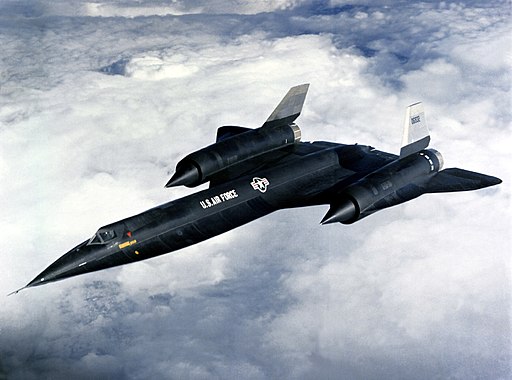
Lockheed A-12
The Lockheed A-12, a predecessor to the iconic SR-71 Blackbird, represented a remarkable leap forward in aviation technology during the Cold War era. Developed as a high-altitude, high-speed reconnaissance aircraft for the United States Central Intelligence Agency (CIA), the A-12 was shrouded in secrecy and designed to operate at the edge of technological feasibility. Known for its sleek and futuristic design, the A-12 was built using advanced materials and engineering techniques to achieve its ambitious performance goals.
With its distinctive delta wing shape and sleek, black exterior, the Lockheed A-12 was an engineering marvel of its time. Powered by two Pratt & Whitney J58 turbojet engines, each capable of producing over 32,000 pounds of thrust, the A-12 could reach speeds exceeding Mach 3 (three times the speed of sound) and cruise at altitudes above 80,000 feet. Its titanium airframe and innovative aerodynamic design allowed it to withstand the extreme heat generated by flying at such high speeds, while its advanced avionics and navigation systems enabled it to navigate with precision over long distances.
Operated by a single pilot, the A-12 conducted reconnaissance missions over hostile territory, gathering valuable intelligence for the United States during the Cold War. Flying at speeds faster than most surface-to-air missiles and at altitudes beyond the reach of enemy interceptors, the A-12 could penetrate deep into enemy airspace with relative impunity. Despite its small size and limited payload capacity, the A-12 played a critical role in providing vital intelligence to U.S. policymakers and military commanders during some of the tensest moments of the Cold War, contributing to the nation’s security and strategic interests.
Armament of the Lockheed A-12
The Lockheed A-12, being a reconnaissance aircraft rather than a combat aircraft, was not armed with traditional weapons like guns or missiles. Its primary mission was to fly high-altitude reconnaissance missions over hostile territory to gather intelligence. However, it did have defensive measures to evade enemy threats:
- Electronic Countermeasures (ECM): The A-12 was equipped with electronic countermeasures to jam or confuse enemy radar and missile guidance systems.
- Radar Warning Receiver (RWR): The aircraft had radar warning receivers to detect and alert the crew to the presence of enemy radar emissions, allowing them to take evasive action.
- Chaff and Flare Dispensers: To counter incoming radar-guided missiles, the A-12 could deploy chaff (small metal strips) and flares to confuse or distract enemy missiles.
- High-speed and Altitude: The A-12’s primary defense was its ability to fly at extremely high speeds and altitudes, making it difficult for enemy aircraft or surface-to-air missiles to intercept or engage effectively.
While the A-12 did not carry offensive weapons, its advanced reconnaissance capabilities provided crucial intelligence to support military operations during the Cold War era.
Dimensions of the Lockheed A-12
The Lockheed A-12, a precursor to the famous SR-71 Blackbird, had the following dimensions:
- Length: Approximately 31.6 meters (103 feet 10 inches).
- Wingspan: Approximately 16.9 meters (55 feet 7 inches).
- Height: Approximately 5.6 meters (18 feet 6 inches).
- Wing Area: Around 88 square meters (950 square feet).
These dimensions allowed the A-12 to achieve remarkable performance, including high-altitude reconnaissance missions at speeds exceeding Mach 3.
