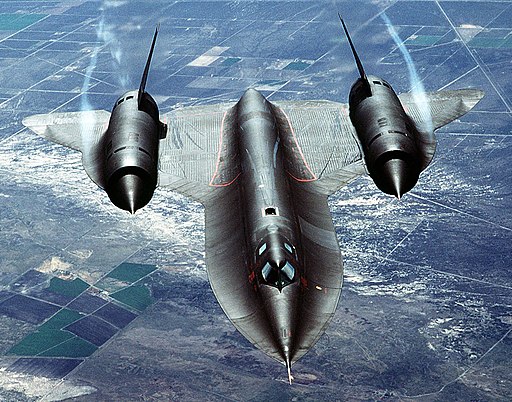
Lockheed SR-71 Blackbird
The Lockheed SR-71 Blackbird stands as an enduring icon of aviation excellence, representing the pinnacle of Cold War-era aerospace engineering. Developed by Lockheed’s Skunk Works division in the 1960s, the SR-71 was designed to operate at speeds exceeding Mach 3 (three times the speed of sound) and altitudes of over 85,000 feet, making it virtually untouchable by enemy defenses. Its sleek, black profile and distinctive shape earned it the nickname “Blackbird,” while its performance capabilities solidified its reputation as one of the most advanced aircraft ever built.
Powered by two Pratt & Whitney J58 turbojet engines with afterburners, the SR-71 could propel itself to speeds in excess of 2,200 miles per hour, allowing it to fly from New York to London in less than two hours. Its titanium airframe, coated in a special radar-absorbing material, made it virtually invisible to enemy radar, while its advanced reconnaissance systems allowed it to gather intelligence with unparalleled accuracy and detail. Equipped with sophisticated cameras and sensors, the SR-71 could survey vast areas of enemy territory, providing invaluable intelligence to U.S. military commanders and policymakers.
Despite its incredible performance and technological sophistication, the SR-71 was notoriously challenging to operate. Its extreme speed and altitude pushed the limits of materials and engineering, requiring meticulous maintenance and careful handling by its skilled crews. However, the SR-71’s contributions to national security were immeasurable, providing critical intelligence during some of the most sensitive moments of the Cold War. Though retired from active service in the late 1990s, the SR-71 remains a symbol of American ingenuity and a testament to the power of human innovation in the pursuit of aerospace excellence.
Armament Lockheed SR-71 Blackbird
The Lockheed SR-71 Blackbird, primarily a reconnaissance aircraft rather than a combat aircraft, was not equipped with traditional offensive weapons like guns or missiles. Its primary mission was reconnaissance, and its design prioritized speed, altitude, and stealth over offensive capabilities. However, it did have some defensive measures to evade enemy threats:
- Electronic Countermeasures (ECM): The SR-71 was equipped with electronic countermeasures to jam or confuse enemy radar and missile guidance systems.
- Radar Warning Receiver (RWR): The aircraft had radar warning receivers to detect and alert the crew to the presence of enemy radar emissions, allowing them to take evasive action.
- Chaff and Flare Dispensers: To counter incoming radar-guided missiles, the SR-71 could deploy chaff (small metal strips) and flares to confuse or distract enemy missiles.
- High-speed and Altitude: The SR-71’s primary defense was its ability to fly at extremely high speeds and altitudes, making it difficult for enemy aircraft or surface-to-air missiles to intercept or engage effectively.
While the SR-71 did not carry offensive weapons, its advanced reconnaissance capabilities provided crucial intelligence to support military operations during the Cold War era.
Dimensions of the Lockheed SR-71 Blackbird
Here are the dimensions of the Lockheed SR-71 Blackbird:
- Length: Approximately 32.74 meters (107 feet 5 inches).
- Wingspan: Approximately 16.94 meters (55 feet 7 inches).
- Height: Approximately 5.64 meters (18 feet 6 inches).
- Wing Area: Around 172.8 square meters (1,857 square feet).
These dimensions helped the SR-71 achieve its remarkable performance, including its ability to fly at speeds exceeding Mach 3 (three times the speed of sound) and at altitudes of over 85,000 feet.
