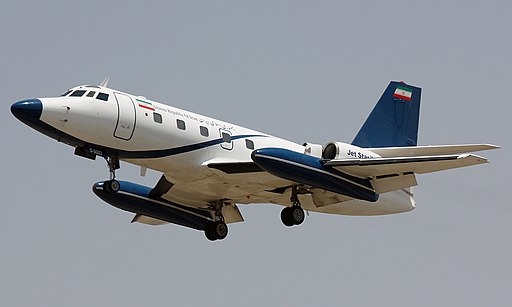
Lockheed JetStar
The Lockheed JetStar stands as a pioneering business jet that made a significant impact in the realm of executive and VIP air travel. Introduced in the early 1960s, the JetStar was one of the first dedicated business jets, designed to provide a swift and comfortable mode of transportation for corporate and government leaders. The aircraft had a distinctive appearance with its four engines mounted on the rear fuselage, and it could accommodate up to ten passengers in a spacious and luxurious cabin. Known for its impressive range and high-speed capabilities, the JetStar became a symbol of prestige in private aviation.
Developed by Lockheed’s famed Skunk Works division, the JetStar was well-received for its performance, versatility, and reliability. It could fly at high altitudes and achieve speeds approaching 600 miles per hour, making it a competitive option for long-distance travel. The JetStar’s success laid the groundwork for the evolution of the business jet market, influencing the design and development of subsequent executive aircraft. While production ceased in the early 1970s, the Lockheed JetStar remains a historic and iconic aircraft in the world of business aviation, leaving a lasting legacy as a trailblazer in private jet travel.
Lockheed JetStar parameters
The Lockheed JetStar was a pioneering business jet known for its performance and spacious cabin. Here are some key parameters for the Lockheed JetStar II, one of the later variants:
- Crew: 2 (pilot and co-pilot)
- Passenger Capacity: Up to 10 passengers
- Length: 60 feet 5 inches (18.42 meters)
- Wingspan: 53 feet 7 inches (16.33 meters)
- Height: 20 feet 5 inches (6.22 meters)
- Empty Weight: Approximately 24,570 pounds (11,140 kilograms)
- Maximum Takeoff Weight: Approximately 44,500 pounds (20,185 kilograms)
- Maximum Speed: Approximately 561 miles per hour (903 kilometers per hour)
- Range: Approximately 2,995 miles (4,823 kilometers)
- Engines: Four Pratt & Whitney JT12A-8 turbojet engines
- Fuel Capacity: Approximately 2,213 gallons (8,385 liters)
- Service Ceiling: 51,000 feet (15,545 meters)
- First Flight: September 4, 1957
- Entered Service: 1959
- Number Built: Approximately 204 aircraft
These parameters showcase the Lockheed JetStar’s capabilities as a high-speed, long-range business jet, making it a popular choice for corporate and government use during its era. The spacious cabin and impressive range contributed to its success in the executive aviation market, and it remains a notable aircraft in the history of business jet development.
History of the Lockheed JetStar
The Lockheed JetStar holds a distinguished place in the history of business aviation as one of the pioneering dedicated business jets. Developed by Lockheed’s Skunk Works division, the JetStar made its first flight on September 4, 1957, and entered service in 1959. The aircraft was designed to cater to the growing demand for executive travel, providing a luxurious and efficient means of transportation for corporate and government leaders. With its four Pratt & Whitney turbojet engines and a distinctive rear-engine configuration, the JetStar boasted impressive speed and range capabilities, setting new standards in business jet performance. Over its production run, the JetStar underwent several variants, with the JetStar II being one of the most notable.
The JetStar’s spacious and comfortable cabin could accommodate up to ten passengers, and its high cruising altitude and speed made it an attractive choice for long-distance travel. While production ceased in the early 1970s, the Lockheed JetStar left an indelible mark on the business aviation industry, contributing to the evolution of executive air travel. Its legacy is evident in the continued development of business jets that prioritize speed, range, and luxury, making the JetStar a trailblazer in the world of private jet transportation.
