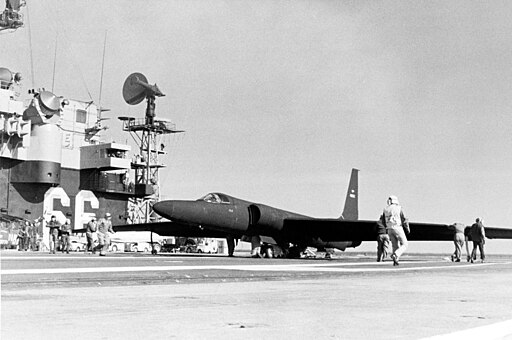
Lockheed U-2
The Lockheed U-2, an iconic reconnaissance aircraft known affectionately as the “Dragon Lady,” has played a pivotal role in gathering intelligence for over six decades. Developed during the Cold War era, the U-2 was designed to conduct high-altitude surveillance missions over hostile territory, providing invaluable intelligence to the United States and its allies. Its distinctive glider-like silhouette and exceptionally high operating altitude made it a formidable asset in the realm of aerial reconnaissance.
With its long, slender wings and narrow fuselage, the U-2 boasts remarkable endurance and altitude capabilities. Operating at altitudes exceeding 70,000 feet, far above the reach of most surface-to-air missiles and interceptors, the U-2 is able to gather intelligence with unparalleled precision and detail. Equipped with a suite of advanced sensors and cameras, including electro-optical, infrared, and radar systems, the U-2 is capable of capturing imagery and signals intelligence across vast swathes of territory, providing critical information to military commanders and policymakers.
Despite its age, the Lockheed U-2 remains an indispensable asset in the realm of reconnaissance and intelligence gathering. Its ability to operate in contested airspace and provide real-time intelligence has made it a cornerstone of U.S. national security strategy. Continuously upgraded and modernized over the years, the U-2 continues to serve on the front lines of intelligence gathering, demonstrating the enduring legacy of one of aviation’s most iconic and enduring aircraft.
Armament Lockheed U-2
The Lockheed U-2 reconnaissance aircraft, also known as the Dragon Lady, is not equipped with traditional offensive weapons like guns or missiles. Its primary mission is reconnaissance, gathering intelligence through high-altitude, long-endurance flights over hostile territory. The U-2 is designed to fly at altitudes exceeding 70,000 feet, well above the reach of most surface-to-air missiles and interceptors, and relies on its speed, altitude, and stealthy design to evade detection by enemy radar systems.
Instead of offensive armament, the U-2 is equipped with a variety of sensors and cameras to collect imagery and signals intelligence. These include electro-optical and infrared cameras, synthetic aperture radar, and other classified intelligence-gathering equipment. The data collected by the U-2’s sensors is used to provide critical intelligence to military commanders and policymakers, supporting a wide range of national security objectives.
While the U-2 is not armed with weapons for offensive operations, it does have defensive measures to protect itself in the event of an attack. These include electronic countermeasures (ECM) to jam or confuse enemy radar and missile guidance systems, as well as the ability to deploy chaff and flares to decoy incoming missiles. Additionally, U-2 pilots are trained in evasive maneuvers to avoid potential threats while conducting reconnaissance missions in hostile airspace.
Dimensions of the Lockheed U-2
The Lockheed U-2 reconnaissance aircraft has the following dimensions:
- Length: Approximately 19.2 meters (63 feet 0 inches).
- Wingspan: Approximately 31.4 meters (103 feet 4 inches).
- Height: Approximately 4.8 meters (15 feet 7 inches).
These dimensions, along with its distinctive glider-like design and long, slender wings, contribute to the U-2’s ability to fly at extremely high altitudes for extended periods of time, making it an effective reconnaissance platform.
_with_a_U-2.jpg)