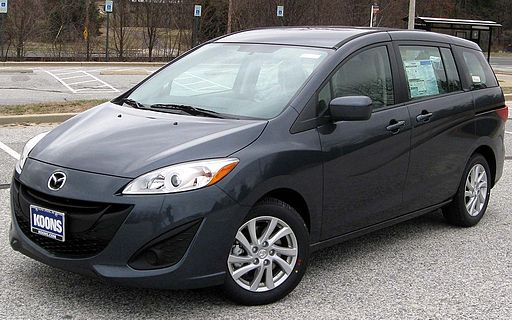
Mazda5 faults
🔧 1. Rear Suspension Issues
- Symptom: Premature tire wear, clunking noises, and poor handling.
- Cause: Weak rear lower control arm bushings and rear alignment settings that are hard to keep within spec.
- Fix: Replacement of bushings or entire control arms; regular alignment checks and using upgraded aftermarket parts may help.
⚙️ 2. Sliding Door Problems
- Symptom: Difficulty opening/closing, doors not staying shut, or latches failing.
- Cause: Worn door rollers, dirty tracks, or broken latches.
- Fix: Cleaning and lubricating the tracks often helps; otherwise, door roller assemblies or latch replacements may be necessary.
🌡️ 3. Engine Overheating (Thermostat Housing Leak)
- Symptom: Coolant leaks, overheating, check engine light (P0128).
- Cause: Plastic thermostat housing cracks or the seal fails.
- Fix: Replace the entire thermostat housing—aluminum aftermarket versions are available and more durable.
🛑 4. Premature Brake Wear
- Symptom: Frequent brake pad/rotor replacements, vibration while braking.
- Cause: The Mazda5 is relatively heavy for its brake setup, leading to overheating and warping of rotors.
- Fix: Use high-quality pads/rotors and check calipers for sticking; some owners upgrade to performance brakes.
🔌 5. Ignition Coil Failures
- Symptom: Engine misfires, rough idle, loss of power, CEL (e.g., P0301-P0304).
- Cause: Failing ignition coils, often around 60,000-100,000 miles.
- Fix: Replace faulty coils—typically best to replace all four (or six for the 2.5L engine) at once.
⚡ 6. Power Steering Pump Noise/Failure
- Symptom: Whining noise, stiff steering, especially when cold.
- Cause: Worn power steering pump or fluid leaks.
- Fix: Replace the power steering pump and check/flush fluid system.
🧰 7. Transmission Shifting Issues (Automatic Models)
- Symptom: Hard or delayed shifting, slipping, or failure to engage gears.
- Cause: Poor maintenance, dirty fluid, or failing shift solenoids.
- Fix: Regular fluid changes are critical (even if Mazda calls it “lifetime” fluid); solenoid or full transmission replacement may be needed if neglected.
💡 8. Dashboard Light Failures / Electrical Gremlins
- Symptom: Intermittent lighting issues, especially backlighting on gauges or HVAC.
- Cause: Faulty connections or failing instrument cluster.
- Fix: Check wiring/connectors; sometimes requires replacing the gauge cluster.
🔋 9. Battery Drain Issues
- Symptom: Dead battery after the car sits for a few days.
- Cause: Faulty door switches, aftermarket accessories, or parasitic draw from modules.
- Fix: Perform a parasitic draw test to isolate the culprit.
🚗 10. Rust (in Some Climates)
- Symptom: Rust spots around rear wheel wells, sliding door bottoms, and undercarriage.
- Cause: Poor undercoating and exposure to road salt.
- Fix: Regular washing and rustproofing can help; affected areas may require cutting/welding and repainting.
Mazda5 as a used car
Mazda5 as a Used Car: Compact Versatility with a Hint of Zoom-Zoom
The Mazda5 occupies a unique space in the automotive world. Blending the practicality of a minivan with the agility of a compact car, it became a go-to solution for small families or urban dwellers looking for a flexible yet enjoyable vehicle. Though Mazda stopped production of the Mazda5 for the U.S. and many other markets in the mid-2010s, it continues to hold strong appeal on the used car market for those who appreciate utility without the bulk of a full-size minivan.
Let’s dive into the technical specifications, ownership experience, and what to consider when shopping for a used Mazda5.
Overview and Market Position
The Mazda5 was produced from 2006 to 2015 in North America, spanning two generations. It was marketed as a compact multi-activity vehicle (MAV) — essentially a small minivan with sliding rear doors, seating for up to six, and car-like driving dynamics. Unlike traditional minivans, the Mazda5 was based on the Mazda3 platform, giving it tighter handling and a more connected feel on the road.
For buyers who found full-size minivans too large and SUVs too inefficient or cumbersome, the Mazda5 struck a practical balance.
Engine and Performance Specifications
The Mazda5 came equipped with naturally aspirated inline-four engines, known more for reliability than raw performance. Here’s a breakdown of the key technical specs by generation:
First Generation (2006–2010)
- Engine: 2.3L MZR I4
- Horsepower: 157 hp @ 6,500 rpm
- Torque: 148 lb-ft @ 4,500 rpm
- Transmission: 5-speed manual or 4-speed automatic
- Fuel Economy: Approx. 21–27 mpg (city/highway)
- Drivetrain: Front-wheel drive
- 0-60 mph: ~9.5 seconds
Second Generation (2012–2015, facelift introduced in 2012)
- Engine: 2.5L MZR I4
- Horsepower: 157 hp @ 6,000 rpm
- Torque: 163 lb-ft @ 4,000 rpm
- Transmission: 6-speed manual (Sport trim) or 5-speed automatic
- Fuel Economy: Approx. 22–28 mpg (city/highway)
- Drivetrain: Front-wheel drive
- 0-60 mph: ~8.7 seconds
The second-generation Mazda5 refined the formula slightly with a more powerful engine and better transmission choices, particularly with the addition of a 6-speed manual option that appealed to driving enthusiasts — a rarity in the minivan segment.
Dimensions and Practicality
- Overall Length: ~180.5 inches
- Width: ~68.9 inches
- Height: ~63.6 inches
- Wheelbase: 108.3 inches
- Cargo Space:
- Behind 3rd row: ~5.6 cubic feet
- With 3rd row folded: ~27.5 cubic feet
- With 2nd and 3rd rows folded: ~55.4 cubic feet
- Seating Capacity: 6 passengers (2-2-2 configuration)
Thanks to its clever design, the Mazda5 maximizes interior space despite its compact footprint. The sliding rear doors — a standout feature in this size class — provide excellent access in tight parking spots and are a huge plus for families with young children.
Driving Experience
This is where the Mazda5 sets itself apart from nearly every other minivan. The ride is firm but composed, and handling is responsive and nimble, especially for a vehicle with three rows of seats. It drives more like a compact sedan than a utility vehicle, which is no surprise given its Mazda3 roots.
Steering feedback is better than you’d expect, and although it’s not a sports car by any means, it’s much more engaging than larger vans or crossovers.
Reliability and Common Issues
While the Mazda5 is generally considered reliable, there are a few issues to watch for on used models:
- Suspension Wear: Rear control arm bushings tend to wear prematurely. Symptoms include odd tire wear and clunking noises over bumps.
- Sliding Door Components: With use, sliding door rollers and latches may fail or stick.
- Ignition Coil Failures: Especially on higher-mileage units, misfires may indicate worn-out coils.
- Thermostat Housing Leaks: Some models experience coolant leaks due to cracked plastic housings.
- Rust: In snowy or coastal areas, check for rust near the rear wheel arches and underbody.
Regular maintenance and using high-quality parts can go a long way in preventing many of these problems.
Interior Features and Technology
The Mazda5’s interior is simple and functional, with most trim levels offering:
- Automatic climate control (on higher trims)
- Bluetooth connectivity (on later models)
- Auxiliary and USB input
- Power windows and locks
- Optional leather seats and sunroof (on Grand Touring trim)
- Fold-flat rear seating for cargo versatility
While it doesn’t offer the advanced infotainment or driver-assistance tech seen in modern vehicles, it covers the basics well for its time. Interior materials are decent, though you might find some hard plastics in high-traffic areas.
Fuel Economy and Ownership Costs
Given its size and utility, the Mazda5 offers decent fuel economy, especially in the manual transmission variants. Insurance rates are generally low, and parts availability is solid due to shared components with other Mazda models.
Its relatively small engine and front-wheel-drive layout help keep maintenance and repair costs manageable, though some labor costs can rise when dealing with tight engine bay components.
Ideal Buyers
The Mazda5 is a great fit for:
- Urban families needing three rows but without the bulk of a full minivan
- Drivers who prioritize maneuverability and fuel efficiency
- Buyers who want a practical car with some enthusiast appeal (especially the manual versions)
- Budget-conscious shoppers who need seating flexibility for kids, pets, or cargo
It’s not ideal for large families who need more than six seats or who regularly tow, as the Mazda5 lacks all-wheel drive and significant towing capacity (rated for only light trailers or utility racks).
Final Thoughts
The Mazda5 remains one of the most interesting family vehicles you can buy used. It’s practical, compact, affordable, and even fun to drive — a rare combination in a segment that often leans toward bland. While it may lack some of the bells and whistles of newer minivans or crossovers, what it does offer is smart design and the soul of a Mazda.
