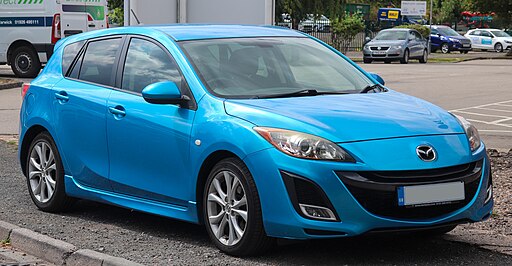
Mazda3 faults
The Mazda3 is widely praised for its sporty handling, stylish design, and reliability. However, like any vehicle, it has its share of common and known issues — some specific to certain model years or drivetrains.
Here’s a detailed list of common Mazda3 faults, organized by system:
1. Suspension Noises and Wear
- Symptom: Clunking, knocking, or rattling from the front suspension, especially when going over bumps or turning.
- Cause: Worn sway bar links, bushings, ball joints, or strut mounts.
- Details: Common on older models (especially 2004–2013). These parts wear out with age and use, especially in areas with rough roads or harsh winters.
2. Rust and Corrosion (Especially on Older Models)
- Symptom: Visible rust on rear wheel arches, rocker panels, door edges, and underbody.
- Cause: Inadequate factory rust-proofing, particularly in first and second generation models (2004–2013).
- Details: Mazda addressed the issue in later years, but pre-2014 cars are especially prone. In colder climates, rust can progress rapidly if not treated.
3. Automatic Transmission Hesitation (Particularly Skyactiv Models)
- Symptom: Jerky gear changes, hesitation, or flaring between shifts.
- Cause: Early software tuning or worn solenoids and valve bodies.
- Details: Most common in 2012–2016 Skyactiv models with the 6-speed automatic. In many cases, a TCM (Transmission Control Module) update improves performance.
4. Infotainment System Freezing or Rebooting (2014+)
- Symptom: Freezing, black screen, or system rebooting randomly.
- Cause: Glitches in Mazda’s Connect infotainment system.
- Details: Particularly on 2014–2017 models. Firmware updates often resolve this, though some early hardware had to be replaced. Newer systems are more stable.
5. Clutch Issues (Manual Transmission)
- Symptom: Slipping clutch, difficulty engaging gears, high clutch bite point.
- Cause: Premature wear of the clutch disc or release bearing.
- Details: Some owners, especially those with spirited driving habits, report clutch replacements under 60,000 miles (100,000 km). More common on 2004–2009 models.
6. Brake Caliper Seizing
- Symptom: Pulling to one side while driving, burning smell, reduced braking power.
- Cause: Sticking or seized rear brake calipers, often due to corrosion or worn pins.
- Details: Especially common in cold or wet climates. Affects both first and second gen Mazda3s.
7. Excessive Oil Consumption
- Symptom: Oil level drops between services; blue smoke from exhaust.
- Cause: Worn piston rings or valve seals.
- Details: A known issue on the 2.3L MZR engines (2004–2009) and some early Skyactiv-G engines (2012–2015). Check oil regularly and look for smoke during cold starts.
8. Power Steering Failure (2007–2009)
- Symptom: Sudden loss of power steering assist.
- Cause: Faulty electric power steering pump or control module.
- Details: Mazda issued a recall for certain 2007–2009 models due to this issue. If buying one from those years, verify recall completion.
9. Windshield Cracking (2019–Present)
- Symptom: Hairline or spider cracks on the windshield with minimal impact.
- Cause: Thin glass or design flaw near the base of the windshield.
- Details: Owners of newer 4th-generation Mazda3s (2019+) have reported spontaneous windshield cracks, possibly due to body flex or flawed design. Often not covered under warranty.
10. Rearview Camera or Safety Sensor Malfunctions
- Symptom: Warning lights, camera not displaying, or safety features like lane assist not functioning.
- Cause: Faulty sensors, software bugs, or moisture ingress.
- Details: Affects newer models with Mazda’s i-Activsense safety tech. Most cases can be solved with software updates or sensor recalibration.
Bonus: Keyless Entry / Push Start Issues (2014–2018)
- Symptom: Push start not working or car not detecting the key fob.
- Cause: Failing start/stop button module or weak key fob battery.
- Details: Sometimes the car thinks the key is out of range even if it’s nearby. Replacing the fob battery or resetting the system usually solves it.
Maintenance Tips to Avoid or Delay These Issues:
- Regular underbody washes to prevent rust, especially in winter.
- Frequent oil checks, especially on older engines.
- Brake inspections every 10,000 miles / 15,000 km.
- Transmission fluid changes every 40,000–60,000 miles for automatics.
- Infotainment updates at the dealership for Mazda Connect bugs.
Final Thoughts
The Mazda3 remains one of the better-built and more fun-to-drive cars in its class. While these issues exist, most are manageable and relatively inexpensive to fix, especially compared to problems in some competitors. Knowing what to look for — and maintaining the car proactively — can ensure years of reliable ownership.
Mazda3 as a used car
Mazda3 as a Used Car: A Smart Blend of Style, Reliability, and Value
The Mazda3 has consistently been a top contender in the compact car segment, offering drivers a premium experience at an affordable price. Whether in sedan or hatchback form, the Mazda3 strikes a compelling balance between performance, fuel efficiency, stylish design, and reliability. As a used car, it delivers even more value, making it an excellent choice for budget-conscious buyers who still want a vehicle with personality and quality.
Design and Interior Appeal
One of the standout features of the Mazda3 — even as a used car — is its design. Unlike many compact cars that lean toward the bland or utilitarian, the Mazda3 features bold styling that often draws comparisons to more expensive European models. The brand’s “Kodo” design language gives it an athletic stance and sleek, flowing lines that age gracefully.
Inside, the cabin feels upscale, especially on models from 2014 onward. Soft-touch materials, an intuitive layout, and minimalist aesthetics make the interior feel more premium than its price tag suggests. The seating is comfortable and supportive, with higher trims offering extras like leather upholstery, heated seats, and a power-adjustable driver’s seat.
Engine and Performance
Mazda3 models offer a variety of powertrains, with the most common being:
- 2.0L Skyactiv-G Inline-4 (approx. 155 hp): Found in lower trims, this engine provides a great mix of performance and fuel economy. It’s ideal for daily commuting and long-distance driving.
- 2.5L Skyactiv-G Inline-4 (approx. 184 hp): Available in higher trims, it delivers a sportier and more responsive driving experience without compromising fuel efficiency.
- 2.5L Turbocharged Engine (250 hp): Introduced in recent models, it gives the Mazda3 near-GTI levels of performance while maintaining daily comfort.
Mazda is known for its driver-focused engineering, and this shows in the Mazda3’s responsive steering, well-tuned suspension, and engaging feel on the road. Unlike many rivals that feel dull or detached, the Mazda3 makes even routine drives more enjoyable.
Transmission Options
Used Mazda3 models commonly come with a 6-speed manual or 6-speed automatic transmission. The manual is slick and engaging, favored by enthusiasts, while the automatic is smooth and responsive, especially with the Skyactiv tuning that maximizes efficiency and performance.
From 2019 onward, Mazda also introduced all-wheel drive (AWD) options, making the Mazda3 one of the few compact cars in its class to offer this feature. It’s a bonus for drivers in areas with heavy rain or snow.
Fuel Efficiency
Fuel economy is one of the Mazda3’s strengths. Depending on the engine and transmission configuration, you can expect:
- 2.0L Skyactiv: 30–41 mpg (combined)
- 2.5L Skyactiv: 27–38 mpg (combined)
- 2.5L Turbo: Around 25–32 mpg (combined)
These numbers make it a cost-effective choice for those looking to keep fuel bills low without sacrificing fun.
Safety Features and Ratings
Even older Mazda3 models offer strong safety credentials. Standard safety equipment includes multiple airbags, ABS, and stability control. Starting in the 2014 model year, Mazda added its i-Activsense suite of safety technologies, which can include:
- Blind Spot Monitoring
- Lane Departure Warning
- Forward Collision Warning
- Automatic Emergency Braking
- Adaptive Cruise Control
The Mazda3 has consistently scored well in crash tests, earning high ratings from the IIHS and NHTSA.
Reliability and Common Issues
The Mazda3 is generally considered a reliable vehicle. However, like any used car, certain model years and configurations may have known issues. Common problems reported include:
- Rust, especially on older models (pre-2014) in areas with salted roads
- Premature clutch wear on manual transmission models
- Infotainment glitches (especially with the Mazda Connect system)
- Suspension wear (bushings and sway bar links)
- Windshield cracking on 2019+ models (a design-related issue)
Routine maintenance is simple and cost-effective. Mazda parts are readily available, and most repairs are reasonably priced. A well-maintained Mazda3 can easily exceed 200,000 miles.
Best Model Years to Buy
When shopping for a used Mazda3, here are some standout model years:
- 2014–2018 (3rd Gen): A sweet spot for many buyers, offering excellent value, sharp styling, and modern features.
- 2019–Present (4th Gen): More premium in look and feel, with added tech and AWD options. These models cost more but feel like a class above.
- 2012–2013: Older but still solid, particularly if well cared for. Great for budget buyers looking for basic transportation with some style.
Value and Resale
Mazda3s tend to hold their value better than many other compact cars, thanks to strong reliability and a loyal customer base. As a used car, it often represents a better deal than similarly priced rivals like the Toyota Corolla or Honda Civic, especially if you prioritize driving dynamics and design.
Final Thoughts
The Mazda3 is one of the most well-rounded used cars in its class. Whether you’re a student, a first-time buyer, a commuter, or someone who simply loves driving, it offers an exceptional combination of efficiency, comfort, and fun. With strong reliability, attractive styling, and affordable operating costs, the Mazda3 proves that you don’t need to sacrifice quality for a good deal on the used car market.
If you’re in the market for a compact car that delivers more than just the basics, the Mazda3 is a used car that’s well worth considering.
