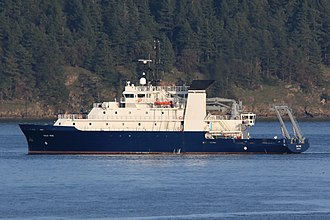
RV Sally Ride (AGOR-28)
The Advanced Oceanographic Research Vessel Carrying the Legacy of America’s First Woman in Space
Modern scientific exploration no longer belongs exclusively to astronauts walking on the Moon or robotic probes traveling through interplanetary space. Some of the most important frontiers of discovery lie much closer to home, hidden beneath the vast surface of Earth’s oceans. Despite centuries of navigation and maritime exploration, humanity still understands surprisingly little about the deep sea, ocean circulation systems, marine ecosystems, and the geological structures hidden beneath the ocean floor. In the twenty-first century, advanced research vessels have become among the most important tools for expanding scientific knowledge about the planet itself. One of the most sophisticated and symbolically significant of these ships is the RV Sally Ride (AGOR-28), a modern American oceanographic research vessel designed to support cutting-edge marine science across the globe.
The RV Sally Ride is far more than a ship. It is a floating scientific institution, a technological platform, a training environment for future researchers, and a symbol of scientific ambition. Operated by the Scripps Institution of Oceanography on behalf of the United States Navy’s Office of Naval Research, the vessel represents a new generation of research ships designed specifically for multidisciplinary marine science in an era increasingly shaped by climate change, environmental monitoring, advanced robotics, and global scientific cooperation.
What makes the vessel especially meaningful is its name. Sally Ride was not only America’s first woman in space but also a physicist, educator, and advocate for science education. Her career symbolized curiosity, intellectual rigor, and the breaking of barriers in scientific achievement. Naming one of the world’s most advanced research vessels after her created a direct symbolic connection between space exploration and ocean exploration. Both fields involve confronting hostile environments, pushing technological limits, and pursuing knowledge about realms still largely unknown to humanity.
The RV Sally Ride therefore exists at the intersection of science, engineering, exploration, and cultural symbolism. It was designed during a period when oceanography became more important than ever before. Climate change, rising sea levels, ocean acidification, marine biodiversity loss, and changing weather systems increasingly forced scientists and governments to recognize the oceans as central components of Earth’s environmental system. Understanding the oceans is no longer a niche academic pursuit. It is essential for understanding the future of human civilization itself.
The ship also represents a major evolution in research vessel design. Earlier generations of oceanographic ships often required compromises between endurance, scientific flexibility, and technological capability. The RV Sally Ride was conceived specifically for the digital era of marine science, where enormous quantities of data are collected continuously using advanced sensors, sonar arrays, underwater robots, satellite communications, and high-performance computing systems.
Unlike conventional commercial ships or naval combat vessels, research ships are designed around entirely different priorities. Precision station-keeping, quiet propulsion, laboratory flexibility, scientific deployment systems, and operational endurance matter more than cargo capacity or weapon systems. Every aspect of RV Sally Ride reflects these scientific priorities.
The vessel belongs to the Neil Armstrong-class of oceanographic research ships, alongside its sister vessel RV Neil Armstrong (AGOR-27). Together, these ships replaced aging research vessels in the United States academic fleet and significantly expanded the capabilities available to marine scientists. They were designed not only for current scientific needs but also for future technological adaptation.
The RV Sally Ride is particularly associated with the Scripps Institution of Oceanography in California, one of the world’s most influential marine science organizations. Through Scripps, the ship supports research missions involving oceanographers, geologists, marine biologists, chemists, climate scientists, engineers, and students from many institutions and nations.
The vessel’s importance extends beyond pure science. Research conducted aboard RV Sally Ride influences climate models, environmental policy, marine conservation strategies, fisheries management, natural hazard assessment, and broader public understanding of the oceans. Data gathered during expeditions may eventually contribute to decisions affecting millions of people worldwide.
The story of RV Sally Ride is therefore not merely about a ship. It is about humanity’s continuing effort to understand the planet through science, technology, and exploration.
The Legacy of Sally Ride and the Symbolism of Exploration
The naming of RV Sally Ride carried extraordinary symbolic significance. Sally Kristen Ride remains one of the most important figures in the history of American science and exploration. In 1983, she became the first American woman to travel into space aboard the Space Shuttle Challenger. Her achievement represented a major cultural and scientific milestone during an era when women remained significantly underrepresented in many scientific and technical fields.
Yet Sally Ride’s influence extended far beyond her historic spaceflight.
She was also a physicist, educator, author, and advocate for science education. Following her NASA career, she dedicated much of her life to encouraging young people, especially girls, to pursue careers in science, technology, engineering, and mathematics.
Naming an advanced oceanographic research vessel after Sally Ride therefore connected multiple themes simultaneously: exploration, education, scientific advancement, and breaking traditional barriers.
There is also a profound conceptual relationship between space exploration and oceanography. Both involve environments fundamentally hostile to human survival. Both require advanced engineering systems to sustain operations. Both depend heavily on robotics, remote sensing, and interdisciplinary scientific cooperation. Both remain filled with unknowns despite decades of technological progress.
In fact, many scientists argue that the deep ocean remains less understood than portions of outer space.
Humanity has mapped parts of Mars and the Moon in greater detail than significant sections of the ocean floor. Deep-sea trenches, hydrothermal vent ecosystems, abyssal plains, and underwater geological structures continue to surprise researchers.
The RV Sally Ride therefore symbolizes the continuation of exploration in a new form.
The vessel’s name also reinforces the idea that scientific exploration is not confined to one frontier. The same curiosity that drives humanity toward distant planets also drives marine scientists toward the deepest regions of Earth’s oceans.
This symbolic connection becomes especially powerful aboard the ship itself. Scientists deploying autonomous underwater vehicles into darkness thousands of meters below the ocean surface often confront challenges conceptually similar to those faced by space missions.
Isolation, extreme environments, technological dependence, and uncertainty define both disciplines.
The RV Sally Ride therefore carries not only scientific equipment but also the broader cultural legacy of exploration itself.
Origins of the AGOR Program
The RV Sally Ride emerged from the United States Navy’s broader effort to modernize the academic research fleet through the Auxiliary General Oceanographic Research, or AGOR, program.
By the early twenty-first century, many existing American research vessels were aging rapidly. Although some older ships possessed distinguished scientific histories, their technology, efficiency, and operational flexibility increasingly fell behind modern scientific requirements.
Oceanography itself was changing dramatically.
Marine science increasingly depended on digital data collection, advanced sonar mapping, robotic systems, satellite communications, autonomous underwater vehicles, and integrated computing infrastructure. Older vessels often lacked the space, electrical systems, and adaptability required for these technologies.
The Office of Naval Research recognized the need for a new generation of highly capable research vessels designed specifically for modern oceanography.
The result was the Neil Armstrong-class research vessel program.
Two ships were planned: RV Neil Armstrong (AGOR-27), operated by the Woods Hole Oceanographic Institution, and RV Sally Ride (AGOR-28), operated by Scripps Institution of Oceanography.
These vessels were intended to replace older ships while significantly expanding scientific capabilities.
The design process emphasized flexibility, endurance, low acoustic signatures, operational efficiency, and future adaptability. Rather than constructing narrowly specialized ships, designers created platforms capable of supporting many scientific disciplines simultaneously.
The AGOR vessels also reflected the continuing partnership between the U.S. Navy and civilian scientific institutions.
This relationship has deep historical roots. During the twentieth century, naval investment in oceanography often supported both strategic and scientific objectives. Understanding ocean acoustics, currents, seafloor geography, and marine environments possessed military relevance during the Cold War, especially for submarine operations.
At the same time, civilian scientists benefited enormously from naval funding and technological development.
The RV Sally Ride continues this tradition while focusing overwhelmingly on peaceful scientific research.
Construction and Launch of RV Sally Ride
The RV Sally Ride was constructed by Dakota Creek Industries in Anacortes, Washington, a shipyard with extensive experience in specialized vessel construction. (en.wikipedia.org)
The ship was laid down in 2014 and launched in 2015, entering service during a period when environmental science and climate research were becoming increasingly important globally.
The construction process reflected modern shipbuilding techniques emphasizing precision engineering, modular design, and operational efficiency.
Unlike commercial cargo vessels or naval combat ships, research vessels require highly specialized internal arrangements. Laboratory spaces, deployment systems, acoustic considerations, computing infrastructure, and scientific flexibility shape virtually every aspect of design.
The launch of RV Sally Ride attracted considerable public and scientific attention because of the vessel’s symbolic name and advanced capabilities.
The ship officially entered service in 2016 and soon began scientific operations supporting the Scripps Institution of Oceanography.
Its arrival represented a major upgrade for the American academic research fleet.
Scientists immediately recognized the vessel’s potential for supporting multidisciplinary expeditions across the Pacific and beyond.
The ship’s construction also reflected growing awareness that marine science infrastructure requires long-term investment. Research vessels are extraordinarily complex and expensive platforms, but they remain indispensable for understanding the oceans.
Satellites can observe ocean surfaces, but many critical processes occur beneath the surface where only direct sampling and instrumentation can provide accurate data.
The RV Sally Ride was therefore built not merely as a replacement vessel but as a platform intended to support decades of scientific discovery.
A Floating Laboratory for Modern Science
One of the defining characteristics of RV Sally Ride is its role as a fully integrated floating laboratory.
Modern oceanographic research depends on the ability to collect, process, analyze, and transmit enormous quantities of data while operating in remote marine environments. The ship was designed specifically around these requirements.
Unlike conventional ships, research vessels function as mobile scientific ecosystems.
The RV Sally Ride contains modular laboratory spaces that can be reconfigured according to mission objectives. Wet laboratories support biological and chemical sampling operations involving seawater, marine organisms, and sediment analysis. Dry laboratories support computing systems, sonar processing, data visualization, and instrument control.
This flexibility is essential because oceanographic missions vary enormously.
One expedition may focus on marine microbiology, while another investigates tectonic plate boundaries or climate-related ocean circulation changes. Some missions deploy underwater robots into deep trenches, while others study atmospheric interactions above the ocean surface.
The ship’s architecture allows adaptation to these changing scientific requirements.
The vessel also includes extensive deck equipment for deploying scientific instruments. Cranes, winches, A-frames, and specialized handling systems enable researchers to lower equipment thousands of meters below the surface.
Oceanographic instruments may include CTD rosettes, sediment corers, sonar arrays, autonomous underwater vehicles, remotely operated vehicles, biological sampling systems, and deep-sea cameras.
Precision matters enormously during these operations.
Scientific equipment often costs millions of dollars and must operate reliably under extreme pressure conditions in the deep ocean. The ship’s positioning systems help maintain stability during delicate deployments.
The RV Sally Ride also supports advanced acoustic research.
Underwater acoustics play critical roles in oceanography, marine biology, fisheries science, and seafloor mapping. Ship-generated noise can interfere with sensitive measurements, so the vessel was engineered to minimize acoustic signatures.
This low-noise design significantly improves the quality of sonar and acoustic data collection.
Modern marine science also depends heavily on digital infrastructure.
The ship possesses advanced communications systems connecting onboard researchers with laboratories and institutions worldwide. Data can often be transmitted in near real time via satellite systems.
In many ways, RV Sally Ride operates as part of a globally interconnected scientific network rather than as an isolated research platform.
Engineering and Technological Innovation
The engineering design of RV Sally Ride reflects decades of evolution in research vessel technology.
One of the ship’s most important features is its diesel-electric propulsion system. Instead of traditional mechanical propulsion arrangements, diesel generators produce electricity powering electric propulsion motors.
This approach offers several advantages particularly valuable for oceanographic operations.
First, diesel-electric propulsion improves fuel efficiency by allowing generators to operate according to actual power demand. Second, electric propulsion reduces vibration and underwater noise, enhancing acoustic research capability. Third, the system allows flexible power distribution across the ship’s scientific and operational systems.
Quiet operation is especially important.
Oceanographic missions frequently involve sonar mapping, acoustic measurements, and marine mammal research. Excessive ship noise can compromise scientific data quality.
The RV Sally Ride was therefore designed with acoustic performance as a major engineering priority.
The ship also incorporates bow and stern thrusters supporting dynamic positioning capability.
Dynamic positioning systems allow the vessel to maintain precise locations despite wind, waves, and ocean currents. This capability becomes essential during deep-sea instrument deployments or remotely operated vehicle operations.
Maintaining station accurately over deep water may require extraordinary precision.
Hull design also plays a crucial role in research vessel performance.
The RV Sally Ride was designed for both coastal and open-ocean operations. Its hull balances stability, endurance, maneuverability, and operational efficiency across varied marine environments.
The vessel’s endurance capability is particularly important for long-duration expeditions.
Oceanographic research frequently occurs far from ports and logistical infrastructure. The ship therefore carries substantial supplies of fuel, food, spare parts, and scientific equipment.
The vessel can remain at sea for extended periods while supporting continuous scientific operations.
Electrical infrastructure aboard the ship supports highly sophisticated scientific systems.
Modern oceanography depends heavily on computers, sensors, imaging systems, autonomous technologies, and real-time data processing. The RV Sally Ride effectively functions as a floating technological platform.
Its engineering systems were designed not merely for current technology but also for future upgrades.
Oceanographic Missions and Scientific Research
The true significance of RV Sally Ride emerges most clearly during scientific expeditions.
The vessel supports an enormous range of research disciplines spanning nearly every aspect of marine science.
Physical oceanographers study currents, ocean circulation, temperature distribution, and climate interactions. Marine biologists investigate ecosystems, biodiversity, and species adaptation. Geologists examine seafloor structures, tectonic activity, and sediment processes. Chemists analyze seawater composition and carbon cycling.
The RV Sally Ride supports all these disciplines simultaneously.
Climate research represents one of the vessel’s most important mission categories.
Oceans absorb most of the excess heat generated by global warming and store enormous quantities of atmospheric carbon dioxide. Understanding ocean behavior is therefore essential for accurate climate modeling.
Researchers aboard the ship collect data on temperature, salinity, circulation patterns, biological productivity, and chemical exchange processes.
These observations contribute directly to global climate science.
Seafloor mapping is another major mission area.
Large portions of Earth’s ocean floor remain poorly mapped despite advances in marine technology. High-resolution sonar systems aboard RV Sally Ride help scientists produce detailed maps of underwater geological structures.
These maps support tectonic research, habitat analysis, natural hazard assessment, and broader scientific understanding of Earth’s structure.
Marine biology missions often focus on ecosystems that remain poorly understood.
Deep-sea organisms inhabit environments characterized by immense pressure, darkness, and extreme temperatures. Hydrothermal vent ecosystems especially continue to reveal extraordinary biological adaptations.
Many species discovered during oceanographic expeditions are entirely new to science.
The vessel also supports atmospheric research involving interactions between oceans and weather systems.
Oceans strongly influence hurricanes, monsoons, global heat distribution, and long-term climate patterns.
Understanding these interactions requires direct field observations at sea.
The RV Sally Ride frequently deploys autonomous and remotely operated underwater systems extending scientific reach into extreme depths.
These robotic technologies allow researchers to investigate regions inaccessible to divers.
In many respects, modern oceanography increasingly depends on robotic exploration supported by research vessels serving as operational hubs.
The Role of Robotics and Autonomous Systems
One of the most transformative developments in modern oceanography involves the growing use of autonomous and remotely operated systems.
The RV Sally Ride was specifically designed to support these technologies.
Autonomous underwater vehicles, commonly known as AUVs, can operate independently beneath the ocean surface while collecting scientific data. These robotic systems may map seafloor terrain, measure chemical conditions, capture imagery, or conduct acoustic surveys.
Remotely operated vehicles, or ROVs, remain connected to the ship through cables allowing direct control by operators onboard.
The ship’s deployment systems and computing infrastructure make it ideally suited for robotic ocean exploration.
Robotic systems dramatically expand scientific capability because they can operate in environments impossible for human divers.
Deep-sea trenches, hydrothermal vents, under-ice regions, and abyssal plains all become accessible through robotic technology.
The RV Sally Ride effectively serves as a command center for these underwater systems.
Researchers onboard monitor robotic operations in real time while analyzing incoming data streams.
This integration of shipboard science with robotic exploration represents one of the defining characteristics of twenty-first-century oceanography.
Future marine research will likely become even more dependent on autonomous technologies.
The RV Sally Ride was designed with this future in mind.
Life Aboard RV Sally Ride
Life aboard an oceanographic research vessel differs profoundly from life on commercial ships or naval combat vessels.
The RV Sally Ride functions simultaneously as a workplace, laboratory, residence, and operational platform.
Scientists, engineers, technicians, crew members, and students live together for weeks during expeditions.
A typical voyage involves highly structured routines centered around scientific operations. Unlike passenger ships, research vessels operate according to mission requirements rather than comfort or entertainment schedules.
Scientific operations frequently continue twenty-four hours per day.
Researchers may work rotating shifts depending on instrument deployment schedules, weather conditions, or sampling windows. Deep-sea operations often require overnight monitoring.
The atmosphere aboard research vessels combines technical professionalism with scientific curiosity.
Scientists from multiple disciplines collaborate closely while adapting constantly to changing ocean conditions.
Meals become important social and organizational moments where crew and researchers exchange information about operations and discoveries.
Shipboard life also involves physical and psychological challenges.
Extended periods at sea create isolation from normal routines. Weather conditions may change rapidly. Seasickness remains common even among experienced personnel.
Yet many scientists describe research expeditions as intellectually exhilarating despite the hardships.
The ocean environment itself creates powerful experiences.
Sunrises over open water, encounters with marine wildlife, and the sense of operating far from ordinary civilization often leave lasting impressions on researchers.
The RV Sally Ride therefore functions not merely as a workplace but also as a unique human environment shaped by scientific exploration.
Scripps Institution of Oceanography and Scientific Leadership
The RV Sally Ride operates under the management of the Scripps Institution of Oceanography, one of the world’s leading marine science organizations.
Founded in 1903 and based in La Jolla, California, Scripps has played a central role in the development of modern oceanography.
The institution conducts research across marine biology, climate science, geology, atmospheric science, ocean engineering, and environmental monitoring.
Scripps scientists have contributed to countless major discoveries involving ocean circulation, climate systems, marine ecosystems, and geophysics.
The institution also emphasizes technological innovation.
Scripps researchers helped develop advanced oceanographic instruments, underwater vehicles, and monitoring systems used worldwide.
The RV Sally Ride therefore belongs to a broader institutional tradition of scientific leadership and marine exploration.
Educational missions also remain central to Scripps operations.
Graduate students and early-career researchers gain critical field experience aboard research vessels. Oceanographic science depends heavily on practical shipboard operations because many marine processes can only be studied directly at sea.
The vessel therefore supports both scientific discovery and scientific education simultaneously.
Oceanography and the Climate Crisis
The growing importance of RV Sally Ride reflects broader global concerns regarding climate change and environmental transformation.
Modern climate science increasingly recognizes oceans as central components of Earth’s environmental system.
Oceans regulate global temperatures, absorb atmospheric carbon dioxide, influence weather systems, and sustain marine ecosystems supporting human economies and food supplies.
Yet many ocean processes remain insufficiently understood.
Research vessels therefore play essential roles in improving climate knowledge.
Data collected aboard RV Sally Ride contribute directly to climate models used worldwide.
Scientists study heat transport, carbon cycling, ocean acidification, sea-level rise, and changing circulation patterns.
These observations help governments and institutions understand environmental trends with potentially enormous societal consequences.
Marine ecosystems also face growing stress from warming waters, pollution, overfishing, and habitat destruction.
Oceanographic research supports conservation efforts by improving understanding of ecosystem dynamics and biodiversity.
The vessel therefore contributes not only to theoretical science but also to practical environmental decision-making.
The Future of Oceanographic Research
The RV Sally Ride was designed not only for present scientific needs but also for future evolution.
Oceanography continues changing rapidly due to advances in robotics, computing, artificial intelligence, remote sensing, and sensor technology.
Future research vessels may rely even more heavily on autonomous systems coordinated through centralized operational platforms.
Artificial intelligence may increasingly assist data analysis and mission planning.
Real-time global scientific collaboration will likely become even more integrated into expedition operations.
The RV Sally Ride already embodies many of these trends.
Its flexible design allows adaptation to technologies that may not yet fully exist.
This long-term adaptability represents one of the ship’s greatest strengths.
Research vessels are extraordinarily expensive national scientific assets. Their usefulness therefore depends heavily on the ability to evolve alongside scientific priorities and technological capabilities.
The RV Sally Ride was created specifically with this philosophy in mind.
The Human Meaning of Exploration
Beyond science and engineering, the RV Sally Ride represents something fundamentally human: the desire to explore unknown environments and expand collective knowledge.
Exploration has always shaped civilization.
Earlier generations crossed oceans searching for trade routes, territory, and resources. Modern scientific exploration instead seeks understanding.
The oceans remain one of Earth’s last great frontiers.
Despite satellites, digital mapping, and advanced technology, humanity still possesses limited understanding of many marine environments.
The RV Sally Ride operates at the edge of this unknown territory.
Its missions may seem highly technical, involving sensors, robotics, chemistry, or data processing. Yet underlying these activities is the same human curiosity that once drove exploration across deserts, mountains, polar regions, and outer space.
The ship’s name reinforces this continuity beautifully.
Sally Ride represented a generation of scientific explorers who expanded humanity’s understanding of what was possible.
The vessel carrying her name continues that tradition upon the oceans of Earth.
Conclusion
The RV Sally Ride (AGOR-28) is far more than a modern research ship. It is a floating symbol of scientific ambition, technological innovation, and humanity’s enduring desire to explore unknown frontiers.
Operated by the Scripps Institution of Oceanography for the United States Navy’s Office of Naval Research, the vessel represents one of the most advanced oceanographic platforms in the world. Designed as part of the Neil Armstrong-class research vessel program, the ship combines sophisticated engineering with extraordinary scientific flexibility.
Its diesel-electric propulsion system, low-noise design, dynamic positioning capability, modular laboratories, robotic deployment systems, and advanced communications infrastructure make it ideally suited for twenty-first-century marine science.
The vessel supports research across climate science, marine biology, geology, ocean circulation, seafloor mapping, and countless other disciplines.
Perhaps most importantly, the RV Sally Ride embodies a broader philosophy of exploration associated with its namesake.
Just as Sally Ride helped humanity expand into space, the ship carrying her name helps scientists explore one of Earth’s least understood environments: the deep ocean.
The oceans regulate climate, sustain biodiversity, influence weather, support economies, and shape planetary systems affecting every human being.
Understanding them is therefore essential for understanding our future.
Every expedition aboard RV Sally Ride contributes to this larger scientific mission.
The vessel represents the idea that exploration continues not only outward into space but also downward into the oceans surrounding our world.
In that sense, RV Sally Ride is not merely a ship.
It is one of humanity’s tools for understanding the planet itself.
Technical Parameters of RV Sally Ride (AGOR-28)
| Parameter | Specification |
|---|---|
| Vessel Name | RV Sally Ride |
| Hull Classification | AGOR-28 |
| Vessel Type | Oceanographic Research Vessel |
| Class | Neil Armstrong-class |
| Owner | United States Navy Office of Naval Research |
| Operator | Scripps Institution of Oceanography |
| Builder | Dakota Creek Industries |
| Construction Location | Anacortes, Washington, USA |
| Laid Down | 2014 |
| Launched | 2015 |
| Entered Service | 2016 |
| Length | Approximately 238 ft (72.5 m) |
| Beam | Approximately 50 ft (15.2 m) |
| Draft | Approximately 15 ft (4.6 m) |
| Full Load Displacement | Approximately 3,043 long tons |
| Propulsion System | Diesel-electric propulsion |
| Main Power Generation | 4 × diesel generators |
| Electric Propulsion Motors | 2 × Siemens electric motors |
| Propellers | 2 × controllable-pitch propellers |
| Bow Thruster | Yes |
| Stern Thruster | Yes |
| Maximum Speed | Approximately 12 knots |
| Operational Range | Approximately 10,545 nautical miles |
| Endurance | Approximately 40 days |
| Crew Capacity | Around 20 crew members |
| Scientific Berths | Around 24 scientists |
| Laboratory Facilities | Modular wet and dry laboratories |
| Mission Types | Oceanography, climate science, geology, biology, acoustics, mapping |
| Acoustic Features | Low-noise hull and propulsion design |
| Positioning Capability | Dynamic positioning systems |
| Autonomous Systems Support | AUV and ROV deployment capability |
| Operating Areas | Coastal and deep-ocean environments |
| Sister Ship | RV Neil Armstrong (AGOR-27) |
| Primary Mission | Multidisciplinary oceanographic research |
Sources used for factual verification: (en.wikipedia.org)
_in_Padilla_Bay,_Washington_in_February_2016.JPG)