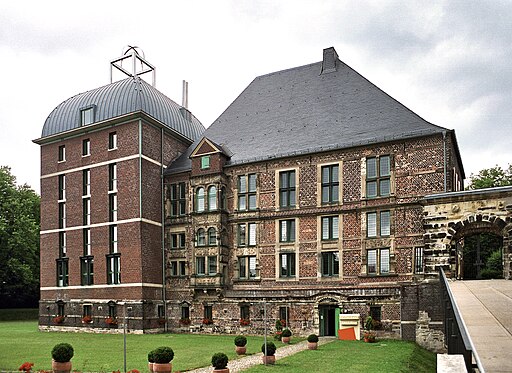
Schloss Horst is a significant historical monument located in Gelsenkirchen, Germany, whose origins date back to the late medieval period. Initially constructed as a fortified moated castle, Schloss Horst served both defensive and residential purposes for local nobility. The castle’s strategic location was chosen for its natural defensive advantages, surrounded by watercourses that formed a natural moat, protecting its inhabitants from potential invaders. Over the centuries, the castle evolved from a purely military stronghold into a noble residence that reflected the changing political and social realities of the region. Its early development was deeply intertwined with the regional dynamics of the Rhineland and Westphalia, where control of land and local governance were essential for maintaining noble status.
Architectural Features and Structural Evolution
Architecturally, Schloss Horst is characterized by its distinctive water castle design, which combines medieval defensive elements with Renaissance and Baroque stylistic influences from later renovations. The castle’s layout revolves around a central courtyard, surrounded by robust stone walls and towers, emphasizing security and imposing presence. Its moat remains a prominent feature, preserving the original defensive concept while also enhancing the castle’s aesthetic appeal. Over time, modifications introduced larger windows, decorative gables, and more comfortable living quarters, signaling the transition from a fortress to a noble residence. The blend of medieval fortifications with elegant residential architecture makes Schloss Horst a valuable example of how castles adapted to evolving functions without losing their historical essence.
Noble Life and Estate Management
Life within Schloss Horst was marked by a balance between noble representation and estate management. The castle served as a residence for influential noble families who exercised authority over the surrounding lands and villages. Their responsibilities extended beyond mere landownership to include local administration, justice, and economic oversight. The estate itself was a complex operation, consisting of agricultural fields, forests, mills, and workshops that provided sustenance and income. Servants, craftsmen, and tenant farmers were integral to maintaining the daily functions of the estate. The castle thus operated as both a family home and a center of regional power, where social hierarchy and economic control were visibly intertwined.
The Surrounding Landscape and Gardens
The environment around Schloss Horst reflects centuries of landscape development shaped by practical needs and aesthetic considerations. Originally designed to support defense and agricultural productivity, the grounds evolved into landscaped gardens and parks that signaled noble prestige and cultivated taste. Water management played a crucial role in both defense and beautification, with the castle’s moats and canals integrated into the surrounding natural features. Later garden designs introduced elements such as formal pathways, ornamental plantings, and open green spaces intended for leisure and social events. The interplay between natural landscape and human design at Schloss Horst demonstrates how noble estates balanced functionality with cultural expression.
Decline and Restoration Efforts
Like many historic castles, Schloss Horst experienced periods of decline, especially during the political upheavals and economic transformations of the 18th and 19th centuries. Industrialization and urban expansion in the Ruhr region led to a diminished role for noble estates, and maintenance of such large properties became increasingly difficult. Parts of the castle fell into disrepair, and its functions shifted away from residential use. However, the 20th century brought renewed interest in heritage preservation, sparking restoration projects aimed at stabilizing the structure and preserving its architectural and historical significance. These efforts have transformed Schloss Horst into a cultural landmark, highlighting the importance of safeguarding historic sites amid modern development.
Cultural and Contemporary Importance
Today, Schloss Horst stands as a vital cultural monument, representing the layered history of the region from medieval times to the present. Its preserved structures and grounds offer insight into the social, economic, and architectural evolution of noble estates. The castle now functions as a museum and event venue, fostering public engagement with local history and heritage. Through exhibitions, educational programs, and community events, Schloss Horst bridges the gap between past and present, illustrating how historic spaces can continue to enrich contemporary cultural life. The castle remains a symbol of regional identity, resilience, and the enduring legacy of architectural heritage.
