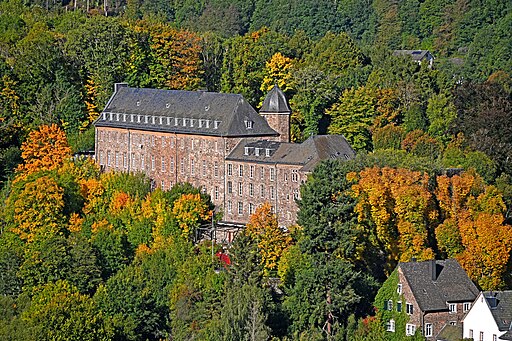
Schloss Schleiden is a historic castle located in the Eifel region of North Rhine-Westphalia, Germany. With origins dating back to the medieval period, the castle has witnessed centuries of political, social, and architectural transformation. It stands as a remarkable example of a fortress adapted over time to both defensive and residential purposes. The castle’s strategic location near the town of Schleiden enabled it to play a crucial role in regional defense and administration, reflecting the broader historical context of territorial disputes and feudal power structures in the Rhineland.
Historical Background and Architectural Evolution
The initial construction of Schloss Schleiden is believed to have started in the 14th century, during a period when castles were primarily built for military defense and territorial control. The original structure was a fortified medieval stronghold, featuring thick stone walls, battlements, and a central keep designed to withstand sieges. Over the centuries, the castle underwent multiple phases of reconstruction and expansion, particularly during the Renaissance and Baroque periods. These modifications introduced more refined architectural elements such as larger windows, ornamental facades, and residential wings, which gradually shifted the castle’s function from purely military to a noble residence.
Throughout its history, Schloss Schleiden has been influenced by various architectural styles, including Gothic, Renaissance, and Baroque. This eclectic mix is visible in the castle’s layout and structural features, creating a unique synthesis of form and function. For instance, the pointed arches and ribbed vaults inside the chapel are typical of Gothic architecture, while the symmetrical courtyards and decorative stonework reflect Renaissance aesthetics. The Baroque influence is particularly evident in the castle’s ornate interior design and garden layouts, which emphasize grandeur and elegance.
Technical Specifications and Structural Features
From a technical standpoint, Schloss Schleiden is characterized by its robust construction techniques and strategic use of materials common to the Eifel region. The primary building material is local basalt stone, known for its durability and resistance to weathering, which was essential for the castle’s defensive purposes. The walls of the main fortress section are approximately 1.5 to 2 meters thick, providing substantial protection against attacks. The foundations are deeply set into the rocky terrain, ensuring structural stability and resistance to erosion.
The castle’s defensive features include multiple layers of fortifications such as a curtain wall, a moat (now mostly dry), and fortified gatehouses equipped with portcullises and murder holes designed to repel invaders. The tower structures, including the central keep and watchtowers, rise to heights of 20 to 25 meters, offering expansive visibility over the surrounding landscape. These towers were originally equipped with machicolations—stone projections with openings for dropping stones or boiling liquids on attackers—as well as arrow slits optimized for crossbows.
Internally, the castle comprises several floors dedicated to various functions. The ground floor often served as storage and stables, featuring vaulted ceilings and thick walls to maintain stable temperatures. The upper floors housed living quarters with large fireplaces for heating, intricately carved wooden beams supporting the ceilings, and leaded glass windows for light and insulation. The roofing system employs a steep pitch covered with slate tiles, chosen for their longevity and fire resistance.
Modern Preservation and Adaptive Reuse
In recent decades, Schloss Schleiden has undergone extensive restoration to preserve its historical integrity while adapting it for modern use. Preservation efforts have focused on stabilizing the masonry, repairing damaged stonework, and restoring original architectural details using traditional methods and materials compatible with the castle’s historic fabric. Modern interventions include discreet structural reinforcements such as steel braces and underpinning, designed to enhance safety without compromising visual authenticity.
The castle today serves multiple functions including a cultural center, museum, and event venue. These adaptive reuse initiatives require sophisticated climate control systems installed within the ancient walls to protect artifacts and ensure visitor comfort, balancing the need for modern technology with conservation principles. Additionally, the integration of unobtrusive electrical and lighting infrastructure allows for exhibitions and performances without detracting from the castle’s ambiance.
Conclusion: Schloss Schleiden as a Technical and Cultural Landmark
Schloss Schleiden stands as a testament to the ingenuity of medieval and early modern architecture, blending defensive necessity with evolving residential and aesthetic demands. Its technical parameters—ranging from the use of local basalt stone and thick fortification walls to advanced defensive mechanisms like machicolations—highlight the complexity of castle engineering in the Eifel region. Moreover, its successful preservation and adaptive reuse demonstrate how historic structures can be maintained as living cultural landmarks. The castle not only offers insight into architectural history and feudal life but also provides a dynamic space for contemporary cultural engagement, ensuring its relevance for future generations.
_100.jpg)