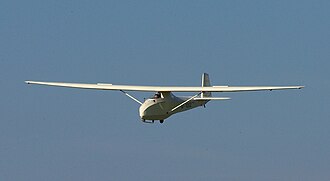
The aircraft’s significance extended far beyond its original role as a beginner’s glider. Produced in several versions and manufactured in multiple countries, the Grunau Baby became a familiar sight at gliding clubs, training centers, and aviation organizations throughout Europe and beyond. Approximately 5,000 examples are cited by the Deutsches Museum, while other historical summaries estimate total production at around 6,000 aircraft when international production and related versions are included. These figures demonstrate the extraordinary reach of a design that was conceived to be economical rather than technologically extravagant. The Baby helped make gliding more accessible to people who could not afford powered aircraft, and its long service life allowed generations of pilots to gain experience in an aircraft that rewarded careful observation, precise control, and a thorough understanding of the atmosphere.
The Grunau Baby also occupies a distinctive place in the history of aviation materials and construction techniques. Its wooden framework, plywood surfaces, and fabric-covered portions reflected the established methods used by glider manufacturers during the interwar period, when lightweight structures were essential to achieving good soaring performance at a reasonable cost. Instead of depending on complicated powered systems, the aircraft emphasized the fundamentals of flight: wing shape, balance, structural efficiency, control response, and the ability to maintain lift while losing as little altitude as possible. This philosophy made the Baby an enduring example of purposeful engineering. It was not designed to break speed records or carry passengers across continents; it was designed to help people fly without an engine, learn the principles of soaring, and discover how a lightweight aircraft could use natural air currents to remain aloft.
Understanding the Schneider Grunau Baby therefore requires more than a description of its dimensions and performance figures. Its story encompasses the growth of gliding as a sport, the development of practical training aircraft, the changing political circumstances of prewar Germany, the international spread of aircraft manufacturing, and the preservation of historical sailplanes after their operational careers had ended. It also illustrates a central truth about aviation history: an aircraft does not need to be exceptionally fast, powerful, or technologically complex to become historically important. Sometimes, a straightforward design that fulfills its intended purpose exceptionally well can have a greater and more lasting influence than far more ambitious machines.
Origins and Development of the Grunau Baby
The Rise of Gliding in Germany
The origins of the Grunau Baby can be traced to the rapid development of gliding in Germany during the years following the First World War. Restrictions on German military aviation after the war, together with the economic and political circumstances of the 1920s, helped encourage interest in flying activities that did not require powered aircraft. Gliding offered an accessible way to study aerodynamics, develop flying skills, and pursue aviation without the considerable expense associated with engines, fuel, and complex mechanical systems. Clubs and groups of enthusiasts began experimenting with lightweight aircraft launched from hillsides, using wind flowing upward along slopes to gain altitude and extend their flights. These early activities helped establish the foundations of a strong German gliding culture, in which aircraft construction, pilot training, scientific experimentation, and competitive soaring became closely connected.
Early gliders were often relatively simple machines, and many depended on favorable hill winds rather than sophisticated methods of finding lift over flatter terrain. Pilots learned to remain airborne by carefully positioning their aircraft in rising air, maintaining appropriate speed, and avoiding excessive altitude loss during turns and changes of direction. The discovery and increasingly systematic understanding of thermal currents during the late 1920s expanded the possibilities of soaring. Thermals are rising columns of air created when the ground heats unevenly and transfers warmth to the atmosphere; a glider that enters a sufficiently strong thermal can circle within the rising air and gain altitude without an engine. As pilots became more skilled at recognizing these currents, gliding evolved from an activity closely associated with hillsides into a discipline capable of supporting longer flights and more ambitious cross-country journeys.
This changing environment created demand for gliders that could perform more effectively than the simplest training machines without becoming prohibitively expensive. A suitable aircraft needed enough aerodynamic efficiency to remain airborne in weak lift, but it also needed to be sufficiently robust for repeated launches and landings by inexperienced pilots. It had to be light enough to launch easily, structurally sound enough to withstand normal training use, and straightforward enough to maintain at small clubs with limited resources. These requirements formed the background against which Edmund Schneider developed the Grunau Baby. Rather than pursuing extreme performance at any cost, the design aimed to balance practical construction, flying qualities, affordability, and useful soaring capability.
Edmund Schneider and the Design Team
Edmund Schneider was an important figure in the development of German gliders, and his work was shaped by the practical demands of a growing aviation community. Based in Grunau, in what is now Jeżów Sudecki in southwestern Poland, Schneider developed sailplanes intended to make gliding more accessible while providing enough performance to support serious training and cross-country flying. The town became closely associated with the aircraft that carried its name, and the Grunau Baby subsequently became one of the best-known products of Schneider’s workshop and its wider manufacturing legacy.
Wolf Hirth, an accomplished glider pilot and influential advocate of soaring, contributed to the development and promotion of the Baby. His experience was valuable because designing a glider required a close relationship between engineering theory and the practical realities of flight. A sailplane’s success depended not only on its aerodynamic calculations but also on whether pilots could launch it reliably, control it accurately, recognize rising air, and land safely in a range of conditions. The Grunau Baby emerged from this combination of technical design and practical flying experience. Its development reflected a clear understanding that a training glider had to be more than a lightweight aircraft: it needed to be an effective teaching instrument that could introduce pilots to increasingly demanding forms of soaring.
The Baby was derived from Schneider’s earlier ESG 31 design, with important changes to the wing and overall configuration. Work associated with the Akaflieg Darmstadt gliding research group influenced the aerodynamic development of the wing, helping create a shape intended to deliver improved soaring performance. The result was a high-wing monoplane with a braced structure, a narrow fuselage, and a characteristic open cockpit in its early versions. Its overall appearance was unmistakably functional, reflecting the priorities of a lightweight aircraft whose every component needed to contribute to lift, structural integrity, or controllability. The Grunau Baby’s immediate popularity confirmed that the design met a real need among gliding clubs and individual pilots.
The First Grunau Baby and Its Early Success
The original Grunau Baby appeared in 1931, and its combination of accessible construction and practical flying qualities quickly attracted attention. The early version, later distinguished from improved models as the Baby I, was relatively lightweight and used an open cockpit that exposed the pilot to the airflow. This arrangement reflected contemporary thinking about glider flying, when some pilots believed that direct awareness of airflow, temperature changes, and atmospheric movement could help them recognize the conditions affecting their aircraft. The absence of a fully enclosed cockpit also reduced weight and construction complexity, both important considerations for a low-cost training glider.
Although the Baby was not intended to compete with the most advanced high-performance sailplanes, it was capable enough to support serious soaring. Its wing design and light structure allowed pilots to remain airborne when suitable lift was available, while its relatively straightforward handling made it useful for building the basic skills required for more ambitious flights. It could be launched by several methods used in gliding at the time, depending on the facilities and practices of the local club. These methods included winch launches and aerotowing where a suitable powered aircraft was available, as well as other launch techniques associated with early gliding operations. The Baby’s versatility helped make it practical in clubs with different resources and geographical conditions.
The aircraft’s early success encouraged further refinement. As pilots accumulated experience, they identified opportunities to improve the wing, control surfaces, structural strength, and cockpit arrangements. These changes were not merely cosmetic. A training aircraft needed to withstand repeated use, and improvements to its control response or launch characteristics could make it more useful across a wider range of operating conditions. The transition from the original Baby to the Baby II family marked the beginning of a development history that would keep the design relevant for many years. The basic concept remained recognizable, but successive versions incorporated lessons learned from actual flying and the continuing progress of sailplane engineering.
Design and Construction of the Schneider Grunau Baby
Wooden Framework and Lightweight Structure
One of the most recognizable characteristics of the Schneider Grunau Baby was its predominantly wooden construction. During the early 1930s, wood remained an established material for lightweight aircraft because it could be shaped into efficient structural components without requiring the specialized metalworking facilities associated with more complex all-metal designs. The Baby used a wooden framework incorporating structural members that supported its wings and fuselage, with plywood employed in areas requiring a relatively rigid, smooth surface and fabric covering used on other portions of the airframe. This arrangement offered an effective compromise between weight, strength, ease of manufacture, and cost. For a sailplane, these factors were especially important because the aircraft had no engine to provide additional thrust when its weight or aerodynamic drag increased. Every unnecessary kilogram could affect launch performance, climb in weak lift, and the ability to remain airborne during marginal soaring conditions.
The wooden structure also made the Grunau Baby suitable for production by relatively small aircraft manufacturers and workshops. Components could be cut, shaped, assembled, and finished using established woodworking techniques, although producing a safe aircraft still demanded accurate workmanship and appropriate materials. The wings had to maintain their designed shape under aerodynamic loads, the fuselage had to support the pilot and transmit loads from the wings and landing structure, and the control surfaces needed to move freely and remain securely attached. Plywood coverings provided rigidity in selected areas, while fabric surfaces helped keep the structure light. This combination of materials was widely used in early sailplanes because it offered an effective way to produce a practical aircraft without the expense of an entirely metallic airframe.
However, wooden construction also imposed important maintenance requirements. Wood can absorb moisture, deteriorate when protective coatings fail, and suffer damage that is not always obvious from a quick external inspection. Fabric coverings can weaken through age and exposure to sunlight, while glue joints and structural members must remain sound for the aircraft to retain its intended strength. A historic Grunau Baby therefore cannot be considered airworthy simply because its external appearance seems satisfactory. Its structure requires appropriate inspection by qualified personnel familiar with wooden aircraft, including examination of the wing spars, joints, control systems, fabric, and other critical components. These considerations are particularly important for surviving examples, many of which have histories extending across several decades and may have undergone earlier repairs or restorations.
Wing Design and Aerodynamic Efficiency
The Grunau Baby’s wing was central to its success. Its relatively long, narrow planform was designed to generate useful lift while limiting the drag that would otherwise cause the glider to lose altitude rapidly. The wing used an airfoil associated with the Göttingen series, with the Göttingen 535 profile frequently cited in technical descriptions of the Baby IIb. Airfoil shape influences how air flows around the wing and determines the relationship between lift, drag, and operating speed. For a glider, the objective is not simply to generate a large amount of lift but to produce that lift efficiently, allowing the aircraft to cover a considerable horizontal distance while descending as little as possible through still air.
The wing’s structural design also had to accommodate the demands of launch and flight. A braced high-wing arrangement supported the wing above the fuselage, while the supporting structure helped transmit aerodynamic forces into the airframe. The wing incorporated a combination of wooden structural members and surface coverings, with plywood used in selected areas such as portions of the leading edge. These features contributed to the wing’s rigidity and helped preserve its aerodynamic shape. The Grunau Baby was not a modern composite sailplane with exceptionally high aspect ratio and advanced laminar-flow construction, but its design represented a practical step forward from simpler early gliders. It achieved a useful level of soaring performance without sacrificing the economy and robustness needed for a widely used training aircraft.
A particularly interesting feature of the Baby’s wing development was the way the airfoil characteristics changed along the span in some descriptions of the original design. This reflected the continuing experimentation of early sailplane designers, who were learning how to balance lift distribution, stall behavior, handling, and drag. The aerodynamic requirements near the wing root were not necessarily identical to those near the tip, and changes in wing section could influence how the aircraft behaved at different angles of attack. The Baby’s development therefore formed part of a wider process through which glider designers refined their understanding of how wing geometry affected stability and performance. The resulting aircraft offered enough efficiency for sustained soaring while retaining the relatively forgiving qualities expected of a trainer.
Fuselage, Tail, and Control Surfaces
The Grunau Baby’s fuselage was narrow and relatively simple, reflecting the need to minimize drag while providing a practical location for the pilot and the aircraft’s control systems. The cockpit was positioned in the forward section, allowing the pilot to operate the controls and observe the surroundings. Behind the cockpit, the fuselage tapered toward the tail, where the horizontal and vertical stabilizing surfaces helped maintain directional and longitudinal stability. This layout was typical of many gliders of the period, which used relatively slender fuselages to reduce aerodynamic resistance and keep structural weight within reasonable limits.
The tail surfaces were essential to the aircraft’s handling. The elevator allowed the pilot to control pitch, influencing the aircraft’s nose-up and nose-down attitude, while the rudder provided directional control through yaw. Ailerons, positioned on the wings, allowed the pilot to roll the aircraft into and out of turns. These controls worked together, and effective glider handling required the pilot to coordinate them rather than rely on one surface in isolation. The Grunau Baby’s design provided the control authority needed for training and routine soaring, but it was still necessary for pilots to understand the relationship between airspeed, bank angle, yaw, and lift. A poorly coordinated turn could increase drag and sink rate, while inappropriate control inputs near a stall could lead to a loss of control.
Successive versions incorporated changes to the control surfaces and other structural details. The Baby IIa, for example, featured modifications that included larger ailerons, a strengthened tail, and an improved cockpit arrangement. The later Baby IIb introduced additional refinements, including spoilers or airbrakes to help pilots control their descent. Such changes demonstrate how the aircraft evolved in response to the needs of gliding clubs and instructors. A training glider had to be efficient enough to teach soaring but also manageable during approach and landing, where the ability to regulate descent was particularly valuable. These improvements helped the Baby remain a practical aircraft long after its initial introduction.
The Cockpit and the Pilot’s Experience
The cockpit of the original Grunau Baby was open, placing the pilot directly in the airflow. Although this arrangement may appear primitive compared with modern enclosed sailplanes, it reflected the design philosophy and practical requirements of the period. An open cockpit reduced weight and construction complexity, provided a clear view of the surroundings, and gave the aircraft its characteristic historical appearance. Pilots could feel the airflow directly, and the exposed position reinforced the sense of connection between the aviator and the environment. At the same time, it meant that the pilot had to contend with wind, cold, rain, and the physical effects of flying in an unpressurized, unheated aircraft.
The pilot sat in a compact cockpit where the controls, seat, and available instruments were arranged to support the essential tasks of gliding. Because the aircraft had no engine, the pilot did not need a conventional engine-control system, fuel gauges, or the many instruments associated with powered flight. Instead, attention focused on airspeed, altitude, attitude, direction, and the surrounding atmospheric conditions. The pilot had to assess whether the glider was losing altitude, whether a thermal might be nearby, whether the aircraft was flying efficiently, and whether sufficient height remained to return to a suitable landing area. This emphasis on observation and judgment was part of what made the Grunau Baby a valuable training aircraft.
Later designs associated with the Baby family adopted more enclosed cockpit arrangements. Edmund Schneider’s postwar Baby 3 and Baby 4 developments in Australia reflected the changing expectations of pilots, who increasingly valued protection from the elements and improved cockpit comfort. An enclosed canopy could also reduce drag and alter the aircraft’s aerodynamic behavior, although it introduced its own structural and manufacturing considerations. The progression from an open cockpit to more enclosed designs illustrates how the broader Grunau Baby lineage adapted to changing technology and pilot expectations while retaining the basic purpose of providing accessible, efficient soaring flight.
Flight Performance and the Science of Soaring
Understanding Glide Ratio
The most important performance measurement for the Grunau Baby is not engine power or maximum level-flight speed, because the aircraft had no engine in its standard configuration. Instead, its performance is best understood through its glide ratio, sink rate, and ability to exploit rising air. Glide ratio describes the horizontal distance an aircraft can travel for a given loss of altitude in still air. A glider with a glide ratio of 17:1 can theoretically travel approximately 17 metres horizontally for every metre of altitude lost under the conditions corresponding to that ratio. This does not mean that the aircraft can remain airborne indefinitely, but it provides a useful way of comparing its aerodynamic efficiency with that of other sailplanes.
The Grunau Baby IIb is commonly credited with a best glide ratio of approximately 17:1, typically achieved at a speed around 55–60 km/h depending on the source and the exact configuration. That performance was respectable for a practical training glider of its era. It allowed a pilot to cover useful distances while losing altitude gradually, provided that the air was reasonably calm and the aircraft was flown at the appropriate speed. A glider’s best glide ratio is not necessarily the same at every weight, and it can be affected by the aircraft’s condition, surface finish, air density, and the precision with which the pilot maintains the required speed. The published figure should therefore be understood as a representative aerodynamic characteristic rather than a guarantee of a particular distance on every flight.
Glide ratio also explains why a glider’s flight path differs fundamentally from that of a powered aircraft. A powered aircraft can use engine thrust to maintain altitude or climb even when the surrounding air is not rising, whereas a glider must exchange altitude for forward movement unless it finds an external source of lift. In still air, the Grunau Baby would gradually descend toward the ground. Its ability to remain airborne for longer periods depended on the pilot finding conditions that offset some or all of that descent. A well-flown glider could travel a considerable distance, but the outcome depended on the balance between the aircraft’s natural sink rate and the movement of the surrounding air.
Minimum Sink Rate and Weak-Thermal Performance
Another important characteristic is the minimum sink rate, which describes the lowest rate at which the glider loses altitude when flown at an appropriate airspeed. Published specifications for the Baby IIb commonly give a minimum sink rate of approximately 0.85 metres per second at around 55 km/h, while museum records for particular examples may report figures closer to 0.8 metres per second at approximately 45 km/h. The difference reflects the fact that performance values may be associated with different configurations, test conditions, or individual aircraft. The central point is that the Baby was designed to descend relatively slowly when flown efficiently, allowing it to make useful progress in weak lift and giving student pilots time to develop their skills.
Minimum sink and best glide ratio describe related but different objectives. When a pilot wants to cover the greatest possible horizontal distance through still air, the best-glide speed is the relevant target. When the priority is to remain in a small area of weak rising air for as long as possible, flying near the minimum-sink condition may be more useful. The pilot therefore needs to select an appropriate speed for the situation rather than assume that one airspeed is optimal for every phase of a flight. This distinction is a fundamental lesson in soaring and helps explain why the Grunau Baby was useful beyond elementary training: it could introduce pilots to the relationship between speed, lift, drag, and time spent airborne.
In weak thermals, these characteristics could determine whether a glider gained height or continued to descend. A thermal may rise more slowly than the glider’s sink rate, in which case the aircraft cannot gain altitude even if the pilot remains within the rising air. If the thermal is sufficiently strong, however, the glider can climb while circling. The Baby’s relatively low weight and useful minimum-sink performance helped pilots exploit favorable conditions, although its performance was modest compared with that of later sailplanes designed specifically for cross-country competition. Its value lay in combining manageable flight behavior with enough efficiency to make meaningful use of atmospheric lift.
Thermals, Ridge Lift, and Cross-Country Flight
The Grunau Baby was introduced during a period when glider pilots were learning to use different forms of atmospheric lift more systematically. Ridge lift occurs when wind encounters a hill or mountain slope and is forced upward. A glider can remain airborne by flying within this rising air, provided that the lift is strong enough to offset the aircraft’s natural sink rate. Thermal lift, by contrast, arises when pockets of warmer air rise through cooler surrounding air. Both forms of lift became central to the development of soaring, and the Baby’s capabilities allowed pilots to practice the skills needed to recognize and use them.
Cross-country soaring requires more than staying in a thermal. Pilots must decide when to leave rising air, how far to glide toward the next promising area, how to account for wind, and whether the available altitude will permit a safe return or landing elsewhere. A relatively modest sailplane such as the Grunau Baby demanded careful planning because its glide ratio was lower than that of many later high-performance designs. Pilots had to choose routes thoughtfully, avoid wasting altitude through unnecessary maneuvering, and recognize when conditions were deteriorating. These limitations could also be educational, encouraging a close understanding of the atmosphere and the importance of conserving height.
The Baby’s place in this period of soaring development is demonstrated by the achievements of pilots who used it to undertake flights that attracted considerable attention. On 3 April 1933, Kurt Schmidt remained airborne in a Grunau Baby II for 36 hours and 36 minutes, setting a world endurance record for motorless aircraft at the time. Such a flight was not simply a demonstration of the glider’s construction; it reflected the pilot’s ability to use favorable atmospheric conditions, manage the aircraft over a prolonged period, and maintain control without an engine. The achievement helped establish the Grunau Baby’s reputation and demonstrated how far gliding had advanced from its earlier dependence on short flights in hillside lift.
The Grunau Baby II, IIa, and IIb: Evolution of a Classic
The Grunau Baby II
The original Grunau Baby established the design’s reputation, but experience gained during early operations led Edmund Schneider to undertake a substantial revision in 1932–1933. The resulting Baby II incorporated a longer wing, changes to the supporting structure, and a more refined fuselage. The additional wing length helped improve aerodynamic performance, while structural refinements addressed the demands of repeated launches and landings. The revised aircraft retained the fundamental character of the original, including its lightweight wooden construction and single-seat layout, but offered a more developed platform for training and soaring. The changes reflected an important principle in aircraft engineering: a successful design can often be improved through carefully targeted modifications without losing the qualities that made it useful in the first place.
The Baby II appeared at a time when gliding was becoming more ambitious. Pilots increasingly sought to stay airborne for longer periods, travel greater distances, and exploit thermal lift rather than depend exclusively on hillside updrafts. These developments placed new demands on training aircraft, which had to be capable enough to introduce pilots to practical soaring while remaining economical to build and operate. The Baby II’s combination of improved wing geometry and a relatively straightforward structure made it suitable for this changing environment. It remained a glider that could be used by clubs and individual owners without the complexity associated with more specialized performance sailplanes.
The improvements also helped create a platform that could be adapted as new operational requirements emerged. Subsequent Baby II variants incorporated changes to the cockpit, control surfaces, structural strength, and descent-control equipment. Rather than treating the Baby as a finished product, Schneider and other manufacturers continued refining it in response to practical experience. This evolutionary approach contributed substantially to the aircraft’s long production history and explains why the designation encompasses several versions with somewhat different specifications.
The Grunau Baby IIa
The Baby IIa represented a further stage in the design’s development. It incorporated improvements to the control surfaces and tail structure, along with changes to the cockpit arrangement. Larger ailerons helped improve lateral control, while structural refinements addressed the loads associated with training use. The addition of an improved windscreen and a detachable cockpit canopy on this version reflected a growing recognition that pilot protection and comfort were important considerations even in lightweight gliders. These changes did not fundamentally alter the aircraft’s purpose, but they made the Baby more practical for repeated use in a wider range of conditions.
Control-surface design was particularly significant for a trainer. Ailerons determine how readily an aircraft can roll into a turn, and their size and effectiveness influence the amount of control input needed to maneuver. A glider must be able to turn accurately when circling in a thermal, yet it must also remain manageable when the pilot encounters turbulence or needs to adjust the flight path quickly. Changes to the tail and control surfaces could improve handling and stability, although the overall result depended on the interaction between the wing, fuselage, center of gravity, and control geometry. The Baby IIa’s modifications therefore reflected an effort to improve the complete flying experience rather than simply increase one headline performance figure.
The cockpit improvements were equally practical. An open cockpit exposed the pilot to the full force of the airflow, which could be tiring during prolonged flights and uncomfortable in cold weather. A windscreen and canopy could reduce some of this exposure while helping maintain a more consistent airflow around the cockpit. However, the exact equipment varied across aircraft and production batches, and the Baby family should not be described as having one universal cockpit configuration. Its long service history involved different manufacturing arrangements and subsequent modifications, making the specific version important when identifying the characteristics of an individual airframe.
The Grunau Baby IIb: The Best-Known Version
The Grunau Baby IIb became the best-known and most widely produced version of the aircraft. It incorporated further refinements, including enlarged ailerons and more effective spoilers or airbrakes that helped the pilot control the rate of descent during approach and landing. The IIb’s development reflected the needs of a mature gliding community in which aircraft were expected to do more than provide short introductory flights. A trainer had to remain useful throughout a pilot’s early progression, from basic handling and launch procedures to more demanding soaring techniques. The IIb offered an effective combination of performance, durability, and controllability that made it attractive to clubs and training organizations across several countries.
The introduction of more effective descent-control devices was particularly important. A glider’s high aerodynamic efficiency is beneficial when the pilot wants to travel far, but it can make landing more demanding because the aircraft may cover a considerable distance while losing altitude. Spoilers disrupt the airflow over part of the wing and reduce lift, while also increasing drag. By deploying them, a pilot can steepen the descent without relying exclusively on increasing airspeed or performing complex maneuvers. This makes it easier to manage the approach path and land within a suitable area. The IIb’s airbrakes therefore improved the aircraft’s practical usefulness, especially in training environments where consistent, controlled approaches were essential.
The IIb also became associated with extensive production and international use. The Deutsches Museum identifies it as a well-known training glider and reports approximately 5,000 Grunau Baby aircraft produced overall, while other sources cite totals closer to 6,000. Its broad adoption was driven by a combination of practical flying qualities, relatively economical construction, and a design that could be manufactured or adapted in different countries. The IIb became a familiar sight at gliding clubs and aviation organizations, helping establish the Baby as one of the defining sailplanes of the interwar and immediate postwar eras.
The Grunau Baby and Germany’s Aviation History
Civilian Gliding and the Political Climate of the 1930s
The Grunau Baby’s development took place during a period of considerable political change in Germany. After the First World War, gliding had grown partly as a means of maintaining interest in aviation despite the restrictions and economic difficulties affecting powered flying. By the early 1930s, it had become an established recreational and technical activity, with clubs, competitions, research groups, and training organizations contributing to the development of aircraft and pilots. The Baby was created for a genuine civilian sporting and instructional purpose, and its practical design made it attractive to people interested in learning to fly without the expense of a powered aircraft.
However, the political circumstances surrounding German aviation changed dramatically after the Nazi seizure of power in 1933. Aviation organizations became increasingly subject to state control, and gliding was incorporated into a broader system of aviation preparation and political mobilization. The Nationalsozialistisches Fliegerkorps, commonly abbreviated as NSFK, became an important organization in the training environment, and the Grunau Baby was used for instruction within the wider system of paramilitary aviation training. Its suitability for teaching basic flying skills made it useful in that context, although its technical design had originally been driven by the requirements of economical gliding and training rather than by a need for a combat aircraft.
This distinction matters when assessing the aircraft’s historical role. The Grunau Baby was an unpowered sailplane, not a military fighter or bomber, and it had no conventional combat capability. Its association with Nazi-era training arose from the way German aviation organizations used gliding as part of a wider training structure. The aircraft’s technical merits and sporting heritage should therefore be distinguished from the political institutions that employed it. Understanding both aspects provides a more complete picture of the Grunau Baby’s place in German aviation history without confusing its original engineering purpose with the wider political and military environment in which it operated.
The Aircraft as a Training Instrument
The Grunau Baby was well suited to teaching the fundamentals of flight because it encouraged pilots to understand energy management, control coordination, and the relationship between the aircraft and the atmosphere. A powered trainer can use engine thrust to maintain altitude or recover some lost energy, but a glider must rely on its aerodynamic efficiency and the surrounding air. Pilots therefore learn to pay close attention to airspeed, altitude, wind, and the changing conditions around the aircraft. The Baby’s relatively simple systems allowed instructors and students to concentrate on these essential skills rather than become preoccupied with engine management or complex onboard equipment.
Training in the Baby also encouraged an appreciation of precision. Every turn changes the balance between lift and drag, and a poorly coordinated maneuver can waste altitude that cannot be recovered without finding rising air. Pilots must judge their approach carefully, select a suitable landing area, and manage their descent using the available control surfaces. These tasks develop habits that are valuable across many forms of aviation, including powered flight. The Baby’s role as a training glider was therefore not merely a consequence of its low cost; its characteristics made it an effective platform for teaching a fundamental understanding of flight.
Its use by clubs and training organizations also made gliding more accessible to a broader range of enthusiasts. A relatively inexpensive aircraft that could be maintained by a small organization offered opportunities to learn soaring without the financial requirements of owning and operating a powered aircraft. The Baby could be used for introductory instruction while also remaining useful to pilots who had developed sufficient skill to explore thermal and ridge soaring. This combination of accessibility and continued usefulness was a major reason for its success.
International Production and the Spread of the Grunau Baby
Production Beyond Germany
The Grunau Baby became an international aircraft because its design met a need shared by gliding communities in many countries. Lightweight training sailplanes were valuable wherever enthusiasts wanted to learn the basics of soaring, and the Baby’s relatively straightforward construction made it a practical candidate for local production or licensed manufacture. As gliding spread through Europe and other regions, aircraft based on the Grunau Baby design appeared under different manufacturers and national designations. These aircraft often retained the basic concept of the original while incorporating changes to construction details, cockpit arrangements, or production methods.
The international history of the Baby also illustrates the importance of licensed manufacturing in aviation. An aircraft could be designed in one country and subsequently built elsewhere, allowing local manufacturers to supply gliding clubs without developing an entirely new design. Such arrangements reduced the engineering burden and helped spread established construction methods. However, licensed aircraft were not always identical in every detail to the original, and local production could introduce differences in dimensions, equipment, materials, and performance. As a result, names associated with the Grunau Baby family should be understood as related designs rather than assumed to describe perfectly interchangeable airframes.
The Baby’s international spread was reinforced by the practical requirements of gliding clubs. A successful trainer had to be sufficiently robust for repeated use, economical to maintain, and capable of helping pilots progress beyond their first flights. The Grunau Baby met these needs well enough to remain in production in different forms after the Second World War. Its influence was not limited to aircraft built directly under the original name; it also extended to derivatives and designs that borrowed important elements of its layout and construction.
The French Nord 1300
One of the best-known French developments associated with the Grunau Baby was the Nord 1300. Produced under French aviation industry arrangements, it represented the adaptation of the established German glider design for use in France. Its relationship to the Baby illustrates how a successful aircraft could cross national boundaries and become part of another country’s aviation heritage. The basic appeal remained the same: a single-seat sailplane that could provide practical training and useful soaring performance without the costs associated with powered flight.
The Nord 1300 became part of the wider French gliding environment, where the need for accessible training aircraft encouraged the use of established and proven designs. As with other national versions, it is important to distinguish the licensed derivative from every individual Grunau Baby variant. Manufacturing practices and equipment could differ, and a particular Nord 1300’s technical specifications may not exactly match those published for a Baby IIb. Nevertheless, the shared lineage is clear in the aircraft’s role and general design philosophy.
The French production story also reflects a wider trend in postwar aviation. Many countries needed practical aircraft for civil flying clubs, technical education, and the rebuilding of their aviation industries. Gliders were especially useful in this context because they did not require engines, fuel supplies, or the same level of infrastructure needed to sustain powered aircraft. Designs such as the Nord 1300 helped support the growth of gliding while keeping the engineering and manufacturing requirements manageable.
British Versions: Slingsby T.5 and Elliotts Baby EoN
The Grunau Baby was also produced in the United Kingdom, where related versions included the Slingsby T.5 and the Elliotts Baby EoN. These aircraft demonstrate how the Baby’s basic concept could be adapted to the requirements of different manufacturers and flying organizations. British gliding clubs needed affordable aircraft that could support instruction and recreational soaring, and the established Baby layout offered a practical foundation. Local production helped make the aircraft available to pilots who might otherwise have faced the expense or difficulty of importing a glider from continental Europe.
The Slingsby T.5 formed part of a wider British glider-manufacturing tradition, in which established designs were used as foundations for training aircraft and further development. Slingsby produced several influential sailplanes and contributed significantly to the growth of gliding in Britain. The company’s work with Baby-related designs also provided experience that could inform the development of later aircraft. The Elliotts Baby EoN represented another British interpretation of the same general lineage, demonstrating that the Baby’s influence extended across more than one manufacturer.
Although the national versions shared a common ancestry, their specifications and construction details could differ. Differences in manufacturing standards, equipment, and later modifications meant that individual aircraft needed to be assessed according to their own records. Their historical significance lies in the wider diffusion of the Baby concept: a practical single-seat glider that could be manufactured locally and used to train pilots across a variety of operating environments.
Brazil, Sweden, Romania, and Other Countries
The Grunau Baby’s reach extended beyond Germany, France, and Britain. In Brazil, a group of approximately 30 aircraft was produced under the name Alcatraz by Laminação Nacional de Metais, which later became associated with Companhia Aeronáutica Paulista. The aircraft’s design was suitable for local manufacture, allowing the Brazilian aviation community to benefit from a proven training glider without developing a completely new sailplane. The Brazilian connection is particularly interesting because it demonstrates how an aircraft conceived in Central Europe could become part of aviation development in South America.
Related aircraft were also manufactured or adapted in Sweden, Romania, and other countries. The Swedish AB Flygplan Se-102 and the Romanian RG-1 are examples of national versions or developments associated with the Baby lineage. Each reflects the value of an established glider design in countries seeking to develop pilot training, sustain civil aviation activity, or make use of local manufacturing capacity. The Grunau Baby’s broad geographic distribution helped establish its reputation as one of the most widely built glider designs of its generation.
The number of countries involved in the Baby’s production and use is a key part of its legacy. Aircraft history often focuses on a design’s original manufacturer, but an aircraft’s influence can be measured just as meaningfully by how widely it was adopted, adapted, and used. The Grunau Baby was successful because it addressed a common requirement: an economical, effective, and maintainable sailplane that could introduce pilots to the fundamentals of flight while supporting more advanced soaring activities.
Postwar Development and Later Variants
The Grunau Baby III
The Grunau Baby III represented an important continuation of the original design after the Second World War. Alexander Schleicher began producing the version in 1951, making it the first official postwar aircraft produced by the company. The Baby III incorporated changes to the fuselage, landing arrangement, and control surfaces, while retaining the general configuration and construction philosophy that had made the earlier versions successful. Its first flight took place on 24 August 1951, and Schleicher’s production run continued until 1955. Although only 21 examples were produced by Schleicher according to the manufacturer’s historical records, the model demonstrated that the Baby design remained relevant in the postwar gliding environment.
One notable modification was the landing arrangement, which included a revised skid and a central wheel. Such a change could make ground handling more convenient while preserving the simplicity expected of a lightweight sailplane. The fuselage was also slightly longer than that of the Baby IIb, and the wing and control surfaces received further refinements. These alterations show how designers continued to improve a proven aircraft without abandoning its basic structure. The Baby III was not intended to compete with the most advanced performance sailplanes of the 1950s; its purpose was to provide a practical single-seat aircraft for training and recreational soaring.
The Baby III is particularly significant because it demonstrates the design’s adaptability after the political and industrial upheavals of the war. Gliding was rebuilding as a civilian sport, and established aircraft designs could help clubs resume operations without the expense of developing entirely new machines. The Baby’s proven characteristics, combined with relatively modest manufacturing requirements, made it an attractive foundation for postwar production. Its continued development also preserved important practical experience in wooden sailplane construction at a time when aviation materials and manufacturing techniques were gradually changing.
The Grunau Baby IV and Australian Development
Edmund Schneider eventually emigrated to Australia, where he continued developing the Baby concept. The resulting Baby 3 and Baby 4 designs incorporated refinements suited to postwar gliding, including more enclosed cockpit arrangements. These developments retained the core idea of an economical single-seat sailplane but adapted the aircraft to evolving expectations regarding comfort, construction, and flying performance. Schneider’s Australian work is a particularly interesting part of the story because it demonstrates that the designer’s influence continued well beyond the original European manufacturing environment.
The Australian versions reflected a broader trend in sailplane development. As gliding became more established, pilots increasingly expected better cockpit protection, improved visibility, and more refined aerodynamic performance. Enclosing the cockpit could improve comfort and reduce some sources of drag, although it also added weight and required careful integration with the fuselage. Designers had to balance these benefits against the need to preserve the low mass and straightforward maintenance that had made the original Baby so appealing.
The Baby IV also illustrates how aircraft designs can evolve differently in different countries. Local manufacturing conditions, pilot preferences, available materials, and the requirements of gliding clubs all influenced the direction of development. Rather than remaining frozen in its original 1931 configuration, the Grunau Baby became a family of related aircraft whose members reflected several decades of practical experience. Its Australian descendants therefore form an important part of its international legacy.
The Grunau Baby V and Motor-Baby
The Grunau Baby V was an unusual two-seat development that departed from the original aircraft’s single-seat arrangement. It used Baby III wings with a redesigned fuselage incorporating a fabric-covered steel-tube structure and tandem seating. Only a small number were built, and the aircraft did not achieve the same popularity as the single-seat versions. Nevertheless, it illustrates the flexibility of the basic design and the continuing interest in adapting familiar components to new training requirements.
A separate experimental direction was the Motor-Baby, a motor-glider conversion equipped with a small engine and a pusher propeller. The installation allowed the aircraft to operate with its own source of propulsion rather than relying entirely on external launch methods and atmospheric lift. The conversion required significant changes to the rear fuselage and propulsion arrangement, showing how the addition of an engine could alter the aerodynamic and structural requirements of a lightweight sailplane. Although motorized Baby derivatives were produced in limited numbers, they remained specialized branches of the wider family rather than replacements for the standard glider.
These variants are important because they show that the Grunau Baby was not a single unchanging aircraft. Its basic design served as a platform for experiments in seating, cockpit configuration, landing gear, and propulsion. Most of these derivatives remained relatively limited in production, but they reveal the continuing interest generated by a successful and adaptable airframe.
The Strengths and Limitations of the Grunau Baby
Why the Aircraft Was So Successful
The Grunau Baby’s greatest strength was the balance it achieved between cost, structural simplicity, and useful soaring performance. It was light enough to operate without an engine, sufficiently efficient to exploit favorable rising air, and straightforward enough to suit gliding clubs with modest facilities. Its wooden construction allowed production using established techniques, while its single-seat layout kept the aircraft relatively compact and economical. For a training glider, these characteristics were more important than extreme speed or record-breaking performance. The Baby did not need to outperform every contemporary sailplane; it needed to help pilots learn safely and effectively while remaining affordable to the organizations that operated it.
Its handling and performance also allowed it to remain useful beyond the earliest stages of instruction. Pilots could learn basic control coordination, launch procedures, landing techniques, and energy management before progressing to thermal soaring and cross-country navigation. The aircraft’s glide ratio and minimum sink rate were sufficient for meaningful soaring in favorable conditions, giving experienced pilots opportunities to explore the atmosphere rather than simply complete short training flights. This combination of accessibility and continued usefulness was a central reason for its widespread adoption.
The Baby also benefited from a design that could be improved without losing its identity. The transition from the original model to the Baby II, IIa, and IIb introduced changes that addressed structural durability, cockpit protection, control response, and descent management. Later versions and derivatives continued this process. The result was a design family that remained recognizable while adapting to the needs of different countries and generations of pilots.
Limitations in Performance and Comfort
The Grunau Baby was not a high-performance sailplane by modern standards. Its glide ratio of approximately 17:1 in the commonly cited Baby IIb configuration was respectable for a training aircraft of its period, but later sailplanes achieved substantially greater aerodynamic efficiency. A modern high-performance glider can travel farther between areas of rising air, giving its pilot more flexibility in route planning and cross-country flight. The Baby’s comparatively modest glide performance meant that pilots had to be careful about how they used altitude, especially when conditions were weak or the wind was unfavorable.
The open cockpit of early versions also limited comfort during prolonged flights. Exposure to wind and cold could be tiring, while the lack of an enclosed canopy offered less protection from the elements. Later cockpit refinements addressed some of these concerns, but comfort was not the primary objective of the original aircraft. Its design reflected the practical priorities of early gliding, when keeping weight and cost low was often more important than providing the enclosed environment found in later sailplanes.
Wooden construction introduced further limitations related to maintenance and aging. Properly maintained wood can remain structurally sound for decades, but an old glider requires careful inspection and preservation. Moisture damage, deteriorated adhesive joints, fabric aging, and previous repairs can all affect structural integrity. These issues do not diminish the Baby’s historical importance, but they explain why surviving examples require specialist care and why historical specifications should not be confused with the condition of any individual aircraft.
Preservation and the Grunau Baby Today
Surviving Aircraft and Museum Collections
Although the Grunau Baby is no longer a mainstream training aircraft, surviving examples continue to be preserved as important parts of aviation heritage. Museums, gliding organizations, and private owners maintain examples that illustrate the development of early sailplanes and the craftsmanship associated with wooden aircraft construction. These aircraft offer more than an opportunity to observe an old design: they preserve evidence of the techniques, materials, and practical decisions that shaped the growth of gliding during the twentieth century.
The Deutsches Museum’s Grunau Baby IIb provides a particularly revealing example of the aircraft’s long service life. According to the museum, the displayed glider accumulated approximately 1,400 takeoffs and landings over 316 flying hours. It was used by a Nazi-era flying organization in 1944–1945, survived destruction, and was rebuilt with technical modifications between 1950 and 1952. Following further changes during its operational life, the aircraft’s last flight took place in 1971. Restoration work carried out between 1989 and 1992 returned it to a configuration representing its earlier postwar condition. This history illustrates how a single glider could pass through different political eras and technical configurations while retaining its identity as a Grunau Baby.
Preservation also offers an opportunity to understand the aircraft’s internal construction. An exposed wing or restored wooden component can reveal the framework beneath the outer surface, showing how spars, ribs, plywood, and fabric combined to create a lightweight aerodynamic structure. These details are often difficult to appreciate from photographs alone, and they demonstrate the craftsmanship required to build an aircraft using traditional materials. For aviation historians and restoration specialists, the Baby is therefore valuable not only as a recognizable aircraft but also as a practical example of early sailplane engineering.
Why the Grunau Baby Remains Historically Important
The Grunau Baby remains important because it helped make gliding accessible to a large international community. It offered an affordable and effective route into aviation at a time when powered flight was expensive and technically demanding. Its use in training helped pilots develop an understanding of flight that extended beyond the operation of a particular aircraft, including the relationship between lift, drag, airspeed, atmospheric movement, and energy management. These lessons remain fundamental to gliding today.
The aircraft also demonstrates the value of incremental engineering. Its success did not depend on a single revolutionary technology, but on the careful integration of proven materials, aerodynamic design, and practical manufacturing. The Baby’s many variants show how a useful aircraft can remain relevant through gradual refinement, while its international production history illustrates how a well-designed machine can spread across different aviation cultures. Few aircraft need to be record-breakers to make a lasting contribution, and the Grunau Baby is an excellent example of a design whose influence came from usefulness rather than spectacular performance.
Finally, the Baby represents a significant chapter in the development of recreational aviation. It connected the pioneering era of hillside gliding with the more sophisticated soaring techniques that emerged as pilots learned to exploit thermal currents and travel greater distances. Its legacy can be seen in the continuing popularity of gliding clubs, the preservation of historic sailplanes, and the enduring emphasis on understanding the atmosphere rather than relying exclusively on mechanical propulsion. The Schneider Grunau Baby is therefore more than a vintage glider: it is a symbol of the ingenuity, patience, and practical knowledge that helped transform gliding into a mature and internationally established aviation discipline.
Technical Specifications of the Schneider Grunau Baby
The table below gives representative specifications for the Grunau Baby IIb, the best-known version of the aircraft. Values vary between sources and individual production examples, so the figures should not be applied automatically to the original Baby I, Baby IIa, Baby III, or other derivatives. The Deutsches Museum also documents an individual IIb with slightly different recorded measurements and weight, illustrating the importance of identifying the specific aircraft when consulting historical records.
| Specification | Grunau Baby IIb |
|---|---|
| Country of origin | Germany |
| Designer | Edmund Schneider, with contributions from Wolf Hirth |
| Manufacturer | Schneider and other licensed or derivative manufacturers |
| Aircraft type | Single-seat training and recreational sailplane |
| First flight of original design | 1931 |
| Introduction of the improved Baby IIb | 1930s; series production from 1936 is commonly cited |
| Crew | 1 pilot |
| Construction | Wooden framework, plywood, and fabric covering |
| Overall length | Approximately 6.09 m |
| Wingspan | Approximately 13.57 m |
| Height | Approximately 1.38 m |
| Wing area | Approximately 14.2 m² |
| Aspect ratio | Approximately 13:1 |
| Airfoil | Göttingen 535 commonly cited |
| Empty weight | Approximately 170 kg |
| Maximum takeoff weight | Approximately 250 kg |
| Powerplant | None in standard glider configuration |
| Maximum glide ratio | Approximately 17:1 at around 55–60 km/h, depending on the source |
| Minimum sink rate | Approximately 0.85 m/s at around 55 km/h |
| Maximum permitted speed | Approximately 150 km/h |
| Typical aerotow speed | Approximately 90 km/h |
| Typical winch-launch speed | Approximately 80 km/h |
| Primary roles | Initial flight training, recreational soaring, and cross-country training |
| Notable design features | Braced high wing, single-seat cockpit, wooden airframe, and spoilers/airbrakes |
| Approximate total family production | About 5,000–6,000, depending on the source and variants counted |
Important note: The figures in this table are historical reference values, not operating instructions for a surviving aircraft. Actual permissible speeds, weight limits, and performance depend on the specific airframe, its approved documentation, and its current airworthiness condition.
Conclusion
The Schneider Grunau Baby stands as one of the most influential sailplanes of the twentieth century. Introduced in 1931, it combined a lightweight wooden structure, a practical wing design, and accessible construction methods to create an aircraft capable of serving both beginners and more experienced soaring enthusiasts. Its evolution through the Baby II, IIa, and IIb versions improved its usefulness, while its later derivatives and licensed productions carried the design into numerous countries and extended its influence well beyond its original German home.
The aircraft’s historical importance lies in the way it connected affordable training with meaningful soaring performance. Its glide ratio and minimum sink rate allowed pilots to explore rising air, learn energy management, and develop the skills needed for longer flights. At the same time, its construction and relatively modest performance reflected the priorities of an earlier generation of aviation engineering, when simplicity, low weight, and maintainability were essential to the success of a glider.
The Grunau Baby’s history also reflects the wider story of twentieth-century aviation, from the growth of German gliding in the interwar period to the political appropriation of aviation training during the Nazi era, international licensed production, and the rebuilding of civilian gliding after the Second World War. Its legacy should be understood in all these contexts, recognizing both its technical contribution and the historical circumstances in which it was used.
Today, surviving Grunau Baby aircraft preserve an important part of gliding heritage. They remind us that flight without an engine depends on the careful interaction of aerodynamic design, pilot judgment, and atmospheric conditions. Although modern sailplanes have surpassed the Baby in performance and comfort, the aircraft remains a compelling example of how a straightforward, well-conceived design can influence aviation for generations. Its place in history is secure not because it was the fastest or most advanced glider of its time, but because it helped make the experience of soaring available to thousands of pilots around the world.
