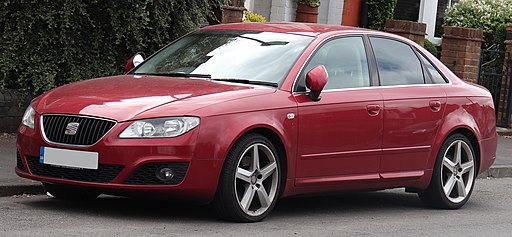
Seat Exeo faults
Common Seat Exeo Faults
Engine & Drivetrain
Diesel-Specific Issues
- DPF clogging Short urban runs lead to soot buildup, triggering regeneration failures and loss of power unless regular 20-minute motorway drives are done.
- EGR valve carbon deposits Heavy soot accumulation causes rough idling, jerky low-speed response and occasional limp-home mode. Cleaning or fitting an upgraded cooler assembly cures symptoms.
- Piezo-injector wear (early 2.0 TDI) Symptoms include misfires, rough running and black smoke. Often resolved with updated injector seals or a software recalibration.
Petrol-Specific Issues
- High oil consumption on TSI engines Particularly noticeable on 1.8 TSI units beyond 100 000 km. Often traced to piston-ring wear or valve-stem seals.
- Camshaft adjuster noise Rattling at cold start can arise from a sticking variable-valve timing actuator; replacement or lubrication remedy.
Transmission Wear
- Multitronic CVT belt wear CVT-equipped diesels (143 PS) need fluid and filter changes every 40 000 km to avoid belt slippage or judder.
- Tiptronic mechatronics faults Harsh or delayed shifts on 5-speed automatics indicate failing valve bodies; fix by control-unit reflash or unit exchange.
- Dual-mass flywheel rattles Manual-gearbox cars over 150 000 km may develop a buzzing or clunk when biting the clutch; replacement restores smooth operation.
Brake and Suspension
Brakes
- Premature pad/disc wear Drivers report squealing or vibration under braking, especially on heavier estate models; upgrading to higher-spec pads can extend service intervals.
- ABS sensor errors Corrosion at wheel-speed sensor heads leads to intermittent ABS warning lights and traction control deactivation.
Suspension & Steering
- Rear upper-arm bush cracking Around 100 000 km, bush deterioration causes clunks over bumps and looseness in cornering.
- Steering-rack gaiter splits Cracked gaiters allow dirt ingress, accelerating rack wear and producing stiffness or kickback through the steering wheel.
Electrical & Electronics
Central Locking & Windows
- Door-lock actuator seizures Motors inside door-modules stick, causing intermittent or complete locking failures on one or more doors.
- Window regulator cable frays Plastic-gear regulators on the driver’s side can jam or drop the glass; full regulator replacement is usually required.
Battery & Charging
- Parasitic battery drain Unknown modules drawing current overnight lead to flat batteries; tracking down aftermarket alarms or faulty control units is key.
- Alternator output faults In some early-build cars, voltage regulators fail, triggering charging-system warning lamps and inconsistent electrical performance.
HVAC & Comfort Systems
Air Conditioning
- Refrigerant leaks Aging seals in hoses and condenser joints allow refrigerant escape, reducing cooling efficiency and risking compressor damage.
- Blower-motor resistor failures Loss of fan-speed control or blower stopped at one speed; resistor pack replacement restores full range.
Interior Rattles & Leaks
- Load-cover squeak in estates The rear tonneau cover on ST models rubs against trim, broadcasting road imperfections as a constant rasp.
- Plenum-chamber water ingress Blocked scuttle drains allow rainwater to flood the passenger footwell and soak the comfort-control unit, leading to erratic HVAC behavior.
Safety & Recalls
Airbag Inflator & Housing
- Driver-airbag propellant degradation Risk of metal-fragment ejection on deployment prompted a recall; confirm that the inflator has been replaced.
- Passenger-airbag gas-generator housing Potential rupture hazard under crash loads led to a separate recall; check VIN against the manufacturer’s campaign list.
Other Safety-Critical Alerts
- ABS/EBD system firmware updates Early cars lacked full electronic-stability-control integration; subsequent software patches improved brake-force distribution.
- Windscreen-washer fluid leaks Cracked reservoir seams allow fluid to seep into the scuttle, causing under-bonnet dampness and blurred wiper performance.
Seat Exeo as a used car
Launched in 2008 and produced until 2013, the Seat Exeo brought fresh life to the previous-generation Audi A4. Sharing its underpinnings with the B7-series A4 sedan and estate, the Exeo combined premium build quality with sharper pricing and Seat’s sport-styled exterior. Today it sits attractively in the used-car market as a spacious D-segment saloon or practical estate, offering Audi-level solidity, a broad engine line-up, and a well-equipped cabin.
Evaluating a used Exeo means understanding its core technical specifications, knowing where wear tends to show up, and spotting the best combinations of engine, gearbox, and trim. This guide drills into the numbers, explores chassis and interior details, highlights potential ownership costs, and shares expert tips for finding a well-preserved example.
Technical Specifications
Engine Line-Up
| Engine | Power (PS) | Torque (Nm) | Injection | Emissions |
|---|---|---|---|---|
| 1.6 TDI (CR) | 102 | 250 | Common-rail diesel | Euro 5 |
| 2.0 TDI (CR) | 120 / 143 | 320 | Common-rail diesel | Euro 5 / Euro 5+ |
| 2.0 TDI (CR Sport 170 PS) | 170 | 350 | Common-rail diesel | Euro 5+ |
| 1.8 TSI | 160 | 250 | Direct-injection petrol | Euro 5 |
| 2.0 TSI | 200 / 211 | 280 / 320 | Direct-injection petrol | Euro 5 |
The diesel range covers three states of tune in the ubiquitous 2.0 TDI block. The 120 PS unit balances economy and performance, the 143 PS variant adds midrange punch (and a CVT option), while the 170 PS “Sport” model delivers brisk responses. Petrol fans can choose the 1.8 TSI’s smooth 160 PS or the hot-hatch-sourced 2.0 TSI in 200 PS or 211 PS flavors.
Performance and Fuel Economy
| Variant | 0–100 km/h (s) | Top Speed (km/h) | Combined Consumption (l/100 km) |
|---|---|---|---|
| 1.6 TDI (102 PS) | 12.6 | 190 | 4.9 |
| 2.0 TDI (120 PS) | 10.5 | 200 | 5.3 |
| 2.0 TDI (143 PS) | 9.2 | 217 | 5.3–5.6 |
| 2.0 TDI (170 PS) | 8.4 | 228 | 5.2 |
| 1.8 TSI (160 PS) | 8.6 | 225 | 7.3 |
| 2.0 TSI (200 PS) | 7.3 | 244 | 6.9 |
| 2.0 TSI (211 PS) | 7.1 | 244 | 7.7 |
Diesels reward longer drives with sub-6 l/100 km figures, while the chargers in the TSI units deliver brisk acceleration with mid-7- to low-8-second sprint times. The Sport-spec 2.0 TDI hits 100 km/h in 8.4 seconds yet still averages around 5.2 l/100 km in real-world driving.
Dimensions, Weight and Cargo
| Metric | Saloon | Estate (ST) |
|---|---|---|
| Length | 4 661 mm | 4 670 mm |
| Width (ex. mirrors) | 1 772 mm | 1 772 mm |
| Height | 1 430 mm | 1 454 mm |
| Wheelbase | 2 642 mm | 2 642 mm |
| Kerb Weight | 1 505–1 530 kg | 1 545–1 575 kg |
| Fuel Tank | 70 litres | 70 litres |
| Boot Volume (seats up) | 460 litres | 422 litres |
| Boot Volume (seats down) | 1 020 litres | 1 390 litres |
Its long wheelbase yields generous rear-seat legroom, while the estate’s extra height and folding seats make it a genuine estate contender. A full-size spare wheel sits neatly under the floor, preserving the generous luggage area.
Transmission and Drivetrain
- 6-speed manual: precise, well-spaced ratios across the range
- 5-speed Tiptronic automatic: smooth but slightly thirstier, fitted to early petrol and diesel models
- Multitronic CVT (143 PS diesel): offers manual “paddle” shifts and a Sport mode, though belt-drive wear demands regular servicing
Front-wheel drive is standard; quattro-style all-wheel drive was never offered on the Exeo.
Chassis, Suspension and Steering
Suspension Layout
- Front: multilink MacPherson struts with coil springs
- Rear: double-wishbone multilink (shared with the outgoing Audi A4 B7)
- Sport chassis option (standard on Sport trim): 15 mm lower ride height, firmer dampers and anti-roll bars
Steering and Handling
Hydraulic power-assisted rack and pinion steering provides consistent feedback. The Exeo turns in crisply, feels stable on the motorway, and benefits from the long wheelbase when absorbing mid-corner bumps. Sport-spec cars grip more firmly but ride less compliantly over rough surfaces.
Brakes and Wheels
- Ventilated front discs (320 × 30 mm on TSIs, 288 × 25 mm on most TDIs)
- Solid rear discs (up to 288 × 12 mm)
- ABS, EBD and EBA standard; many later cars also feature ESC and traction control
- Wheel options span 16 in to 18 in alloys; larger wheels sharpen response but accentuate harshness
Interior, Comfort and Practicality
Cabin Layout and Materials
The Exeo’s dashboard, carried over largely unchanged from the A4 Cabriolet, uses quality plastics and chrome-accented vents. Instruments are clear and logically arranged. Later models introduced upgraded trim inserts and an acoustic windscreen for reduced cabin noise.
Seating and Storage
- Front seats offer height, rake, and lumbar adjustment; Sport variants add bolstering
- Rear passengers enjoy 958 mm headroom and ample shoulder room, though centre-seat comfort is modest
- Deep door pockets, a multi-tier glovebox, two cupholders in the centre console, and an underfloor storage bin
Infotainment
- Standard 5- to 6.5-inch audio units with CD, MP3, AUX and Bluetooth
- Optional sat-nav and premium sound upgrade via dealer-fitted packages
- No factory Apple CarPlay or Android Auto, but many owners retrofit aftermarket systems
Safety and Driver Assistance
- Euro NCAP score: four stars in 2010 testing
- Airbags: front, side-chest, curtain, and driver’s knee
- ISOFIX rear outer seats, electronic stability control, traction control
- Optional features on late-run cars: front and rear parking sensors, rain-sensing wipers, adaptive headlights
Common Reliability Issues
Diesel Particulars
- DPF clogging: heavy short-trip use can lead to soot build-up; regular 20-minute highway runs or induction cleaning remedy this
- EGR valve carbon: can cause rough idling and loss of low-speed torque; cleaning or fitting an upgraded cooler assembly cures symptoms
- Piezo injector wear (early 2.0 TDI): occasional misfires and rough running, often resolved with software updates and new injector seals
Transmission and Driveline
- CVT belt wear in Multitronic units: requires fluid and filter changes every 40 000 km
- Tiptronic mechatronics faults: can cause harsh shifts, cured by control module reflashes or unit replacement
Chassis and Suspension
- Rear upper-arm bushes: prone to cracking after 100 000 km, producing clunks over bumps
- Steering rack gaiters: cracking can admit dirt and cause premature rack wear
Electrical and Body
- Central-locking actuators: door-module motors can seize, leading to intermittent locking failures
- Window regulators: cable frays and plastic-gear wear on driver’s side; replacement of the regulator assembly restores smooth operation
- Door-seal drains: blocked channels can flood footwells; clearing drains and fresh seals prevents moisture ingress
Buying Advice
Pre-Purchase Checklist
- Confirm service history, particularly timing-belt change at 60 000 km or five years
- Test-drive across town and motorway speeds to reveal suspension knocks, steering play, or gearbox hesitations
- Scan the ECU for stored fault codes—look for DPF, ABS, or airbag warnings
- Inspect under the bonnet for oil seepage at cam covers and around turbocharger seals
Price Guide (Approximate, mid-2025)
| Model Year | 1.6 TDI (102 PS) | 2.0 TDI (143 PS) | 2.0 TSI (200 PS) |
|---|---|---|---|
| 2008–2010 | €5 000–€7 500 | €7 000–€9 500 | €9 500–€12 000 |
| 2011–2013 | €6 500–€9 000 | €8 500–€11 000 | €10 000–€13 500 |
Factor in any outstanding recalls (EGR cooler, pedal-plate weld) and budget for tyres, brake pads, and brake-fluid service. Estate versions typically fetch a small premium.
Conclusion
The Seat Exeo stands out as a used-car contender offering Audi-grade build quality, a versatile engine range, and ample interior space—all wrapped in sharper Seat styling. By focusing on well-maintained examples with documented timing-belt and service history, buyers can secure a well-rounded D-segment saloon or estate at a competitive price. Whether you prioritise frugal diesel touring, lively petrol performance, or simply a solid daily driver, the Exeo delivers enduring value and refinement.
