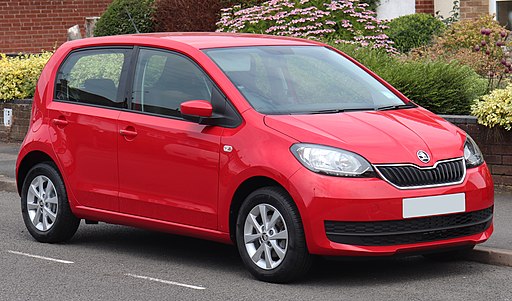
Škoda Citigo faults
Engine and Drivetrain Faults
Timing Chain Tensioner Wear
- On higher-mileage 1.0 MPI units the timing-chain tensioner can weaken, leading to a rattling noise on cold start.
- Failure to replace oil at 5 000 mile intervals accelerates wear; a stretched chain risks mis-timing and engine damage.
Misfires and Ignition Coil Failures
- Aged spark plugs or degraded ignition coils often trigger P0301–P0304 codes and rough running.
- Replacing plugs and coils as a matched set restores smooth idle and peak performance.
Throttle-Body Carbon Buildup
- Carbon deposits accumulate on the throttle-valve butterfly, causing uneven idling or sudden stall.
- Periodic cleaning with throttle-body spray typically cures hesitation and poor throttle response.
Exhaust Leaks and EGR Valve Issues
- Cracks or gasket failures in the exhaust manifold often cause audible leaks under acceleration.
- EGR valves may seize from carbon buildup, leading to rough running, limp-home mode or failed emissions tests.
Transmission and Clutch Issues
ASG Automated-Manual Gearbox Jerks
- Early Citigo ASG boxes exhibit jerky or delayed gear changes, especially under load or in cold conditions.
- Regular ASG oil and filter changes (every 40 000 km) mitigate mechatronic wear but don’t eliminate shudder.
Manual Clutch and Flywheel Wear
- Dual-mass flywheels on manual cars can develop internal rattle after 100 000 km, felt as driveline vibration.
- Solid-flywheel retrofits cure noise but transfer more vibration through the gearbox.
Gearbox Noise and Shifting Difficulties
- Worn synchros produce crunching when slotting into first or reverse.
- A noisy input shaft bearing in the gearbox may whine at higher speeds and worsen over time.
Suspension, Steering and Brakes
Rear Torsion-Beam Bushing Failure
- The rubber bushings on the rear torsion-beam split after extended service, causing clunks over bumps.
- Replacement bush kits restore silent operation.
Shock Absorbers and Control-Arm Wear
- Leaking or weakened dampers lead to a bouncy ride and uneven tyre wear.
- Bent or corroded control-arm ball joints degrade steering precision and may trigger ABS fault codes.
Brake Wear and Noise
- Rear drum-brake Citigos (pre-2017) often suffer rusted shoes and uneven pad wear, producing squeal and grabbing.
- Facelift models with rear discs offer better feel but still require frequent pad and rotor inspection in urban use.
Electrical and Electronic Gremlins
Central-Locking and Door-Actuator Failures
- Door-lock actuator motors can stall or fail, resulting in intermittent locking or inability to unlock doors.
- Symptoms range from dead-bolt click with no movement to random relock events after opening.
Infotainment Glitches and Smartphone Dock Issues
- Early Swing head units suffer firmware freezes, Bluetooth dropouts or failure to detect the Move&Fun cradle.
- Upgrading to the latest Škoda software resolves most connectivity and DAB reception faults.
Parasitic Battery Drain
- Aftermarket alarms or faulty courtesy-light modules may draw current overnight, leading to flat batteries.
- Isolating the offending circuit or replacing the control unit cures the drain.
Dashboard and Airbag Warning Sensors
- Airbag-warning-light recalls covered inflator propellant deterioration on driver modules (2012–2014 build) and passenger inflators (2012–2017) to prevent over-pressure rupture.
- A faulty sensor may illuminate the SRS warning lamp; checking VIN with a dealer confirms corrective work.
Body, Interior and Miscellaneous Faults
Rattles and Poor Noise Insulation
- Loose trim panels and recycled-plastic dash components generate creaks and buzzes at speed.
- Adding foam-padding behind door cards and securing loose clips greatly reduces cabin noise.
Slow Windscreen Defrost and Heater Performance
- Compact heater cores struggle to clear mist rapidly, leaving occupants waiting 10 – 15 minutes in cold weather.
- Fitting a more powerful fan resistor or aftermarket defrost outlet can speed up cabin heating.
Panoramic Sunroof and Towing-Eye Defects
- Panoramic-roof bonding failures (March–April 2016 builds) led to panel detachments; affected cars were recalled for reinforcement.
- Towing-eye welds on 2017 models did not meet spec and could fracture under load; Škoda replaced faulty eyes free of charge.
Corrosion in Sub-Frame and Sills
- Early Citigos can show surface rust around front sub-frame mounts and sill edges.
- Underseal treatment and spot-priming cut corrosion progression.
Recall-Related Child-Lock and Airbag Issues
- Five-door Citigos built Nov 2015–Apr 2016 were recalled to rectify rear-child-lock disengaging unexpectedly.
- Always verify with a Škoda dealer that all open recalls—airbag inflators, sunroof bonding, child-locks, towing eye—have been addressed.
Škoda Citigo as a used car
The Škoda Citigo, produced between 2011 and 2020, stakes its claim as one of the most practical and economical city cars on the market. Sharing its underpinnings with the Volkswagen Up and SEAT Mii, the Citigo offers a spacious interior, low running costs and straightforward mechanics. For buyers seeking a reliable supermini for urban commuting or occasional weekend trips, a well‐maintained used Citigo can deliver years of trouble‐free motoring.
Market Position and Generations
First Generation (2011–2017)
The original Citigo debut model focused purely on efficiency. It launched with two 1.0-litre naturally aspirated petrol engines, mated to either a five-speed manual or an automated five-speed “ASG” gearbox. A light facelift in 2015 introduced refreshed bumpers and interior trim.
Facelifted Model (2017–2020)
In early 2017, Škoda applied subtle styling tweaks to the front grille, bumpers and alloy-wheel designs. Infotainment took a leap forward with a smartphone‐docking “Move&Fun” app system replacing the older removable sat-nav module. Petrol engines remained unchanged, and the Citigo lineup concluded in 2020 with the launch of the fully electric Citigo e iV.
Technical Specifications
Engine Line-Up
| Engine Variant | Output | Torque | Fuel System |
|---|---|---|---|
| 1.0 MPI 60 PS | 44 kW / 60 PS | 95 Nm @ 3 000 rpm | Multipoint EFI |
| 1.0 MPI 75 PS | 55 kW / 75 PS | 95 Nm @ 3 000 rpm | Multipoint EFI |
| 1.0 G-TEC CNG 68 PS | 50 kW / 68 PS | 90 Nm @ 3 000 rpm | Multi-point EFI / CNG |
The base 60 PS unit is more than adequate for urban driving, delivering 0–100 km/h in around 14.4 seconds. The 75 PS version sharpens acceleration to 13.2 seconds and raises top speed from roughly 160 km/h to 171 km/h. The factory CNG model adds dual-fuel flexibility with negligible performance loss.
Performance and Fuel Economy
| Variant | 0–100 km/h | Top Speed (km/h) | Combined Consumption (l/100 km) |
|---|---|---|---|
| 1.0 MPI 60 PS | 14.4 s | 160 | 4.5 |
| 1.0 MPI 75 PS | 13.2 s | 171 | 4.7 |
| 1.0 G-TEC 68 PS | 16.3 s | 160 | 4.4 (CNG) |
Frugal consumption figures under 5 l/100 km reward careful throttle work. Highway cruising in the 75 PS model rarely breaches 5.5 l/100 km, while the CNG variant regularly returns sub-4 kg/100 km in gas usage.
Dimensions, Weight and Cargo
| Metric | Specification |
|---|---|
| Overall Length | 3 563 – 3 597 mm |
| Overall Width (excl. mirrors) | 1 641 – 1 645 mm |
| Overall Height | 1 478 – 1 481 mm |
| Wheelbase | 2 420 mm |
| Kerb Weight | 929 – 932 kg |
| Fuel Tank Capacity | 35 litres |
| Boot Volume (seats up) | 251 litres |
| Boot Volume (seats folded) | 951 litres |
Compact exterior dimensions make tight parking effortless, while clever packaging yields class-leading cabin space. Folding the rear bench transforms the bootspace into a near-flat 1 m³ loading bay.
Transmission and Drivetrain
- 5-speed manual gearbox with light, precise throws
- Optional 5-speed ASG automated manual (early models only)
- Front-wheel-drive layout, torsion-beam rear axle
The manual gearbox offers a long service life and minimal maintenance. ASG variants can exhibit jerky engagement under load and demand strict adherence to fluid-change intervals.
Chassis, Suspension and Steering
- Front: MacPherson struts with coil springs
- Rear: torsion-beam axle with progressive springs
- Hydraulic-assisted rack-and-pinion steering
The Citigo’s suspension balance delivers urban comfort and composed cornering. Facelifted Sport models feature 15 mm lower ride height and firmer dampers, tightening body control at the expense of bump compliance.
Brakes and Wheels
- Ventilated front discs (240 × 20 mm); rear drums (pre-2017)
- Solid rear discs (199 × 9 mm) optional on facelift models
- Wheel options: 14 in steel, 14–16 in alloys
Early drum-rear cars can suffer overdue shoe adjustments. Disc conversions on facelift models improve pedal feel and fade resistance under repeated stops.
Interior and Practicality
Cabin Layout and Materials
The Citigo’s dashboard features clean lines, straightforward switchgear and durable plastics. Post-2017 models introduced soft-touch inserts on the dash top and sport-style seat fabrics on Monte Carlo trims.
Infotainment and Connectivity
- Standard 6.5-inch “Swing” touchscreen with DAB, Bluetooth and USB
- Move&Fun smartphone-docking cradle with dedicated navigation and media app
- Optional rear-parking sensors from mid-range trims
Škoda’s Move&Fun app integrates smartphones smoothly, delivering map guidance and audio through the car’s speakers.
Seating and Storage
- Front seats with height adjustment and manual lumbar support
- Split-folding 60/40 rear bench
- Deep door bins, dual cupholders and under-floor boot storage
Even four-seater models feel spacious up front, and adults fit reasonably well in the rear for short journeys. The split-fold rear bench unlocks nearly 1 000 litres for bulkier cargo.
Safety and Driver Assistance
- Euro NCAP five-star rating on launch
- Dual front airbags, side-thorax airbags, curtain airbags
- ABS, EBD, ESC and hill-hold assist standard post-2017
- Optional autonomous emergency braking up to 30 km/h
Safety equipment escalated with the 2017 facelift, making even low-spec cars compliant with the latest active-safety norms.
Common Reliability and Maintenance Points
Engine and Fuel System
- Misfire caused by aged spark plugs or ignition coils—replace in matched sets
- Throttle-body carbon buildup on high-mileage 1.0 MPI units—periodic cleaning restores smooth idle
- CNG-valve seals may perish, leading to minor gas leaks—replace gasket kits if sniffed
Transmission and Clutch
- ASG automated manuals prone to clutch overheating under hill starts—ensure regular mechatronic oil and filter changes
- Dual-mass flywheel wear on high-mile manuals leads to light rattles—solid-flywheel retrofit cures noise
Suspension and Steering
- Rear torsion-beam bush splits after 100 000 km, causing knocks over bumps—bush kit replacement restores silence
- Steering-rack gaiters crack with age—renew gaiters and inspect rack for pitting
Electrical and Electronics
- Door-lock actuator failures manifest as intermittent central-locking faults—replace actuators in affected doors
- Infotainment glitches on early post-2011 models resolved by firmware updates
- Parasitic battery drain from aftermarket alarm modules—isolate circuit and remove faulty component
Ownership Costs and Running Expenses
- Full minor service (oil, filter, inspection): €100–€150
- ASG fluid and filter service every 40 000 km: €200–€250
- Timing-belt change (not required on MPI engines) irrelevant; just cam-belt inspection on older motors
- Insurance groups 1–4, depending on engine output and trim
- Road tax: typically exempt or lowest band for Euro 5 petrol engines
Parts commonality with the VW Up and SEAT Mii ensures spares remain affordable and readily available through Škoda’s network and independent suppliers.
Buying Guide and Pre-Purchase Checklist
- Confirm full service history, focusing on scheduled ASG fluid changes and any infotainment recalls
- Test national-route driving to provoke higher-speed stability and detect gearbox hesitation
- Inspect underbody and wheel arches for early-model corrosion, especially around sills and sub-frame mounts
- Verify all infotainment and Move&Fun functions; test smartphone docking and Bluetooth streaming
- Check boot-lid strut integrity and gas-strut seals; replace weak struts to prevent hatch collapse
Prices for 2012–2015 Citigos with 60 PS range from €3 000–€4 500. Post-2017 facelift models with 75 PS and higher trim levels command €5 000–€6 500, depending on mileage and condition.
Conclusion
The Škoda Citigo remains an outstanding choice in the used-supermini segment. Its blend of efficient engines, simple yet spacious packaging and low running costs make it ideal for urban dwellers and small families. By focusing on well-maintained examples, verifying service history and performing a thorough road test, buyers can secure a reliable Citigo that combines budget-friendly motoring with proven VW-Group underpinnings. Whether in S-trim simplicity or Monte Carlo sport guise, the Citigo rewards diligent ownership with years of economical and nimble performance.
