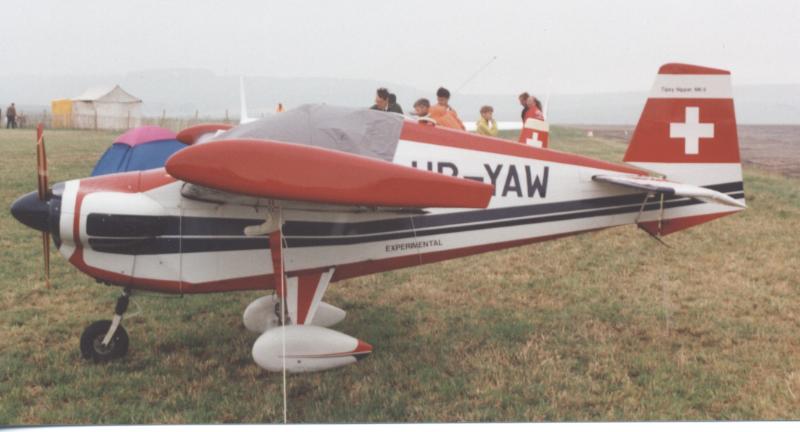
The Tipsy Nipper is a classic example of post-World War II light sport aircraft designed primarily for personal recreational flying and pilot training. Originating in Belgium during the 1950s, this single-seat aerobatic monoplane gained popularity among private pilots and flying clubs for its simplicity, affordability, and impressive performance characteristics given its minimal size and weight. The Nipper’s design philosophy centered on creating an accessible, easy-to-build aircraft that combined spirited handling with straightforward maintenance, making it an ideal platform for amateur constructors and sport aviators seeking a responsive and fun-to-fly machine. Its low cost and nimble nature cemented the Tipsy Nipper’s place as one of the quintessential light aerobatic aircraft of its era.
Airframe and structural design
The airframe of the Tipsy Nipper is a low-wing cantilever monoplane with a wooden structure, reflecting common construction techniques of the period. The wings are built around two spruce spars with plywood ribs, covered with plywood sheeting to provide a smooth aerodynamic surface. The fuselage employs a wooden framework with plywood skinning, resulting in a lightweight yet sufficiently strong airframe capable of withstanding aerobatic stresses. This all-wood construction offers the advantage of easy repair and modification, critical for homebuilders and recreational pilots. The aircraft’s relatively short wingspan and compact fuselage reduce overall weight and drag, contributing to its agile handling characteristics. The aircraft features a fixed tailwheel undercarriage with relatively narrow track main wheels, emphasizing simplicity and lightness.
Dimensions and physical specifications
The Tipsy Nipper’s compact dimensions reflect its role as a single-seat sport aircraft optimized for agility and aerobatic performance. It has a wingspan of approximately 6.4 meters (21 feet), with a wing area of around 7.5 square meters (81 square feet). The aircraft’s length is close to 5.0 meters (16 feet), and it stands roughly 1.8 meters (6 feet) tall. These small dimensions, combined with the lightweight wooden structure, contribute to an empty weight near 210 kilograms (460 pounds) and a maximum takeoff weight of approximately 320 kilograms (705 pounds). Such a light airframe enables the Nipper to achieve remarkable climb rates and maneuverability with relatively modest powerplants.
Powerplant and propulsion
The Tipsy Nipper was designed to accommodate a variety of small, lightweight piston engines suited to its minimal airframe. Early production models were frequently equipped with air-cooled engines such as the Continental A-65 or similar flat-four engines producing approximately 65 horsepower, providing an excellent power-to-weight ratio for the aircraft. Some builders have installed slightly more powerful engines up to around 90 horsepower to enhance climb performance and top speed. The engine is mounted in the nose with a fixed-pitch two-blade propeller, optimized for a balance of climb and cruise efficiency. The lightweight and compact powerplant integration plays a critical role in the aircraft’s nimble aerobatic capabilities and economical fuel consumption.
Cockpit layout and pilot accommodations
The Tipsy Nipper’s cockpit is designed for a single occupant, emphasizing simplicity and direct control feedback. The enclosed canopy provides good visibility in all directions, a critical feature for aerobatic flying and situational awareness. Instrumentation is typically basic but sufficient for sport and training flights, usually consisting of airspeed indicator, altimeter, tachometer, oil pressure and temperature gauges, and magnetic compass. Controls include a conventional stick and rudder pedals, allowing precise inputs essential for aerobatic maneuvers. The seating position is semi-reclined, optimizing pilot comfort and reducing frontal area for aerodynamic efficiency. The cockpit dimensions, while snug, accommodate a range of pilot sizes given the aircraft’s lightweight design and focus on minimalism.
Flight performance and handling characteristics
Performance-wise, the Tipsy Nipper is renowned for its lively and responsive handling, a trait highly prized by aerobatic enthusiasts and sport pilots. The aircraft can reach maximum speeds of approximately 200 km/h (125 mph) under typical powerplant configurations, with cruising speeds around 160 km/h (100 mph). Its stall speed is relatively low, approximately 55 km/h (34 mph), aided by the wing’s moderate loading and clean aerodynamic profile. Climb rates are typically in the range of 4 to 5 meters per second (800 to 1,000 feet per minute), impressive for an aircraft powered by modest engines. The Nipper’s low inertia and tight turning radius enable it to perform a full spectrum of aerobatic maneuvers including loops, rolls, spins, and hammerheads with ease. Pilots often describe its control response as direct and harmonious, providing excellent feedback and encouraging precise handling inputs.
Operational roles and usage
Primarily, the Tipsy Nipper was conceived as a personal sport and aerobatic aircraft, well-suited for pilot training, recreational flying, and light competition aerobatics. Its affordability and ease of construction made it a popular choice among amateur builders, flying clubs, and early postwar aviators seeking an economical yet capable platform. The aircraft’s simplicity and robustness allowed it to operate from grass strips and small airfields without elaborate ground support. Over the years, it has been used extensively for pilot proficiency maintenance and basic aerobatic instruction, proving invaluable for introducing pilots to advanced maneuvering techniques in a forgiving yet spirited airframe. Although not intended for commercial or military applications, the Nipper carved a niche as a beloved light aircraft within the general aviation community.
Maintenance and build considerations
Given its wooden construction and straightforward systems, the Tipsy Nipper requires diligent maintenance focused on wood preservation, fabric integrity, and routine engine care. Owners and builders typically perform regular inspections of the airframe to detect signs of moisture ingress, wood rot, or structural fatigue, all common concerns with wooden aircraft over time. The engine, being generally simple and air-cooled, benefits from routine oil changes, valve adjustments, and spark plug checks typical of piston engines of its class. The aircraft’s fixed gear and minimal systems reduce maintenance complexity and costs, making it highly accessible for owners performing much of the upkeep themselves. Many examples are homebuilt or kit-assembled, with comprehensive plans and builder support available to assist with construction techniques, ensuring structural integrity and flight safety.
Variants and legacy
While the core Tipsy Nipper design remained relatively consistent, minor variations existed depending on engine selection, builder modifications, and regulatory compliance across different countries. Some pilots experimented with slightly larger engines or aerodynamic tweaks to optimize performance, but the fundamental characteristics remained unchanged. The aircraft’s enduring legacy lies in its role as a quintessential lightweight sport aircraft that inspired a generation of pilots and homebuilders. Its influence extends into modern light sport and ultralight aviation by exemplifying how efficient design, modest power, and pilot-centric ergonomics can produce a rewarding flying experience without complexity or high operating costs.
Conclusion
The Tipsy Nipper remains a celebrated icon of postwar recreational aviation, embodying the ideals of simplicity, economy, and spirited performance. Its wooden low-wing monoplane construction, lightweight design, and modest powerplant combine to create an agile and responsive aircraft ideally suited for sport flying and aerobatics. From its humble beginnings in Belgium to its adoption by flying enthusiasts worldwide, the Nipper continues to be revered for its accessible design, forgiving handling, and the pure joy it brings to pilots. Whether used for training, competition, or leisurely cross-country flights, the Tipsy Nipper exemplifies how thoughtful engineering and pilot-focused design can deliver an enduring and beloved aircraft platform.
