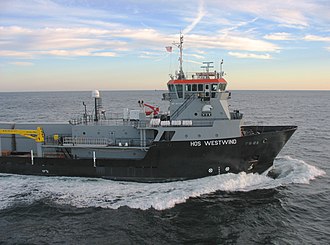
The USNS Westwind (T-AGSE-2) occupies a unique and highly specialized niche within the broader framework of United States naval and oceanographic capabilities. Unlike conventional naval vessels designed for combat, deterrence, or transport, Westwind represents a convergence of science, engineering, and national security priorities. As a submarine and special warfare support vessel, it plays a pivotal role in enabling undersea operations, testing advanced systems, and supporting the evolution of modern naval warfare in an era increasingly defined by stealth, autonomy, and technological sophistication.
This article provides a comprehensive and deeply technical exploration of the USNS Westwind, examining its origins, design philosophy, engineering systems, operational roles, and strategic importance. Through this detailed analysis, it becomes clear that ships like Westwind, though often overlooked by the public, are essential to maintaining technological superiority beneath the oceans.
Historical Background and Program Origins
The Need for Submarine Support Platforms
The development of the USNS Westwind must be understood within the broader context of undersea warfare evolution during the late 20th and early 21st centuries. As submarines became quieter, more capable, and more central to strategic deterrence and intelligence gathering, the need for specialized support vessels grew significantly. Traditional surface ships were not optimized for tasks such as deploying unmanned underwater vehicles (UUVs), conducting acoustic trials, or supporting deep-sea engineering operations.
The U.S. Navy identified a gap between research vessels and operational fleet units. This gap required a hybrid platform capable of supporting experimental systems, conducting classified missions, and providing logistical and technical assistance to submarine forces. The Westwind was conceived as part of this response, combining elements of oceanographic research ships with military support capabilities.
Integration into the Military Sealift Command
Like many specialized support vessels, the USNS Westwind is operated by the Military Sealift Command (MSC). This organizational structure allows the ship to benefit from civilian maritime expertise while remaining fully integrated into naval operations. The MSC model is particularly well-suited for vessels like Westwind, where mission flexibility, endurance, and technical specialization are more critical than combat readiness.
The designation T-AGSE reflects its role as an Auxiliary General Submarine Engineering vessel, emphasizing its focus on engineering support, testing, and undersea operations rather than direct combat.
Design Philosophy and Structural Characteristics
Hybrid Design Approach
The design of the USNS Westwind reflects a hybrid philosophy that balances scientific capability with operational resilience. Unlike purely commercial research vessels, Westwind incorporates military-grade systems, redundancy, and survivability features. At the same time, it retains the flexibility and modularity required for scientific and engineering missions.
The hull form is optimized for stability rather than speed, a critical factor when conducting precise underwater operations. Dynamic positioning systems allow the ship to maintain its position with exceptional accuracy, even in challenging sea conditions. This capability is essential for deploying sensitive equipment such as remotely operated vehicles (ROVs) and sonar arrays.
Deck Layout and Mission Modules
One of the defining features of the Westwind is its modular deck configuration. The vessel is equipped with large open working decks that can be reconfigured depending on mission requirements. Containers housing laboratories, control centers, or specialized equipment can be installed and integrated into the ship’s systems.
Heavy-duty cranes and A-frames are installed to support the deployment and recovery of underwater systems. These mechanical systems are engineered to handle significant loads while maintaining precision, ensuring that delicate equipment can be operated safely.
Propulsion and Power Systems
Diesel-Electric Propulsion Architecture
The USNS Westwind utilizes a diesel-electric propulsion system, a configuration well-suited to vessels requiring both efficiency and precise control. In this system, diesel engines drive generators that produce electrical power, which is then used to drive electric propulsion motors connected to the ship’s propellers.
This arrangement offers several advantages. First, it allows for flexible power distribution, enabling the ship to allocate energy between propulsion and mission systems as needed. Second, it reduces acoustic signatures compared to traditional mechanical drive systems, an important consideration when operating in proximity to submarines or conducting acoustic research.
Maneuverability and Dynamic Positioning
In addition to its main propulsion system, the Westwind is equipped with multiple thrusters, including bow and stern units. These thrusters are integrated into a dynamic positioning (DP) system that uses GPS, gyroscopes, and environmental sensors to maintain the vessel’s position automatically.
Dynamic positioning is a critical capability for submarine support operations. Whether deploying a UUV or conducting seabed mapping, even minor deviations in position can compromise mission success. The DP system ensures that the ship remains stable and accurately positioned over a target area.
Scientific and Engineering Capabilities
Submarine Engineering Support
At its core, the mission of the USNS Westwind is to support submarine engineering and undersea warfare development. This includes testing new sonar systems, evaluating propulsion technologies, and conducting acoustic trials. The ship serves as a floating laboratory where engineers and scientists can conduct experiments in real-world conditions.
Specialized instrumentation allows for precise measurement of underwater phenomena, including sound propagation, pressure variations, and thermal gradients. These data are essential for improving submarine stealth and detection capabilities.
Unmanned Underwater Systems
The rise of unmanned underwater vehicles has transformed naval operations, and the Westwind is designed to support these systems extensively. The ship can deploy, control, and recover UUVs and ROVs used for reconnaissance, mine countermeasures, and infrastructure inspection.
Control centers onboard the vessel provide operators with real-time data and video feeds, enabling complex missions to be conducted remotely. The integration of these systems requires advanced computing infrastructure and robust communication links.
Oceanographic Research Functions
In addition to its military roles, the Westwind also contributes to oceanographic research. Its sensors and laboratories enable the study of ocean currents, seabed composition, and marine ecosystems. This dual-use capability enhances the ship’s value, allowing it to support both defense and scientific objectives.
Communication and Sensor Systems
Advanced Communication Suites
Effective communication is essential for coordinating complex operations, particularly those involving submarines and unmanned systems. The USNS Westwind is equipped with a comprehensive suite of communication technologies, including satellite links, secure radio systems, and data networks.
These systems enable real-time information exchange with naval command centers, other vessels, and deployed assets. Encryption and cybersecurity measures ensure that sensitive data remain protected.
Sensor Integration
The ship’s sensor suite includes radar, sonar, and environmental monitoring systems. These sensors provide situational awareness and support mission planning. Sonar systems, in particular, are critical for detecting and tracking underwater objects, as well as for conducting acoustic research.
Integration of sensor data into centralized control systems allows operators to make informed decisions quickly and effectively.
Operational Roles and Missions
Support for Naval Exercises
The USNS Westwind frequently participates in naval exercises, providing support for submarine operations and testing new technologies. These exercises allow the Navy to evaluate systems in realistic scenarios, ensuring readiness and effectiveness.
Classified Operations
Due to the nature of its mission, many of the Westwind’s activities are classified. These may include testing experimental systems, supporting special operations forces, or conducting intelligence-gathering missions. The ship’s design and capabilities make it well-suited for such tasks.
Collaboration with Research Institutions
The Westwind often collaborates with academic and research institutions, contributing to advancements in oceanography and marine engineering. These partnerships enhance the ship’s capabilities and expand its impact beyond military applications.
Life Onboard and Crew Structure
Civilian Mariners and Technical Specialists
The crew of the USNS Westwind consists primarily of civilian mariners, supported by military personnel and technical specialists. This diverse team brings together expertise in navigation, engineering, and scientific research.
Working Environment
Life onboard the Westwind is characterized by a strong focus on technical work and mission execution. Laboratories, control rooms, and workshops dominate the ship’s interior spaces, reflecting its role as a working platform rather than a traditional naval vessel.
Strategic Importance in Modern Naval Doctrine
Undersea Dominance
In modern naval strategy, control of the undersea domain is increasingly important. Submarines provide stealth, deterrence, and intelligence capabilities that are difficult to counter. The USNS Westwind supports these capabilities by enabling the development and testing of advanced technologies.
Technological Innovation
The ship serves as a platform for innovation, allowing the Navy to experiment with new systems and concepts. This role is critical in maintaining a technological edge in an increasingly competitive global environment.
Future Outlook and Modernization
Emerging Technologies
As new technologies emerge, the USNS Westwind is likely to undergo upgrades to enhance its capabilities. These may include improved sensors, advanced propulsion systems, and greater integration with autonomous platforms.
Continued Relevance
The need for specialized support vessels like the Westwind is unlikely to diminish. As undersea operations become more complex, the demand for platforms capable of supporting these missions will continue to grow.
Conclusion
The USNS Westwind (T-AGSE-2) represents a vital but often overlooked component of modern naval operations. Through its combination of engineering support, scientific capability, and operational flexibility, it enables advancements in undersea warfare and oceanographic research. Its contributions extend beyond immediate missions, shaping the future of naval technology and strategy.
Technical Specifications Table
| Parameter | Specification |
|---|---|
| Ship Name | USNS Westwind (T-AGSE-2) |
| Type | Auxiliary General Submarine Engineering Vessel |
| Operator | Military Sealift Command |
| Propulsion | Diesel-electric system |
| Length | Approx. 100–120 meters |
| Beam | Approx. 20–25 meters |
| Draft | Approx. 6–8 meters |
| Displacement | Approx. 5,000–8,000 tons |
| Speed | Approx. 12–16 knots |
| Crew | Civilian mariners + technical staff |
| Dynamic Positioning | Yes |
| Mission Deck | Modular, containerized systems |
| Cranes/A-Frames | Heavy-lift deployment systems |
| Supported Systems | UUVs, ROVs, sonar arrays |
| Communication | Satellite + secure naval comms |
| Sensors | Radar, sonar, environmental systems |
.jpg)