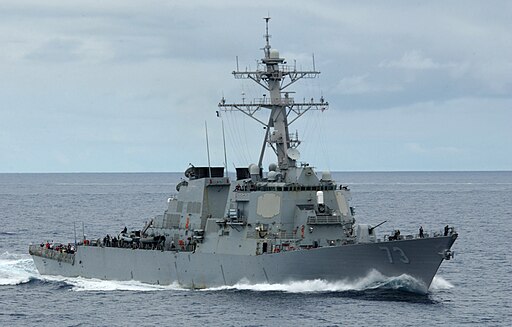
USS Decatur (DDG-73)
USS Decatur (DDG-73): A Vanguard of Naval Excellence
The USS Decatur (DDG-73) is an Arleigh Burke-class guided-missile destroyer in the United States Navy. Commissioned in 1998, it represents a formidable blend of firepower, technology, and versatility. Named after Commodore Stephen Decatur, a celebrated naval officer from the early 19th century, the ship carries forward a legacy of bravery and dedication to the mission. As part of the Arleigh Burke class, the Decatur is equipped for multi-mission operations, including anti-air, anti-surface, anti-submarine, and ballistic missile defense.
This article delves into the USS Decatur’s design, operational capabilities, historical background, and its critical role in modern naval strategy.
Historical Context
The USS Decatur is the fifth U.S. Navy ship to bear the name Decatur, honoring Commodore Stephen Decatur (1779–1820), a hero of the First Barbary War and the War of 1812. Decatur’s daring leadership and victories, such as the burning of the captured frigate USS Philadelphia in Tripoli Harbor, earned him national acclaim and the enduring respect of the Navy.
Construction and Commissioning
The USS Decatur was built by Ingalls Shipbuilding in Pascagoula, Mississippi, a shipyard renowned for constructing advanced naval vessels. Key milestones include:
- Keel Laid: January 11, 1996
- Launched: November 13, 1996
- Commissioned: August 29, 1998
The commissioning ceremony took place in Portsmouth, Virginia, with Captain Michael G. Gilday—who would later become the Chief of Naval Operations—serving as the ship’s first commanding officer.
Design and Specifications
The Arleigh Burke-class destroyers are among the most advanced and durable warships ever constructed. The USS Decatur (DDG-73), as a Flight I variant, incorporates features that enable it to excel in diverse operational environments.
1. Physical Characteristics
- Displacement: Approximately 9,200 tons (full load)
- Length: 505 feet
- Beam: 66 feet
- Draft: 31 feet
- Speed: Over 30 knots
- Range: 4,400 nautical miles at 20 knots
The Decatur’s hull is constructed from steel and features an angular design to reduce radar cross-section, enhancing stealth capabilities.
2. Propulsion
The ship is powered by four General Electric LM2500 gas turbines, producing a total of 100,000 shaft horsepower. This propulsion system provides exceptional speed, maneuverability, and endurance.
3. Aegis Combat System
The Aegis Combat System is the technological cornerstone of the USS Decatur. It integrates sensors, weapons, and communications systems to detect, track, and engage threats with unprecedented speed and accuracy. Key components include:
- SPY-1D radar: A high-powered, phased-array radar system capable of tracking hundreds of targets simultaneously.
- MK 41 Vertical Launch System (VLS): With 90 cells, it can carry a mix of missiles tailored to specific mission needs.
4. Armament
The USS Decatur is armed to perform in multiple warfare domains:
- Standard Missiles (SM-2, SM-6): For air and missile defense.
- Tomahawk Cruise Missiles: Precision strikes against land-based targets.
- RUM-139 VL-ASROC (Anti-Submarine Rockets): Engages submarine threats.
- Mk 45 5-inch/54-caliber naval gun: Supports surface engagements and shore bombardment.
- Phalanx CIWS (Close-In Weapon System): Provides defense against incoming missiles and aircraft.
- Mk 32 Torpedo Tubes: Armed with lightweight torpedoes for anti-submarine warfare.
5. Sensors and Countermeasures
The Decatur’s sensor suite includes advanced sonar systems for submarine detection and an electronic warfare suite to counter enemy radar and missiles. Its AN/SLQ-32(V)3 system provides electronic support measures and jamming capabilities.
6. Aviation Support
The destroyer includes a flight deck and facilities to operate and support MH-60R Seahawk helicopters, extending its reach in anti-submarine warfare, reconnaissance, and search-and-rescue operations.
Operational History
Since its commissioning, the USS Decatur has participated in numerous operations and exercises, demonstrating its capabilities in a range of environments.
1. Early Deployments
In its initial years, the USS Decatur was deployed to support Operation Southern Watch, enforcing no-fly zones over Iraq in the late 1990s and early 2000s. These operations showcased the ship’s ability to operate in high-stakes environments.
2. Global War on Terror
Following the September 11 attacks, the Decatur was integral to the Global War on Terrorism, providing support for Operation Enduring Freedom and Operation Iraqi Freedom. Its roles included escorting carrier strike groups, conducting maritime security operations, and launching Tomahawk strikes.
3. Freedom of Navigation Operations (FONOPs)
The USS Decatur has been a key participant in Freedom of Navigation Operations in contested regions such as the South China Sea. In October 2018, the Decatur was involved in a high-profile encounter with a Chinese warship while transiting near Gaven Reef, a disputed territory claimed by China. The incident underscored the ship’s role in asserting international norms and freedom of the seas.
4. Humanitarian Assistance and Disaster Relief
The Decatur has also contributed to humanitarian missions, such as delivering aid during natural disasters and assisting in maritime search-and-rescue efforts.
5. Exercises and Alliances
The destroyer frequently participates in multinational exercises, including:
- RIMPAC (Rim of the Pacific Exercise): The world’s largest international maritime exercise.
- Talisman Sabre: U.S.-Australia joint military drills.
- Malabar Exercise: Collaborative training with India and Japan.
Strategic Importance
The USS Decatur’s deployment history reflects its importance in supporting U.S. maritime strategy. Forward-deployed in the U.S. Pacific Fleet, the ship plays a crucial role in maintaining stability and countering threats in the Indo-Pacific. Its capabilities allow it to deter aggression, protect sea lanes, and enhance interoperability with allied forces.
As tensions rise in regions such as the South China Sea and the Taiwan Strait, the Decatur serves as a powerful symbol of U.S. commitment to upholding freedom of navigation and ensuring a rules-based international order.
Modernization
To remain effective in an era of rapidly evolving threats, the USS Decatur has undergone several upgrades:
- Aegis Baseline 9 Upgrade: Enhances ballistic missile defense and integrates the ship into the Navy’s Naval Integrated Fire Control-Counter Air (NIFC-CA) system.
- SM-6 Integration: Expands the ship’s capability to engage air, surface, and ballistic missile threats.
- Electronic Warfare Enhancements: To counter increasingly sophisticated adversaries.
- Cybersecurity Improvements: Ensures the ship’s systems are protected from cyberattacks.
Legacy and Future
The USS Decatur stands as a testament to the durability and versatility of the Arleigh Burke-class destroyers. Its namesake, Commodore Stephen Decatur, remains a source of inspiration for its crew, exemplifying courage, innovation, and patriotism. As the Decatur continues to serve, it will remain at the forefront of protecting U.S. interests and fostering global maritime security.
With its ongoing modernization and forward-deployed status, the USS Decatur (DDG-73) is well-equipped to meet the challenges of 21st-century naval warfare and to honor the legacy of its storied name.
_transits_through_the_ocean_during_a_sea_power_demonstration_for_Sailors_and_their_families_aboard_the_Nimitz-class_aircraft_carrier_USS_Ronald_Reagan.jpg)