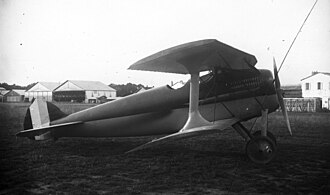
SPAD S.XX – The Elegant Final Chapter of France’s Famous SPAD Fighter Legacy
When aviation enthusiasts discuss the great French aircraft of the First World War, names such as the SPAD S.VII and SPAD S.XIII immediately come to mind. These powerful, rugged fighters became symbols of French air power and helped establish the reputation of the Société Pour l’Aviation et ses Dérivés, better known simply as SPAD, as one of the most important aircraft manufacturers of the early twentieth century. However, the story of SPAD did not end with the armistice of 1918. In the years immediately following the war, the company attempted to adapt its successful fighter design philosophy to the rapidly changing world of aviation. The result was the SPAD S.XX, an advanced and ambitious aircraft that represented both the continuation of a legendary lineage and the beginning of a new era.
The SPAD S.XX was not merely another refinement of a wartime fighter. It was designed during a transitional period when aviation was moving away from the desperate demands of wartime production and toward a future shaped by racing, commercial aviation, military modernization, and technological experimentation. Designers were no longer focused solely on producing aircraft capable of surviving combat. They were exploring speed, efficiency, passenger transport, long-distance flight, and the possibilities of aviation in peacetime.
In this environment, the SPAD S.XX represented an attempt to preserve the strengths of the company’s wartime fighters while incorporating new ideas. It combined the structural strength and aerodynamic discipline that had made SPAD fighters famous with a larger, more refined configuration suitable for new roles. Although it never achieved the legendary status of the S.VII or S.XIII, the S.XX remains a fascinating aircraft because it demonstrates how aviation design evolved after the First World War.
The aircraft reflected a changing philosophy. During the war, a fighter had to be strong, reliable, and heavily armed. After the war, speed and efficiency became increasingly important. Aviation pioneers competed for records, explored new routes, and demonstrated that aircraft could become practical tools rather than temporary weapons. The SPAD S.XX belonged to this period of transformation, standing between the classic fighter era and the emerging age of modern aviation.
The Origins of SPAD and the Road Toward the S.XX
From Pre-War Experiments to Wartime Excellence
The history of the SPAD S.XX begins with the remarkable development of the SPAD company itself. Founded during the early years of aviation, SPAD became one of France’s most successful aircraft manufacturers during the First World War. The company gained prominence through the work of designers such as Louis Béchereau, whose engineering approach emphasized strength, speed, and reliability.
Before the arrival of SPAD fighters, many early combat aircraft were lightly built and optimized for maneuverability. While agility was important, these aircraft often lacked structural strength and high-speed performance. Béchereau introduced a different philosophy. Instead of creating fragile machines designed around low-speed turning battles, he developed aircraft capable of diving rapidly, carrying powerful engines, and maintaining structural integrity under demanding conditions.
This approach produced the SPAD S.VII, introduced in 1916. The aircraft became one of the most successful Allied fighters of the war, earning praise from pilots for its speed, durability, and excellent diving ability. The later SPAD S.XIII improved upon the design by adding more power and heavier armament, becoming one of the most important French fighters of the conflict.
By the end of the war, SPAD had developed a reputation for producing aircraft that combined performance with dependability. However, the end of hostilities created a difficult situation for aircraft manufacturers. Military contracts disappeared almost overnight, and companies had to search for new markets and new purposes.
The SPAD S.XX emerged from this challenge. The company needed an aircraft that could demonstrate continued innovation while adapting to a world where military aviation was no longer the only path forward.
The Post-War Aviation Environment
The years immediately following the First World War were a period of both uncertainty and opportunity for aviation. Thousands of aircraft and trained pilots existed, but the military demand that had driven rapid technological development had suddenly declined. Aircraft manufacturers across Europe faced financial pressure and began exploring civilian applications.
At the same time, public interest in aviation reached unprecedented levels. Wartime advances had proven that aircraft could travel significant distances and operate reliably. Air races, record attempts, and demonstration flights became popular events that attracted public attention and private investment.
Speed became particularly important. Before the war, aircraft were primarily judged by their ability to fly. After the war, designers increasingly competed to create faster, more efficient machines. Racing aircraft served as testbeds for new aerodynamic concepts and engine technology.
The SPAD S.XX was influenced by this environment. It carried the DNA of a fighter aircraft but was designed with a broader vision. Its creators understood that aviation was entering a new phase where performance, refinement, and versatility would determine success.
Development of the SPAD S.XX
A New Generation of SPAD Design
The SPAD S.XX was developed as part of SPAD’s effort to create advanced aircraft after the First World War. Rather than simply continuing production of wartime fighters, engineers explored larger and more sophisticated designs that could take advantage of new engines and improved aerodynamic knowledge.
The aircraft maintained several characteristics associated with SPAD fighters, including a strong wooden structure, careful attention to aerodynamic efficiency, and an emphasis on speed. However, it differed significantly from the compact single-seat fighters that had defined the company during the war.
The S.XX was designed as a two-seat aircraft, reflecting the changing needs of aviation. A second crew member allowed the aircraft to perform roles beyond pure combat, including reconnaissance, training, and demonstration flying. This additional flexibility made sense in the post-war environment, where manufacturers needed aircraft capable of serving multiple markets.
The design also reflected lessons learned from wartime aviation. Engineers understood that aerodynamic cleanliness was essential for achieving high performance. The aircraft featured a streamlined fuselage and carefully designed surfaces intended to reduce drag. Every improvement in efficiency contributed to greater speed and better fuel economy.
Structure and Construction Philosophy
Like many SPAD aircraft, the S.XX used traditional construction methods refined through years of experience. The airframe consisted primarily of a wooden framework covered with fabric. Although this approach may seem simple compared with modern composite aircraft, it represented highly advanced engineering for its time.
Wood remained an excellent aircraft material during this period because it combined strength, flexibility, and low weight. Skilled craftsmen could produce precise structures capable of withstanding significant aerodynamic forces. The use of fabric covering also allowed designers to create smooth aerodynamic surfaces without excessive weight.
The S.XX benefited from SPAD’s wartime experience in structural design. Combat aircraft had to endure violent maneuvers, high-speed dives, and rough operational conditions. These lessons contributed to the creation of a strong and durable aircraft.
The aircraft’s structure also reflected the balance designers needed to achieve. A heavier structure could improve strength but reduce performance. A lighter structure could increase speed but risk reduced durability. SPAD’s reputation came from finding practical compromises between these competing requirements.
Engineering Features of the SPAD S.XX
Aerodynamic Design and Performance Goals
The SPAD S.XX was created during a period when aerodynamic science was rapidly developing. Engineers were beginning to understand more clearly how airflow influenced aircraft performance, and manufacturers increasingly focused on reducing unnecessary drag.
The aircraft featured a streamlined fuselage designed to allow air to flow smoothly around the structure. Compared with many earlier aircraft that had exposed components and complex external arrangements, the S.XX represented a cleaner approach.
The wing design also reflected performance priorities. The aircraft used a biplane configuration, which remained common during the period because it provided excellent structural strength and lifting capability. Although monoplanes would eventually dominate high-performance aviation, biplanes offered advantages during the early post-war years.
The arrangement of wings, struts, and control surfaces was carefully optimized to provide a balance between stability and speed. Designers wanted an aircraft that could perform efficiently while remaining manageable for pilots.
The Influence of Racing and Record Aircraft
One of the most interesting aspects of the SPAD S.XX is its relationship with the world of aviation competition. During the 1920s, racing became a major driver of aircraft development. Manufacturers used competitions to demonstrate technological superiority and attract customers.
Aircraft created for racing often influenced future military and civilian designs. Improvements in aerodynamics, engine installation, and structural techniques developed for speed competitions frequently found their way into production aircraft.
The S.XX reflected this trend. Although it was not simply a racing aircraft, its design incorporated the pursuit of performance that characterized the era. It represented a bridge between wartime fighters and the specialized racing machines that would soon dominate international aviation events.
This focus on performance also influenced the aircraft’s appearance. The S.XX possessed the sleek, purposeful look associated with high-speed aircraft. Its designers clearly intended it to represent modern aviation rather than simply extend older wartime concepts.
The Engine and Performance Characteristics
Powering the Next Generation
The engine was one of the most important elements in determining the success of any aircraft during this period. Wartime fighters had demonstrated the importance of reliable, powerful engines, and post-war designers continued seeking improvements.
The SPAD S.XX was associated with powerful inline engines that provided significantly greater performance than many earlier aircraft. These engines offered smooth power delivery and allowed the aircraft to achieve speeds suitable for the new era of aviation competition.
The aircraft’s performance reflected the combination of engine power and aerodynamic efficiency. Rather than relying only on a larger engine, SPAD engineers focused on ensuring that available power translated effectively into speed and climb performance.
This approach was consistent with the company’s wartime philosophy. The SPAD S.VII and S.XIII had been successful not because they were the most maneuverable aircraft available, but because they combined power, speed, and structural strength in a highly effective package.
Flight Characteristics
Pilots familiar with SPAD fighters often appreciated their stability and predictable handling, and the S.XX continued many of these characteristics. The aircraft was designed to provide confident handling at higher speeds, reflecting SPAD’s emphasis on performance-oriented flying.
Unlike some highly maneuverable aircraft that demanded constant pilot attention, SPAD designs often rewarded disciplined flying techniques. Their strength and speed allowed pilots to use energy effectively, particularly in combat situations.
The S.XX benefited from this heritage while adapting it to a new purpose. Its larger size and two-seat configuration changed its personality, but the aircraft retained the sense of solidity associated with SPAD designs.
Conclusion of Part 1
The SPAD S.XX represented an important transition in aviation history. It was born from a company famous for wartime fighters but developed during a period when aviation was searching for a new identity. The aircraft carried forward the engineering lessons of the First World War while embracing the possibilities of peacetime aviation.
Its design combined SPAD’s traditional strengths—structural integrity, aerodynamic discipline, and performance—with the emerging demands of a new era. Although it never achieved the fame of the legendary SPAD S.VII and S.XIII, it remains an important example of how aircraft manufacturers adapted after the war.
In the next part, the article will continue with the SPAD S.XX’s production history, operational roles, variants, comparisons with contemporary aircraft, historical legacy, final conclusion, and a complete HTML technical specifications table.
SPAD S.XX – Production, Service, Legacy, and Technical Specifications
Production Challenges in a Changing Aviation World
The development of the SPAD S.XX occurred during one of the most difficult periods in the history of aircraft manufacturing. The First World War had created enormous demand for military aircraft, but the sudden end of hostilities in 1918 caused a dramatic collapse in military orders. Companies that had expanded rapidly during wartime now faced a completely different marketplace.
For SPAD, the challenge was especially significant. The company had achieved tremendous success through aircraft such as the SPAD S.VII and SPAD S.XIII, but those machines had been designed for a conflict that no longer existed. The peacetime aviation industry required new ideas, new customers, and new aircraft categories.
The S.XX represented an attempt to adapt to this environment. Instead of focusing exclusively on military contracts, SPAD explored aircraft capable of attracting private owners, aviation organizations, and government users interested in new post-war applications. The aircraft demonstrated that the company still possessed advanced design capabilities and could compete in the rapidly evolving aviation world.
However, the commercial environment was difficult. Numerous aircraft manufacturers were competing for limited opportunities, and many wartime companies struggled or disappeared entirely. The aviation industry was moving toward larger companies with stronger financial resources, and smaller manufacturers faced increasing pressure.
The SPAD S.XX therefore became part of a broader story about the transition from wartime aviation to peacetime aviation. Its development reflected ambition and technical ability, but also the economic realities of a rapidly changing industry.
The Role of the SPAD S.XX in Post-War Aviation
Military Interest and Limited Adoption
Although the SPAD S.XX emerged after the First World War, military aviation remained interested in advanced aircraft designs. Air forces around the world were reorganizing, studying wartime lessons, and considering the future role of aviation.
The S.XX offered several qualities that attracted attention. Its strong construction, performance-oriented design, and connection to SPAD’s successful fighter heritage made it an interesting candidate for military applications. Aircraft designers and military planners were exploring new concepts, including improved reconnaissance aircraft, advanced trainers, and high-performance machines.
However, the military market after the war was far smaller than during the conflict. Governments reduced spending, and aircraft procurement programs became limited. Many promising designs failed to achieve large production contracts simply because there was not enough demand.
The S.XX’s limited production reflected these circumstances. It was a technically interesting aircraft, but the world it entered was very different from the one that had created the SPAD S.XIII. The age of mass wartime fighter production had ended, and manufacturers needed to find new paths forward.
The Aircraft as a High-Performance Demonstrator
One of the most important aspects of the SPAD S.XX was its role as a demonstration of aviation potential. In the early post-war years, aircraft manufacturers competed not only through military contracts but also through public visibility.
Speed records, demonstration flights, and aviation competitions became powerful marketing tools. A successful aircraft could attract attention from governments, private customers, and investors. Performance became a symbol of technological progress.
The S.XX represented this new approach. Its design showcased what SPAD engineers could achieve when they were no longer limited by wartime requirements. The aircraft emphasized refinement, speed, and aerodynamic efficiency rather than weapons and battlefield durability.
In this sense, the S.XX was part of a broader movement that transformed aircraft from military tools into symbols of modern technology. It belonged to the same era that produced long-distance flights, international air races, and the first serious attempts at commercial aviation.
Comparing the SPAD S.XX with Earlier SPAD Fighters
The SPAD S.XX and the SPAD S.VII
The SPAD S.VII was one of the most influential French fighters of the First World War. Introduced in 1916, it established SPAD’s reputation for producing fast, strong, and reliable aircraft. Compared with the compact S.VII, the S.XX represented a significant evolution.
The S.VII was designed specifically for combat. Every aspect of its design reflected the demands of aerial warfare: speed, climbing ability, structural strength, and pilot survivability. It was a machine created for military necessity.
The S.XX, by contrast, belonged to a different era. Although it inherited some of the same engineering principles, it was designed around broader aviation goals. It was larger, more refined, and less focused on direct combat requirements.
The comparison between the two aircraft demonstrates how aviation priorities changed after the war. The S.VII represented the mature First World War fighter concept, while the S.XX represented aviation’s search for a new identity.
The SPAD S.XX and the SPAD S.XIII
The SPAD S.XIII was arguably the peak of SPAD’s wartime fighter development. It combined increased engine power with improved armament and became one of the most important Allied fighters of the conflict.
Many famous pilots used the S.XIII, and its reputation became closely connected with French and Allied air victories. It represented the final refinement of the classic SPAD fighter philosophy.
The S.XX maintained elements of this heritage, particularly the emphasis on strength and performance. However, it was not intended to replace the S.XIII as a fighter. Instead, it demonstrated how SPAD attempted to move forward after the war.
The difference between these aircraft highlights the speed of aviation development. In just a few years, aircraft designs moved from simple reconnaissance machines to advanced fighters and then toward new civilian and experimental concepts.
The Engineering Legacy of the SPAD S.XX
Influence on French Aviation Design
Although the SPAD S.XX was not produced in large numbers, its design represented important trends in French aviation. It showed how manufacturers were attempting to balance traditional construction methods with new performance expectations.
The aircraft demonstrated the continued value of strong, carefully engineered airframes. While aviation technology would soon move toward all-metal construction and more advanced manufacturing techniques, the principles behind SPAD designs remained influential.
Strength-to-weight efficiency, aerodynamic cleanliness, and reliable handling continued to be essential characteristics of successful aircraft. The S.XX reflected these principles during a period of rapid technological change.
A Bridge Between Eras
The SPAD S.XX is historically significant because it represents a bridge between two major periods of aviation history. On one side stood the First World War era, defined by rapid military innovation and the development of specialized fighters. On the other side was the modern aviation era, characterized by racing, commercial transport, and increasingly sophisticated engineering.
Aircraft from transitional periods are often overlooked because they do not fit neatly into historical categories. The S.XX was neither a famous wartime fighter nor a revolutionary modern aircraft. Instead, it occupied the space between them.
However, these transitional designs are valuable because they reveal how aviation evolved. They show designers experimenting with new possibilities and adapting to changing circumstances.
The Broader Historical Importance of SPAD
A Company That Shaped Early Aviation
The importance of the SPAD S.XX is closely connected to the broader achievements of the SPAD company. During its existence, SPAD contributed significantly to the development of military aviation and helped establish France as a major aviation power.
The company’s aircraft influenced generations of pilots and designers. The SPAD S.VII and S.XIII became symbols of engineering excellence, while later designs such as the S.XX demonstrated the company’s willingness to explore new directions.
SPAD’s legacy also reflects the importance of industrial adaptation. Aviation companies cannot survive by relying only on past successes. They must continuously respond to changing technology, economics, and customer needs.
The S.XX represents one chapter in this larger story of innovation and adjustment.
Preservation and Historical Interest
Today, surviving examples and historical documentation preserve the memory of aircraft such as the SPAD S.XX. While it is less famous than some First World War fighters, aviation historians recognize its importance as part of the transition between wartime and modern aircraft design.
The aircraft attracts interest because it represents a fascinating moment when aviation possibilities seemed almost unlimited. Engineers, pilots, and entrepreneurs were exploring new ideas, and every aircraft contributed lessons that influenced future developments.
Studying aircraft like the S.XX provides a deeper understanding of aviation history. Famous aircraft often receive attention because of dramatic events, but transitional designs reveal the process of technological evolution.
Conclusion: The SPAD S.XX and the Evolution of Flight
The SPAD S.XX may not have achieved the legendary status of the SPAD S.VII or S.XIII, but it remains an important aircraft in the story of aviation development. It represented the efforts of a famous manufacturer to adapt its wartime expertise to a new world.
The aircraft combined the traditional SPAD qualities of strength, precision, and performance with the changing demands of post-war aviation. It reflected a period when aircraft were no longer defined solely by combat but by exploration, competition, and new possibilities.
Its significance lies not only in what it achieved but in what it represented. The S.XX was a symbol of aviation’s transition from the battlefield to the wider world. It showed that the lessons learned during wartime could be transformed into new forms of innovation.
The aircraft stands as a reminder that aviation history is not shaped only by the most famous machines. It is also shaped by the experimental aircraft, transitional designs, and engineering efforts that helped move technology forward.
The SPAD S.XX occupies exactly this place: a sophisticated aircraft born from a legendary fighter tradition, created during a changing era, and remembered today as a fascinating link between early combat aviation and the modern age of flight.
SPAD S.XX Technical Specifications
The following specifications represent commonly published estimates for the SPAD S.XX. Exact figures vary because limited production aircraft could differ in engine installation and configuration.
| Specification | Details |
|---|---|
| Aircraft Name | SPAD S.XX |
| Manufacturer | Société Pour l’Aviation et ses Dérivés (SPAD) |
| Country of Origin | France |
| Designer | Louis Béchereau / SPAD design team |
| Period | Post-First World War era |
| Aircraft Type | Two-seat biplane aircraft |
| Primary Roles | High-performance aircraft, reconnaissance, demonstration, experimental use |
| Configuration | Single-engine tractor biplane |
| Construction | Wooden structure with fabric covering |
| Crew | Two (pilot and observer/passenger) |
| Engine | High-powered inline engine depending on configuration |
| Power Output | Approximately 300 hp class depending on engine installation |
| Maximum Speed | Approximately 220–250 km/h depending on configuration |
| Wingspan | Approximately 10–11 m range |
| Length | Approximately 7–8 m range |
| Landing Gear | Fixed conventional landing gear |
| Armament | Not standardized; primarily non-combat configurations |
| Design Features | Streamlined fuselage, strong SPAD construction, performance-focused aerodynamics |
| Historical Significance | One of SPAD’s important post-war transitional designs |
_(...)Agence_Rol_btv1b6916310d_(cropped).jpg)