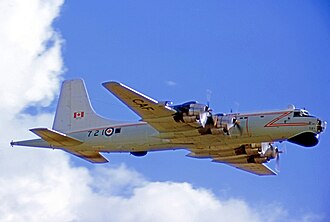
The Aircraft That Guarded Canada’s Oceans
The Canadair CP-107 Argus occupies a distinctive place in Canadian aviation history, representing an era when long-range maritime patrol aircraft became essential to national defence, anti-submarine warfare, and the protection of vast ocean territories. Developed during the early years of the Cold War, the Argus was designed to meet the demanding requirements of the Royal Canadian Air Force (RCAF), which needed an aircraft capable of flying long distances over the North Atlantic, searching for submarines, monitoring maritime activity, and operating for extended periods far from land. At a time when the Soviet Union was expanding its submarine fleet and the strategic importance of the Atlantic and Arctic approaches to North America was growing, Canada required a specialized aircraft that could combine endurance, sophisticated detection equipment, substantial payload capacity, and the ability to operate reliably in challenging weather conditions. The result was an aircraft that became one of the most recognizable symbols of Canada’s contribution to NATO maritime security, earning a reputation for its endurance, practical engineering, and ability to remain on patrol for hours while searching enormous expanses of ocean.
Unlike many military aircraft developed primarily for speed, altitude, or maneuverability, the CP-107 Argus was built around a different philosophy: the ability to remain airborne, observe, detect, and respond. Its large fuselage accommodated multiple crew members, mission equipment, and extensive provisions for long-duration operations, while its four piston engines provided the power required for sustained patrols across the Atlantic. Although its appearance reflected the practical priorities of a specialized military aircraft rather than the sleek lines of a high-performance fighter, the Argus became an exceptionally capable platform for its intended mission. It helped Canada maintain a credible maritime surveillance capability during a period of intense geopolitical tension and demonstrated how a purpose-built patrol aircraft could contribute to deterrence without engaging in direct combat. Today, the CP-107 Argus remains an important subject for aviation historians, military enthusiasts, and anyone interested in the development of Canadian aerospace engineering.
Historical Background and Development
The Cold War and Canada’s Maritime Responsibilities
The origins of the Canadair CP-107 Argus are closely connected to the strategic circumstances that emerged after the Second World War. During the conflict, Allied forces had learned that control of the Atlantic shipping routes was essential to the movement of troops, fuel, food, industrial materials, and military equipment between North America and Europe. German submarines had demonstrated how severely maritime transportation could be disrupted by an effective underwater threat, forcing the Allies to develop increasingly sophisticated methods of detection, surveillance, and coordinated anti-submarine warfare. By the late 1940s and early 1950s, the emergence of the Cold War created a new version of this challenge, as Soviet submarines became a major concern for NATO planners responsible for defending transatlantic communications and the maritime approaches to North America.
Canada was particularly important in this strategic environment because of its geographical position between the Atlantic and Pacific oceans, its extensive northern coastline, and its membership in NATO. Canadian forces were expected to contribute to the defence of the North Atlantic, where submarine activity could threaten the sea lanes connecting Europe and North America. Meeting this responsibility required aircraft capable of operating at considerable distances from their bases, searching broad ocean areas, and carrying specialized sensors and weapons. Early maritime patrol platforms provided valuable experience, but technological advances and evolving operational requirements made a new generation of aircraft desirable. The RCAF therefore sought a long-range maritime patrol aircraft that could combine reliable performance with excellent endurance, effective low-altitude operation, and enough internal space to accommodate the equipment and personnel needed for complex search missions.
The Origins of the Canadair Argus
Canadair, the Montreal-based aircraft manufacturer with extensive experience in military and civil aviation, was selected to develop the aircraft that would become the CP-107 Argus. Rather than designing an entirely new aircraft from the beginning, the company drew on the general airframe architecture of the Bristol Britannia, a British-developed turboprop airliner known for its long-range capabilities. This approach offered a useful starting point because the Britannia had been designed for sustained flight over considerable distances, with a relatively large fuselage and a wing configuration suitable for efficient cruising. However, a commercial airliner and a military anti-submarine patrol aircraft faced very different operational demands, and the Argus required extensive changes to transform the underlying design into a specialized surveillance and warfare platform.
The military aircraft retained a broadly similar external configuration, including a high-mounted wing, four engines, and a conventional tail arrangement, but its systems and internal layout were adapted to the needs of maritime operations. Passenger-oriented equipment was replaced by mission workstations, sensor systems, communications equipment, navigation instruments, and provisions for carrying anti-submarine weapons. The design also emphasized the ability to operate for prolonged periods at relatively low altitudes, where crews could visually inspect ocean surfaces and employ detection equipment effectively. These requirements influenced the aircraft’s structure, internal arrangements, and operational procedures. The resulting CP-107 Argus was therefore not simply a military version of a civilian airliner; it was a purpose-built patrol aircraft whose design reflected the specific operational problems faced by Canadian maritime forces during the Cold War.
First Flight and Entry into Service
The Argus prototype first flew on 28 March 1957, marking an important milestone for Canada’s domestic aerospace industry and its military aviation capability. Flight testing and development continued as the aircraft’s systems were evaluated and refined for operational use. The RCAF began receiving production aircraft in 1958, and the type subsequently became a central component of Canada’s long-range maritime patrol force. Its introduction represented a significant improvement in the ability of Canadian crews to conduct extended surveillance missions over the North Atlantic and other areas of national maritime interest.
The aircraft received the designation CP-107, reflecting its role as a Canadian maritime patrol platform, and the name Argus, taken from the many-eyed giant of Greek mythology traditionally associated with vigilance. The name was particularly appropriate for an aircraft whose principal responsibility was to search vast areas of ocean for evidence of potentially hostile activity. During its operational career, the Argus served in an environment where information gathering, persistence, and reliable detection were often more important than spectacular performance. Its arrival gave Canada a specialized aircraft capable of conducting complex missions over great distances, and it became an important element of the country’s contribution to NATO’s maritime surveillance and anti-submarine warfare activities.
Design and Engineering Characteristics
Airframe and Overall Configuration
The Canadair CP-107 Argus was a large, four-engine aircraft with a high-mounted wing, a spacious fuselage, and a conventional tail configuration. Its external design reflected its origins in the Bristol Britannia airliner, but the military requirements of the Argus dictated substantial differences in its construction and internal arrangement. The high wing provided a useful platform for the four engine installations and contributed to the aircraft’s overall aerodynamic configuration, while the relatively large fuselage provided room for the crew, mission equipment, weapons, and supplies required for extended patrols. The aircraft’s structure was designed to accommodate the operational demands of maritime surveillance, including lengthy missions, repeated low-altitude flying, and operations in weather conditions that could be challenging even for experienced aircrews.
The Argus was not intended to compete with jet aircraft in terms of maximum speed, nor did its mission require the high-altitude performance associated with strategic bombers or commercial transports. Instead, its design emphasized the balance between range, endurance, payload, and operational flexibility. The ability to fly economically for long periods was especially important because a patrol aircraft’s effectiveness depended heavily on how much time it could spend searching the assigned area rather than travelling to and from it. A well-designed patrol aircraft also needed sufficient internal space for operators to monitor sensors, interpret incoming information, coordinate with other units, and manage mission equipment without excessive interference between workstations. The Argus’s large airframe made these tasks possible, establishing it as a practical and durable platform for sustained maritime operations.
Dimensions and Physical Characteristics
The CP-107 Argus measured approximately 129 feet in wingspan, with an overall length of about 117 feet and a height of approximately 38 feet. These dimensions placed it among the substantial aircraft of its generation, although its size was driven primarily by the requirements of long-range patrol rather than the need to transport large numbers of passengers or cargo. Its generous wing area supported the aircraft’s operating requirements, while the fuselage accommodated the mission stations and equipment needed for anti-submarine warfare. The aircraft’s maximum takeoff weight was approximately 157,000 pounds, although exact operating weights depended on the configuration, fuel load, mission equipment, and other operational considerations.
Its large dimensions were particularly useful during missions in which the aircraft had to carry substantial quantities of fuel and remain on station for many hours. Long-range patrol aircraft must balance several competing requirements: additional fuel improves endurance, mission equipment increases detection capability, weapons provide operational options, and crew provisions become increasingly important as mission duration increases. The Argus’s size gave designers sufficient room to manage these competing needs without sacrificing the essential characteristics required for ocean surveillance. Although it was a large aircraft to operate and maintain, its physical dimensions were an advantage in the mission for which it had been developed.
Bristol Hercules Piston Engines
One of the most distinctive aspects of the CP-107 Argus was its use of four Bristol Hercules 734 radial piston engines, each producing approximately 2,500 horsepower. This engine choice reflected the engineering priorities of the period, when proven piston engines remained attractive for certain long-endurance missions despite the increasing availability of jet and turboprop propulsion. The Hercules was an air-cooled radial engine, a configuration with a substantial operational history and characteristics that made it suitable for demanding service when properly maintained. Four engines gave the Argus considerable combined power, supported its relatively high operating weight, and provided the propulsion needed for long-distance missions carrying fuel, sensors, crew, and weapons.
The Argus’s piston-engine configuration also had implications for its patrol performance. Maritime surveillance often requires an aircraft to remain airborne for extended periods, sometimes at relatively low speeds and altitudes while searching an assigned area or tracking a contact. In this environment, endurance and fuel consumption can matter more than achieving the highest possible speed. The Argus’s engines were selected for a design that emphasized long-duration operation and practical reliability, rather than the rapid acceleration or high-altitude speed expected of a combat aircraft. Although piston engines required considerable maintenance and involved more mechanical complexity than some later propulsion systems, the Argus demonstrated that a carefully designed four-engine piston aircraft could remain highly effective in the specialized maritime patrol role.
Flight Performance and Endurance
The CP-107 Argus had a maximum speed of approximately 315 miles per hour, or around 507 kilometres per hour, depending on the reference and measurement conditions. Its normal cruising speed was lower, as efficient long-range flight required the crew to balance speed against fuel consumption and the time available for the assigned patrol. The aircraft’s maximum operating range is commonly reported at approximately 5,000 miles, or about 8,000 kilometres, although practical mission radius and time on station depended on factors such as fuel reserves, weather, search patterns, payload, and the distance between the operating base and patrol area.
Endurance was among the Argus’s most important characteristics. Its ability to remain airborne for extended periods enabled crews to search large maritime sectors, conduct repeated sensor sweeps, investigate suspicious contacts, and maintain surveillance over areas that would be difficult to monitor using shorter-range aircraft. The practical value of endurance extended beyond the simple number of hours spent in flight: a long-range aircraft could respond to distant operational requirements while retaining sufficient time to search the target area. This was particularly important in the North Atlantic, where the vastness of the ocean and the potential for poor weather could make maritime surveillance a demanding task. The Argus’s performance characteristics therefore reflected a deliberate compromise in which speed remained useful but endurance and mission persistence were the dominant priorities.
Mission Systems and Anti-Submarine Warfare Equipment
Radar and Maritime Search
The Argus was equipped for maritime surveillance using radar and other detection systems that enabled its crew to search for surface vessels, identify contacts, and investigate objects of interest over large areas of ocean. Radar was especially valuable because it could reveal surface contacts that were difficult to see visually, particularly in darkness, poor visibility, or challenging sea conditions. By integrating radar information with navigation data and visual observations, the crew could establish a more complete picture of the surrounding maritime environment and direct its attention toward areas that warranted further investigation.
The value of maritime radar depended on more than the presence of a sensor. Operators needed to interpret returns, distinguish relevant contacts from clutter, consider the effects of weather and sea conditions, and coordinate their findings with the rest of the crew. The Argus provided a dedicated environment in which mission personnel could manage these tasks during long patrols. Its radar and navigation systems helped transform a large aircraft into an effective search platform, allowing the crew to monitor an assigned area systematically rather than relying exclusively on visual observation. The combination of sensor equipment, trained operators, and long endurance made the aircraft a significant asset in the wider maritime surveillance network.
Magnetic Anomaly Detection
An important element of the Argus’s anti-submarine warfare capability was its use of magnetic anomaly detection equipment. Magnetic anomaly detectors, commonly known as MAD systems, are designed to identify small disturbances in the Earth’s magnetic field that may be caused by large ferromagnetic objects, including submarines. Because magnetic effects diminish rapidly with distance, such equipment is most useful when an aircraft passes relatively close to a potential target. It therefore complements other sensors rather than replacing radar, acoustic information, or visual search.
The Argus’s MAD equipment supported the investigation of submarine contacts by giving the crew another method of searching for evidence of a submerged vessel. When other detection methods suggested that a submarine might be present, the aircraft could conduct a more focused search and use magnetic information to help refine the assessment. The effectiveness of this process depended on accurate navigation, appropriate flight profiles, careful sensor operation, and the ability to combine several sources of information. The use of MAD equipment illustrates the increasingly technical nature of anti-submarine warfare during the Cold War, when finding a submarine required more than simply observing the ocean surface. It also demonstrates why specialized patrol aircraft remained important even as naval detection technology advanced.
Sonobuoys and Acoustic Detection
Sonobuoys were another key component of the broader anti-submarine warfare system associated with maritime patrol aircraft such as the Argus. These expendable devices could be deployed into the ocean to detect and transmit acoustic information, helping crews investigate possible submarine activity beneath the surface. Depending on the type of buoy and the mission configuration, acoustic sensors could listen for sounds associated with submarine machinery, propulsion, or movement through the water. The information could then be transmitted to the aircraft for analysis by trained operators.
Acoustic search was a complex activity because underwater sound behaves differently depending on water temperature, depth, salinity, background noise, and other environmental conditions. A submarine might be difficult to detect if it operated quietly, used favourable water layers, or remained within an area affected by significant acoustic interference. For this reason, sonobuoys were most useful when employed as part of a coordinated search plan involving multiple sensors and careful tactical decisions. The Argus gave its crew the space and endurance required to deploy and monitor acoustic equipment over a wide search area, helping turn uncertain indications into more useful information about possible underwater contacts.
Navigation, Communications, and Mission Coordination
Long-range maritime patrol required reliable navigation and communications systems because crews frequently operated far from land, sometimes in regions where weather conditions could change rapidly and visual references were limited. The Argus incorporated navigation equipment that enabled crews to maintain their position, follow planned search patterns, return to base safely, and coordinate their movements with other military units. Accurate navigation was particularly important when the aircraft needed to revisit a contact, conduct a systematic search, or fly a prescribed route for sensor employment.
Communications were equally important because maritime patrol rarely took place in isolation. The aircraft might exchange information with naval vessels, shore-based command centres, other aircraft, and allied military units, contributing to a wider operational picture of activity at sea. Information gathered during a patrol was valuable only if it could be communicated clearly, interpreted correctly, and incorporated into the decisions of commanders responsible for the mission. The Argus therefore functioned not merely as an aircraft carrying sensors, but as a mobile information-gathering and coordination platform whose effectiveness depended on the interaction between its equipment, its crew, and the wider military organization.
Armament and Operational Capabilities
Anti-Submarine Weapons
The CP-107 Argus was designed to carry anti-submarine weapons, including torpedoes and depth charges, giving it the ability to progress from searching for a potential submarine to attacking a confirmed or sufficiently well-localized target when authorized. This combination of detection and weapon-carrying capability was central to the aircraft’s Cold War role. An aircraft that could identify a submarine but had no means of engaging it would provide useful intelligence, but an aircraft capable of both locating and attacking a target could exert a more direct influence on the outcome of an anti-submarine operation.
Weapon employment required careful coordination between detection systems, navigation, tactical planning, and the crew’s assessment of the contact. A submarine’s position could become uncertain as time passed, particularly if the aircraft had to investigate a contact before establishing its location with sufficient confidence. Anti-submarine weapons were therefore only one part of a broader process involving search, detection, classification, tracking, and engagement. The Argus’s internal weapon provisions and mission systems were developed around this sequence, allowing the aircraft to contribute to both surveillance and the potential neutralization of hostile underwater threats.
Surface Surveillance and Maritime Reconnaissance
Although anti-submarine warfare was a defining mission, the Argus was also valuable for general maritime reconnaissance and surveillance. Its radar, navigation equipment, endurance, and crew capacity enabled it to search for surface vessels, monitor shipping activity, and investigate maritime contacts of operational interest. During a period when the movement of naval forces across the Atlantic was a major strategic concern, the ability to monitor wide areas of ocean was an important element of maritime situational awareness.
Surface surveillance also required crews to distinguish between routine maritime traffic and activity that might warrant closer examination. Radar observations, visual identification, communications, and information received from other units could all contribute to an assessment of a vessel’s identity and behaviour. The Argus’s long endurance allowed it to remain in an assigned area while gathering information over time, providing a more detailed picture than might be possible from a brief flyover. This flexibility made the aircraft useful beyond its most specialized anti-submarine role and reinforced its importance as a general-purpose maritime patrol platform.
Operational Service with the Royal Canadian Air Force
Integration into Canada’s Maritime Patrol Force
After entering service, the Argus became a major element of Canada’s long-range maritime patrol capability. Its introduction required more than the delivery of aircraft: crews had to be trained in navigation, radar operation, acoustic search, tactical coordination, weapon procedures, and the practical challenges of long-duration missions. Maintenance personnel also required specialized knowledge to keep the aircraft’s four engines, mission equipment, airframe systems, and other components in reliable operating condition. The success of the Argus depended on this wider organization as much as it depended on the aircraft itself.
The RCAF operated the Argus within a broader system of maritime surveillance and NATO cooperation. Aircraft could be assigned patrol areas, investigate contacts, participate in training exercises, and coordinate with surface vessels and allied forces. The aircraft’s large crew allowed different specialists to work together, with flight crew members managing the aircraft while mission operators focused on the information needed to complete the assigned task. This division of responsibilities was essential during extended operations, when the volume of information and the length of the mission required sustained attention from multiple crew members.
North Atlantic Patrols and NATO Responsibilities
The North Atlantic was one of the most important operational environments for the Argus. The ocean’s immense size, variable weather, and strategic importance to NATO created a continuing requirement for aircraft capable of detecting and tracking potential submarine threats. Maritime patrol missions were designed to search designated areas, investigate suspicious activity, support exercises, and maintain familiarity with the operating environment. Although many patrols did not result in the detection of a hostile submarine, they remained valuable because they contributed to surveillance coverage, training, readiness, and the demonstration of an effective maritime defence capability.
The Argus helped Canada fulfil its responsibilities as a NATO member by providing an aircraft capable of conducting long-duration missions over important sea lanes. Its ability to remain airborne for extended periods was particularly useful in the North Atlantic, where travel to a patrol area could consume a significant portion of a mission if the aircraft lacked sufficient range and endurance. Once on station, the crew could use radar, acoustic equipment, magnetic anomaly detection, and other information sources to investigate the maritime environment. These missions formed part of a larger effort to make the movement of submarines more difficult to conceal and to ensure that NATO forces could respond to emerging threats.
Operating in Harsh Weather Conditions
Maritime patrol over the North Atlantic exposed Argus crews to some of the most demanding conditions encountered in routine military aviation. Strong winds, turbulence, low cloud, icing, rain, darkness, and rough seas could all complicate operations. The aircraft had to be maintained to a high standard, and crews needed to understand how weather could affect both flight safety and sensor performance. A storm could make visual observation difficult, while sea clutter might complicate the interpretation of radar returns. Underwater acoustic conditions could also vary, affecting the usefulness of deployed sonobuoys and the confidence with which a contact could be assessed.
The operational value of the Argus depended partly on its ability to carry out missions under such conditions without requiring every patrol to take place in ideal weather. This did not mean that the aircraft could ignore safety limits or operate without restrictions; rather, it meant that its design, equipment, procedures, and training were intended to support demanding maritime missions. Long-range patrol aviation requires a combination of sound engineering and disciplined human judgment, since even a technically capable aircraft cannot compensate for poor preparation or an unsafe operating environment. The Argus became an important part of Canada’s maritime capability because it brought these elements together in a platform suited to sustained operations over remote ocean regions.
Crew Composition and Life on Board
The Argus normally operated with a substantial crew, commonly described as approximately fifteen personnel, although the exact complement could vary according to the mission and operational configuration. This crew included flight personnel and specialists responsible for operating sensors, managing navigation and communications, and supporting the aircraft’s anti-submarine warfare mission. Unlike a transport aircraft, in which most of the occupants are passengers or cargo handlers, the Argus carried a large number of personnel whose work was directly connected to the collection and interpretation of tactical information.
Life aboard the aircraft during a lengthy patrol could be physically and mentally demanding. Crew members had to remain attentive for extended periods, monitor equipment, communicate clearly, and manage the fatigue associated with long hours of flight. The aircraft’s internal layout was arranged around the needs of the mission rather than passenger comfort, and personnel often worked in confined areas surrounded by instruments, communications equipment, and specialized consoles. Effective teamwork was essential because the successful completion of a patrol required the coordinated efforts of individuals performing different but closely related tasks. The Argus’s operational history therefore reflects not only the capabilities of its airframe and equipment, but also the skill, endurance, and professionalism of the people who flew and maintained it.
The Argus and Canadian Aerospace Engineering
A Domestic Industrial Achievement
The development of the CP-107 Argus was a significant achievement for Canada’s aerospace industry. Canadair’s ability to adapt an existing airframe architecture into a sophisticated maritime patrol aircraft demonstrated the country’s capacity to design and manufacture complex military aviation systems for demanding national requirements. The programme brought together airframe engineering, propulsion integration, systems installation, flight testing, production planning, and military operational expertise. It also demonstrated that an aircraft did not need to be entirely original in its external appearance to represent a major engineering accomplishment; the real challenge lay in adapting the design to a fundamentally different mission.
The Argus programme also contributed to the development of technical knowledge and experience within Canadian aviation. Producing and supporting a complex four-engine aircraft required trained engineers, technicians, mechanics, and manufacturing personnel, while operational service created continuing demand for maintenance expertise and systems knowledge. Such experience formed part of the broader industrial foundation that supported Canada’s subsequent aerospace programmes. The Argus should therefore be understood not only as a military aircraft, but also as an example of the technical and organizational capabilities required to build and sustain a sophisticated defence platform.
Why the Bristol Britannia Was an Effective Starting Point
Using the Bristol Britannia as the starting point for the Argus offered important practical advantages. The Britannia had been developed for long-distance commercial transport, so its general configuration already reflected the need for efficient cruising, a substantial airframe, and reliable performance over extended journeys. These qualities aligned with several of the RCAF’s requirements for a long-range patrol aircraft. Beginning with an established design could also reduce some of the risks and costs associated with developing an entirely new airframe, allowing engineering effort to focus on the changes required for military operations.
However, the similarities between the two aircraft should not obscure the scale of the Argus’s specialization. Maritime patrol required equipment, structural arrangements, crew workstations, weapon provisions, and operational capabilities that were not part of the original commercial transport mission. The military aircraft had to accommodate these changes while retaining the range and endurance needed for long ocean patrols. The Argus illustrates a recurring theme in aviation engineering: a successful conversion depends not simply on adding equipment to an existing design, but on understanding how the new mission affects the entire aircraft and adapting the platform accordingly.
Limitations and the Evolution of Maritime Patrol Aviation
The Challenges of Piston-Engine Technology
Despite its considerable strengths, the CP-107 Argus had limitations associated with its piston-engine propulsion system and the technological era in which it was developed. Piston engines could deliver useful power and support long-duration flight, but they required regular maintenance and included numerous mechanical components that needed inspection and servicing. Compared with newer turboprop aircraft, the Argus’s engine arrangement reflected an earlier stage in propulsion development, and its operating characteristics increasingly stood out as aviation technology advanced.
The aircraft’s speed was also limited relative to newer jet-powered platforms, although maximum speed was not the principal measure of its effectiveness. A faster aircraft could travel to a distant patrol area more quickly, but a patrol aircraft’s overall value also depended on its ability to search effectively once it arrived. The Argus remained useful because its design was well matched to the endurance-oriented missions for which it had been created. Nevertheless, the development of more modern engines, improved sensors, digital systems, and new anti-submarine warfare techniques gradually changed the balance of advantages and disadvantages that had originally favoured the Argus.
The Arrival of More Modern Patrol Aircraft
As the Cold War continued, advances in aircraft propulsion, electronics, acoustic processing, and submarine design placed new demands on maritime patrol forces. Modern submarines became increasingly difficult to detect, while new aircraft offered improvements in speed, mission systems, reliability, and crew efficiency. Maritime patrol was also becoming more information-intensive, with a growing emphasis on processing multiple sensor inputs, coordinating with other platforms, and maintaining a comprehensive picture of activity across a large operational area.
Canada eventually selected the Lockheed CP-140 Aurora as the successor to the Argus. Based on the Lockheed P-3 Orion family, the Aurora introduced a newer airframe and a more modern suite of maritime surveillance and anti-submarine warfare systems. The transition reflected the changing requirements of military aviation rather than a sudden loss of usefulness by the older aircraft. The Argus had performed its intended role for many years, but the increasing complexity of submarine threats and the availability of newer technology made a replacement programme necessary. The Aurora continued Canada’s tradition of long-range maritime patrol while incorporating capabilities better suited to the later Cold War and subsequent operational environments.
Retirement and Historical Legacy
The End of Argus Operations
The CP-107 Argus served the RCAF and the unified Canadian Armed Forces for approximately two decades, with its retirement taking place in the early 1980s as the CP-140 Aurora assumed the maritime patrol role. Its long service life reflected the durability of the basic airframe concept and the continued importance of the mission for which it had been developed. By the time the Argus left operational service, advances in aviation technology had changed many aspects of maritime surveillance, but the fundamental requirement to locate, track, and assess activity over Canada’s extensive maritime approaches remained as important as ever.
Retiring an aircraft such as the Argus involved more than removing it from frontline duty. Military organizations had to transition crews to the replacement platform, introduce new maintenance procedures, adapt operational training, and ensure continuity in their surveillance responsibilities. The arrival of the Aurora marked a new stage in Canadian maritime aviation, but it also reflected the operational experience accumulated during the Argus era. Lessons about long-range patrol planning, crew coordination, mission endurance, and the integration of multiple sensors remained relevant even as the technology used to accomplish these tasks changed.
Surviving Aircraft and Preservation
The retirement of the Argus did not eliminate its significance as an aviation heritage subject. Surviving examples and historical records provide a valuable connection to a period when long-range piston-engine patrol aircraft played a central role in NATO’s maritime strategy. Preserved military aircraft allow visitors, researchers, and aviation enthusiasts to examine the scale and physical arrangement of machines that once operated in demanding conditions far from home. They also help illustrate the practical realities of military aviation, including the large crews, specialized equipment, and extensive logistical support required to sustain prolonged operations.
The Argus is especially interesting because its external form combines features inherited from civil transport aviation with the specialized requirements of anti-submarine warfare. Its large fuselage, four radial engines, high-mounted wing, and mission-oriented design make it representative of a transitional period in aviation history. Preserved aircraft can also serve as educational tools, helping explain the role of maritime patrol in the Cold War and the relationship between aircraft technology, national defence policy, and international security. Their historical value lies not only in their engineering, but also in the experiences of the people who flew, maintained, and supported them.
The Argus’s Place in Canadian Military History
The Canadair CP-107 Argus remains an important symbol of Canada’s contribution to Cold War maritime defence. It helped protect the sea routes on which the security of North America and Europe depended, supported NATO’s anti-submarine warfare efforts, and demonstrated the value of a specialized long-endurance aircraft. Its service illustrates how military effectiveness often comes from the integration of reliable engineering, specialized equipment, well-trained personnel, and a clear understanding of operational requirements. The Argus was not designed to dominate air combat or achieve record-breaking speeds; it was designed to search, observe, detect, and, when necessary, engage underwater threats.
Its legacy also extends to Canada’s aerospace industry and the evolution of maritime surveillance technology. The aircraft demonstrated the benefits of adapting a proven airframe architecture to a highly specialized military role, while its operational career showed how endurance and crew coordination could be decisive advantages in a vast and demanding environment. The Argus has since been superseded by more advanced aircraft, but its place in the development of Canadian maritime aviation remains secure. For historians and enthusiasts, it offers a compelling example of how an aircraft designed around a specific strategic problem can become one of the defining military machines of its generation.
Conclusion: An Enduring Symbol of Maritime Vigilance
The Canadair CP-107 Argus was much more than a four-engine patrol aircraft; it was a carefully engineered response to one of the central security challenges of the Cold War. Developed for the Royal Canadian Air Force and introduced at a time when NATO placed enormous importance on protecting the North Atlantic, it combined long-range performance, extensive endurance, specialized detection equipment, a substantial crew, and anti-submarine weapons in a single operational platform. Its design drew on the general architecture of the Bristol Britannia but transformed that foundation into an aircraft capable of performing demanding military missions over remote oceans. Radar, magnetic anomaly detection, sonobuoys, navigation systems, and communications equipment enabled the Argus to search for submarines and surface vessels while supporting a wider network of allied maritime forces.
The aircraft’s career also demonstrates the importance of matching engineering decisions to operational needs. Although the Argus did not possess the speed or technological sophistication of later patrol aircraft, its combination of endurance, payload, and mission flexibility made it highly effective for the environment in which it operated. Its retirement in favour of the CP-140 Aurora reflected the steady advancement of aerospace technology and the growing complexity of maritime warfare, rather than diminishing the achievements of the Argus itself. Today, the CP-107 stands as a significant chapter in Canadian aviation history, representing decades of service, industrial capability, and commitment to maritime security. Its story continues to offer valuable insight into the evolution of anti-submarine warfare and the enduring importance of keeping watch over the world’s oceans.
Canadair CP-107 Argus: Technical Specifications Summary
The following table summarizes commonly cited specifications for the Canadair CP-107 Argus. Figures are approximate, and reported performance can vary according to the source, aircraft configuration, operating conditions, and distinction between maximum range and practical patrol radius.
| Specification | Details |
|---|---|
| Aircraft designation | Canadair CP-107 Argus |
| Aircraft type | Long-range maritime patrol and anti-submarine warfare aircraft |
| Manufacturer | Canadair, Canada |
| Primary operator | Royal Canadian Air Force; subsequently operated by the Canadian Armed Forces |
| First flight | 28 March 1957 |
| Introduction to service | 1958 |
| Retirement | Early 1980s |
| Airframe ancestry | Developed from the Bristol Britannia airliner design |
| Crew | Approximately 15 personnel, depending on mission |
| Overall length | Approximately 117 ft (35.7 m) |
| Wingspan | Approximately 129 ft (39.2 m) |
| Height | Approximately 38 ft (11.6 m) |
| Powerplant | Four Bristol Hercules 734 radial piston engines |
| Engine power | Approximately 2,500 hp per engine |
| Total nominal engine power | Approximately 10,000 hp |
| Maximum speed | Approximately 315 mph (507 km/h) |
| Cruise speed | Lower than maximum speed; varied with mission requirements |
| Maximum range | Approximately 5,000 miles (8,000 km), depending on reference and conditions |
| Maximum takeoff weight | Approximately 157,000 lb (71,200 kg) |
| Primary mission | Long-range maritime surveillance and anti-submarine warfare |
| Detection equipment | Maritime radar, magnetic anomaly detection, and acoustic search equipment |
| Acoustic equipment | Sonobuoys for underwater detection and contact investigation |
| Armament | Anti-submarine weapons, including torpedoes and depth charges, depending on configuration |
| Main operating environment | North Atlantic and other Canadian maritime approaches |
| Replacement aircraft | Lockheed CP-140 Aurora |
| Historical significance | One of Canada’s principal Cold War long-range maritime patrol aircraft |
