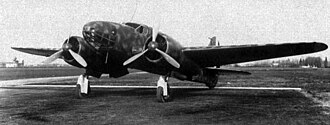
The Caproni Ca.310 Libeccio was an Italian twin-engine military aircraft developed during the late 1930s, a period when European air forces were rapidly modernizing in anticipation of a possible major conflict. Designed to perform reconnaissance, light bombing, and other general-purpose military missions, the Ca.310 represented an attempt to combine the versatility of a multipurpose aircraft with the improved performance associated with newer monoplane designs. Manufactured by the Italian aircraft company Caproni, the aircraft emerged at a time when military planners increasingly valued speed, retractable landing gear, twin-engine reliability, and the ability to carry out different operational tasks without requiring separate specialized aircraft for every role. Its name, Libeccio, refers to the southwesterly wind familiar in the Mediterranean, following an Italian aviation naming tradition that gave certain aircraft evocative names drawn from nature and the weather.
Although the Ca.310 attracted international interest and entered service with several air arms, its operational history ultimately demonstrated the difficulties of transforming a promising design into an effective frontline combat aircraft. The type was developed from the earlier Caproni Ca.309 Ghibli and incorporated a number of improvements, including retractable landing gear and more powerful engines. These features helped make it appear competitive in the export market, where countries with limited aviation industries were looking for modern aircraft that could undertake reconnaissance and bombing missions. However, reports of disappointing performance and mechanical reliability problems undermined the aircraft’s reputation, particularly among foreign customers. Its story is therefore more complicated than that of a simple failed bomber: the Ca.310 illustrates the opportunities and limitations of interwar aviation engineering, the commercial ambitions of Italy’s aircraft industry, and the challenges faced by smaller air forces attempting to modernize with imported equipment. Its brief but revealing history also connects Italian aviation development with the Spanish Civil War, the Norwegian military aviation service, and the opening stages of the Second World War.
Historical Background: Italian Aviation in the 1930s
The Expansion of Military Aviation
During the 1930s, military aviation underwent a period of profound transformation. Aircraft manufacturers moved away from many of the slower biplanes and fixed-undercarriage designs that had dominated earlier decades and increasingly adopted streamlined monoplanes, enclosed cockpits, improved propulsion systems, and retractable landing gear. These developments reflected the growing recognition that air power would play an important role in future conflicts, not only through strategic bombing and fighter combat but also through reconnaissance, battlefield observation, communications, and direct support for ground forces. European governments consequently placed greater emphasis on expanding their aircraft inventories and obtaining machines that could perform several missions with reasonable efficiency.
Italy was an active participant in this transformation. Under the Fascist government of Benito Mussolini, aviation received considerable public attention and was promoted as evidence of national technological achievement. Italian aircraft manufacturers produced a diverse range of fighters, bombers, transports, flying boats, and specialist military machines, while the country’s aviation authorities sought to expand the capabilities of the Regia Aeronautica, the Italian Royal Air Force. This environment created commercial opportunities for established manufacturers such as Caproni, whose experience extended across military and civil aircraft. Yet the rapid expansion of aviation also generated intense pressure to deliver new designs quickly, and the resulting aircraft did not always match the expectations placed upon them. Technical ambition, production capacity, engine development, procurement decisions, and the changing demands of modern warfare frequently pulled in different directions.
The Need for a Versatile Reconnaissance Aircraft
Reconnaissance aircraft occupied an important position in the air forces of the interwar period because military commanders needed information about enemy positions, troop movements, roads, railways, ports, and defensive installations. An aircraft capable of carrying cameras or an observer while also transporting a modest bomb load could potentially provide intelligence during one sortie and attack suitable targets during another. Such versatility was especially attractive to smaller air forces that could not afford large fleets of highly specialized aircraft. A twin-engine design offered additional advantages, including the possibility of carrying a useful payload, supporting longer missions, and providing some redundancy if one engine failed, although an aircraft’s actual safety and survivability depended on far more than engine count alone.
The Caproni Ca.310 was conceived within this broader requirement for a practical, adaptable military aircraft. It was intended to occupy a middle ground between lighter liaison or colonial-service aircraft and more substantial frontline bombers. Its combination of two engines, a glazed forward section, retractable landing gear, and provision for defensive armament gave it the appearance of a modern reconnaissance bomber. Nevertheless, the military aviation environment was evolving quickly. Aircraft that appeared sufficiently capable during the early design phase could become less competitive by the time they entered service, especially when improvements in fighter speed, antiaircraft defenses, communications, and operational doctrine increased the demands placed on reconnaissance and light-bombing units.
Development of the Caproni Ca.310
From the Caproni Ca.309 Ghibli to the Ca.310
The Ca.310 was closely related to the Caproni Ca.309 Ghibli, a twin-engine aircraft developed for general-purpose duties and service in colonial environments. The earlier design reflected the practical philosophy of producing a relatively straightforward aircraft capable of operating in a variety of conditions. Rather than beginning with an entirely new airframe, Caproni developed the Ca.310 from this established foundation, adapting the design to improve its performance and make it more attractive to military customers seeking a modern reconnaissance and light-bombing platform.
The most significant changes included the adoption of retractable main landing gear and the installation of more powerful radial engines. Retractable landing gear reduced aerodynamic drag compared with a fixed undercarriage, while the revised powerplant arrangement was intended to improve speed and carrying capability. These changes reflected a wider trend in the aviation industry: manufacturers increasingly modernized existing airframes to reduce development time and costs while offering customers improved performance. The Ca.310 retained the general configuration of a low-wing twin-engine monoplane, but its revised equipment and propulsion made it a more ambitious military product than its predecessor.
The aircraft’s development is generally associated with Caproni designer Cesare Pallavicino and the company’s engineering organization. The prototype first flew on 20 February 1937, and the aircraft entered service in 1938. The interval between prototype flight and service introduction was relatively short, reflecting the urgency with which manufacturers and military authorities pursued new aircraft during the late 1930s. However, rapid development did not guarantee that all performance claims, reliability expectations, and operational requirements would be satisfied once aircraft were delivered to units and flown under real service conditions.
The Meaning of the Name Libeccio
The designation Libeccio gave the aircraft a distinctive identity. In Italian, the word describes a southwesterly wind associated with the Mediterranean region. The name was appropriate for an aircraft developed by an Italian manufacturer and reinforced the cultural character of the country’s aviation industry, which often used memorable names alongside formal military designations. In historical writing, the aircraft is therefore commonly identified as the Caproni Ca.310 Libeccio, distinguishing it from related aircraft in the broader Caproni family.
The name also helps explain why the Ca.310 remains recognizable to aviation enthusiasts despite its relatively limited operational influence. Its history is tied not only to technical specifications but also to national procurement decisions, export negotiations, and unusual episodes in the military aviation history of countries that purchased it. In Norway, in particular, the aircraft acquired an additional nickname that reflected the economic circumstances of its purchase, giving the Libeccio a place in a story that extended well beyond the Italian aviation industry.
Design and Construction
Airframe Configuration and Structural Design
The Caproni Ca.310 was a low-wing monoplane with two piston engines mounted in nacelles on the wings. Its configuration reflected the increasing acceptance of monoplanes as the standard arrangement for modern military aircraft. A low-mounted wing provided a practical structure for the engines and retractable landing gear while helping create a relatively compact overall profile. The aircraft had a glazed forward section intended to provide visibility for observation and bombing-related duties, while its fuselage accommodated the crew, equipment, and mission-related payload. This arrangement made the aircraft suitable for work that required both a pilot and personnel responsible for observing the ground, operating communications equipment, or managing weapons.
Construction combined several materials rather than relying exclusively on either metal or wood. The fuselage used a welded steel-tube framework with a covering that included light-alloy panels and fabric, while the tail incorporated wooden structural elements, with plywood on fixed surfaces and fabric on control surfaces. This mixed construction approach was characteristic of a period when manufacturers were adopting metal structures and streamlined aerodynamic forms but still used established materials and techniques where they remained economical or practical. The result was an aircraft that combined relatively modern external features with construction methods inherited from earlier generations of aircraft.
The mixed structure should not be mistaken for a sign that the Ca.310 was simply an outdated design. During the 1930s, aircraft manufacturers frequently used combinations of steel tubing, light alloys, plywood, and fabric according to the structural requirements of individual components, the availability of industrial materials, and production costs. The important question was whether the complete aircraft met the intended balance of weight, strength, performance, maintainability, and price. In the Ca.310’s case, the airframe provided a workable basis for a light reconnaissance bomber, but its overall effectiveness was ultimately limited by the interaction of engine performance, equipment, reliability, and operational demands.
Engines and Propulsion
The Ca.310 was powered by two Piaggio Stella P.VII-series air-cooled radial piston engines. Published technical summaries commonly list power figures of approximately 430 to 470 horsepower per engine, depending on the precise engine designation and specification being cited. These figures should be treated with care because published references do not always describe the same configuration, and engine ratings can vary according to model, operating conditions, and rating method. Nevertheless, the basic arrangement is clear: two radial engines provided the propulsion required for a relatively compact aircraft expected to carry a crew, reconnaissance equipment, defensive weapons, and a light bomb load.
Radial engines were widely used during the interwar period because they offered a practical combination of power, durability, and air cooling. Their cylinders were arranged around the crankshaft, allowing airflow to help manage engine temperature without requiring the liquid-cooling radiator systems associated with many inline engines. This arrangement was attractive for military aircraft, although it also created aerodynamic considerations related to the frontal area of the engine nacelles. In a twin-engine aircraft such as the Ca.310, the design team had to balance available horsepower against drag, weight, fuel consumption, maintenance requirements, and the performance expected from the completed machine.
The use of two engines did not automatically make the aircraft highly reliable. A twin-engine design could offer a measure of redundancy, but it also required two engines, two propeller systems, additional fuel and control systems, and maintenance personnel capable of keeping both powerplants operational. If one engine developed a fault during a flight, the aircraft’s ability to continue safely depended on its remaining power, weight, altitude, weather, and handling characteristics. Reports of mechanical difficulties among some Ca.310 operators demonstrated that the practical value of a twin-engine aircraft rested on the reliability of its complete propulsion installation rather than on the number of engines alone.
Landing Gear and Aerodynamic Features
One of the Ca.310’s most important changes from the Ca.309 was its retractable landing gear. On aircraft with fixed landing gear, the wheels and supporting structures remain exposed during flight, creating additional aerodynamic drag. Retracting the main wheels after takeoff allowed designers to reduce this resistance and improve cruising and maximum-speed potential. The feature had become increasingly common among modern military monoplanes during the 1930s and helped give the Ca.310 a more contemporary appearance than many earlier utility aircraft.
The aircraft’s overall layout was intended to provide useful performance without sacrificing the practical qualities demanded of a reconnaissance machine. Its twin-engine arrangement and compact fuselage supported a multi-role concept, while the forward glazing improved visibility for crew members performing observation or bombing duties. However, a streamlined shape and retractable undercarriage could not overcome every limitation imposed by the aircraft’s available power and loaded weight. Actual performance depended on the complete design, including wing characteristics, engine condition, equipment fit, fuel load, external stores, and the maintenance standards of the operating unit.
Armament and Military Equipment
Defensive Machine Guns
The Caproni Ca.310 was designed to carry defensive machine guns, although the exact installation could vary among aircraft and configurations. Commonly published specifications describe three 7.7 mm Breda-SAFAT machine guns, with two fixed forward-firing weapons associated with the wing-root area and a flexible gun mounted in a dorsal defensive position. The forward-firing weapons could be used against targets in the aircraft’s flight path, while the dorsal gun gave the crew a means of responding to attacks from at least part of the rear upper hemisphere. The arrangement was typical of light reconnaissance bombers of the period, which needed some defensive capability without the weight and complexity of a heavily armed bomber.
Such weapons offered limited protection against determined attacks by modern fighters. By the late 1930s, fighter aircraft were becoming faster and more heavily armed, while the speed and maneuverability of reconnaissance bombers increasingly determined whether their defensive armament could be used effectively. A manually operated defensive gun also depended on the gunner’s ability to detect an approaching aircraft, track it accurately, and fire from a suitable position. The Ca.310’s machine guns were therefore best understood as a defensive measure rather than a guarantee that the aircraft could survive operations in contested airspace.
Bomb-Carrying Capability
The Ca.310 could carry a modest bomb load, with commonly cited figures placing its capacity at approximately 400 kilograms, although some general references give slightly higher values for particular configurations. This capacity made the aircraft suitable for light-bombing tasks against targets such as transport concentrations, supply points, lightly protected installations, and other objectives appropriate to a small reconnaissance bomber. It was not intended to compete with large bombers carrying several tonnes of ordnance, and its practical usefulness depended on the relationship between bomb load, fuel, crew, range, and the conditions of a particular mission.
The ability to carry bombs added to the aircraft’s versatility but also created competing operational demands. A reconnaissance flight might benefit from a greater fuel reserve or additional observation equipment, whereas a bombing sortie would require an appropriate weapons load and sufficient performance to reach and leave the target area. Increasing the aircraft’s payload generally raised its takeoff weight and could affect climb, acceleration, and range. Military planners therefore had to decide how to configure the aircraft for each task rather than assuming that all capabilities could be used simultaneously at their maximum values.
Reconnaissance Equipment and Crew Responsibilities
The aircraft’s three-person crew generally comprised a pilot and two additional crew members responsible for functions that could include observation, navigation, bombing, radio operation, and defensive gunnery. The precise division of responsibilities could vary with mission requirements and equipment fit. The pilot concentrated on aircraft handling and navigation, while the other crew members could assist with identifying ground features, maintaining communications, gathering intelligence, and operating the bomb-aiming or defensive systems. This division of labor reflected the demanding nature of reconnaissance missions, in which collecting useful information could be just as important as reaching the target area.
Reconnaissance equipment was particularly important because the value of such an aircraft was not measured solely by speed or bomb capacity. A successful mission might involve locating an enemy position, identifying the movement of vehicles, recording the condition of an airfield, or transmitting information that helped commanders make decisions. Even a relatively small aircraft could contribute meaningfully if it provided timely and accurate intelligence. Nevertheless, the usefulness of these missions depended on adequate communications, trained crews, suitable sensors, and the ability to operate without excessive mechanical interruptions. The Ca.310’s mixed record illustrates how a theoretically versatile platform could struggle to deliver its full value when its practical performance fell short of expectations.
Operational History of the Caproni Ca.310
First Flight and Entry into Service
The prototype of the Caproni Ca.310 completed its first flight on 20 February 1937, marking the beginning of the aircraft’s transition from an engineering project to a potential military product. Following development and evaluation, the type entered service in 1938, when European air forces were becoming increasingly concerned about the possibility of a major conflict. The timing appeared favorable for Caproni because many countries were searching for modern aircraft that could undertake reconnaissance, light bombing, and other general-purpose missions without requiring the financial commitment associated with larger bomber types.
However, introducing a new aircraft into military service involved considerably more than demonstrating that it could fly at an acceptable speed. The aircraft needed to perform consistently with its operational equipment, tolerate the demands of repeated sorties, and remain maintainable by the personnel available at frontline bases. Pilots also needed sufficient training to become familiar with the handling characteristics of the new machine, while ground crews had to establish maintenance routines for its engines, landing gear, electrical systems, and weapons. The Ca.310’s subsequent reputation suggests that the difference between advertised capabilities and dependable everyday performance became an important issue for several operators.
The aircraft’s service history was consequently shaped by a combination of ambition and compromise. It possessed features that appeared attractive on paper, including twin engines and retractable landing gear, but its capabilities did not consistently satisfy the expectations of every customer. For an export aircraft, such shortcomings could be particularly damaging because foreign purchasers often compared the manufacturer’s promises with the results of acceptance flights, training, and operational experience. The Ca.310’s difficulties would influence procurement decisions and encourage interest in improved versions, demonstrating how customer feedback could affect the development of an aircraft family.
The Spanish Civil War
The Spanish Civil War provided one of the earliest opportunities for the Ca.310 to be evaluated in a conflict environment. Italy intervened on behalf of Francisco Franco’s Nationalist forces, providing aircraft, personnel, and other military assistance. A group of 16 Ca.310s was sent to Spain in 1938 for operational evaluation as reconnaissance and bombing aircraft. Their deployment placed the type in a conflict in which military aviation was developing rapidly and in which the practical value of different aircraft designs could be assessed under combat conditions.
The Spanish Civil War had already become an important testing ground for aviation technology and tactics. Aircraft were used for reconnaissance, ground attack, tactical bombing, and fighter interception, while air forces gained experience in coordinating operations with ground troops. For the Ca.310, this environment offered a chance to demonstrate whether its combination of observation capability, defensive armament, and bomb-carrying capacity could provide a useful contribution to military operations. Yet combat experience also exposed aircraft to conditions that peacetime evaluations could not fully reproduce, including operational wear, improvised maintenance arrangements, hostile fire, and the need to complete missions under pressure.
The Ca.310’s experience in Spain should not be interpreted as proof that it became a decisive combat aircraft. Rather, its deployment formed part of the wider process through which Italian military aviation acquired practical experience with equipment intended for future operations. The aircraft’s limitations, alongside those of numerous other interwar designs, helped illustrate the difficulties of maintaining the effectiveness of light bombers and reconnaissance machines as fighter performance and air-defense capabilities improved. Its participation in Spain is historically significant because it placed the aircraft among the machines exposed to one of the most important aviation laboratories of the 1930s.
Service with the Regia Aeronautica
The Regia Aeronautica, Italy’s Royal Air Force, was the principal domestic military customer for the Ca.310. Italian authorities ordered the aircraft for duties that included training, liaison, and light transport, in addition to its broader reconnaissance and bombing potential. The Italian Air Force’s interest reflected the appeal of a platform that could undertake routine military assignments while retaining the possibility of carrying out more demanding missions when required. For an expanding air force, aircraft with several potential roles could help fill gaps in operational capability while newer or more specialized types were introduced.
The Ca.310 also formed part of a broader family of Caproni aircraft developed for related purposes. This family approach allowed the manufacturer to build on existing engineering experience and pursue improvements through related designs rather than developing every aircraft independently. Nevertheless, aircraft sharing a general configuration could differ significantly in their performance, equipment, and suitability for particular missions. The Ca.310’s limitations encouraged the development of later variants, illustrating the importance of continuous improvement during a period when military aircraft technology was advancing at a remarkable pace.
During the Second World War, some Ca.310s were used in North Africa, including in Libya, where aircraft assigned to general-purpose duties operated in a challenging environment. Desert operations placed considerable demands on engines, airframes, maintenance facilities, and supply systems. Heat, dust, long distances, and limited infrastructure could complicate the operation of aircraft that already required careful mechanical attention. Although the Ca.310 was not among the most influential aircraft of the Italian air arm, its continued use demonstrated that older or less successful designs could retain practical value when assigned to secondary tasks or when better equipment was unavailable in sufficient numbers.
Combat Performance and Operational Limitations
The Ca.310’s reputation was undermined by performance that did not consistently match customer expectations. A maximum speed commonly quoted at around 365 kilometres per hour appeared reasonable for a light military aircraft developed in the mid-1930s, but maximum speed alone was an incomplete measure of combat effectiveness. Climb performance, acceleration, endurance, service ceiling, handling at operational weights, reliability, and the ability to survive interception all mattered when deciding whether an aircraft could complete a mission successfully. A machine that could reach an attractive top speed in favorable conditions might still struggle when carrying bombs, operating from a poorly equipped airfield, or flying in hot weather.
Mechanical reliability was another concern. A military aircraft needed to be ready when ordered to fly, and repeated technical faults could reduce the number of aircraft available for operations even if the design remained technically capable of performing its assigned role. Engines, propellers, fuel systems, landing gear, and other components all required maintenance, while a shortage of spare parts could turn relatively minor problems into lengthy periods of inactivity. For smaller air forces, the effect could be particularly serious because they often possessed only a limited number of aircraft of each type.
The Ca.310’s limitations also reflected the rapidly changing nature of military aviation. During the late 1930s, the distinction between reconnaissance aircraft, light bombers, and attack aircraft was becoming more complicated as air forces developed specialized equipment and operational doctrines. Light bombers faced growing threats from faster fighters and more effective antiaircraft weapons, while reconnaissance aircraft increasingly needed to gather information without being intercepted. The Ca.310’s combination of capabilities remained useful for some assignments, but it could not escape the broader problem confronting many interwar aircraft: designs that were adequate when conceived could become less competitive as the demands of modern war intensified.
The Norwegian Caproni Ca.310: The Klippfisk Bomber
Norway’s Search for Modern Military Aircraft
The Norwegian acquisition of the Caproni Ca.310 is one of the most distinctive episodes in the aircraft’s history. During the late 1930s, Norway sought to improve its military aviation capabilities, but the country’s armed forces faced limitations in funding, industrial capacity, and the number of modern aircraft available. Purchasing aircraft from foreign manufacturers provided a way to expand the fleet without having to design and manufacture an entirely new type domestically. Italy, with its established aircraft industry and willingness to export military equipment, became one of the potential suppliers.
Norwegian authorities ordered four Ca.310s in 1938, and the aircraft were delivered during that year. The purchase also formed part of a wider procurement plan that included the possibility of licensed production in Norway. Local manufacture was attractive because it could potentially provide additional aircraft, develop domestic technical expertise, and reduce dependence on imported equipment. However, licensed production required more than an agreement between governments and manufacturers. It depended on tooling, technical documentation, trained workers, access to components, and sufficient time to complete the production process before military circumstances changed.
Norway’s decision to acquire the Ca.310 must be understood in the context of its defense planning before the German invasion of April 1940. The country was attempting to strengthen its military capabilities during a period when European tensions were increasing, yet procurement decisions could not always keep pace with the speed of international developments. Aircraft ordered in one political and strategic environment could arrive just as the conditions under which they were expected to operate were changing dramatically. The Ca.310 therefore became part of a larger story about the vulnerability of small countries that depended on foreign suppliers to modernize their armed forces.
Why Was It Called the Klippfisk Bomber?
The Norwegian aircraft acquired the nickname Klippfiskbomberen, or “clipfish bomber,” because the purchase was associated with Norwegian exports of dried and salted cod to Italy. The arrangement has become one of the most memorable details in the Ca.310’s history because it links military procurement with the traditional fishing economy of a country far from the aircraft manufacturer’s factories. Norway’s seafood exports were commercially important, and the use of export revenues in connection with the aircraft purchase gave the transaction an unusual economic dimension.
The nickname also highlights how international arms purchases could be shaped by trade relationships rather than by a simple exchange of cash for equipment. Countries sometimes used bilateral trade arrangements, commodity exports, and other financial mechanisms to obtain military equipment from foreign suppliers. Such arrangements could help facilitate transactions, but they did not guarantee that the aircraft purchased would meet every operational requirement. In Norway’s case, the Ca.310 would become associated with a procurement decision that appeared promising when made but was overtaken by technical disappointments and the outbreak of war.
The story of the clipfish bomber has endured partly because it captures the contrast between the ordinary commercial activities of a small nation and the increasingly urgent demands of military modernization. Dried and salted cod was a familiar export product, while a modern twin-engine reconnaissance bomber represented a very different aspect of national security. The connection between the two gives the Norwegian Ca.310 a distinctive place in aviation history and explains why the aircraft remains an object of interest beyond the community of specialists who study Italian military aviation.
Mechanical Difficulties and Disappointment
Norwegian experience with the Ca.310 revealed problems that went beyond the aircraft’s published specifications. The Norwegian military found that the aircraft did not fully meet expectations, and technical difficulties were reported during the period surrounding their delivery and operation. The challenges affected confidence in the type and influenced the country’s subsequent procurement decisions. An aircraft could possess an attractive design and a reasonable theoretical performance envelope while still proving disappointing when flown regularly under the practical conditions faced by a military unit.
For a country with a relatively small fleet, mechanical reliability was especially important. Every aircraft represented a significant investment, and the loss of availability of even one machine could have a noticeable effect on the operational capacity of a unit. Pilots and maintenance personnel also needed to develop confidence in the aircraft, particularly when preparing for missions in which technical failure could lead to a forced landing far from a suitable airfield. The Ca.310’s problems therefore had consequences beyond the inconvenience of individual repairs: they undermined the confidence that Norwegian authorities needed to place in their newly acquired equipment.
Norway consequently pursued alternatives, including improved versions of the basic design. The experience demonstrated that procurement decisions were not necessarily final once an aircraft had been delivered. Military customers could seek modifications, negotiate replacement aircraft, or redirect orders toward designs that promised better performance. The Ca.310’s Norwegian career thus became an example of the importance of acceptance testing, practical evaluation, and the ability to adapt procurement plans when a new aircraft failed to meet its intended requirements.
The Abandoned Norwegian Production Project
The Norwegian purchase included plans for licensed production of additional Ca.310 aircraft at Kjeller, near Oslo. The arrangement was intended to provide a foundation for domestic assembly or manufacture and would have expanded the country’s ability to obtain military aircraft without relying entirely on completed imports from Italy. The production plan reflected the belief that a foreign design could be adapted to national needs while helping establish or strengthen local industrial expertise.
However, the project was disrupted by the outbreak of the Second World War and the German invasion of Norway on 9 April 1940. Work associated with the planned production could not continue normally under the circumstances created by the invasion and occupation. The wider military and industrial arrangements on which the program depended were effectively overturned, and the planned Norwegian production run did not develop into a completed fleet of locally built Ca.310s.
The failure of the project illustrates how vulnerable prewar aircraft production programs could be to sudden geopolitical change. Aircraft manufacturing depended on complex supply chains, specialized labor, factory access, and cooperation across national borders. Even a project that had progressed beyond preliminary discussions could be halted when a country lost control of its territory or when international transport and industrial arrangements were disrupted. In the Norwegian case, the invasion transformed a peacetime modernization initiative into a historical footnote in a much larger military catastrophe.
The Caproni Ca.310 During the German Invasion of Norway
The Situation on 9 April 1940
On 9 April 1940, German forces invaded Norway as part of Operation Weserübung, a campaign intended to secure strategic positions in Scandinavia. The invasion brought the Norwegian armed forces into a conflict for which their preparations had been constrained by limited resources and the political circumstances of the preceding years. Airfields, ports, and communications facilities became important objectives, and Norwegian aviation units faced the immediate challenge of responding to an attack launched with speed and substantial military force.
The four Norwegian Ca.310s were stationed at Sola, near Stavanger, when the invasion began. Their presence at the airfield placed them within the opening phase of a campaign that would quickly disrupt the Norwegian military aviation system. The aircraft were not in a position to transform the balance of air power, and their mechanical difficulties compounded the problems associated with attempting to move or operate them during the invasion. The situation also demonstrates the difference between possessing aircraft in peacetime and having an operational force that can respond effectively during a surprise attack.
The opening hours of the invasion were chaotic for many Norwegian units. Personnel had to respond to rapidly changing orders, uncertain communications, attacks on military installations, and the threat of further enemy action. In such circumstances, even aircraft that were serviceable could be difficult to deploy, while machines suffering from mechanical problems faced additional obstacles. The Ca.310s’ limited contribution to the defense of Norway was therefore the result of both the aircraft’s own shortcomings and the larger operational crisis confronting the Norwegian military.
The Escape of One Aircraft
One of the Norwegian Ca.310s managed to leave the immediate situation at Sola and eventually reached the Valdres region of eastern Norway. The aircraft’s subsequent journey reflected the desperate conditions faced by Norwegian aviation personnel during the invasion. Its crew attempted to keep the machine out of German hands, but mechanical problems prevented the aircraft from becoming an effective instrument of continued resistance. When the Germans occupied the area, the aircraft was captured and its engines were removed, leaving the airframe behind.
This episode is significant because it offers a rare example of how an individual aircraft’s fate could be determined by a combination of operational decisions, geography, technical reliability, and the speed of an enemy advance. The aircraft had been acquired to strengthen Norway’s defenses, yet within a short period it was unable to perform the role for which it had been purchased. Its survival as a physical object, rather than its effectiveness as a fighting machine, would ultimately become the most important part of its historical legacy.
The fate of the remaining Norwegian aircraft was similarly shaped by the circumstances of the invasion. Mechanical problems, damage, and the loss of control over airfields prevented the four-aircraft fleet from making a meaningful contribution to the defense of the country. This does not mean that the aircraft’s crews lacked determination or that the procurement decision alone explains Norway’s military predicament. Rather, the Ca.310 episode illustrates how fragile a small aviation force could be when confronted by a sudden attack, especially if its equipment was already struggling to meet service requirements.
Variants and Related Aircraft
The Caproni Ca.310bis
The Ca.310bis was an experimental development of the Ca.310 that introduced a revised nose arrangement, including a more extensively glazed forward section. This configuration anticipated features associated with the subsequent Caproni Ca.311. The changes reflected an effort to improve the aircraft’s suitability for reconnaissance and observation tasks while continuing to use the general design lineage established by the earlier aircraft.
The development of the Ca.310bis is an example of how manufacturers used prototypes and modified airframes to explore improvements without abandoning the entire existing design. A revised nose could change the field of view available to crew members and create a more suitable arrangement for observing the ground or conducting bombing-related tasks. Such modifications were particularly relevant for reconnaissance aircraft, where visibility and crew working conditions could affect the usefulness of a mission.
Although the Ca.310bis did not become a major production type in its own right, its relationship to the Ca.311 demonstrates that the Ca.310 contributed to a continuing process of design evolution. The later aircraft incorporated further changes intended to improve the operational usefulness of the family, showing that the manufacturer’s experience with the original Libeccio remained relevant even when the initial version failed to satisfy all customers.
The Caproni Ca.311
The Caproni Ca.311 developed the basic concept further and became a more important member of the wider family of Italian twin-engine reconnaissance aircraft. Its design included a distinctive glazed nose arrangement that was better suited to observation and related duties than the earlier configuration. The Ca.311 represented an effort to refine the airframe and improve the practical utility of the aircraft, responding to the demands of a military environment in which reconnaissance and light attack remained important missions.
The relationship between the Ca.310 and Ca.311 illustrates the difference between an unsuccessful or disappointing aircraft and an entirely unsuccessful development program. Problems with one version did not necessarily eliminate the value of the underlying concept. Manufacturers could use operational feedback, customer requirements, and technical experience to develop improved variants that retained useful features of the original design while addressing specific shortcomings.
Nevertheless, the existence of a successor should not be interpreted as proof that every problem with the Ca.310 was resolved simply by changing the aircraft’s designation. Each version had its own engine arrangements, equipment, performance characteristics, and operational history. The Ca.311 belongs in the Ca.310’s story because it demonstrates the continuation of Caproni’s design work, but the two aircraft should be assessed as related yet distinct machines.
The Caproni Ca.312
The Caproni Ca.312 was another attempt to improve the capabilities of the same general aircraft family. It was developed with more powerful Piaggio P.XVI-series radial engines, commonly associated with an output of approximately 650 horsepower each, depending on the exact rating cited. The increased power was intended to address some of the performance concerns associated with the earlier aircraft and to make the improved design more attractive to customers who required a more capable twin-engine machine.
Norway’s dissatisfaction with the Ca.310 influenced its interest in improved aircraft, and the Ca.312 formed part of the broader effort to provide a more suitable replacement. The distinction is important because it shows that Norwegian procurement was not simply abandoned after the original aircraft proved disappointing. Instead, the authorities explored alternative arrangements and upgraded designs, seeking to obtain equipment better suited to the country’s military requirements.
The Ca.312 also demonstrates the importance of engine power in the evolution of interwar aircraft. More powerful engines could improve acceleration, climb, and performance under load, but they also introduced considerations involving fuel consumption, engine weight, cooling, maintenance, and supply. A successful redesign therefore required more than installing a larger engine; the entire aircraft had to operate as a coherent system. The Ca.312 represented an attempt to achieve a more satisfactory balance, although the outbreak of war disrupted several planned deliveries and procurement arrangements.
International Customers and Export Prospects
Hungary and Other Foreign Operators
The Ca.310 attracted interest outside Italy, and the aircraft was supplied to foreign customers, including Norway and Hungary. Its export appeal reflected the demand for modern twin-engine aircraft that could undertake several military tasks while remaining less expensive and less demanding than larger bombers. For countries seeking to modernize their air forces during the late 1930s, the ability to purchase an existing foreign design could offer a quicker route to increased capability than attempting to develop an aircraft independently.
However, export sales also exposed manufacturers to close scrutiny from customers who needed equipment that could meet clearly defined requirements. Performance guarantees, engine reliability, payload, range, ease of maintenance, and access to spare parts all influenced the success of an aircraft in the international market. The Ca.310’s shortcomings damaged confidence among some customers and encouraged interest in improved versions. Such outcomes could affect not only sales of the original aircraft but also the prospects of later designs produced by the same manufacturer.
The aircraft’s international history illustrates the increasingly competitive nature of the arms market before the Second World War. Italian manufacturers were competing with producers from other countries whose aircraft were also benefiting from advances in engines, aerodynamics, weapons, and manufacturing methods. Buyers had to judge not only the performance of the aircraft being offered but also the supplier’s ability to deliver replacements, provide technical assistance, and maintain support during a crisis. The Ca.310’s mixed reception demonstrates how an export aircraft’s reputation depended on operational experience as much as on the manufacturer’s original presentation.
The Limits of Export Success
The Ca.310’s export prospects were constrained by the gap between its intended role and the results achieved in service. A versatile aircraft could appeal to a wide range of buyers, but the same flexibility could become a disadvantage if it did not excel in any of its principal tasks. An aircraft expected to perform reconnaissance, light bombing, training, and liaison duties needed a careful balance between speed, endurance, payload, visibility, and ease of operation. If it proved insufficiently capable in demanding missions or required excessive maintenance, the apparent convenience of a multi-role design could be outweighed by its practical limitations.
The international situation also became increasingly unfavorable to normal aircraft commerce. As the European crisis intensified, governments faced the possibility that aircraft ordered from abroad might not be delivered on schedule, spare parts might become difficult to obtain, or a supplier’s political alignment might change the terms of cooperation. The outbreak of war in 1939 and subsequent expansion of the conflict made such concerns more urgent. Aircraft programs that had been planned during peacetime were disrupted by military priorities, blockades, occupations, and the reallocation of industrial resources.
The Ca.310 therefore offers a useful example of the limits of export-oriented aviation development. Its existence demonstrated that Caproni could design and manufacture a modern twin-engine aircraft and sell it abroad, but commercial interest did not guarantee long-term operational success. The aircraft’s reputation was shaped by its actual capabilities, the reliability of its components, and the increasingly demanding conditions of the period in which it was expected to operate.
Production and Manufacturing
Industrial Context
The Ca.310 emerged from the Caproni industrial organization, whose aircraft activities formed part of Italy’s broader aviation manufacturing sector. Producing a military aircraft in the late 1930s involved a network of suppliers and specialized operations, including airframe fabrication, engine manufacture, propeller production, instrument installation, electrical work, weapons integration, and flight testing. The final aircraft represented the combined efforts of many departments rather than the work of a single designer or factory team.
The use of a mixed-material structure offered a practical manufacturing approach for a period when aircraft factories were balancing modern engineering ambitions with existing industrial capabilities. Steel tubing, light-alloy panels, wooden components, and fabric coverings required different production techniques, and the ability to combine them efficiently depended on skilled workers and suitable workshop facilities. Production efficiency was important because aircraft orders were often time-sensitive, while military customers expected manufacturers to deliver machines that were consistent enough for maintenance crews and pilots to operate them as a standardized fleet.
The Ca.310’s production history should also be understood within the broader challenge of building aircraft for both domestic and foreign customers. Export models could require different equipment, radios, armament arrangements, documentation, or other modifications to meet the requirements of individual buyers. These differences could complicate manufacturing and logistics, especially when a relatively small aircraft type was ordered in separate batches. The industrial story of the Ca.310 was therefore inseparable from the commercial and political circumstances in which it was produced.
How Many Caproni Ca.310 Aircraft Were Built?
The total production figure for the Ca.310 is commonly reported as approximately 312 aircraft, although figures associated with the broader family of related Caproni aircraft should not be confused with the production total for the Ca.310 itself. The distinction matters because different sources sometimes combine related models or give differing totals according to the way prototypes, variants, and production batches are counted. For a historical article, the figure of around 312 is a useful commonly cited estimate, but it should not be treated as a universal total for all related Caproni types.
The production number indicates that the aircraft was more than a one-off experimental project, but it was not produced on the scale of the largest mass-produced combat aircraft of the Second World War. Its relatively limited numbers reflect the aircraft’s specialized role, its mixed operational reputation, and the changing demands of military aviation as the conflict developed. Later aircraft with improved performance and different equipment arrangements increasingly occupied the attention of air forces seeking to modernize their fleets.
Production figures also reveal only part of an aircraft’s historical significance. A machine built in several hundred examples could still have an outsized influence on the procurement experience of a small country or provide an important step in the development of a manufacturer’s later designs. In the case of the Ca.310, the number produced is less important than the combination of its early combat experience, its export history, its Norwegian connection, and its place within the evolution of Caproni’s twin-engine aircraft.
Performance and Comparison with Contemporary Aircraft
Maximum Speed, Range, and Endurance
The Ca.310 is commonly credited with a maximum speed of approximately 365 kilometres per hour, or around 227 miles per hour. Published sources differ on certain technical figures, including weights, engine ratings, and range, so individual numbers should be understood as representative values rather than immutable measurements applicable to every aircraft. Nevertheless, the commonly cited maximum speed gives a useful indication of the performance expected from a light twin-engine reconnaissance bomber in the late 1930s.
Range was another important consideration. A reconnaissance aircraft needed to reach areas of interest, remain in the operational area long enough to observe or photograph targets, and return to base with an adequate fuel reserve. Published range figures for the Ca.310 vary, with commonly referenced estimates around 1,600 to 1,700 kilometres. Actual mission radius would be considerably more dependent on the aircraft’s fuel load, cruise settings, wind conditions, payload, and reserve requirements than a single maximum-range figure might suggest.
Cruising speed was generally lower than maximum speed, as is the case with most aircraft. Flying continuously at maximum power could increase fuel consumption and place additional demands on the engines, so operational planning required a balance between time, endurance, and mechanical considerations. The Ca.310’s performance must therefore be judged as a combination of speed, endurance, payload, and reliability rather than through a single headline figure.
Strengths and Weaknesses Compared with Other Aircraft
Compared with older biplane reconnaissance aircraft, the Ca.310 offered a more modern monoplane configuration, twin engines, and retractable landing gear. These features reflected the direction in which military aviation was moving during the 1930s. The aircraft also offered a useful combination of defensive weapons and light-bombing capability, making it suitable in principle for missions that required both observation and a limited offensive payload.
Against more advanced aircraft entering service as the Second World War approached, however, the Ca.310 faced a different competitive environment. Some newer reconnaissance and attack aircraft were designed around higher performance, stronger armament, or more specialized mission equipment. As the capabilities of fighters and air-defense systems improved, light reconnaissance bombers had to operate with greater attention to speed, altitude, surprise, and coordination with other forces. A design that had seemed acceptable a few years earlier could become increasingly vulnerable without substantial improvement.
The Ca.310’s mixed reputation should not be taken to mean that every contemporary aircraft was automatically superior or that the type lacked all practical value. Aircraft performance depended on the mission, the operator, the state of maintenance, and the availability of support facilities. In less demanding roles, an older or less powerful aircraft could remain useful long after a more capable design had entered service. The Ca.310’s significance lies partly in the way it reveals the difference between the technical promise of a general-purpose aircraft and the increasingly specialized requirements of modern air warfare.
The Caproni Ca.310 After the War
Withdrawal from Military Service
The Caproni Ca.310 did not become a major postwar combat aircraft, and the Italian Air Force’s last examples are generally reported to have been retired by 1948. By that stage, the Second World War had transformed military aviation. Jet propulsion was beginning to influence fighter development, while piston-engine combat aircraft had advanced dramatically in speed, armament, avionics, and operational performance during the conflict. The role once occupied by light reconnaissance bombers was being reorganized around newer aircraft and changing military requirements.
Postwar demobilization and reconstruction also influenced the fate of older aircraft. Military authorities needed to rationalize fleets, standardize equipment, reduce maintenance burdens, and dispose of machines that no longer offered adequate performance. Aircraft that had suffered from mechanical problems or had been built in relatively small numbers could be particularly unattractive to retain when spare parts were scarce and newer designs were available. The Ca.310’s withdrawal from service therefore formed part of a broader transition rather than representing an isolated decision about one aircraft.
The end of the Ca.310’s operational career did not erase its historical importance. Its service record remained relevant to the study of Italian aviation development, export procurement, and the military experience of countries such as Norway. It also demonstrated how quickly the technological standards of military aviation could change during a single decade. A design conceived as a modern reconnaissance bomber in 1937 belonged to a substantially different technological world by the late 1940s.
The Surviving Caproni Ca.310 and Its Restoration
Discovery of the Norwegian Aircraft
One of the most remarkable aspects of the Ca.310’s legacy is the survival of a Norwegian example. After the German capture of the aircraft in Valdres in April 1940, its engines were removed and the remaining airframe was left behind. Over time, parts of the aircraft were taken by local people, and the surviving structure eventually became difficult to distinguish from the surrounding landscape and later use of the area. What had once been a military aircraft was reduced to scattered and neglected remains, with little immediate indication of its significance to aviation history.
The remains were rediscovered in 1981, decades after the aircraft had been abandoned. Their recovery provided an opportunity to preserve the physical evidence of a type that had become increasingly rare. The surviving structure was subsequently transported to Flyhistorisk Museum Sola, the aviation museum at Sola in southwestern Norway, in 1999. This marked the beginning of an extensive restoration and reconstruction effort intended to preserve the aircraft and make its story accessible to future generations.
The surviving example is especially important because it is commonly identified as the only preserved Caproni Ca.310 Libeccio in the world. Its significance extends beyond its rarity: it connects the aircraft’s technical history with the events of April 1940 and the efforts made by Norwegian personnel to escape the German invasion. It also provides a tangible link to the unusual procurement arrangement that gave the type its memorable clipfish nickname.
Restoration and Historical Authenticity
Restoring an aircraft whose original structure has deteriorated over many decades is a complex task. In the case of the Norwegian Ca.310, the surviving steel-tube fuselage framework provided an important foundation for reconstruction. However, substantial portions of the completed museum aircraft are reconstructed rather than preserved original components. This distinction is important for anyone interested in historical authenticity because a restored aircraft can communicate the shape, layout, and engineering principles of an original design without every visible surface or component having survived from its wartime service.
A careful restoration must balance structural accuracy, historical documentation, material conservation, and the practical requirements of displaying an aircraft safely. Restorers may need to interpret incomplete evidence, compare photographs and technical drawings, and determine how to recreate missing components without misrepresenting the surviving structure. These decisions become particularly challenging when an aircraft was manufactured in relatively small numbers and few original examples remain available for comparison.
The work at Sola has given the Ca.310 a continuing presence in aviation history long after its operational retirement. Museum preservation allows visitors to appreciate the aircraft’s proportions, mixed construction, and crew arrangement in ways that technical descriptions alone cannot fully communicate. It also provides a starting point for discussing the broader circumstances of Norwegian military aviation before and during the German invasion. The surviving aircraft is therefore valuable not simply as an example of engineering but as a material witness to a short and difficult chapter in European history.
Why the Caproni Ca.310 Matters in Aviation History
A Case Study in Interwar Aircraft Development
The Ca.310 is a useful case study in the opportunities and limitations of interwar aircraft engineering. It incorporated features that were increasingly common in modern military aircraft, including a low-wing monoplane layout, twin radial engines, retractable landing gear, and provision for reconnaissance and light bombing. These characteristics made it an attractive proposal for air forces that needed a flexible aircraft and could not necessarily afford separate machines for every role. Its development also demonstrates the commercial advantages of building on an existing design rather than beginning every new project from the ground up.
Yet the aircraft’s limitations show that modern-looking features did not guarantee operational success. Effective military aircraft had to satisfy a demanding combination of requirements, and shortcomings in engine reliability, practical performance, maintainability, or mission equipment could reduce their value considerably. The Ca.310’s experience in foreign service illustrates how important it was for manufacturers to meet customer expectations under real operating conditions, particularly when competing for export contracts.
The aircraft also demonstrates the speed at which the military aviation environment was changing. A machine developed in the middle of the 1930s could enter service only a short time before the outbreak of a war that would radically alter aircraft design and operational doctrine. Within a few years, the requirements of combat placed greater emphasis on performance, survivability, specialized equipment, and reliable production at scale. The Ca.310 belonged to a transitional period in which the aircraft industry was moving rapidly toward the standards that would dominate the Second World War.
Lessons for Military Procurement
The Ca.310’s history provides several lessons about military procurement. First, published performance figures and a modern design configuration cannot replace careful acceptance testing and operational evaluation. Second, an aircraft’s usefulness depends on its complete support system, including spare parts, maintenance facilities, technical documentation, and trained personnel. Third, a small air force must consider the consequences of equipment downtime because a limited number of aircraft can make each mechanical failure disproportionately important.
The Norwegian experience also demonstrates the risks associated with long-term procurement plans during periods of international instability. Foreign purchases and licensed production agreements may offer an efficient way to modernize an air force, but they can become vulnerable when international trade is disrupted or a country is invaded. Procurement planning must therefore consider not only the price and performance of an aircraft but also the resilience of its supply chain, the availability of alternatives, and the time required to put equipment into service.
Finally, the Ca.310 illustrates the importance of evaluating an aircraft according to its actual historical context rather than judging it solely by later technological standards. It was developed before the full impact of the Second World War on aircraft design had become clear. Its strengths and weaknesses reflected the engineering knowledge, industrial conditions, and operational expectations of the late 1930s. Understanding those circumstances provides a more balanced assessment than simply labeling the aircraft a success or failure.
Conclusion: The Enduring Legacy of the Caproni Ca.310 Libeccio
The Caproni Ca.310 Libeccio occupies a distinctive place in the history of Italian military aviation. Developed from the Ca.309 Ghibli and first flown in February 1937, it represented an effort to create a modern twin-engine aircraft capable of carrying out reconnaissance, light bombing, and other general-purpose military missions. Its low-wing monoplane configuration, retractable landing gear, radial engines, and defensive armament reflected the technical direction of military aviation during the late 1930s. The aircraft entered service in 1938, participated in operational evaluations during the Spanish Civil War, and was employed by Italian forces and several foreign customers. Despite these achievements, its disappointing performance and reported reliability difficulties prevented it from becoming one of the most successful aircraft of its generation.
The Ca.310’s most memorable story unfolded in Norway, where four aircraft were acquired in 1938 through a procurement arrangement associated with the country’s exports of dried and salted cod. The nickname “clipfish bomber” captured the unusual connection between commercial trade and military modernization. Plans to build additional aircraft in Norway were disrupted by the German invasion of April 1940, and the four imported machines were unable to make a meaningful contribution to the country’s defense. One aircraft survived long enough to be rediscovered decades later, and its remains became the foundation of a substantial reconstruction project at Flyhistorisk Museum Sola.
Today, the Ca.310 is best remembered not as a decisive weapon of the Second World War but as an instructive example of the complicated relationship between aircraft engineering, industrial ambition, export markets, and military reality. Its history reveals how quickly aviation technology could advance, how essential reliability was to operational effectiveness, and how events beyond an aircraft designer’s control could determine the fate of an entire procurement program. The surviving Norwegian example gives this history a tangible presence, ensuring that the Libeccio remains relevant to enthusiasts and researchers interested in the evolution of military aircraft during one of the most consequential periods in aviation history.
Caproni Ca.310 Technical Specifications: Summary Table
The following table summarizes commonly cited specifications for the Caproni Ca.310 Libeccio. Figures differ among historical references, particularly for engine ratings, weights, dimensions, and range, so the values below should be understood as representative specifications rather than an exact description of every production aircraft.
| Specification | Details |
|---|---|
| Full designation | Caproni Ca.310 Libeccio |
| Aircraft category | Twin-engine reconnaissance aircraft and light bomber |
| Country of origin | Italy |
| Manufacturer | Caproni |
| Designer | Cesare Pallavicino |
| First flight | 20 February 1937 |
| Introduction into service | 1938 |
| Crew | 3 |
| Configuration | Low-wing monoplane |
| Construction | Mixed construction; steel-tube fuselage, light-alloy panels, fabric covering, wooden tail components |
| Powerplant | 2 × Piaggio Stella P.VII-series air-cooled radial piston engines |
| Engine power | Approximately 430–470 hp per engine, depending on rating and variant |
| Total installed power | Approximately 860–940 hp |
| Propellers | Three-bladed propellers |
| Length | Approximately 12.2 m |
| Wingspan | Approximately 16.2–16.4 m |
| Height | Approximately 3.5 m |
| Wing area | Approximately 38.7 m² |
| Empty weight | Approximately 3,040 kg |
| Maximum takeoff weight | Approximately 4,650–4,750 kg |
| Maximum speed | Approximately 365 km/h |
| Cruise speed | Approximately 285–315 km/h |
| Range | Approximately 1,600–1,700 km, depending on configuration and source |
| Service ceiling | Approximately 7,000 m |
| Standard armament | Commonly cited as 3 × 7.7 mm Breda-SAFAT machine guns |
| Bomb capacity | Approximately 400 kg |
| Principal missions | Reconnaissance, light bombing, observation, liaison, and other general-purpose duties |
| Principal military operator | Regia Aeronautica |
| Other operators | Norway, Hungary, and other foreign customers, depending on variant and service history |
| Commonly cited production total | Approximately 312 aircraft |
| Related aircraft | Caproni Ca.309 Ghibli, Ca.310bis, Ca.311, and Ca.312 |
| Last reported Italian military service | By 1948 |
| Surviving example | Norwegian aircraft reconstructed and preserved at Flyhistorisk Museum Sola, Norway |
