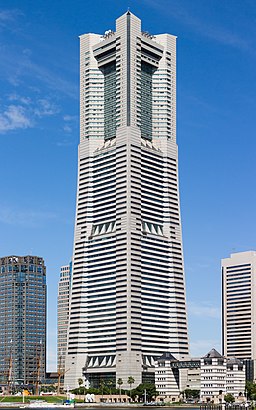
Yokohama Landmark Tower
Yokohama Landmark Tower: An Architectural Marvel in Japan
Yokohama Landmark Tower, a defining feature of Yokohama’s skyline, stands as one of Japan’s tallest and most iconic skyscrapers. Located in the Minato Mirai 21 district, this architectural masterpiece has been a symbol of modernity and progress since its completion in 1993. With a height of 296.3 meters (972 feet), it was Japan’s tallest building until 2014, when it was surpassed by the Abeno Harukas in Osaka. However, it remains one of the most significant structures in the country, offering breathtaking views, high-end shopping, luxury accommodations, and cutting-edge office spaces.
History and Development
The construction of Yokohama Landmark Tower was part of a broader urban development initiative to revitalize the Minato Mirai 21 area, transforming it into a vibrant commercial and entertainment hub. Designed by the renowned architectural firm Mitsubishi Jisho Sekkei, the tower was built by the Takenaka Corporation, one of Japan’s leading construction companies. The project’s goal was to create a state-of-the-art facility that could serve as a beacon of Yokohama’s economic and cultural resurgence.
Architectural Features
Design and Structure
Yokohama Landmark Tower exhibits a sleek and modern design, characterized by its tapering shape and reinforced concrete core. Unlike steel-framed skyscrapers, it utilizes a hybrid structure combining steel and reinforced concrete, which enhances its resistance to earthquakes—an essential feature for buildings in Japan. The structure consists of 73 floors above ground and three underground levels.
Wind and Earthquake Resistance
One of the tower’s most impressive engineering feats is its ability to withstand strong winds and seismic activity. Engineers incorporated a tuned mass damper system, which reduces sway and vibration, ensuring the comfort and safety of occupants even during extreme weather conditions.
Key Attractions and Features
Observation Deck – Sky Garden
One of Yokohama Landmark Tower’s main attractions is its Sky Garden, an observation deck located on the 69th floor. It offers a panoramic view of Yokohama, Tokyo, and even Mount Fuji on clear days. The Sky Garden is accessible via one of the world’s fastest elevators, which ascends at an astonishing speed of 750 meters per minute, reaching the 69th floor in approximately 40 seconds.
Yokohama Royal Park Hotel
Occupying the upper floors (49th to 70th), the Yokohama Royal Park Hotel is a luxurious accommodation that provides guests with an unparalleled experience. Featuring elegant rooms with stunning views, fine dining restaurants, and a top-class spa, the hotel is a preferred destination for both business travelers and tourists.
Landmark Plaza and Dockyard Garden
At the base of the tower is Landmark Plaza, a five-story shopping mall featuring a wide range of retail stores, restaurants, and entertainment facilities. Nearby, the Dockyard Garden, a restored stone dock from the 19th century, serves as an open-air event space and a reminder of Yokohama’s rich maritime history.
Economic and Cultural Impact
Since its opening, Yokohama Landmark Tower has played a crucial role in the city’s economic growth, attracting businesses, investors, and tourists. It has become a major commercial hub, hosting corporate offices, retail businesses, and entertainment venues. The tower is also a cultural landmark, frequently hosting exhibitions, concerts, and special events that celebrate the city’s heritage and innovation.
Conclusion
Yokohama Landmark Tower is more than just a skyscraper—it is a symbol of Yokohama’s transformation into a global metropolis. Its innovative design, luxurious amenities, and breathtaking views make it a must-visit destination for anyone traveling to Japan. Whether you are a history enthusiast, an architecture aficionado, or simply a tourist looking for a memorable experience, the Yokohama Landmark Tower offers something for everyone.
