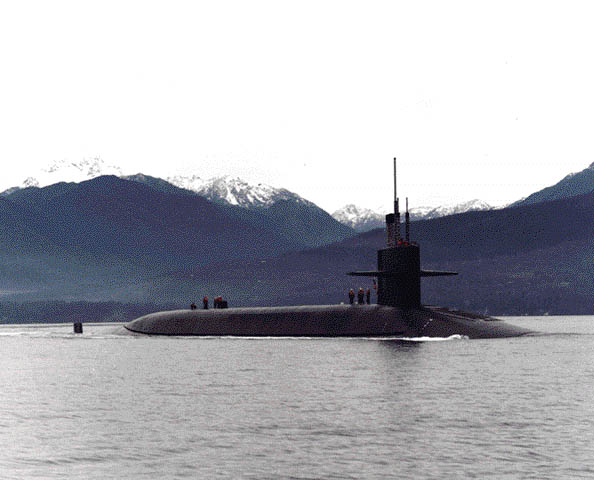
USS Henry M. Jackson (SSBN-730)
The USS Henry M. Jackson (SSBN-730) stands as a pinnacle of American naval engineering and strategic deterrence. As an Ohio-class ballistic missile submarine, she embodies decades of technological advancement, operational excellence, and unwavering commitment to national security. This article delves into her rich history, design philosophy, and the technical specifications that make her one of the most formidable assets in the United States Navy.
Historical Background and Significance
Commissioned during the height of the Cold War, the USS Henry M. Jackson (SSBN-730) was named in honor of Senator Henry M. Jackson, a staunch advocate for national defense and nuclear policy. As part of the Ohio-class, she was designed to provide a secure and survivable second-strike capability, ensuring that the United States maintains a credible nuclear deterrent. Over the years, she has played a critical role in strategic deterrence missions, remaining on patrol in the world’s oceans to safeguard national interests.
Design Philosophy and Mission Profile
The design of the USS Henry M. Jackson reflects a meticulous balance between stealth, durability, and offensive capability. Engineered to operate in the harshest underwater environments, every aspect of her construction has been optimized for silent running, survivability, and rapid responsiveness. Her primary mission is to deliver nuclear deterrence through the deployment of ballistic missiles, a role that demands both impeccable reliability and an array of advanced systems for command, control, and communication.
Hull and Structural Features
The Ohio-class submarines, including the USS Henry M. Jackson, are renowned for their robust construction:
- Length and Dimensions:
- The submarine measures approximately 170 meters (560 feet) in length, providing extensive internal space for missile compartments, reactor systems, and crew accommodations.
- With a beam of roughly 13 meters (43 feet), the vessel is designed to maximize stability during deep-sea operations.
- Displacement:
- When submerged, her displacement approaches nearly 18,750 tons, a testament to the structural integrity required to withstand the immense pressures of the deep ocean.
- Hull Construction:
- The pressure hull is fabricated from high-strength steel alloys, ensuring resilience against underwater pressures and impacts.
- An advanced anechoic coating on the exterior minimizes sonar detection, enhancing her stealth capabilities during covert patrols.
Propulsion and Power Systems
At the heart of the USS Henry M. Jackson is a state-of-the-art nuclear propulsion system that delivers unmatched endurance and power:
- Nuclear Reactor:
- Powered by a pressurized water reactor (PWR), the submarine is capable of operating submerged for extended periods without the need for refueling.
- This reactor not only provides a virtually limitless operational range but also supports rapid acceleration when necessary.
- Propulsion System:
- A single shaft, coupled with an advanced pump-jet system, drives the submarine forward with exceptional quietness—a crucial attribute for evading detection.
- The propulsion system is engineered for a maximum submerged speed of approximately 20 knots, ensuring timely repositioning during critical missions.
Armament and Offensive Capabilities
The USS Henry M. Jackson is a key component of the U.S. strategic nuclear triad, with formidable offensive capabilities designed to deter adversaries:
- Ballistic Missile Armament:
- She is armed with 24 missile tubes, each capable of launching Trident II D-5 ballistic missiles.
- These missiles boast long-range accuracy and multiple independently targetable reentry vehicles (MIRVs), significantly enhancing the submarine’s strike potential.
- Torpedo Systems:
- In addition to her missile armament, the vessel is equipped with four 21-inch torpedo tubes.
- These tubes allow for the deployment of heavyweight torpedoes for self-defense and against surface or underwater threats.
- Combat Systems Integration:
- The onboard combat management system fuses data from sonar arrays, electronic intelligence, and navigational sensors to provide real-time situational awareness.
- This integration ensures rapid target acquisition and engagement, allowing the submarine to respond effectively to evolving threats.
Sensor and Communication Technologies
Maintaining stealth and operational efficiency in the underwater domain requires a sophisticated array of sensors and communication systems:
- Sonar Capabilities:
- The USS Henry M. Jackson is outfitted with both passive and active sonar systems, offering a comprehensive 360-degree detection capability.
- Advanced signal processing algorithms enable the submarine to discern between natural oceanic noise and potential threats.
- Electronic Warfare Systems:
- Integrated electronic surveillance systems provide the means to intercept and analyze enemy communications.
- These systems can also deploy countermeasures to disrupt hostile tracking and targeting efforts.
- Communication Infrastructure:
- High-speed secure data links ensure continuous communication with command centers and allied forces.
- The submarine’s satellite and underwater communication systems are designed for uninterrupted operation, even during extended patrols in contested environments.
Crew Accommodations and Operational Readiness
A successful ballistic missile submarine must balance technological prowess with the well-being and efficiency of its crew:
- Crew Complement:
- The USS Henry M. Jackson typically accommodates a crew of approximately 155 officers and enlisted personnel, all highly trained to operate the vessel’s complex systems.
- Living quarters, mess facilities, and recreational areas are designed to support crew morale during long deployments.
- Training and Simulation:
- Onboard training facilities, including simulators and briefing rooms, ensure that the crew remains adept at managing both routine operations and emergency scenarios.
- Regular drills and simulations are integral to maintaining operational readiness in the unpredictable underwater environment.
Modernization and Future Prospects
Since her commissioning, the USS Henry M. Jackson has undergone several modernization initiatives to keep pace with evolving threats and technological advancements:
- System Upgrades:
- Periodic overhauls have seen enhancements in her combat systems, sensor arrays, and communication infrastructure, ensuring she remains at the cutting edge of submarine warfare technology.
- Maintenance and Lifecycle Management:
- Comprehensive maintenance programs extend the operational life of the vessel, ensuring that her nuclear reactor, propulsion, and structural components function optimally throughout her service life.
- Strategic Adaptability:
- The design of the Ohio-class allows for retrofits and technological insertions, providing the flexibility to incorporate future advancements in missile technology and digital warfare capabilities.
Strategic Impact and Operational Legacy
The USS Henry M. Jackson has long been a cornerstone of the United States’ strategic deterrence. Her silent patrols beneath the ocean surface ensure that any potential adversary remains aware of the formidable retaliatory capability the U.S. can unleash if provoked. Her contributions to national security extend beyond her technical specifications, embodying the principles of readiness, resilience, and adaptability in a rapidly changing geopolitical landscape.
Conclusion
The USS Henry M. Jackson (SSBN-730) is more than just a vessel; it is a floating fortress of strategic power and technological ingenuity. From her robust nuclear propulsion and stealthy design to her sophisticated missile systems and advanced sensor arrays, every facet of her construction is a testament to the enduring excellence of American naval engineering. As she continues to serve as a deterrent and a guardian of national security, the USS Henry M. Jackson remains a symbol of resilience and innovation, ensuring that the United States’ maritime strategy remains formidable and future-ready.
2.jpg)