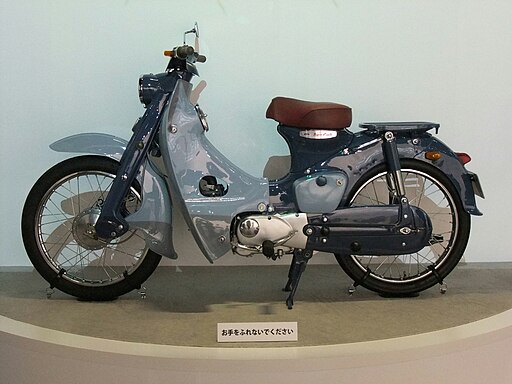
Honda Super Cub
The Honda Super Cub first hit the roads in 1958, and it quickly became one of the most recognizable and beloved vehicles on the planet. Praised for its simplicity, durability, and remarkable fuel efficiency, the Super Cub is more than just a mode of transportation—it’s a symbol of thoughtful engineering and design that meets the needs of millions across the globe. Its timeless appeal has ensured that it remains not only relevant but revered in an ever-evolving transportation landscape.
Design and Engineering
Design Philosophy and Aesthetic Evolution
The Honda Super Cub was designed with a simple yet purposeful aesthetic in mind. Emphasizing minimalism, utility, and a dash of retro charm, every curve and contour is intentional. The sleek bodywork and clean lines serve both aerodynamic efficiency and visual appeal, making the bike an ideal companion for urban environments. While the design has evolved over the decades to incorporate modern styling cues, its core identity—as a compact, efficient commuter—remains intact.
Frame, Build Quality, and Materials
At the heart of the Super Cub’s enduring design is its robust yet lightweight chassis. Constructed from high-strength tubular steel, the frame is engineered to absorb everyday road shocks while maintaining nimble handling. The meticulously designed build focuses on longevity and ease of maintenance, elements that have contributed to the Cub’s reputation as a workhorse of urban mobility. Every joint, weld, and material choice is made to ensure the vehicle can withstand the rigors of daily use, even in challenging environments.
Engine and Performance
Engine Specifications and Architecture
The Honda Super Cub is renowned for its efficient, air-cooled, four-stroke, single-cylinder engine—a compact powerplant that embodies the philosophy of “less is more.” In most markets, the engine comes with a displacement of approximately 49 cc to 50 cc, making it exceptionally well-suited for city commuting and short-distance travel. Despite its modest size, the engine is capable of delivering smooth, reliable performance.
Below is a summary table of the key technical parameters:
| Parameter | Specification |
|---|---|
| Engine Type | Air-cooled, four-stroke, single-cylinder |
| Displacement | 49–50 cc |
| Bore x Stroke | Approximately 39.0 mm x 41.4 mm (varies slightly depending on the model) |
| Maximum Power Output | Roughly 3.5–3.7 hp (≈2.7–2.8 kW) @ high RPMs |
| Maximum Torque | Around 2.8–3.0 Nm @ mid-range RPMs |
| Fuel System | Carburettor on classic models; recent variants may feature fuel injection |
| Cooling System | Air cooling |
These specifications illustrate Honda’s approach to providing just enough power for urban scenarios while ensuring excellent fuel efficiency and ease of use.
Powertrain and Fuel Efficiency
The Super Cub’s powertrain is designed around simplicity and reliability rather than raw horsepower. Its responsive nature means that low-end torque is readily accessible—a critical factor when navigating tight city streets or accelerating from a standstill. Many models offer a natural, “step-through” design that enhances rider confidence, especially in stop-start traffic. Additionally, the Super Cub’s excellent fuel economy is reflective of its efficient engine tuning, making it a cost-effective option for daily commuting and short trips.
Transmission, Handling, and Suspension
Transmission and Drivetrain
One of the hallmarks of the Honda Super Cub is its exceptionally user-friendly transmission. Most versions come with an automatic centrifugal clutch system paired with a continuously variable transmission (CVT) or a semi-automatic gearbox. This ensures smooth and seamless acceleration, with minimal input required from the rider, making it accessible to both beginners and seasoned commuters. The power is delivered in a linear fashion, ensuring that the bike remains responsive across different speed ranges.
Suspension and Handling Characteristics
Front and Rear Suspension
The Super Cub’s suspension system is optimized for urban environments. At the front, telescopic forks adeptly absorb road shocks, while the rear typically features a swingarm with hydraulic dampers. This combination provides a balanced response to uneven surfaces—be it potholes in busy city streets or slight irregularities in suburban roads. The suspension setup not only contributes to rider comfort but also plays a key role in ensuring reliable handling during twisty rides and sudden maneuvers.
Braking and Stability
In line with its design principles, the braking system on the Super Cub is simple yet effective. Traditional drum brakes have been a staple on many models, ensuring reliable stopping power in a compact package. Modern iterations of the Cub may also provide disc brakes at the front, enhancing performance during wet conditions or emergency stops. Together, these braking systems ensure that the rider maintains complete control, contributing significantly to overall road safety.
Technology and Instrumentation
Dashboard and Instrument Cluster
The Honda Super Cub’s instrument panel has evolved to meet the modern rider’s needs while retaining its intuitive simplicity. Early models featured analog gauges that conveyed vital information at a glance, a design ethos that continues in many contemporary versions. Current models often incorporate a digital display to show speed, fuel level, and mileage. This arrangement prioritizes ease of reading and minimal distraction, allowing the rider to remain focused on the road.
Lighting, Connectivity, and Future Upgrades
Modern variants of the Super Cub incorporate advanced LED lighting systems, which not only improve visibility in diverse conditions but also contribute to energy efficiency. While the Super Cub is traditionally minimalist in its approach to connectivity, future upgrades may include compatibility with smartphone apps for diagnostics and ride tracking. These enhancements aim to bridge the gap between classic engineering and modern digital innovation while maintaining the Cub’s core simplicity and reliability.
Maintenance, Durability, and Legacy
Serviceability and Long-Term Reliability
Honda has engineered the Super Cub with maintenance in mind. Its modular design allows for quick adjustments and component replacements, meaning routine services such as oil changes or brake inspections can be executed efficiently. This ease of maintenance is one of the main reasons the Super Cub has retained its reputation for durability over decades of widespread use. The robust construction is designed to endure a multitude of operating conditions, ensuring that it remains a practical choice for daily commuting and extended usage alike.
Enduring Legacy and Cultural Impact
Beyond its technical prowess, the Honda Super Cub has achieved cultural significance in many regions. Its simplicity and reliability have made it a favorite among diverse groups—from young urban commuters to small business owners relying on it for daily deliveries. Its legacy is not only maintained through its innovative engineering but also through the countless stories of everyday adventure and perseverance shared by its riders over generations.
Conclusion: A Timeless Commuter Icon
The Honda Super Cub stands as a paragon of efficient design and engineering excellence. With its modest yet robust engine, user-friendly transmission, balanced suspension, and thoughtful instrumentation, the Super Cub continues to deliver a riding experience that is both engaging and exceedingly practical. It remains an enduring beacon of innovation—combining modern technological advances with a design philosophy that champions simplicity, economy, and reliability.
