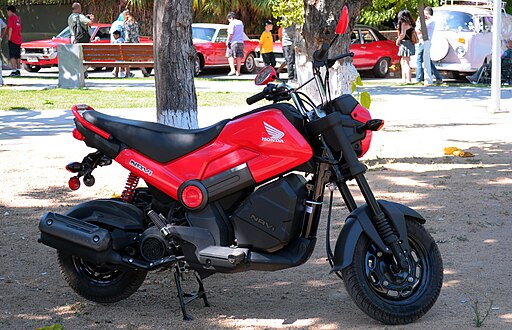
Honda Navi
The Honda Navi emerged as a fresh concept aimed at those seeking a blend of fun, practicality, and reliability. Designed primarily for urban commuters and novice riders, the Navi reimagines two-wheeler mobility by combining scooter-like ease with the engaging dynamics of a motorcycle. Its distinctive design and agile performance create an experience that is both spirited and economical. With its compact size, responsive engine, and advanced ergonomics, the Navi appeals to riders of all ages looking to carve their path in bustling city streets.
Design and Ergonomics
Aesthetic Appeal and Innovative Styling
The Honda Navi takes bold design cues, offering an aesthetic that is both unconventional and functionally smart. Its compact body features clean, curvaceous lines that marry modern styling with a hint of retro charm. Every curve and contour is meticulously crafted not only to catch the eye but also to optimize aerodynamics—a quality that sets this machine apart from traditional commuter bikes. Designers have placed special emphasis on reducing overall weight without sacrificing structural integrity, resulting in a vehicle that is as nimble in urban traffic as it is appealing in its visual statement.
Rider Position and Comfort
Ergonomics is central to the Navi’s design. The riding position is upright yet relaxed, allowing riders to enjoy extended commutes without discomfort. A well-cushioned seat and strategically placed handlebars complement the bike’s lightweight frame, ensuring that both short trips and longer journeys are met with a stable, fatigue-resistant posture. By ensuring that every detail enhances the rider’s experience—from control placement to suspension tuning—the Navi reaffirms Honda’s commitment to creating machines that are both joyful and practical.
Engine and Performance
Technical Specifications and Engine Architecture
At the heart of the Honda Navi is a finely tuned engine built for efficiency and responsive performance. The powerplant is an air-cooled, 4-stroke, single-cylinder engine purpose-built for urban maneuverability. Its displacement of approximately 109 cc makes it ideally suited for city commuting, while ensuring that riders are treated to a lively performance response.
Below is a summary of the key technical parameters:
| Parameter | Specification |
|---|---|
| Engine Type | Air-cooled, 4-stroke, single-cylinder |
| Displacement | 109 cc |
| Maximum Power Output | Approximately 9.5 bhp @ 8,000 rpm |
| Maximum Torque | Around 8.5 Nm @ 6,500 rpm |
| Fuel System | Carburetor (with emerging fuel injection variants) |
| Cooling System | Air cooling |
| Frame Construction | Lightweight steel tubular frame |
This engine is designed not only to deliver adequate power for daily commuting but also to maintain impressive fuel economy, making it an attractive option for cost-conscious riders.
Transmission and Gear Mechanics
Complementing its spirited engine is a well-matched transmission system. The Honda Navi typically features a 4-speed manual gearbox that is engineered for smooth gear shifts and a linear power delivery. This setup ensures that even at lower speeds, the engine’s torque is readily available, making stop-start traffic and urban navigation effortless. The tactile feedback provided by the clutch and gear lever fosters a sense of connectedness between the rider and the machine—a crucial trait for those taking their first foray into motorcycle riding.
Suspension, Handling, and Braking
Suspension System
Urban terrains can be unpredictable—a mix of smooth roads and sudden imperfections. The Navi’s suspension system has been carefully tuned for both comfort and performance. At the front, telescopic forks absorb shocks from potholes and speed bumps, while a robust mono-shock setup at the rear ensures stability during cornering and braking. This balanced configuration not only enhances rider comfort but also contributes to the bike’s overall agility.
Braking and Safety Features
Safety is paramount in the design of the Honda Navi. The braking system typically comprises a front disc brake complemented by a rear drum brake (or disc brake in some variants). Together, they provide reliable stopping power even in adverse conditions. The thoughtful calibration of the braking system minimizes stopping distances, allowing for confident maneuvering in city traffic and emergency scenarios alike.
Technology and Instrumentation
Digital Dashboard and Instrumentation
In today’s connected world, a rider’s dashboard plays an essential role in conveying critical information at a glance. The Navi’s instrument panel offers a digital display that highlights vital information such as speed, fuel level, and gear position. This interface has been designed with simplicity in mind, ensuring that even novice riders can quickly interpret the data without distraction from the road ahead.
Integrated Connectivity and Future Enhancements
Beyond basic instrumentation, the Honda Navi hints at future connectivity features. While current models keep the focus on core riding dynamics, upcoming iterations may incorporate smartphone connectivity, real-time diagnostics, or even navigation prompts. Such integrations would further enhance the user experience by merging traditional mechanical efficiency with modern digital innovation—a trend that Honda continues to pursue with vigor.
Efficiency and Environmental Considerations
Fuel Economy and Cost-Effectiveness
One of the Navi’s most appealing aspects is its remarkable fuel efficiency. Optimized for urban riding, its engine delivers fuel consumption figures that are well-suited for daily commutes. Riders can typically expect consumption figures that make every liter of fuel count, a factor that translates directly into lower operating costs over time. This focus on efficiency aligns perfectly with the needs of modern urban riders who are increasingly mindful of both budget and environmental impact.
Emission Control and Environmental Impact
The Honda Navi is engineered to conform to stringent emission standards, ensuring that it minimizes its environmental footprint. Through advanced combustion techniques and efficient fuel usage, the Navi not only delivers a fun riding experience but also contributes to cleaner urban air quality. As regulatory requirements evolve, Honda is committed to incorporating further emission reduction technologies, reinforcing its legacy of sustainable mobility.
Maintenance, Durability, and Long-Term Value
Serviceability and Build Quality
Honda’s reputation for reliability shines through in the Navi’s design. Every component is crafted with long-term durability in mind, and the modular design simplifies maintenance tasks. Routine services such as oil changes, filter replacements, and brake adjustments have been engineered to be efficient and cost-effective, ensuring that the Navi remains a dependable companion over the years. This focus on serviceability minimizes downtime, making the bike an excellent long-term investment for daily commuters.
Aftermarket Potential and Customization
Beyond factory settings, the Honda Navi offers a canvas for customization. Enthusiasts appreciate the potential for aftermarket modifications—ranging from cosmetic enhancements to performance tweaks—that allow them to personalize their ride. Whether it’s adjusting the handlebar geometry, adding custom decals, or even tuning the engine response, the Navi encourages a vibrant community of riders to imprint their own style onto this versatile machine.
Conclusion: The Navi Edge
The Honda Navi stands out as a testament to Honda’s innovative spirit, offering a unique fusion of style, performance, and practicality. Its compact dimensions, responsive 109 cc engine, and thoughtfully engineered ergonomics make it the ideal choice for urban riders seeking both fun and function. As cities grow denser and riding demands become more complex, the Navi’s blend of fuel efficiency, low maintenance, and customizable features position it as a forward-thinking mobility solution.
