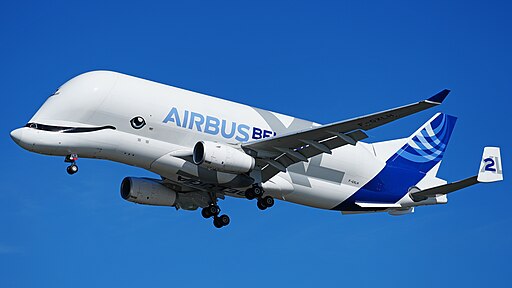
Airbus BelugaXL
Airbus BelugaXL: A Modern Marvel in Outsize Cargo Transport
The Airbus BelugaXL stands as a shining example of innovation in the aerospace logistics world. Developed to carry oversized components and subassemblies vital to aircraft production, the BelugaXL blends advanced technology with refined engineering to meet the ever-growing demands of modern manufacturing. Derived from the Airbus A330-200 platform, this new-generation transport aircraft pushes the boundaries of payload capacity while maintaining efficiency and operational flexibility.
Historical Background and Evolution
From BelugaST to BelugaXL
Airbus has long relied on specialized carriers to move large aircraft parts between its production sites. The predecessor, known as the BelugaST (Super Transporter), served as an iconic workhorse for decades. However, as production ramp-ups for models like the A350 escalated, limitations in transport volume became apparent. Launched in late 2014, the BelugaXL was conceived as a direct response to these challenges. It was designed to deliver approximately 30% extra transport capacity compared to its predecessor, ensuring that Airbus could efficiently support increased production rates.
Driving Factors Behind the Redesign
The evolution from the original Beluga to the BelugaXL was driven by several critical factors:
- Production Growth: The expanding demand for rapid delivery of oversized components required a carrier with enhanced capacity.
- Technological Advancements: Leveraging the mature A330-200 platform allowed Airbus to integrate state-of-the-art systems and materials.
- Operational Efficiency: A streamlined design and improved payload handling systems meant faster turnaround times and increased throughput between production lines.
Design and Construction
Airframe and Structure
The BelugaXL’s design retains many hallmarks of its A330 heritage while incorporating significant modifications for its specialized role. Key design enhancements include:
- Lowered Cockpit and Extended Fuselage: A lowered cockpit positioning and an elongated fuselage grant the BelugaXL an expansive cargo bay, tailored to carry the largest A350 fuselage sections or dual 30-meter wings.
- Reinforced Structure: The airframe is engineered to handle the stresses associated with heavy cargo loads and frequent loading/unloading operations. Advanced composite materials and high-strength alloys ensure both durability and weight efficiency.
- Optimized Loading Systems: Large rear cargo doors and an innovative loading system facilitate the rapid and safe transfer of oversized components, thereby reducing ground time and improving overall efficiency.
Aerodynamic Efficiency
Despite its enormous size, the BelugaXL maintains impressive aerodynamic performance:
- Wing Design: With a wingspan of 60.3 meters, the wing structure is optimized for long-range stability and lift efficiency. This design reduces drag and enhances fuel economy during long missions.
- Streamlined Profile: The smooth, carefully contoured fuselage minimizes turbulence, ensuring that even when carrying bulky cargo, the aircraft’s performance remains uncompromised.
Technical Specifications
Dimensions and Structural Data
The BelugaXL’s imposing physical dimensions are key to its ability to transport some of the largest components in the aerospace industry:
- Overall Length: 63.1 meters
- Height: 18.9 meters
- Wingspan: 60.3 meters
- Fuselage Width: 8.8 meters
- Loadable Volume Length: 46.8 meters
- Maximum Loadable Cross-Section:
- Width: 8.1 meters
- Height: 7.5 meters
These figures translate into an extraordinary cargo bay designed to accommodate parts that are simply too large for standard aircraft.
Performance Specifications
The performance parameters of the BelugaXL further illustrate its capabilities as an oversized transport aircraft:
- Maximum Payload: 51 tonnes
- Maximum Range: Up to 4,000 kilometers when carrying a full payload
- Maximum Takeoff Weight (MTOW): 227 tonnes
- Maximum Landing Weight: 187 tonnes
- Maximum Zero Fuel Weight: 178 tonnes
- Maximum Fuel Capacity: Approximately 73.3 tonnes
These metrics ensure that the aircraft can maintain long-haul operations and support complex logistical chains across multiple production sites.
Propulsion and Avionics
Built on the foundation of the A330-200, the BelugaXL inherits a reliable and efficient propulsion system:
- Engine Type: Twin turbofan engines—proven, high-efficiency powerplants of the A330 family
- Thrust: Sufficient to sustain rapid acceleration even with heavy cargo loads, balancing between power and fuel economy
- Modern Avionics: A sophisticated digital cockpit equipped with electronic flight instrument systems (EFIS), fly-by-wire controls, and integrated communication and navigation technologies ensures safe and efficient operation in diverse environments.
Performance and Operational Capabilities
Enhanced Cargo Capacity
The standout feature of the BelugaXL is its unprecedented cargo capacity:
- Increased Volume: Offering about 30% more transport capacity than the original BelugaST, the BelugaXL can accommodate larger and more cumbersome aircraft components.
- Rapid Turnaround: The design optimizations, including wide cargo doors and advanced loading systems, significantly reduce loading and unloading times. This speed is critical in maintaining an uninterrupted production cycle.
Long-Range Efficiency
Despite its bulky design, the BelugaXL is built for performance:
- Extended Range: With a maximum range of 4,000 kilometers, the aircraft is fully capable of intercontinental flights. This is particularly beneficial for Airbus, as it connects various production sites across Europe efficiently.
- Fuel Efficiency: The integration of modern engines and aerodynamic refinements ensures that the BelugaXL remains fuel-efficient, even on long-haul missions.
Operational Flexibility
The BelugaXL’s design and capabilities make it a versatile tool in Airbus’s logistical operations:
- Dedicated Transport Role: As an internal badge of innovation, it primarily serves Airbus Transport International (ATI), ferrying components between multiple European manufacturing sites.
- Adaptable Loading Configurations: Its spacious, adaptable cargo bay can be quickly reconfigured to meet changing production demands, ensuring that a wide range of parts—from fuselage sections to wing assemblies—can be transported safely and securely.
- Integrated Flight Management: The state-of-the-art avionics and digital systems allow for precise flight path management, essential when navigating the busy air corridors of Europe and ensuring timely delivery.
Role in Airbus Production and Global Impact
Supporting Production Ramp-Up
The BelugaXL was developed as an integral part of Airbus’s strategy to increase production rates for new-generation aircraft:
- Component Transportation: By moving oversized components swiftly and reliably between production sites, the BelugaXL plays a critical role in shortening assembly times and enhancing overall production efficiency.
- Synchronized Supply Chain: The ability to transport large parts in a single flight minimizes ground handling and intermodal transfers, thus integrating seamlessly into Airbus’s tightly coordinated manufacturing process.
International Collaboration and Future Prospects
While primarily intended for Airbus’s internal logistics, the capabilities of the BelugaXL highlight potential applications beyond the company:
- Commercial and Industrial Use: The unique combination of large payload capacity and long-range efficiency makes the BelugaXL concept attractive for any industry that requires the transport of oversized cargo.
- Innovative Design Influence: The success of the BelugaXL is likely to influence future designs in the logistics and heavy cargo transport sectors, setting new standards for efficiency, safety, and operational flexibility.
Future Outlook and Innovations
Technological Upgrades
As production rates and logistical demands continue to evolve, Airbus is already exploring ways to further enhance the BelugaXL’s performance:
- Avionics Enhancements: Future firmware updates and hardware refinements promise to further streamline operations and increase flight safety.
- Efficiency Improvements: Continued efforts in aerodynamic research and engine optimization could yield even more fuel-efficient operations, maximizing mission range and payload capabilities.
Expanding Operational Horizons
The BelugaXL’s versatile design opens the door to potential future applications:
- Dual Roles: There is ongoing discussion about adapting the platform further to handle specialized roles within commercial or even humanitarian logistics.
- Fleet Expansion: With a proven record in supporting production ramp-up, Airbus may consider increasing its fleet size to further optimize its internal logistics or offer leasing options to third parties facing similar oversized transport challenges.
Conclusion
The Airbus BelugaXL represents a remarkable fusion of commercial design ingenuity and military-level engineering, meticulously crafted to address the unique challenges of transporting oversized aerospace components. With its impressive dimensions—such as a length of 63.1 meters, a wingspan of 60.3 meters, and a cargo bay designed to handle complex, voluminous loads—the BelugaXL not only meets but exceeds the operational requirements of a modern, globalized production system.
Its robust technical specifications, encompassing a maximum payload of 51 tonnes, a maximum takeoff weight of 227 tonnes, and a range of up to 4,000 kilometers, underscore its critical role in ensuring the smooth and efficient movement of vital components. The aircraft’s advanced propulsion, state-of-the-art avionics, and innovative design are a testament to Airbus’s ongoing commitment to operational excellence and technological advancement.
.jpg)