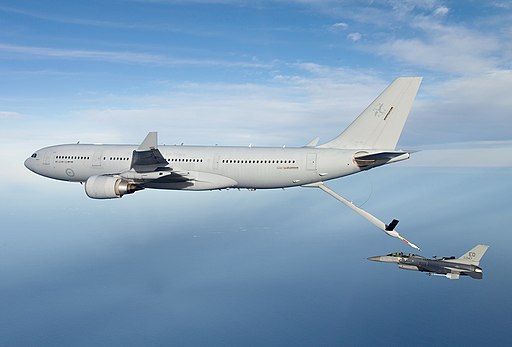
Airbus A330 MRTT
Airbus A330 MRTT: A Multifunctional Tanker and Transport Marvel
The Airbus A330 MRTT (Multi Role Tanker Transport) is one of the most advanced aerial refuelling and strategic transport aircraft in service today. Derived from the highly successful Airbus A330-200, the MRTT variant combines commercial airliner efficiency with state-of-the-art military capabilities. Designed to support a wide range of missions—from air-to-air refuelling for fighter jets to troop and cargo transport, and even VIP and MEDEVAC operations—the A330 MRTT stands as a testament to modern aerospace engineering.
Development and Design Philosophy
Origins and Evolution
In the late 1990s, as air forces around the world began to demand more versatile aerial refuelling assets, Airbus leveraged its commercial expertise by converting the A330-200 into a dedicated military platform. The conversion process was rigorous, involving extensive modifications to meet stringent military standards while retaining the efficiency and reliability of a commercial jetliner. The first prototype took to the skies in 2007, and since then, more than 30 units have been delivered to various air forces across several continents.
Design Objectives
The principal goal behind the A330 MRTT was to create a single airframe capable of performing multiple roles. Designers focused on:
- Operational Flexibility: Accommodating both tanker and transport roles in a single platform.
- Enhanced Survivability: Incorporating advanced avionics and redundant systems.
- Fuel Efficiency: Optimizing performance for extended missions.
- Commonality: Maintaining a high degree of similarity with the commercial A330 family to ease pilot training, maintenance, and logistics.
Technical Specifications
The technical parameters of the A330 MRTT highlight its cutting-edge engineering and robust performance. Below is a comprehensive breakdown of its key specifications.
Dimensions and Weight
- Length: 58.8 meters The overall length ensures ample cabin space for passengers, cargo, and specialized configurations required for military operations.
- Wingspan: 60.3 meters The wide wingspan plays a crucial role in achieving the optimal lift-to-drag ratio, enabling efficient long-haul flights and short-field performance.
- Height: 17.4 meters This dimension is critical for ground handling and interfacing with airport infrastructure worldwide.
- Maximum Takeoff Weight (MTOW): 233,000 kilograms The high MTOW allows the MRTT to carry substantial payloads, including fuel, cargo, and military equipment, making it one of the most capable aircraft in its category.
Propulsion and Performance
Powered by twin advanced turbofan engines, the A330 MRTT is engineered for both power and efficiency.
- Engine Options:
- Rolls-Royce Trent 700
- General Electric CF6-80E1 Each engine is optimized to deliver variant-specific thrust levels while ensuring reliable performance under diverse operating conditions.
- Thrust: Approximately 70,000 lbf (per engine) This thrust rating enables the aircraft to cruise at high speeds and support heavy payload operations.
- Cruising Speed: Approximately 860 km/h (Mach 0.86) The balance of speed and fuel economy makes it ideal for rapid deployment over long distances.
- Maximum Speed: Around 880 km/h While cruising speed is optimized for efficiency, the MRTT’s design also supports high-speed operations when required by tactical scenarios.
Fuel Capacity and Range
One of the defining features of the A330 MRTT is its exceptional fuel capacity and impressive range, both critical for extended military operations.
- Maximum Fuel Capacity: 111,000 kilograms A substantial fuel reserve not only supports long direct flights but also provides the necessary fuel for multiple aerial refuelling sorties.
- Range: Up to 14,800 kilometers (without payload) This range allows the aircraft to project power globally, making it a strategic asset for long-range missions and rapid response scenarios.
Avionics and Systems
Modern Cockpit and Digital Integration
The A330 MRTT benefits greatly from a state-of-the-art digital cockpit derived from the A330 legacy. This includes:
- Advanced Electronic Flight Instrument Systems (EFIS): Modern displays provide real-time data on flight performance, weather, and navigational cues, ensuring precise control during complex missions.
- Fly-by-Wire Control System: The digital flight control system enhances handling precision, reduces pilot workload, and optimizes performance in various flight regimes.
- Integrated Communication and Navigation Systems: These systems allow seamless connectivity during aerial refuelling, transport operations, and coordination with ground control, maintaining operational safety and mission coordination.
Refuelling and Mission Management
A standout feature of the MRTT is its ability to conduct mid-air refuelling operations with a high degree of automation and reliability.
- Aerial Refuelling Boom System (ARBS): The MRTT is the first tanker certified for automatic air-to-air refuelling using the boom system during daytime operations. This system uses a fly-by-wire control that enhances precision during fuel transfer.
- Hose-and-Drogue System: Complementing the boom, this system offers flexibility, particularly for refuelling aircraft that are not equipped with a probe-and-drogue receptive system.
- Dual-Gondola Configuration: Some variants can be equipped with two underwing refuelling pods, enabling simultaneous multi-aircraft refuelling operations—a capability essential for sustained combat operations or large-scale humanitarian missions.
Multi-Role Capabilities
The versatility of the A330 MRTT is one of its greatest strengths, allowing it to meet diverse operational requirements beyond just aerial refuelling.
Air-to-Air Refuelling
The MRTT is primarily known for its refuelling capabilities, which include:
- Boom Refuelling: The automatic refuelling boom ensures high-speed fuel transfer to compatible aircraft, significantly extending their operational range.
- Probe-and-Drogue Refuelling: The inclusion of hose-and-drogue systems means that the MRTT can service a broader range of aircraft, including those from allied nations with different refuelling needs.
- Inter-Tanker Refuelling: Some variants have the capability to refuel other MRTTs in mid-air, further enhancing operational flexibility and strategic reach.
Strategic Transport and Cargo Management
Beyond refuelling, the A330 MRTT excels in its transport role:
- Passenger Transportation: Configurable interiors allow for the transport of up to 291 passengers in a high-density configuration, or fewer passengers in a VIP layout, ensuring that the aircraft can adapt to various mission profiles.
- Cargo and Troop Deployment: With a payload capacity of up to 45,000 kilograms, the MRTT can concomitantly carry military equipment, vehicles, and personnel. Its spacious cargo hold makes it invaluable during humanitarian missions and rapid deployment operations.
- Medical Evacuation (MEDEVAC): The aircraft can be quickly reconfigured to serve as a flying hospital, providing critical care services and rescuing injured personnel during crises.
Operational Roles and Global Deployment
Proof in Service
Since its introduction, the A330 MRTT has been integrated into the fleets of multiple air forces worldwide, including those of Australia, the United Kingdom, France, Saudi Arabia, and Singapore. Its operational track record demonstrates:
- Extended Mission Durability: The aircraft has successfully supported long-duration operations in combat zones and humanitarian events.
- Fleet Commonality: Operators benefit from the commonality with the A330 family, leading to reduced training costs and streamlined maintenance operations.
- Versatile Mission Profiles: Whether refuelling fighter jets during combat sorties or delivering critical supplies in disaster zones, the MRTT’s robust design has consistently met mission requirements.
Strategic Impact
The A330 MRTT’s contributions to strategic air mobility cannot be overstated:
- Force Projection: Its advanced refuelling capability allows combat aircraft to extend their operations far beyond their normal range, providing significant tactical advantages.
- Rapid Response: As a transport asset, the MRTT facilitates swift deployments of troops and equipment, ensuring that military and humanitarian responses are both prompt and efficient.
- International Collaboration: The MRTT serves as a linchpin in multinational operations, where interoperability between air forces is crucial for missions involving joint refuelling or coordinated transport efforts.
Conclusion
The Airbus A330 MRTT encapsulates the future of multi-role military aviation. By transforming a commercial airliner into a sophisticated, battle-proven tanker and transport aircraft, Airbus has delivered a platform that meets a wide array of modern operational challenges. Its robust technical parameters—from extraordinary fuel capacity and exceptional range to advanced avionics and versatile refuelling systems—underscore the MRTT’s role as a critical asset for air forces around the world.
.jpg)