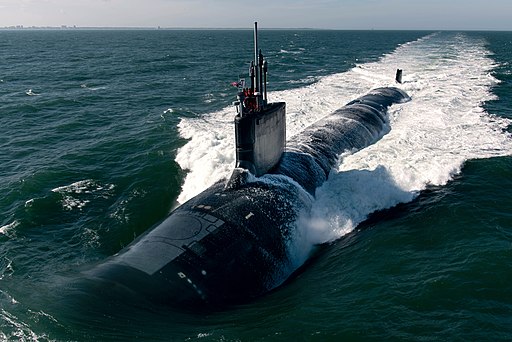
USS Montana (SSN-794)
USS Montana (SSN-794) is a Block IV Virginia-class nuclear-powered attack submarine of the United States Navy. As one of the latest additions to the fleet, Montana blends stealth, endurance, and advanced combat capabilities to fulfill a wide spectrum of undersea warfare missions, from intelligence gathering to precision strikes.
History and Development
Naming and Symbolism
The submarine is named for the State of Montana, reflecting the Navy’s tradition of honoring U.S. states and their values. Announced by the Secretary of the Navy in September 2015, the name underscores Montana’s heritage of rugged terrain and resilience—qualities mirrored in the vessel’s design.
Construction Timeline
- Contract Awarded: 28 April 2014, as part of a multi-boat procurement contract.
- Keel Laid: 16 May 2018 at Newport News Shipbuilding in Virginia, marking the official start of hull assembly.
- Christening Ceremony: 12 September 2020, presided over by sponsor Sally Jewell in a ceremony that spotlighted the vessel’s future role.
- Launch: 8 February 2021, when Montana slid into the James River for the first time.
- Commissioning: 25 June 2022 at Naval Station Norfolk, formally inducting her into active service.
Design and Construction
Hull and Materials
Montana’s hull employs high-yield steel and specialized composites engineered to dampen vibrations and absorb acoustic energy. This “anechoic” layering reduces the submarine’s acoustic signature, making detection by enemy sonar far less likely.
Stealth Features
Key stealth innovations include:
- Pump-jet Propulsor: Replacing traditional propeller blades to minimize cavitation noise.
- Machinery Isolation: Critical machinery is mounted on shock-absorbing platforms, decoupling noise sources from the hull.
- Coating and Fairings: Advanced anechoic tiles and streamlined external fairings further suppress sound reflections.
Technical Specifications
Dimensions and Displacement
- Length: 377 ft (115 m)
- Beam: 34 ft (10.4 m)
- Draft: 32 ft (9.8 m)
- Surfaced/ Submerged Displacement: Approximately 7,800 tons.
Propulsion and Performance
- Reactor: S9G pressurized-water nuclear reactor providing essentially unlimited range.
- Speed: Exceeds 25 knots (46 km/h) submerged.
- Endurance: Can sustain submerged operations up to 90 days, limited primarily by food supplies.
- Test Depth: Rated for depths greater than 800 ft (244 m).
Armament and Combat Systems
- Vertical Launch System (VLS): 12 tomahawk-capable tubes for land-attack missiles.
- Torpedo Tubes: Four 21-inch tubes firing MK-48 heavyweight torpedoes, capable of engaging both surface vessels and subsurface threats.
- Sensor Suite: AN/BQQ-10 digital sonar, photonic mast in lieu of a traditional periscope, and integrated electronic warfare systems for signal interception and analysis.
Crew and Habitability
Montana typically hosts 15 officers and 120 enlisted personnel. Interiors are arranged to balance operational efficiency with crew comfort during extended patrols. Features include:
- Ergonomic Control Center: Touch-screen interfaces and redundant displays for rapid decision-making.
- Crew Quarters: Modular berthing racks, communal mess, and fitness equipment to sustain morale on long deployments.
Operational Capability and Role
Stealth and Endurance
Montana’s combination of acoustic quieting, pump-jet propulsion, and reactor-driven endurance enables clandestine operations across vast ocean areas. Whether under Arctic ice or littoral choke points, Montana can remain undetected for months.
Strategic and Tactical Deployment
- Intelligence, Surveillance, Reconnaissance (ISR): Deploys unmanned underwater vehicles (UUVs) and special-operations teams for covert reconnaissance.
- Strike Operations: Launches Tomahawk missiles against high-value land targets with pinpoint accuracy.
- Subsea Warfare: Uses torpedoes and countermeasures to neutralize enemy submarines and surface warships.
Conclusion and Future Prospects
As a Block IV Virginia-class boat, USS Montana benefits from incremental upgrades—reduced maintenance periods and enhanced systems—that improve overall fleet readiness. Looking ahead, she will integrate next-generation technologies such as extra-large UUV compatibility and improved acoustic processing. Montana exemplifies the continual evolution of undersea warfare, remaining a formidable asset in the projection of naval power.
_conducts_initial_sea_trials_in_the_Atlantic_Ocean_on_1_February_2022_(220201-O-NO101-150).JPG)