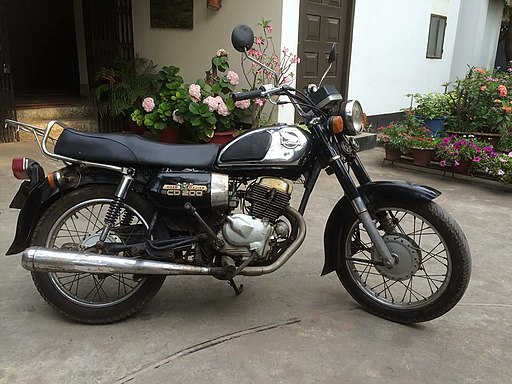
Honda CD200 RoadMaster: A Timeless Commuter’s Companion
The Honda CD200 RoadMaster blends simplicity, durability, and accessibility in a classic single-cylinder package. Born in the early 1980s as an evolution of Honda’s CD series, this lightweight motorcycle won riders with its user-friendly ergonomics, fuel efficiency, and rock-solid reliability. Even decades later, the CD200 remains a favorite for urban commuters, vintage enthusiasts, and anyone seeking a no-nonsense ride.
Historical Background
Market Position
In the late 1970s and early 1980s, demand surged for affordable, fuel-sipping motorcycles that could handle daily commuting. Honda answered with the CD200 RoadMaster—a successor to the CD175—slotting neatly between entry-level singles and larger multi-cylinder models.
Design Philosophy
Engineering focused on ease of use. A low seat height, relaxed riding posture, and soft suspension made the CD200 comfortable for riders of all experience levels. Mechanically, Honda retained proven air-cooled four-stroke technology, trading peak power for broad torque and minimal upkeep.
Engine and Performance
Powerplant Details
• Engine type: Air-cooled single-cylinder, SOHC, four-stroke • Displacement: 198 cc • Bore × stroke: 67.0 mm × 56.0 mm • Compression ratio: 8.1 : 1 • Carburetion: 22 mm Keihin constant-velocity carburetor • Ignition: Battery-and-coil with breaker points
Performance Figures
• Maximum power: 12 bhp @ 7,500 rpm • Maximum torque: 12 Nm @ 6,000 rpm • Top speed: Approximately 100 km/h • Fuel economy: Around 3.5 L/100 km • Fuel capacity: 12 L (reserve included)
The CD200’s modest output emphasizes smooth low-end torque. Starting from standstill, the powerband unfolds gently, making city traffic maneuvers and seaside cruises equally effortless.
Chassis and Suspension
Frame Design
Constructed with a steel tubular cradle, the CD200’s frame balances lightweight agility with enough rigidity to handle occasional uneven pavement. A compact wheelbase contributes to a tight turning radius.
Front Suspension
Telescopic forks absorb bumps with roughly 100 mm of travel. The fork springs are soft by modern standards, prioritizing comfort over high-speed precision.
Rear Suspension and Brakes
• Rear shocks: Dual units with adjustable preload, providing 90 mm of travel • Brakes: Drum front (130 mm) and drum rear (130 mm)
Combined, the suspension and braking deliver predictable behavior, inspiring confidence for daily errands and country-lane escapes.
Electrical and Instrumentation
Charging System
A 6-volt generator feeds a simple regulator/rectifier. While stock lighting can feel dim by today’s standards, upgrading to a 12-volt system and LED bulbs is a popular enhancement.
Instrument Cluster
The uncluttered dash features an analog speedometer, odometer, green neutral light, and turn-signal indicators. All controls remain cable-driven, making diagnostics and repairs straightforward.
Dimensions, Weight, and Ergonomics
• Overall length: 1,950 mm • Seat height: 780 mm • Wheelbase: 1,210 mm • Ground clearance: 170 mm • Wet weight: 118 kg
An upright riding stance, generous handlebar sweep, and low center of gravity ensure nimble handling in traffic and effortless foot placement at stops. Riders of varying heights appreciate the uncluttered tank profile and broad seat.
Maintenance and Reliability
Routine Service
• Oil change: Every 2,000 km • Valve clearance check: Every 6,000 km • Carburetor cleaning: Annually or as needed • Chain adjustment: Every 1,000 km
Common Issues and Fixes
• Stubborn carburetor jets: Ultrasonic cleaning or rebuild kit • Weak electrical charging: Replace regulator or upgrade to 12 V • Worn suspension: Aftermarket springs or fork oil refresh
With minimal electronics and a straightforward engine, most work can be handled at home with basic tools.
Customization and Upgrades
• 12-volt conversion kit with LED lighting for brighter night rides • High-performance air filter and jet kit for crisper throttle response • Aftermarket exhaust for slight weight reduction and a deeper tone • Modern brake shoes or hydraulic drum conversion for improved stopping • Vintage-style luggage racks, panniers, or a café-style seat for personal flair
Rider Community and Legacy
Owners of the CD200 RoadMaster gather online in retro-bike forums and local club meets. They swap restoration tips, source rare trim pieces, and organize group rides to showcase these enduring workhorses. The RoadMaster’s blend of simplicity, economy, and character cements its status as a true classic.
Conclusion and Further Exploration
The Honda CD200 RoadMaster epitomizes the essence of commuter motorcycling: practical, reliable, and endlessly tunable. Whether you’re restoring an original survivor or customizing a modern retro build, its straightforward engineering keeps both budgets and headaches low. For deeper dives, consider comparisons with the later CD250 and CG125 models, or explore DIY guides on cylinder head porting and clutch upgrades—avenues that unlock even more personality from this humble roadster.
.jpg)