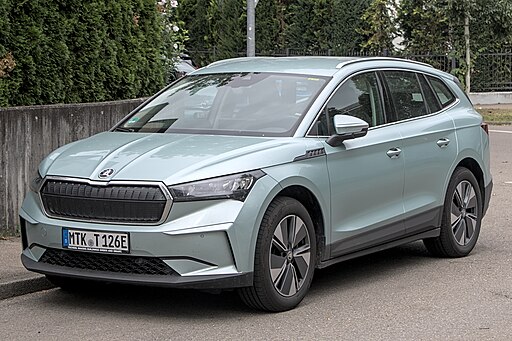
Škoda Enyaq faults
Below is an overview of the most frequently reported issues on the Škoda Enyaq, organized by system. Each entry includes details on how the fault manifests and typical remedies or workarounds.
Charging & Power Supply
- Unreliable Public Charging Owners often experience interrupted or slow charging sessions at certain AC and DC stations. This can be due to compatibility quirks between the car’s onboard charger and older charging hardware, resulting in longer than expected charge times or aborted sessions.
- Home Charger Communication Some Enyaq vehicles fail to initiate or complete a home‐charging session. Symptoms include the car remaining locked even when physically plugged in, requiring a complete restart of the car’s charging system or firmware update from the dealer.
- 12-Volt Battery Drain The auxiliary 12 V battery can unexpectedly discharge, especially on short trips or after extended standby periods. Dashboard warnings (12 V symbol) appear, and in severe cases the vehicle won’t unlock or start until the battery is replaced or jump-started.
Software & Infotainment Glitches
- Touchscreen Freezes & Reboots Infotainment units may lock up, reboot randomly, or display graphic artifacts. Affected owners often wait for OTA software updates or visit dealerships for a full system reflash.
- Smartphone/App Sync Failures Remote-climate control, locking/unlocking via the app, or navigation updates sometimes fail to transmit, forcing users to rely on manual climate pre-conditioning or in-car adjustments.
Keyless Entry & Usability
- KESSY (Keyless Entry/Start) Malfunctions Intermittent failures of the keyless-entry system can leave doors locked or inhibit engine start. Dealers typically diagnose and replace the KESSY control module or apply a firmware patch.
- Inconsistent Car-App Lock Status The car’s locked/unlocked status reported in the Škoda Connect app doesn’t always match reality, occasionally preventing remote unlock or vehicle location functions until both car and phone are rebooted.
Ride Quality & Handling
- Suspension Imbalances & Premature Tire Wear Some Enyaq units exhibit uneven damping or camber issues, leading to a harsh or unsettled ride and accelerated tyre wear on one edge. Realignment, damper replacement, or a chassis software tweak often restores proper balancing.
- Regenerative-to-Mechanical Brake Transition Drivers notice a jerky or pulsed sensation when regenerative braking hands off to the mechanical brakes. Temporary solutions include adjusting the regeneration strength in the driving profile or waiting for a calibration update.
Common Fault Codes
| Code | Description |
|---|---|
| P0456 | Evaporative emissions system – small leak detected |
| P0133 | O₂ sensor circuit slow response (bank 1, sensor 1) |
| P0299 | Turbocharger / supercharger underboost |
| U0155 | Lost communication with instrument cluster control |
| U0001 | High-speed CAN communication bus fault |
Škoda Enyaq as a used car
Škoda Enyaq iV as a Used Car: A Comprehensive Guide
Buying a Škoda Enyaq iV on the second‐hand market demands careful consideration of its technical specifications, battery health, maintenance history, and long-term costs. This guide delves into all the crucial aspects you need to know when shopping for a pre-owned Enyaq iV.
Technical Specifications
Battery and Electric Motor
The Škoda Enyaq iV is offered in multiple battery‐motor configurations:
- Enyaq 60: 55 kWh usable capacity, rear‐wheel drive, single electric motor rated at 132 kW (180 hp), 310 Nm torque.
- Enyaq 80: 62 kWh usable capacity, rear‐wheel drive, single motor at 150 kW (204 hp), 310 Nm torque.
- Enyaq 80x: 62 kWh usable, dual‐motor all-wheel drive, combined 195 kW (265 hp), 425 Nm torque.
- Enyaq RS: 82 kWh usable, dual-motor AWD, 220 kW (300 hp), 460 Nm torque.
Battery voltage sits around 400 V, with cell chemistry of nickel-manganese-cobalt (NMC).
Performance and Efficiency
Performance varies by trim:
- 0–100 km/h in 8.7 s (Enyaq 60), 8.5 s (Enyaq 80), 6.9 s (80x), 6.2 s (RS).
- Top speed electronically limited to 160 km/h (60/80) or 180 km/h (80x/RS).
- WLTP combined range spans 340 km (Enyaq 60) up to 540 km (Enyaq 80).
Energy consumption averages between 14 and 17 kWh/100 km under mixed driving.
Charging Options
Enyaq charging capabilities:
- AC charging: onboard charger up to 11 kW (three-phase).
- DC fast-charging: up to 125 kW peak, replenishing 10–80 % in roughly 35 minutes.
- Vehicle-to-Load (V2L) socket (80 kWh models): 2.2 kW output for external devices.
Dimensions and Weight
Key measurements for all variants:
| Specification | Value |
|---|---|
| Length | 4,653 mm |
| Width (mirrors in) | 1,877 mm |
| Height | 1,616 mm |
| Wheelbase | 2,765 mm |
| Curb weight | 1,860–2,155 kg |
| Cargo volume | 585 L (rear seats up) 1,710 L (folded) |
Depreciation and Pricing as a Used Car
Market Value Trends
Enyaq prices drop roughly 20–25 % in the first year, then 10 % annually thereafter. A 2021 Enyaq 80 in mid-spec trim sells for approximately €30,000–€35,000 in 2025, down from an original €45,000–€50,000 new.
Warranty and Incentives
Factory warranties typically cover:
- General vehicle: 2 years, unlimited mileage.
- Battery: 8 years or 160,000 km, guaranteeing at least 70 % capacity.
- Additional dealer-installed accessories: confirm individual coverage.
Remaining warranty can greatly increase resale appeal.
Battery Health and Degradation
Measuring Battery Capacity
When evaluating a used Enyaq, look for:
- Onboard data: “State of Health” (%) accessible via diagnostic tools at dealerships or independent EV specialists.
- Third-party apps: Some OBD-II dongles paired with smartphone apps report battery degradation trends.
Estimated Degradation Over Time
Typical battery fade:
- Year 1–2: 1–3 % capacity loss.
- Year 3–5: additional 2–5 % (cumulative up to 8 %).
- Real-world factors: frequent fast charging and extreme temperatures accelerate wear.
Maintenance and Common Faults
Regular Service Items
Even electric vehicles require routine care:
- Brake fluid: replace every 2 years.
- Cabin filter: service every 15,000 km.
- Coolant for thermal management: inspect at 60,000 km intervals.
- Software updates: apply OTA or dealer reflashes annually to ensure charging and infotainment stability.
Known Faults and Repairs
Typical issues reported on early Enyaq models include:
- Infotainment reboots or touchscreen freezes: often resolved via software update or module replacement.
- Keyless-entry (KESSY) intermittent failure: firmware patches or control‐unit swaps required.
- 12 V battery drain: auxiliary battery failure due to parasitic loads identified and replaced under warranty.
- Regenerative braking switch-over judder: calibration tweaks in vehicle profiles improve smoothness.
Parts cost for these repairs ranges from €200 (12 V battery) to €1,200 (infotainment module).
Ownership Costs and Insurance
Total cost of ownership factors:
- Electricity cost: ~€0.15–€0.25/kWh depending on tariff, equating to €6–€10 per 100 km.
- Annual service (inspection only): €150–€250.
- Insurance group: typically mid-range, €600–€900 per year in central Europe.
- Tyre wear: remains comparable to ICE SUVs; budget €100–€200 per tyre every 30,000 km.
Tax incentives and lower maintenance make the Enyaq attractive versus equivalent diesel or petrol SUVs.
Final Recommendations
When evaluating a used Škoda Enyaq iV:
- Verify battery State of Health with diagnostic tools.
- Check service records for firmware updates addressing known faults.
- Review warranty status on both vehicle and battery.
- Inspect charging history—excessive DC-fast charging can accelerate degradation.
- Arrange a pre-purchase road test focusing on infotainment stability, regenerative braking smoothness, and KESSY reliability.
A well-maintained Enyaq combines low running costs, generous interior space, and refined driving dynamics—making it a compelling choice in the growing electric-SUV segment.
