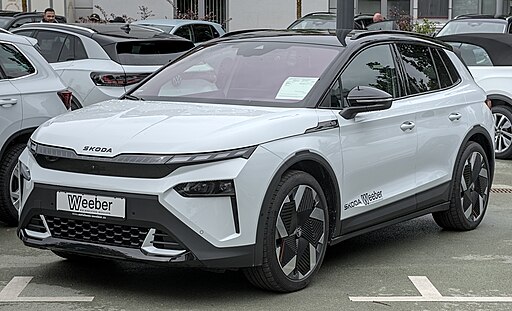
Škoda Elroq faults
Below are the most frequently reported issues on early Škoda Elroq models, organized by system. Each entry explains how the fault typically appears and the usual remedy or workaround.
Charging & Power Supply
- Unpredictable DC Fast-Charging Speeds Some Elroq owners notice the peak charge rate dropping below the quoted 145–175 kW shortly after start, especially at busy stations. This is often caused by BMS thermal management ramping down power when cell temperatures rise. Dealers can apply a software update to optimize cooling curves, or fit an optional heat-pump upgrade to stabilize temperatures.
- Home Charger Handshake Failures Intermittent “vehicle not charging” messages at private AC stations can trace back to mismatched pilot-signal voltages. Symptoms include the car locking while plugged in but drawing zero amps. A simple reset (power off/on) sometimes restores communication, but a dealer reflash of the onboard-charger firmware provides a more permanent fix.
- 12 V Battery Drain on Short Trips Parasitic loads—like active parking-sensor heaters—can discharge the auxiliary battery after multiple sub-5 km drives. Owners report “12 V battery low” warnings on startup. Replacing the battery under warranty and installing the latest body-control-module software patch eliminates the excessive standby drain.
Software & Infotainment
- Infotainment System Reboots or Freezes Random screen resets, stuck menus, or garbled graphics units are traced to early-generation MIB3 software. Until a full OTA update is applied, the temporary workaround is powering the car off for several minutes to reboot the head unit. Škoda dealerships can install the latest MIB3 release, which addresses memory-leak issues causing the lockups.
- Smartphone Mirroring Disconnects Apple CarPlay or Android Auto sessions sometimes drop unexpectedly after a few minutes, requiring reconnection. This is often down to USB-port power management defaults. Swapping to a higher-quality USB-C cable or having the dealer adjust the USB-power-setting in VCM (vehicle control module) restores stable connectivity.
Keyless Entry & Vehicle Access
- KESSY Intermittent Failures Owners have experienced doors refusing to unlock or the push-start button remaining unresponsive despite a charged key-fob battery. The root cause is a marginal contact in the keyless-entry antenna unit. A firmware reflash can improve antenna sensitivity; in more severe cases, the antenna module is replaced under warranty.
- False Lock/Unlock Status in App The Škoda Connect app occasionally shows the Elroq locked when it’s actually unlocked—or vice versa—preventing remote start or pre-conditioning. Both car and app cache need clearing, and dealers sometimes push a cloud-side update to synchronize server timestamps with vehicle reports.
Powertrain & Battery
- Accelerated Battery Degradation on 58 kWh Packs A handful of Elroq 50s have shown 5–8 % capacity loss within the first two years, above the expected 1–3 %. Over-use of 100 % state-of-charge during fast-charging sessions at motorway stations is the main driver. Reducing frequent 100 % charges and installing the heat-pump option limits stress on the cells.
- Thermal Management Warnings Under sustained high-speed driving or repeated fast-charge cycles, the dashboard may display “Battery temperature too high” and restrict charging or reduce power. A planned software calibration (via dealer) optimizes coolant-pump algorithms to avoid unnecessary derating.
Regenerative Braking & Brake Feel
- Judder at Regen-to-Friction Transition Drivers note a slight shudder when the car switches from regenerative to mechanical braking at low speeds. Adjusting the “recovery strength” in the driving profile can smooth the hand-off. A permanent fix requires an updated brake-control-unit calibration from the workshop.
- Squealing from Front Calipers Some Elroqs emit a high-pitched squeal after light braking, especially in damp conditions. Applying a high-temperature brake-lubricant to the pads’ backing plate or fitting Škoda’s updated pad-and-shims kit (available free of charge under recall) cures the noise.
Suspension & Handling
- Clunking Noise over Road Irregularities A small number of owners report a knocking sound from the rear suspension when driving slowly over bumps. Inspections often reveal a loose lower-arm bushing or a dry anti-roll-bar link. Dealers will grease or replace the affected components under the standard three-year warranty.
- Uneven Tyre Wear Due to Alignment Drift Elroq’s adaptive chassis occasionally drifts from OEM toe/camber settings after hard cornering. This leads to inner-edge tyre wear on the front axle. A steering-angle sensor recalibration and wheel-alignment check restores proper geometry.
Sensors & Electronics
- Rain/Light Sensor Misreads The automatic wiper or head-lamp control sometimes stays inactive in heavy rain or toggles on in bright but overcast conditions. Cleaning the area behind the windscreen camera and updating the front-camera calibration via dealer software re-synchronizes the light-sensor thresholds.
- TPMS Fault Codes A few Elroqs return “TPMS sensor signal weak” warnings after wheel-rotations or winter-wheel swaps. Relearning the sensor IDs with a diagnostic tool or replacing low-battery sensors resolves the alerts and ensures accurate tyre-pressure monitoring.
Škoda Elroq as a used car
Škoda Elroq as a Used Car: A Comprehensive Guide
Buying a Škoda Elroq on the second-hand market means balancing fresh-off-the-line technology with the realities of depreciation, battery health and real-world running costs. This guide walks you through every critical aspect—from powertrain specs to maintenance routines—to help you make an informed purchase.
Technical Specifications
Battery and Motor Configurations
- Elroq 50
- Usable battery capacity: 58 kWh
- Electric motor output: 170 PS (125 kW), 310 Nm torque
- Rear-wheel drive
- Elroq 60
- Usable battery capacity: 62 kWh
- Electric motor output: 201 PS (148 kW), 310 Nm torque
- Rear-wheel drive
- Elroq 85
- Usable battery capacity: 82 kWh
- Electric motor output: 286 PS (210 kW), 460 Nm torque
- Rear-wheel drive; optional Sportline with adaptive chassis
All variants run on a 400 V architecture with NMC (nickel-manganese-cobalt) cells and standard heat-pump thermal management.
Performance and Efficiency
- Acceleration (0–100 km/h):
- Elroq 50: 9.1 s
- Elroq 60: 8.5 s
- Elroq 85: 6.2 s
- Top speed: 160 km/h (50/60), 180 km/h (85)
- WLTP range:
- Elroq 50: ~360 km
- Elroq 60: ~400 km
- Elroq 85: ~580 km
- Combined energy consumption: 14–17 kWh/100 km
Charging Capabilities
- AC charging: onboard charger up to 11 kW (three-phase)
- DC fast-charging:
- Elroq 50 & 60: up to 145 kW peak
- Elroq 85: up to 175 kW peak
- 10–80 % DC charge times: 25–30 minutes (85 variant fastest)
- Vehicle-to-Load (V2L) socket on 82 kWh models for 2.2 kW external use
Dimensions and Weight
| Specification | Value |
|---|---|
| Length | 4 488 mm |
| Width (mirrors in) | 1 884 mm |
| Height | 1 625 mm |
| Wheelbase | 2 687 mm |
| Curb weight | 1 874–2 181 kg |
| Luggage capacity | 470 L (seats up) |
| Maximum load volume | 1 495 L (rear folded) |
Market Depreciation & Pricing
Typical Used-Car Values
- Year 1 depreciation: ~20 % of MSRP
- Years 2–3: ~10 % annual decline
- A 2024 Elroq 60 with mid-spec trim trades for €32 000–€35 000 in late 2025
Warranty Transfers
- Vehicle: 2 years unlimited mileage (transferable)
- Battery: 8 years or 160 000 km, 70 % capacity guarantee Verifying remaining coverage can boost resale value and peace of mind.
Battery Health & Longevity
Assessing State of Health
- Dealer diagnostics reveal precise SOH (%)
- OBD-II dongles and third-party apps can log degradation over time
Expected Degradation Curve
- Years 1–2: 1–3 % capacity loss
- Years 3–5: additional 2–5 % fade (typical cumulative ∼8 %) Factors accelerating wear include frequent 100 % charges, high-power DC sessions and extreme climates.
Maintenance, Reliability & Known Issues
Service Intervals
- Brake fluid: every 2 years
- Cabin air filter: every 15 000 km
- Coolant system check: every 60 000 km
- Software updates: annual OTA or dealer reflash
Common Faults on Early Models
- Infotainment freezes or reboots requiring module reflashes
- Keyless-entry (KESSY) dropouts remedied by firmware patches or control-unit swaps
- Auxiliary 12 V battery drain on short trips; replacement under warranty
- Mild judder at regen-to-mechanical brake transition; calibration tweaks available
Repair costs range from €200 for a 12 V battery swap to €1 000+ for infotainment module work once warranties expire.
Ownership Costs & Insurance
Running Costs
- Electricity: €0.15–€0.25/kWh → €6–€10 per 100 km
- Annual inspection: €150–€250
- Tyres: €120–€200 each, 30 000 km life expectancy
- Insurance: €600–€1 000 per year, depending on region and trim
Incentives & Taxes
- Exemption from annual registration fees in many European jurisdictions
- Urban access zone benefits in low-emission cities
Pre-Purchase Checklist
- Verify battery SOH via diagnostic session.
- Inspect service history for software updates and any control-unit replacements.
- Confirm transferred warranties on both vehicle and battery.
- Review charging patterns—excessive DC usage can hasten cell degradation.
- Conduct a test drive focusing on infotainment stability, regen smoothness and KESSY reliability.
