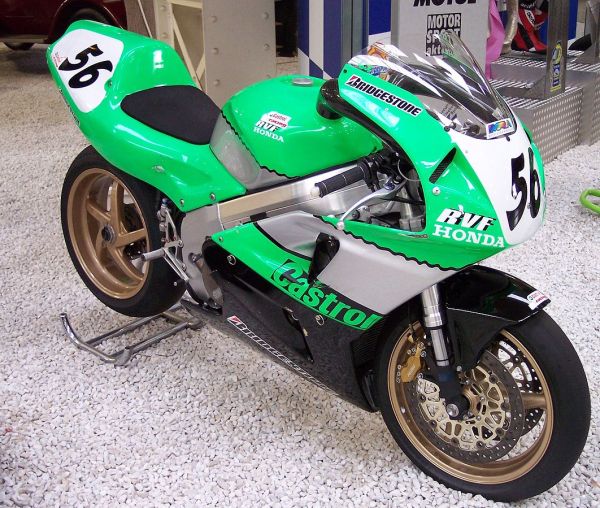
The Honda RVF750 RC45 arrived in 1994 as a homologation special built to dominate World Superbike racing. Its purpose-built V-4 engine, lightweight aluminum chassis, and race-derived suspension delivered razor-sharp handling and explosive acceleration. This article explores the RC45’s engineering DNA, performance benchmarks, maintenance essentials, and lasting impact on sportbike development.
Development and Design Philosophy
Honda engineers designed the RC45 to extract maximum performance within production-bike regulations. Core objectives included:
- Creating a compact V-4 layout for narrow frontal area and central mass
- Equipping the chassis with adjustable race-grade suspension components
- Balancing street usability with track-ready geometry and ergonomics
- Integrating advanced materials to minimize weight and maximize rigidity
This blend of competition heritage and street adaptability set a new benchmark for liter-class sportbikes.
Engine Architecture
Engine Configuration
- Type: Liquid-cooled, 749 cc, 90° V-4 four-stroke
- Bore × Stroke: 72.0 mm × 46.0 mm
- Compression Ratio: 11.2 : 1
Cylinder Head and Valvetrain
- Valvetrain: DOHC per bank; 4 valves per cylinder (16 total)
- Cam Drive: Lightweight chain with hydraulic tensioners
- Valve Diameter: Intake 30 mm; Exhaust 24 mm
Induction and Fueling
- Carburetors: 4 × Keihin 36 mm flat-slide CV units
- Airbox: Tuned plenum with individual velocity stacks
- Intake Tracts: Straight-through runners for minimal flow resistance
Cooling and Lubrication
- Radiator: 3-row aluminum core with thermostatic fan
- Coolant Capacity: 1.8 L
- Oil System: Wet sump; 3.8 L capacity
- Oil Cooler: Front-mounted stacked-plate unit
Drivetrain
- Transmission: 6-speed constant-mesh
- Clutch: Wet multi-plate with assist mechanism
- Final Drive: 520 O-ring chain; 17 T front, 43 T rear
The close-ratio gearbox keeps the engine in its power band, while the assist clutch lightens lever effort and reduces back torque.
Chassis, Suspension, and Braking
Frame Geometry
- Frame Type: Aluminum twin-spar perimeter
- Wheelbase: 1 395 mm
- Rake/Trail: 23.5° / 98 mm
- Seat Height: 820 mm
- Ground Clearance: 145 mm
- Dry Weight: 179 kg
Front Suspension
- Forks: 43 mm Showa inverted, adjustable preload, compression, rebound
- Travel: 120 mm
Rear Suspension
- Swingarm: Pro-Arm single-side aluminum
- Shock: Showa piggyback reservoir, preload, compression, rebound adjustable
- Travel: 120 mm
Wheels and Tires
- Front: 17 × 3.50 in; 120/60 ZR17
- Rear: 17 × 5.50 in; 180/55 ZR17
Brakes
- Front: Dual 310 mm discs; Nissin four-piston radial calipers
- Rear: Single 220 mm disc; Nissin two-piston caliper
- Brake Lines: Steel-braided option widely available
Electrical System and Instrumentation
- Battery: 12 V 8 Ah
- Alternator Output: 350 W at 6 000 rpm
- Ignition: Digital CDI with rev limiter
- Lighting: 55 W halogen headlight; 21 W dual-filament tail
- Instruments: Analog tachometer, analog speedometer, digital odometer, temperature warning light, shift lamp
A compact fuse block and consolidated grounding points simplify wiring and diagnostics.
Performance Metrics
- Peak Power: 100 hp (75 kW) @ 12 000 rpm
- Peak Torque: 80 Nm @ 10 500 rpm
- Top Speed: 260 km/h
- 0–100 km/h: 3.1 s
- Fuel Consumption: 7.5 L/100 km at 100 km/h cruise
- Fuel Capacity: 17 L (3 L reserve)
The RVF750’s V-4 engine excels above 8 000 rpm, offering a razor-sharp throttle response and a race-bred powerband.
Maintenance Best Practices
- Valve Clearance: Check every 12 000 km; shim-under-bucket design requires precision shims
- Carburetor Balance: Synchronize every 6 000 km for smooth idling and even throttle response
- Coolant Service: Replace every two years; inspect hoses and radiator for corrosion
- Chain and Sprockets: Adjust and lube every 1 000 km; service sprockets when chain stretch exceeds 1 %
- Brake Fluid: Flush annually with DOT 4 to prevent moisture ingress and caliper corrosion
- Suspension Seals: Inspect fork and shock seals every 12 000 km; replace with low-friction units for optimal performance
Adhering to these intervals preserves the RC45’s razor-sharp handling and high-rev stability.
Technical Specification Summary
| Parameter | Specification |
|---|---|
| Engine Type | Liquid-cooled 90° V-4 |
| Displacement | 749 cc |
| Bore × Stroke | 72.0 mm × 46.0 mm |
| Compression Ratio | 11.2 : 1 |
| Valvetrain | DOHC per bank; 4 valves/cylinder |
| Carburetors | 4 × Keihin 36 mm flat-slide CV |
| Transmission | 6-speed constant-mesh |
| Final Drive | 520 O-ring chain (17 T/43 T) |
| Frame | Aluminum twin-spar perimeter |
| Front Suspension | 43 mm inverted Showa adjustable forks |
| Rear Suspension | Pro-Arm single-side Showa adjustable |
| Wheelbase | 1 395 mm |
| Dry Weight | 179 kg |
| Fuel Capacity | 17 L (3 L reserve) |
| Peak Power | 100 hp @ 12 000 rpm |
| Peak Torque | 80 Nm @ 10 500 rpm |
| Top Speed | 260 km/h |
Legacy and Aftermarket Ecosystem
The RC45 remains a coveted model among collectors and track enthusiasts. Key factors sustaining its appeal include:
- Limited production run enhancing exclusivity
- Race-tested components and genuine SP accessories
- Aftermarket upgrades: ECU mapping kits, quick-shifter installations, modern slipper clutches
- Community support: detailed rebuild guides, OEM part repros, track-day setup advice
These resources ensure the RC45 can be maintained and upgraded to meet modern performance standards.
Conclusion
The Honda RVF750 RC45 stands as a pinnacle of 1990s sportbike engineering, merging homologation pedigree with street-legal adaptability. Its compact V-4 engine, race-derived chassis, and precision suspension deliver an intoxicating blend of agility and power. With meticulous maintenance and targeted enhancements, the RC45 continues to deliver an unrivaled riding experience and a lasting legacy in sportbike history.