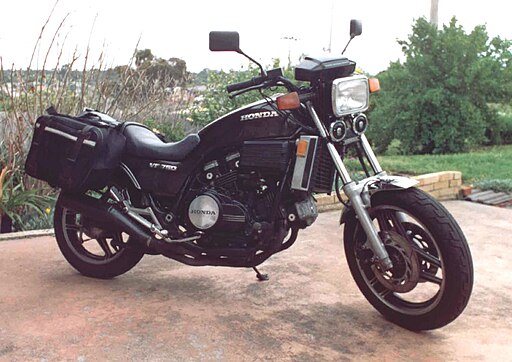
The Honda Sabre burst onto the scene in 1982 as Honda’s first factory V-4 cruiser, combining the exotic appeal of a 90° V-4 powerplant with the low-slung ergonomics of an American-style touring bike. With its shaft drive, unique exhaust note, and robust engine architecture, the Sabre built a loyal following among riders seeking smooth torque delivery, low maintenance, and distinctive styling. This article examines the Sabre’s technical underpinnings, performance benchmarks, maintenance requirements, and enduring legacy.
Model Development and Design Philosophy
Honda’s goal with the Sabre was to leverage its proven VF-series V-4 engine in a cruiser chassis, delivering ample mid-range thrust without sacrificing reliability. Key design priorities included:
- Maximizing low-end and mid-range torque for effortless roll-on power
- Utilizing a shaft final drive to reduce routine upkeep
- Incorporating a low seat height and forward footpegs for cruiser comfort
- Ensuring component commonality with sportier VF models for parts availability
The result was a machine that felt relaxed around town yet could sustain spirited highway cruising with poise.
Engine Architecture
Configuration and Displacement
- Type: Liquid-cooled, four-stroke, 90° V-4
- Displacement: 748 cc
- Bore × Stroke: 65.0 mm × 56.4 mm
- Compression Ratio: 10.0 : 1
A 90° V angle provides perfect primary balance, eliminating heavy counterweights and yielding a naturally smooth powerplant.
Valvetrain and Cam Drive
- Valvetrain: Dual overhead camshafts per bank
- Valves: 4 per cylinder (16 total)
- Cam Drive: Helical precision gears
Gear-driven cams remove belt-service intervals and ensure precise timing at high RPM, while hydraulic valve lifters maintain zero lash under most conditions.
Induction and Fueling
- Carburetors: 4 × Keihin CV 32 mm constant-velocity
- Airbox: Tuned plenum with dual resonance chambers
- Intake Tracts: Short, straight runner design
Constant-velocity carbs optimize throttle response from idle through redline, and the tuned airbox smooths airflow pulses to broaden usable torque.
Cooling and Lubrication
- Radiator: 3-row aluminum core with thermostatic fan
- Coolant Capacity: 3.0 L
- Oil System: Wet sump, 4.0 L capacity
- Oil Filter: Spin-on cartridge
An integrated oil cooler maintains stable temperatures during long rides, and routed coolant passages prevent hot spots across both cylinder heads.
Drivetrain
- Transmission: 5-speed constant-mesh
- Clutch: Wet multi-plate, cable-actuated
- Final Drive: Enclosed shaft with universal joint
The shaft drive virtually eliminates chain maintenance and delivers smooth, predictable rear-wheel torque, enhancing reliability and rider confidence.
Chassis, Suspension, and Braking
Frame Geometry
- Frame Type: Steel double-cradle
- Wheelbase: 1 520 mm
- Rake/Trail: 27° / 111 mm
- Seat Height: 740 mm
- Ground Clearance: 145 mm
- Dry Weight: 254 kg
A reinforced cradle frame carries both engine and shaft housing, balancing rigidity with ride comfort.
Front Suspension
- Forks: 37 mm telescopic, non-adjustable
- Travel: 120 mm
Rear Suspension
- Swingarm: Dual shocks with progressive linkage
- Travel: 110 mm
- Adjustments: Spring preload only
Wheels and Tires
- Front Wheel: 18 × 2.15 in; tire 100/90 -18
- Rear Wheel: 17 × 2.75 in; tire 130/90 -17
Brakes
- Front: Dual 270 mm discs with dual-piston calipers
- Rear: Single 296 mm disc with single-piston caliper
- Brake Lines: Factory-rubber, upgradeable to braided steel
Braking balance favors front bias yet feels progressive under hard application, with ample heat capacity for spirited cruising.
Electrical System and Instrumentation
- Battery: 12 V 11 Ah sealed lead-acid
- Alternator: 355 W at 5 500 rpm
- Ignition: Digital CDI with full-advance mapping
- Lighting: 35 W halogen headlamp; 5 W tail/stop lamp
- Instruments: Analog tachometer, speedometer, fuel gauge, coolant-temperature gauge, odometer
Circuit protection uses blade fuses grouped under seat for easy access, and a dedicated ground bus simplifies diagnostics.
Performance Metrics
- Peak Power: 82 hp @ 9 000 rpm
- Peak Torque: 64 Nm @ 7 500 rpm
- Top Speed: 200 km/h
- 0–100 km/h: 4.8 s
- Fuel Economy: 6.5 L/100 km at 90 km/h cruise
- Fuel Capacity: 18 L (including 3 L reserve)
The Sabre’s power delivery is most compelling between 4 000 and 8 500 rpm, offering smooth roll-on acceleration and minimal vibration thanks to its balanced V-4 design.
Maintenance and Preventative Strategies
- Valve Clearance: Inspect every 16 000 km; hydraulic lifters rarely require adjustment but must be flushed if noisy.
- Carburetor Sync: Balance every 8 000 km for stable idle and even cylinder fueling.
- Coolant Service: Replace every two years; inspect radiator hoses for softening or swelling.
- Shaft Drive: Check universal joint splines for play and service final-drive oil every 12 000 km.
- Brake Fluid: Flush annually with DOT 4 fluid to prevent internal corrosion.
- Tires and Wheels: Inspect for shaft-seal leaks and tire wear; maintain correct air pressure to prevent sidewall stress.
Adhering to these intervals preserves the Sabre’s renowned reliability and minimizes unscheduled downtime.
Technical Specification Summary
| Parameter | Specification |
|---|---|
| Engine Type | Liquid-cooled 90° V-4 |
| Displacement | 748 cc |
| Bore × Stroke | 65 mm × 56.4 mm |
| Compression Ratio | 10.0 : 1 |
| Valvetrain | DOHC per bank, 4 valves/cylinder |
| Cam Drive | Helical gear train |
| Fuel System | 4 × Keihin CV 32 mm carburetors |
| Transmission | 5-speed constant-mesh |
| Final Drive | Enclosed shaft |
| Frame | Steel double-cradle |
| Front Suspension | 37 mm telescopic forks |
| Rear Suspension | Dual shocks with linkage |
| Wheelbase | 1 520 mm |
| Dry Weight | 254 kg |
| Fuel Capacity | 18 L (3 L reserve) |
| Peak Power | 82 hp @ 9 000 rpm |
| Peak Torque | 64 Nm @ 7 500 rpm |
| Top Speed | 200 km/h |
Legacy and Aftermarket Ecosystem
The Sabre’s pioneering V-4 cruiser layout spawned a dedicated community. Highlights of its continued appeal include:
- Ongoing production of factory replacement parts, from carburetor rebuild kits to shaft-drive seals
- Aftermarket upgrades such as electronic fuel-injection conversions and modern brake calipers
- Suspension refinements including cartridge-style forks and piggyback rear shocks
- A wealth of technical manuals, wiring diagrams, and owner forums preserving detailed restoration guidance
These resources ensure that the Sabre remains both collectible and practical for modern riders.
Conclusion
The Honda Sabre stands as a landmark in motorcycle engineering, marrying a smooth, gear-driven V-4 powerplant with cruiser-style comfort and a virtually maintenance-free shaft drive. Its timeless design, user-friendly ergonomics, and robust mechanical architecture continue to captivate enthusiasts three decades on. With diligent maintenance and targeted upgrades, the Sabre retains its place as an enduring icon in Honda’s storied lineup.
